This post may contain affiliate links. By browsing this website, you agree to our disclaimer, privacy policy, and terms of use.
Twinkling lights, a glowing tree, and ornaments passed down through generations — holiday décor is meant to make our homes feel safe and joyful.
But what if those same decorations are quietly adding lead dust, PVC, and toxic flame retardants to your living room? Testing shows even major brands fall short on safety.
The good news: you don’t have to give up the cozy traditions you love. In this guide, we’ll show you which decorations to avoid, the safer swaps to look for, and how to keep the holidays magical without the hidden toxins.
The holidays are meant to feel cozy and magical — twinkling lights, favorite ornaments, and gifts under the tree. But behind the sparkle, many common decorations contain hidden hazards like lead, PVC, and flame retardants.
Most families never realize it, but the very items we pull out each year to celebrate can also introduce toxins into our homes. The good news: with a few smart swaps, you can keep all the traditions you love without the hidden risks.
When Cornell University tested ten leading brands of Christmas lights, every set exceeded the EPA’s lead safety limit — some by more than thirty times.
For children, this is especially concerning: their bodies absorb lead at a much higher rate than adults, and even small exposures can have lasting effects.
And it’s not just the lights to worry about. That artificial tree that smells more like “new car smell” than pine? It’s likely off-gassing dangerous phthalates, flame retardants, and volatile organic compounds into your home.
But we’re not here to steal your holiday cheer! The good news is that there are a ton of great non-toxic holiday decorations out there.
And the even better news is they won’t cost you an arm and a leg. You can find a lot of great non-toxic Christmas decor at stores like Target and Walmart, often for the same price or just a few dollars more.
So before you unbox your holiday decorations this year, be sure to read this guide about non-toxic holiday decorations.
You’ll learn which holiday decor items are the most toxic, what to buy instead, and get tips for safely enjoying this festive season with your family without abandoning your cherished traditions.
Toxic Holiday Decorations To Watch For
Are Artificial Christmas Trees Safe?
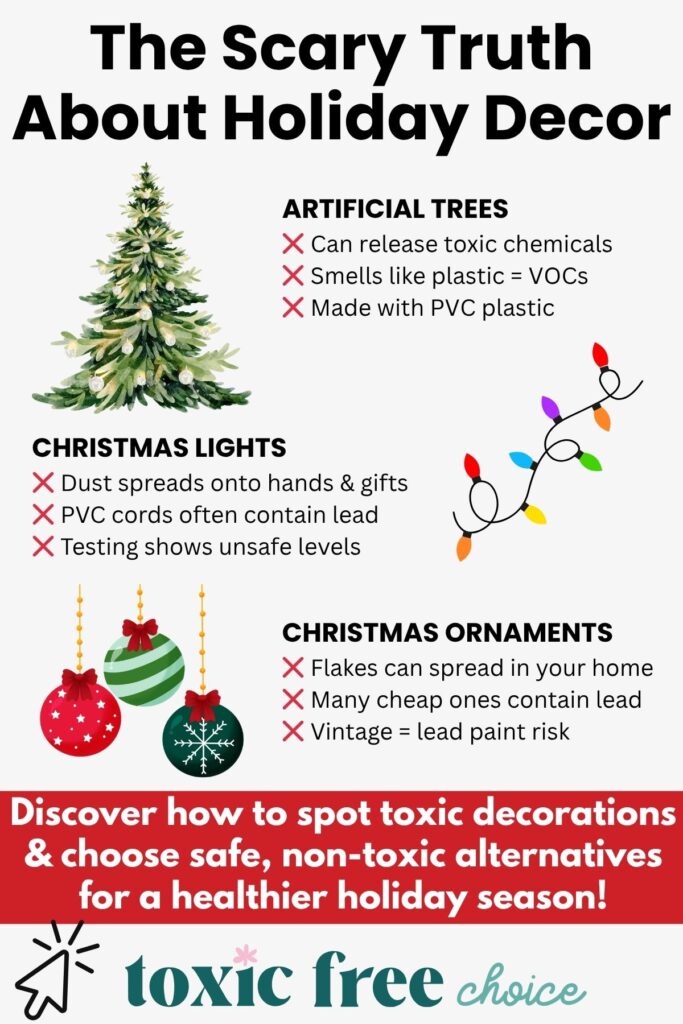
Not entirely. Most are made from PVC plastic, which contains:
- Lead (3 of 4 tested by UNC contained it)
- Phthalates
- Flame retardants
- Heavy metals
Add heat from lights or vents, and these chemicals off-gas into your living room. If your tree smells like plastic instead of pine, you’re breathing VOCs.
Are Christmas Lights Toxic?
Yes. The biggest risk comes from lead in the PVC cord coating.
- Cornell Testing: Every brand exceeded EPA safety limits.
- CNN Testing:
- Walmart: 86–132 μg (limit: 15 μg)
- GE: 68–109 μg
- Dollar Store: up to 174,000 μg — essentially toxic waste.
Lead dust spreads to hands, gifts under the tree, and windowsills. Kids don’t need to chew cords to be exposed.
Do Ornaments Contain Toxins?
Often, yes. Testing found:
- 53% of cheap ornaments from dollar stores contained lead.
- Vintage ornaments (pre-1978) almost always contain lead paint.
Safer Handling Tips:
- Keep heirlooms high on the tree, away from kids and pets.
- Wash your hands after handling.
- Store in sealed containers to prevent dust contamination.
How To Choose Safer Holiday Decorations
The Safest Artificial Christmas Tree Alternatives
There’s no such thing as a truly non-toxic artificial tree — but you can make safer choices. Most are made with PVC (polyvinyl chloride), which can contain lead, phthalates, and flame retardants.
🚩 Red Flags To Avoid
- Very soft or rubbery branches (common in PVC trees)
- Strong “new car” chemical odor out of the box
- Pre-lit trees with no specifications
- Prop 65 warning labels (lead, antimony, flame retardants)
🌿 Better Materials
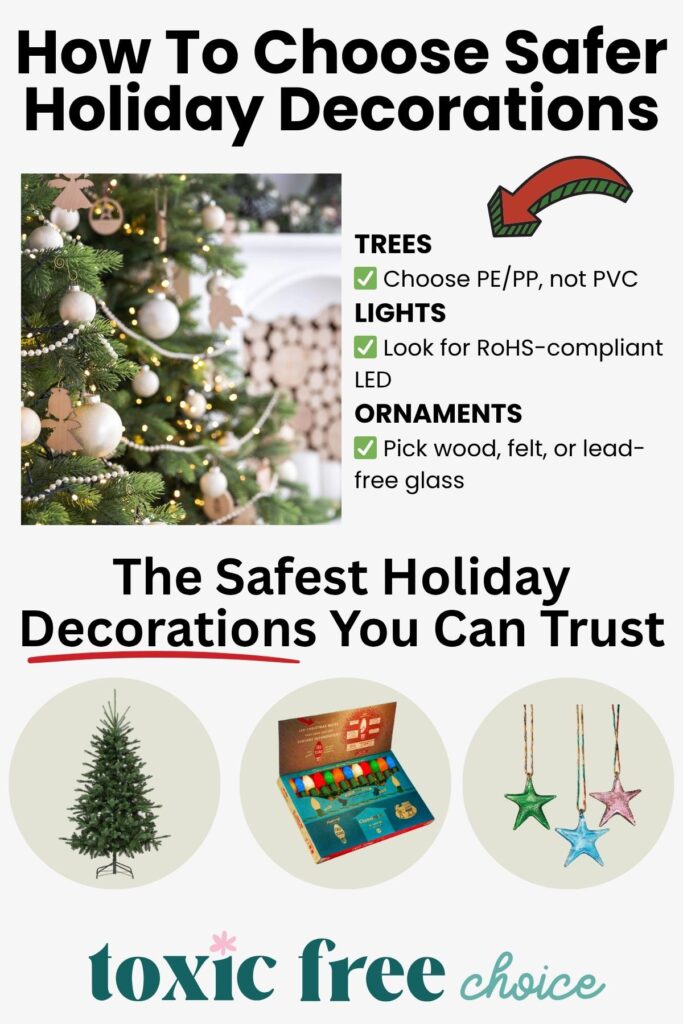
- PE (polyethylene) or PP (polypropylene) needles are safer than PVC
- Choose unlit models so you can add your own safer lights
- Look for transparency: brands that provide material breakdowns and testing info
Safer Setup & Use
- Unbox and air out outside or in a garage
- Wipe down once with a damp microfiber cloth
- Keep away from heat vents to reduce off-gassing
- Run a HEPA air purifier for the first week
- Wet-dust and HEPA-vacuum weekly during the season
- Store cool and sealed (not in hot attics)
Starter Brands (not endorsements, just starting points)
- ✅ IKEA Vinterfint Christmas Tree → IKEA makes some great PVC-free Christmas tree options made with a mix of (PE/PP/PET/steel). Flame-retardant status isn’t always clear, so you may need to ask for documentation from IKEA.
- ✅ Balsam Hill Blue Spruce Christmas Tree → Their “Most Realistic” line of trees is primarily made of PE; may have some minor PVC wraps. Note: these trees are treated with flame retardants.
How To Find Lead-Free Christmas Lights
String lights are one of the biggest sources of lead exposure during the holidays. The danger isn’t in the bulbs — it’s in the PVC cord coating, which often contains lead as a stabilizer.
🚩 Red Flags To Avoid
- Sticky, rubbery cords (older formulations, often high in lead)
- California Prop 65 warning labels
- Extremely low prices that suggest corners were cut
🌿 Safer Features To Look For
- Hard, stiff plastic cords (common in newer LED models)
- Packaging labeled “RoHS compliant” (restricts lead and heavy metals)
- Manufacture date of 2018 or later
Safer Light Brands
- ✅ Tru-Tone Christmas Lights → Vintage style bulbs without the lead.
- ✅ ChrGoGo Holiday Lights (manufactured after 2018) → Lead-free in XRF testing, only antimony flame retardant.
- ✅ Philips LED Christmas Lights → Consistently lead-free, with only trace arsenic.
- ✅ RoHS-compliant brands like Quntis → While slightly more expensive, Quntis tends to provide safer, lead-free options.
💡 Yes, safer lights may cost $10–15 more, but avoiding 30x higher lead levels is worth it.
How To Avoid Lead In Ornaments
Ornaments can also be a hidden source of toxins. Cheap imports and older vintage pieces often contain lead-based paints.
🚩 Visual Red Flags
- Cracking or “alligator skin” surfaces
- Blue or gray undertones in aged paint
- Chalky residue when touched
- Chipping or peeling paint
Bonus Tip: Use Lead Test Swabs on multiple spots. If it turns red, the ornament contains lead.
Safer Ornament Materials
- ✅ Budget-Friendly → Non-toxic ornaments like wood cutouts, paper snowflakes are always a great option
- ✅ Mid-Range → Cotton or felted wool ornaments are always safe ornaments for kids & pets
- ✅ Premium → GREENGUARD-certified ornaments, verified lead-free glass, handcrafted lead-free pewter.
🎄 Best Non-Toxic Holiday Décor Alternatives
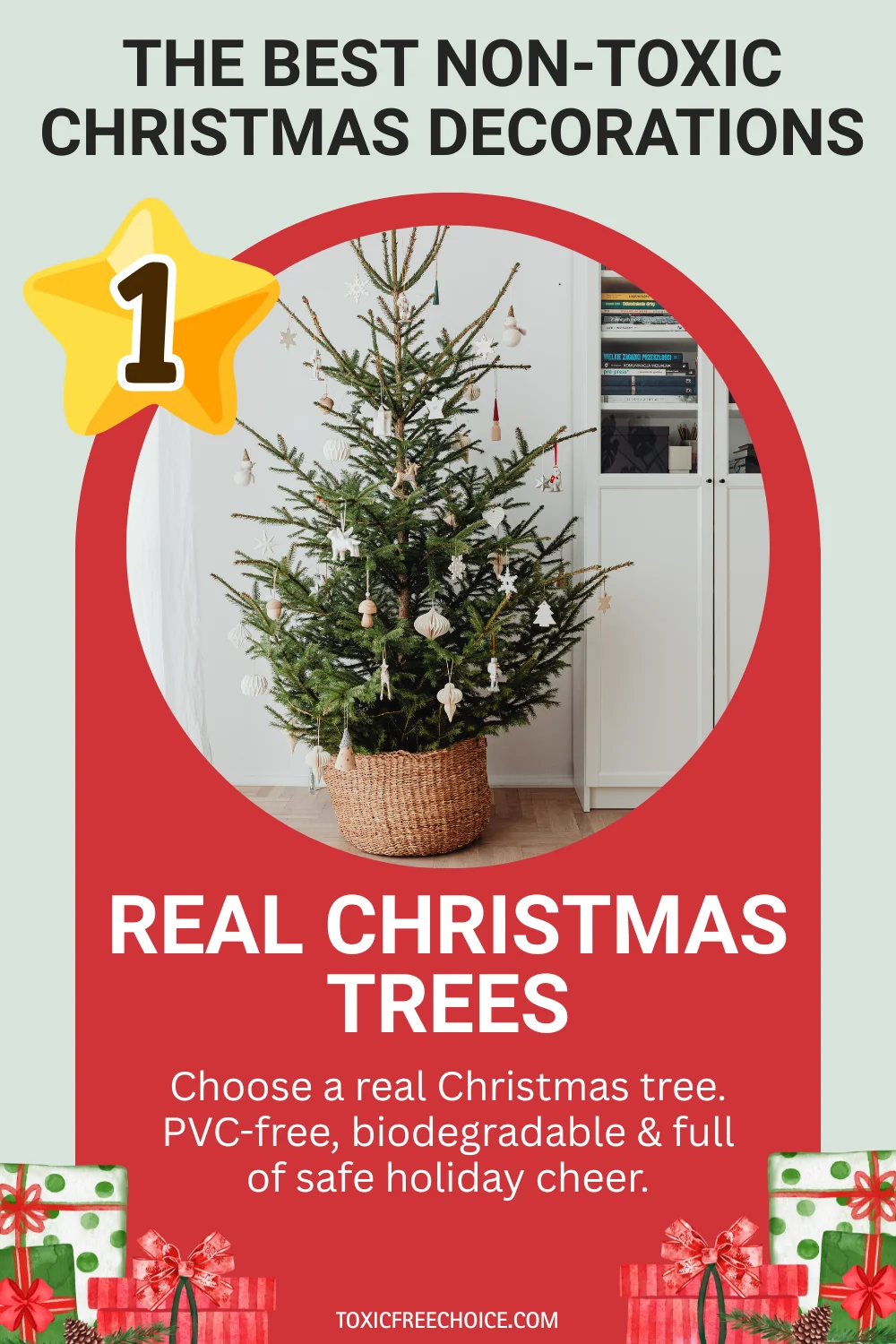
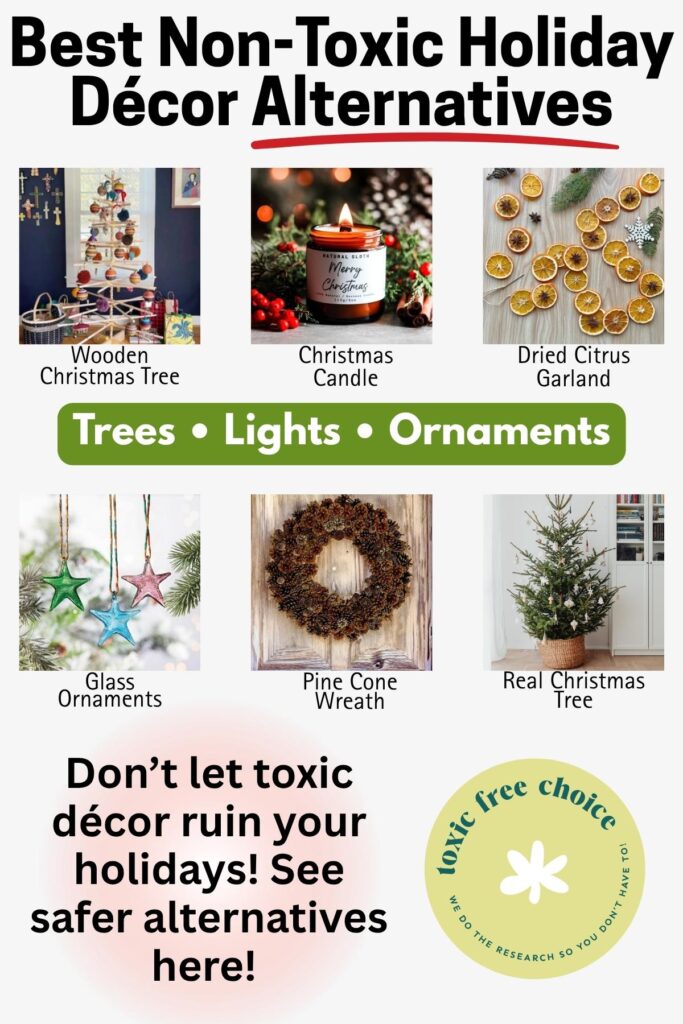
A Real Organic Christmas Tree is the safest alternative to PVC artificial trees.
While they don’t off-gas chemicals, live trees can carry mold spores that may bother allergy sufferers.
To minimize risks, buy closer to Christmas, display for a shorter period, and run a HEPA air purifier nearby.
For the most eco-friendly choice, choose an organic, pesticide-free tree from a local farm.
Price
$120-$200 (Depends on variety & size)
Types of Trees
Douglas | Turkish | Nordman | Noble | Grand Fir | Blue Spruce
100% Certified Organic | Free From Residue From Pesticides, Herbicides & Other Toxins
location/shipping
United States, ONLY ships to select states | Additional Shipping Fee
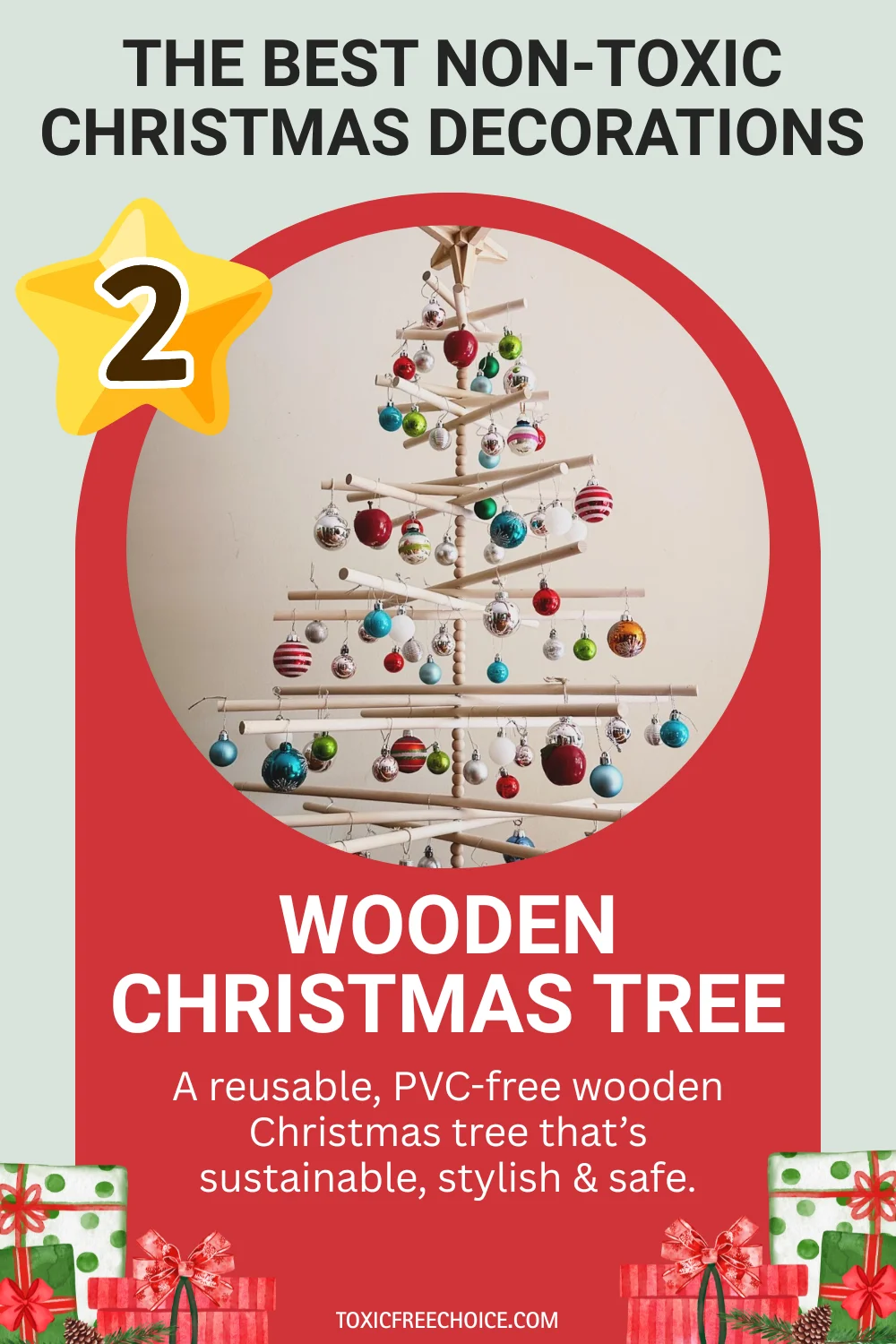
Skip the artificial vs. real tree debate with a handcrafted Wooden Christmas Tree.
These sturdy designs are reusable year after year, completely free of PVC, and often made from sustainable wood.
With branches that can be rearranged, each display feels one-of-a-kind.
Wooden Christmas trees bring a nostalgic, Scandinavian charm while staying truly non-toxic.
Price
From $172.55+
Materials
Recycled Wood
location/shipping
United States, ships internationally
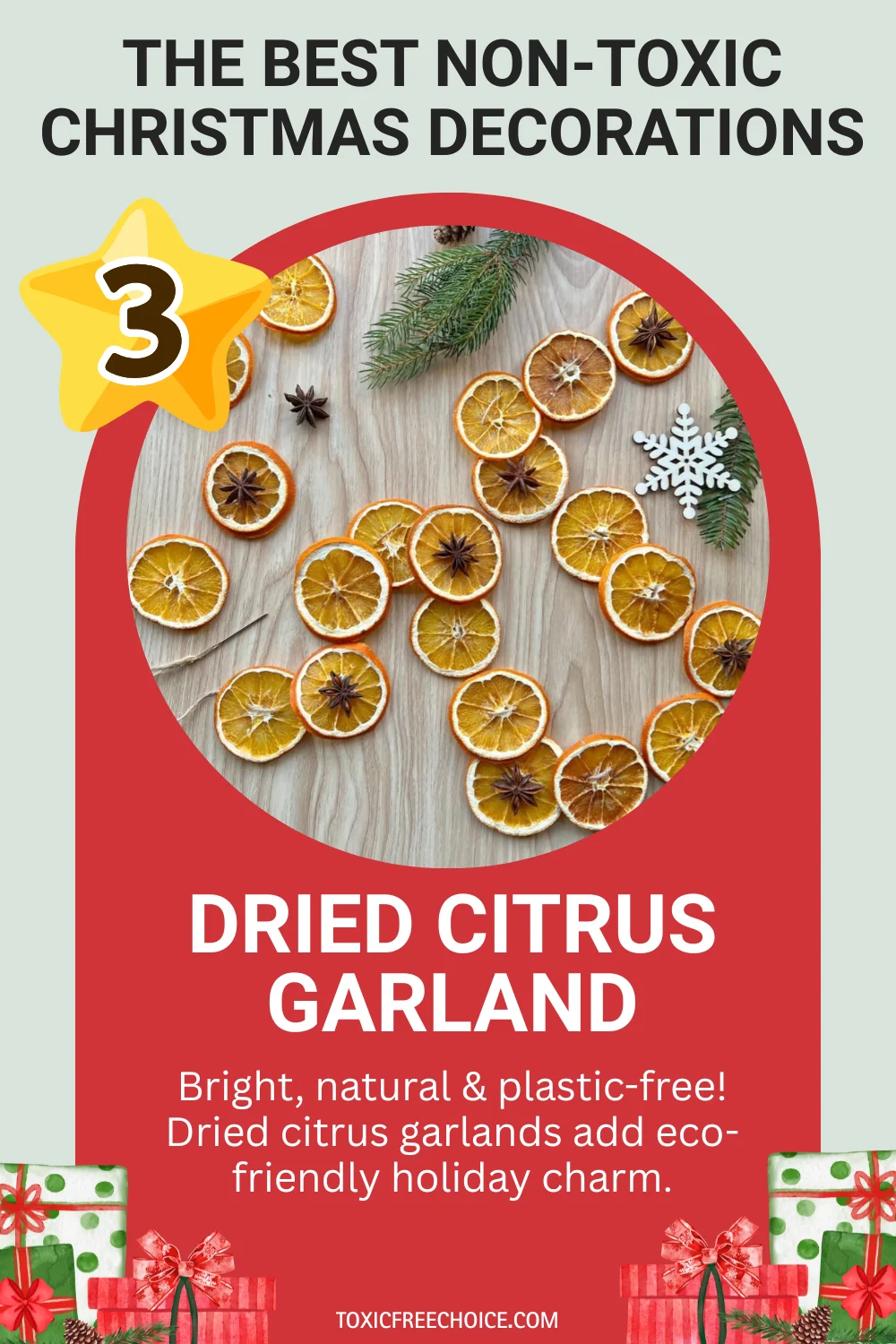
Dried citrus garlands are a festive, zero-waste swap for synthetic garlands.
DIY your own with slices of dried oranges strung on natural cotton twine, or shop artisan versions on Etsy.
Draped over a mantel, window, or tree, they add bright color, a fresh scent, and timeless old-world style — all without plastic or toxins.
Price
From $28.18+
Materials
Dried Oranges & Citrus
location/shipping
United States, ships internationally
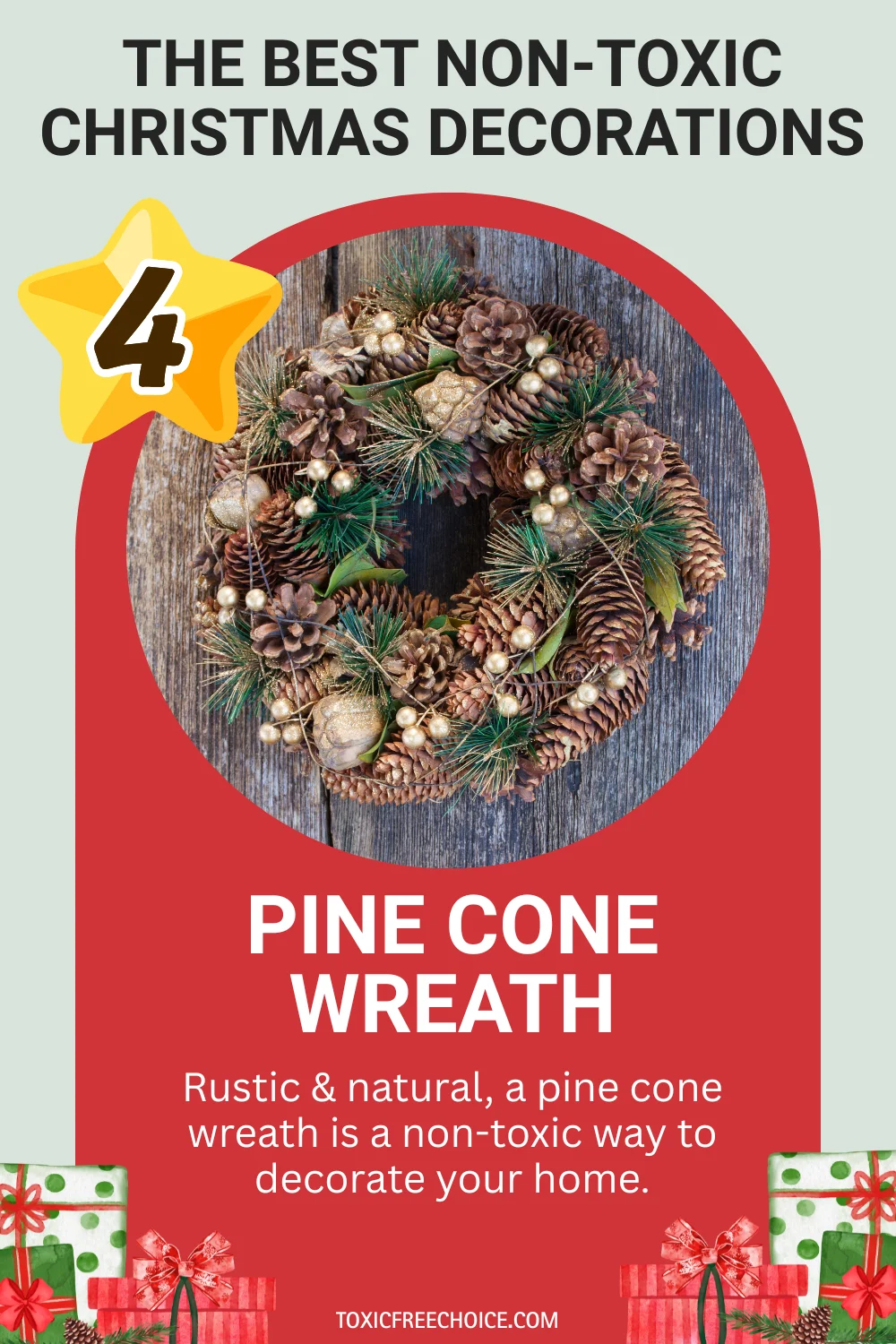
Instead of PVC wreaths, try a handmade Pine Cone Christmas Wreath.
Each design is unique, featuring naturally weathered pine cones arranged on a metal frame and finished with moss or ribbon.
These rustic wreaths work indoors or on a sheltered porch, giving your home cozy woodland vibes without synthetic greenery.
Price
From $116.62+
Materials
Pine Cones | Wire | Frame
location/shipping
United States, ships internationally
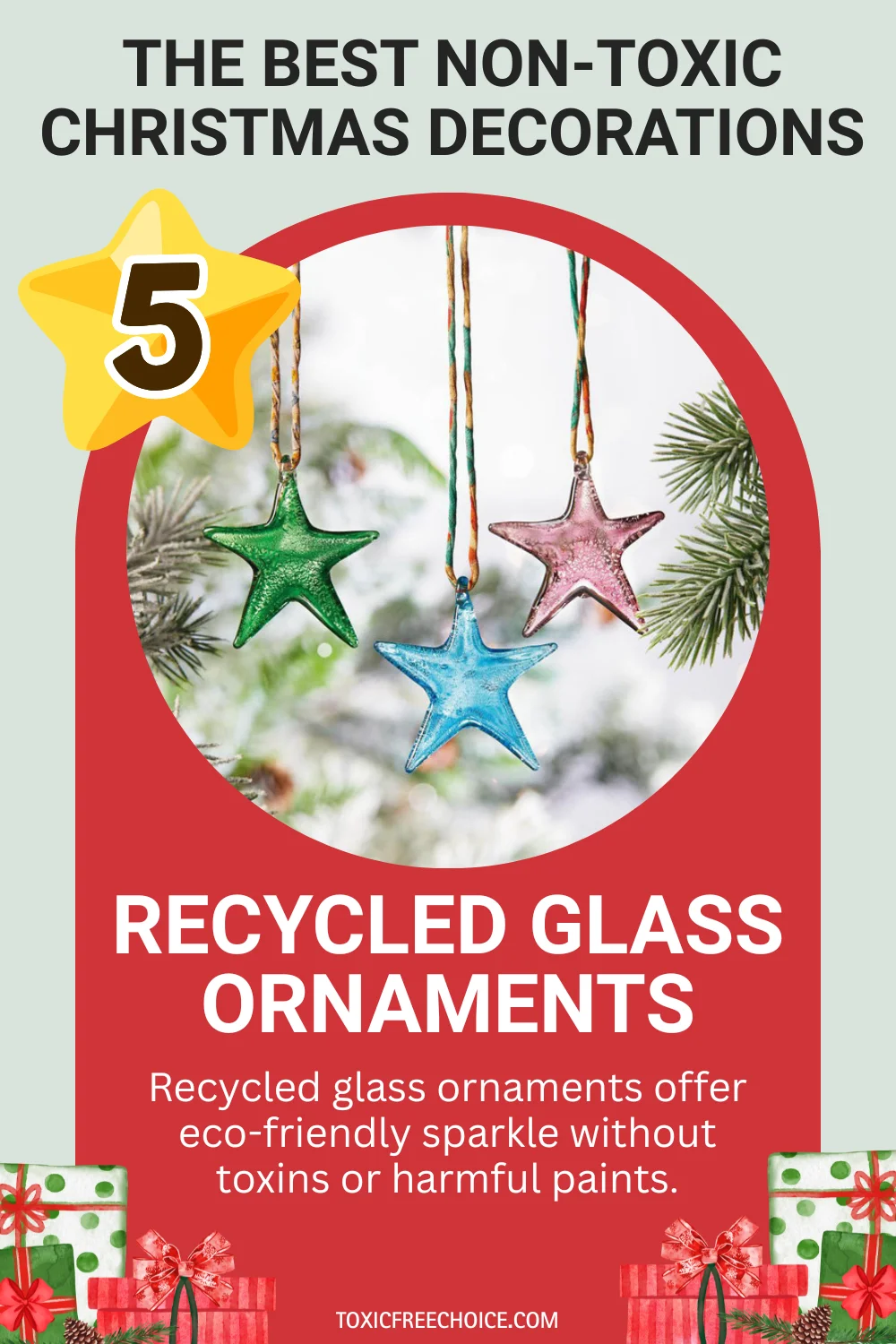
Glass ornaments are generally safer than plastic ones, as long as they’re lead-free.
For a sustainable twist, choose recycled glass ornaments, like these Star Ornaments made from reclaimed glass and sari fabric.
Each piece is handmade and unique, adding eco-friendly sparkle to your tree without the toxins found in cheap plastic or vintage painted ornaments.
Price
$30 (Set of 3)
Materials
Recycled Glass | Upcycled Sari Hanging Loops
location/shipping
India/United States, ships worldwide
6. Natural Holiday Scents: Skip The Toxic Plug-Ins
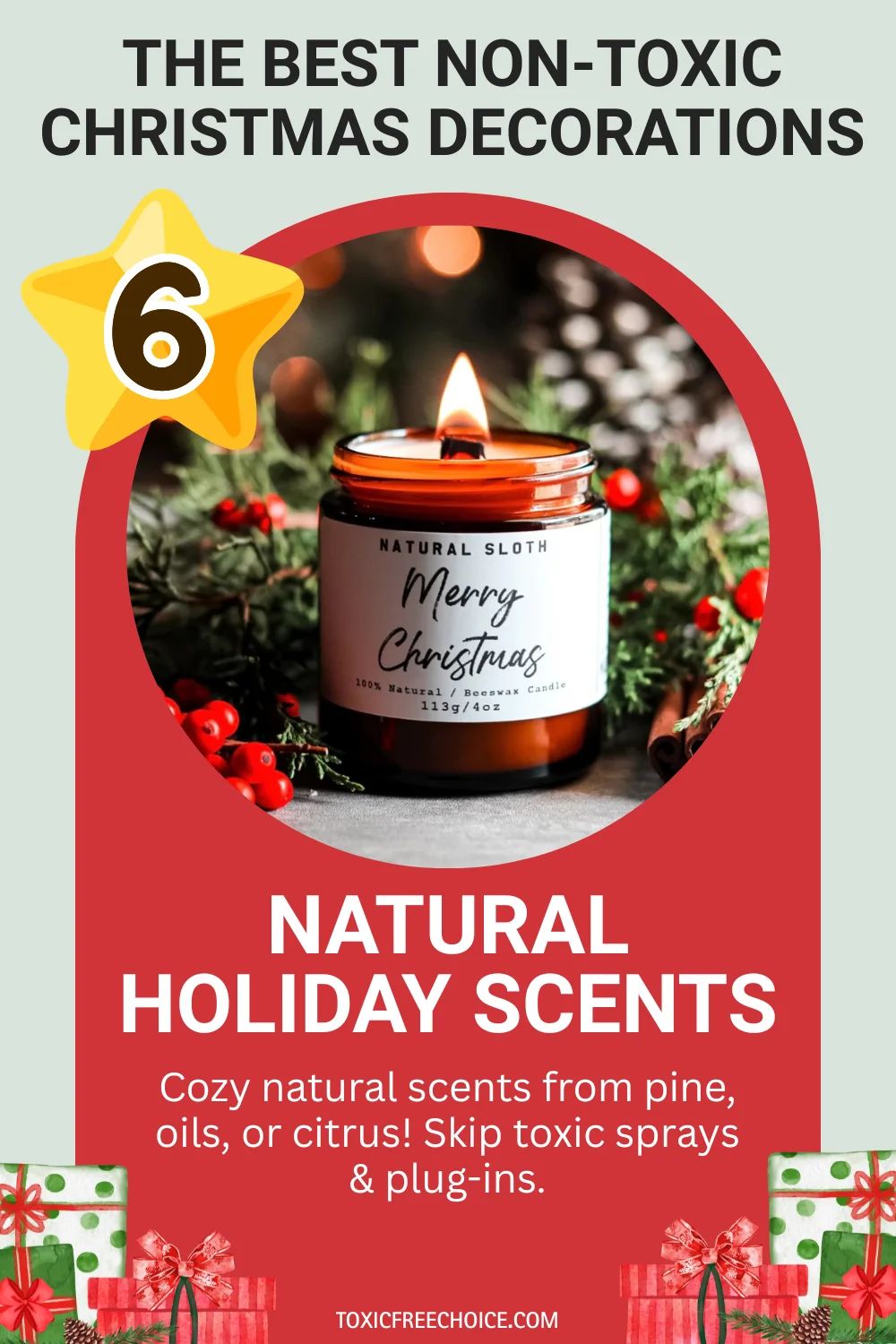
Ditch synthetic “holiday-scented” plug-ins, which often contain phthalates and VOCs.
Instead, create natural holiday scents at home:
- Simmer pots with cinnamon sticks, orange peels, and cloves
- Fresh eucalyptus or pine branches in vases
- Non-toxic Christmas candles
- Dried orange slices strung as garland
These options make your home smell festive without releasing harmful chemicals into the air.
Tips For Decorating Safely Around Kids & Pets
- Wash Your Hands: Every time you handle lights or ornaments, wash up. Lead dust is invisible, and hand-to-mouth contact is the primary way kids get exposed.
- Create Kid-Safe Decoration Zones: Give children their own box of safe, non-toxic decorations — think wool felt, wooden cutouts, and paper ornaments. Adults should handle vintage, breakable, or wired décor.
- Be Aware of Pet Dangers: While it sounds non-toxic, salt dough ornaments can be very poisonous for dogs. If ingested, they can cause neurological symptoms, vomiting, tremors, seizures, and even death. Also, watch out for tinsel and the liquids in retro bubble lights and snow globes.
Do A Daily Scan:
- Check light strings for hot spots
- Pick up loose ornament hooks (choking hazard)
- Keep exits clear of decorations
- Look for chewed cords or knocked-down ornaments
Keep Emergency Numbers Visible:
- Poison Control: 1-800-222-1222
- ASPCA Pet Poison Control: 888-426-4435
Frequently Asked Questions About Non-Toxic Holiday Decorations
Focus on these third-party certifications:
– RoHS for string lights (limits lead and other heavy metals)
– UL for basic electrical safety
– GREENGUARD for low chemical emissions
– Oeko-Tex Standard 100 for textiles like stockings and tree skirts.
Yes. Real Christmas trees can trigger what’s called “Christmas Tree Syndrome,” which affects about 7% of allergy sufferers. SUNY research found that mold spores indoors can increase 6.5 times once a tree is set up.
Within just 24–48 hours, sensitive people may notice runny noses, watery eyes, more sneezing, coughing, or even worsening asthma symptoms. The longer the tree stays indoors, the higher the mold count climbs.
1. Avoid vacuuming first (this can spread microscopic lead dust)
2. Clear the area immediately. Carry barefoot kids and pets away
3. Put on thick gloves and closed-toe shoes
4. Use the “slice of bread” method: press damp bread onto tiny glass fragments
5. Shine a flashlight at floor level to spot missed shards—check a 15-foot radius
6. Wet mop with disposable paper towels, then throw them away
7. If you vacuum afterward, dispose of the bag immediately
8. Wash your hands thoroughly (and kids’ hands too)
A real organic tree from a pesticide-free farm is also a good option if mold isn’t a concern. The safest artificial options are made from PE (polyethylene) or PP (polypropylene) instead of PVC.
IKEA and Balsam Hill’s “Most Realistic” line carries mostly PVC-free trees, though they may still have minor PVC components or flame retardants.
If you want to avoid plastics entirely, consider a wooden heirloom tree, a cardboard tree, or a potted plant alternative.
Safer swaps include dried citrus slices, popcorn and cranberry strands, paper chains, felted wool garlands, or wooden bead strands.
These avoid the PVC, phthalates, and flame retardants often found in synthetic garlands while still adding festive charm.
1. Choose Safer Materials — Wood, wool, cotton, paper, and glass over PVC or painted plastics.
2. Check Certifications — RoHS for electronics, Oeko-Tex for textiles, GREENGUARD for low emissions.
3. Practice Safe Handling — wash hands after touching lights or old ornaments, wet-dust regularly, and hang fragile/vintage pieces high out of kids’ and pets’ reach.
Celebrate The Holidays Safely With Non-Toxic Holiday Decorations!
Holiday décor highlights a larger battle for stronger safety regulations when it comes to the products we bring into our homes.
Toys get tested. Decorations don’t. And that’s why lead, PVC, and flame retardants keep showing up in the holiday decor we purchase every year.
The good news? Safer options are getting easier and easier to find. Natural garlands, recycled glass ornaments, and even safer artificial trees are becoming more affordable and accessible.
“Overhauling every holiday decoration at once can feel overwhelming. Start with the big wins: replace the lights, swap the ornaments within reach, and if you use an artificial tree, choose PE or PP instead of PVC.
Even small changes lighten the toxic load at home. Over time, your holiday box will hold the same fond memories, just without the hidden toxins. And that’s the kind of holiday magic worth keeping.
More Non-Toxic Holiday Resources
Looking to make the rest of your holiday season safer, too? These guides go deeper into avoiding hidden toxins in the products your family uses most:
- Non-Toxic Christmas Decor Ideas → Safer swaps for wreaths, garlands, and table settings
- Non-Toxic Christmas Candles → Clean-burning candles without paraffin or synthetic fragrance
- Non-Toxic Christmas Gifts For Everyone → Health-conscious gift ideas for all ages
- Non-Toxic Christmas Gifts For Kids → Safe, thoughtful picks for little ones
📌 Save This Research-Backed Holiday Safety Guide
Holiday décor shouldn’t expose your family to lead, PVC, or toxic flame retardants. Pin this guide now to keep science-based tips on safer lights, trees, and ornaments handy — so you can decorate with confidence, not chemicals. 🎄⚠️🔬
References:
- California Office of Environmental Health Hazard Assessment. (2023). Proposition 65 warnings website. https://www.p65warnings.ca.gov/
- Center for Environmental Health. (n.d.). Artificial Christmas trees. https://ceh.org/yourhealth/artificial-christmas-trees/
- Christmas Tree Syndrome Study Group. (2007). Christmas tree syndrome: Mold exposure in allergy patients. Annals of Allergy, Asthma & Immunology, 99(6), 531–536. https://pmc.ncbi.nlm.nih.gov/articles/PMC1930673/
- Ecology Center. (2022). Toxic chemicals in dollar store products—2022 report. https://www.ecocenter.org/sites/default/files/2022-04/Toxic%20Chemicals%20in%20Dollar%20Store%20Products-%202022%20Report.pdf
- Ecology Center. (2022, April 12). Press release: Toxic chemicals found in dollar store products. https://www.ecocenter.org/our-work/healthy-stuff-lab/reports/dollar-store-products-2022/press-release-toxic-chemicals-dollar
- European Commission. (2023). Restriction of hazardous substances (RoHS) directive. https://environment.ec.europa.eu/topics/waste-and-recycling/rohs-directive_en
- Laquatra, J., Coyne, L. M., & Pierce, M. R. (2008). Lead in Christmas lights. Journal of Environmental Health, 71(5), 8–11. https://pubmed.ncbi.nlm.nih.gov/19115717/
- Legal Information Institute. (2023). 16 CFR § 1500.89 – Ban of lead-containing paint and certain consumer products bearing lead-containing paint. Cornell Law School. https://www.law.cornell.edu/cfr/text/16/1500.89
- Minnesota Department of Health. (2021). Vintage lead ornaments. https://www.health.state.mn.us/communities/environment/lead/fs/vintage.html
- OEKO-TEX Association. (2023). STANDARD 100 by OEKO-TEX. https://www.oeko-tex.com/en/our-standards/oeko-tex-standard-100/
- Portnoy, J. M., Barnes, C. S., & Kennedy, K. (2025). Christmas trees and mold exposure indoors. Environmental Health Insights, 19, 1–8. https://pmc.ncbi.nlm.nih.gov/articles/PMC11983573/
- Schettler, T., Solomon, G., Valenti, M., & Huddle, A. (2005). Possible harmful health effects of Christmas trees. Environmental Health Perspectives, 113(12), A850–A853. https://pubmed.ncbi.nlm.nih.gov/15628192/
- Sustainable Brands. (2014, November 13). Study finds toxic chemicals in many seasonal holiday décor products. https://sustainablebrands.com/read/study-finds-toxic-chemicals-in-many-seasonal-holiday-decor-products
- Toxic Free Choice. (2024). Indoor air purifiers. https://toxicfreechoice.com/indoor-air-purifiers/
- UL Solutions. (n.d.). Electrical safety for code authorities, design professionals, and installers. https://code-authorities.ul.com/about/buildingsafetyprograms/electrical-safety-code-authorities-design-professionals-and-installers/
- UL Solutions. (2023). UL GREENGUARD certification. https://www.ul.com/services/ul-greenguard-certification
- U.S. Consumer Product Safety Commission. (2002). Holiday decorating hazards (Publication No. 611). https://www.cpsc.gov/s3fs-public/611.pdf
- U.S. Environmental Protection Agency. (2023). What are volatile organic compounds (VOCs)? https://www.epa.gov/indoor-air-quality-iaq/what-are-volatile-organic-compounds-vocs
- Vets Now. (2017, July 11). The dog almost dies after eating salt-dough ornaments. https://www.vets-now.com/2017/07/dog-almost-dies-salt-dough-poisoning/
- World Health Organization. (2023). Lead poisoning and health. https://www.who.int/news-room/fact-sheets/detail/lead-poisoning-and-health