


This post may contain affiliate links. By browsing this website, you agree to our disclaimer, privacy policy, and terms of use.
Many products marketed as the best non-toxic underwear are labeled “organic,” “natural,” or “chemical-free,” yet the materials and textile treatments used in intimate apparel are rarely disclosed in detail.
Because underwear sits directly against sensitive skin for extended periods, material composition becomes especially relevant.
Conventional underwear may include synthetic fibers, chemical dyes, and finishing agents that can leave behind residues. In warm, high-friction environments, these substances can interact with moisture and skin, creating a potential pathway for irritation or low-level exposure.
Despite this, transparency around textile processing remains limited across much of the apparel industry.
This guide examines what underwear is made of, how chemical exposure can occur through fabrics, and which materials and brands stand out based on certifications, construction, and manufacturing transparency.
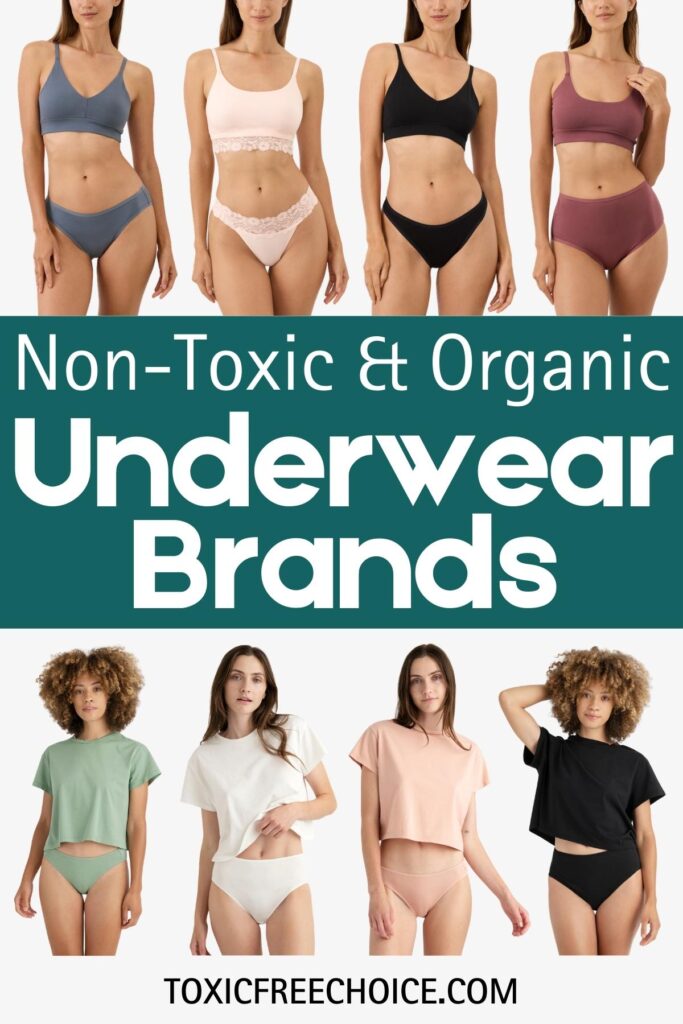
Hidden Chemicals in Underwear Fabrics
Textile manufacturing involves multiple stages — from fiber production to dyeing and finishing — and each step can introduce chemical residues into the final garment.
While not all products contain all of the substances below, these are among the most commonly discussed in textile safety research.
PFAS and Stain-Resistant Treatments
Per- and polyfluoroalkyl substances (PFAS) may be used to create water- or stain-resistant finishes. While less common in underwear, they can appear in performance fabrics.
PFAS are persistent in the environment and are being studied for potential links to hormone and immune system effects.
Azo and Disperse Dyes
Synthetic dyes are widely used in textile production. Certain azo dyes can break down into aromatic amines, some of which are restricted in the EU.
Disperse dyes, commonly used in synthetic fabrics, have been associated with skin irritation and allergic reactions in sensitive individuals.
Phthalates in Synthetic Materials
Phthalates may be used in textile coatings, prints, or flexible synthetic components. They are not always disclosed, but can be present in garments containing synthetic blends. Some phthalates have been studied for their endocrine-disrupting potential.
Formaldehyde-Based Finishes
Formaldehyde resins are sometimes used to improve wrinkle resistance or fabric stability. Residual formaldehyde has been linked to contact dermatitis, particularly in garments worn close to the skin.
Pesticide Residues in Conventional Cotton
Conventional cotton production often involves pesticide use. Trace residues may remain in fibers unless processed under certified organic standards.
Heavy Metals in Dyes and Pigments
Certain dyes and pigments may contain trace levels of heavy metals such as lead, cadmium, or chromium, particularly in less regulated manufacturing environments.
What Research and Industry Practices Reveal
Research on textiles has largely focused on how dyes, finishing agents, and synthetic additives interact with the skin.
While clothing is not considered a primary source of chemical exposure compared to food or water, dermatology studies have identified substances such as formaldehyde resins and disperse dyes as potential triggers for irritation or allergic reactions.
Regulatory actions — particularly in the European Union — have restricted specific azo dyes due to concerns about carcinogenic breakdown products.
At the same time, substances like PFAS and phthalates continue to be studied for persistence and potential endocrine-related effects, though their contribution from clothing remains less clearly defined.
In practice, a key challenge is the lack of transparency in textile production. Most garments go through multiple processing stages, yet these are rarely disclosed.
Two products labeled as “organic cotton” may differ significantly depending on dye systems, finishing treatments, and overall manufacturing practices.
Fabric composition can also be misleading. Many products marketed as natural include elastane or other synthetic fibers to improve stretch and durability. While functional, these additions introduce materials that are not always emphasized in product claims.
Certifications provide some guidance but vary in scope. Some focus on organic fiber sourcing, while others test for residual substances in finished textiles. Understanding these differences is important when interpreting safety claims.
Overall, current evidence suggests that while textile exposure risks are generally lower than other sources, material transparency and processing methods remain key factors in evaluating underwear safety.
How We Evaluated These Underwear Brands
To identify lower-toxicity options, brands were assessed based on material composition, manufacturing practices, and overall transparency.
Fiber Composition
Priority was given to natural fibers such as organic cotton, hemp, and silk, particularly when supported by certifications like GOTS.
Dyes and Chemical Processing
Brands that disclose dye practices or use low-impact, azo-free, or certified-safe dye systems were prioritized. Limited use of chemical finishes — such as wrinkle-resistant or stain-resistant treatments — was also considered.
Synthetic Content and Elastic Exposure
While some elastane or spandex is often necessary for fit, preference was given to designs that minimize synthetic fiber content or prevent direct skin contact through covered waistbands and seams.
Certifications and Testing
Third-party certifications such as GOTS and OEKO-TEX were used as indicators of chemical restrictions, material sourcing, and finished product testing. However, certifications were evaluated in context rather than treated as absolute indicators of safety.
Manufacturing Transparency
Brands that provide clear information about sourcing, production processes, and material composition were prioritized over those relying on vague marketing claims.
Durability and Wearability
Construction quality, fabric integrity, and expected lifespan were also considered, as products that degrade quickly may increase exposure to fiber shedding or require more frequent replacement.
The following brands were selected based on fiber composition, dye practices, certification standards, and overall manufacturing transparency.
While no textile product is entirely free from processing inputs, these options prioritize lower synthetic content and more controlled chemical use compared to conventional alternatives.
Best Non-Toxic Underwear Brands For 2026
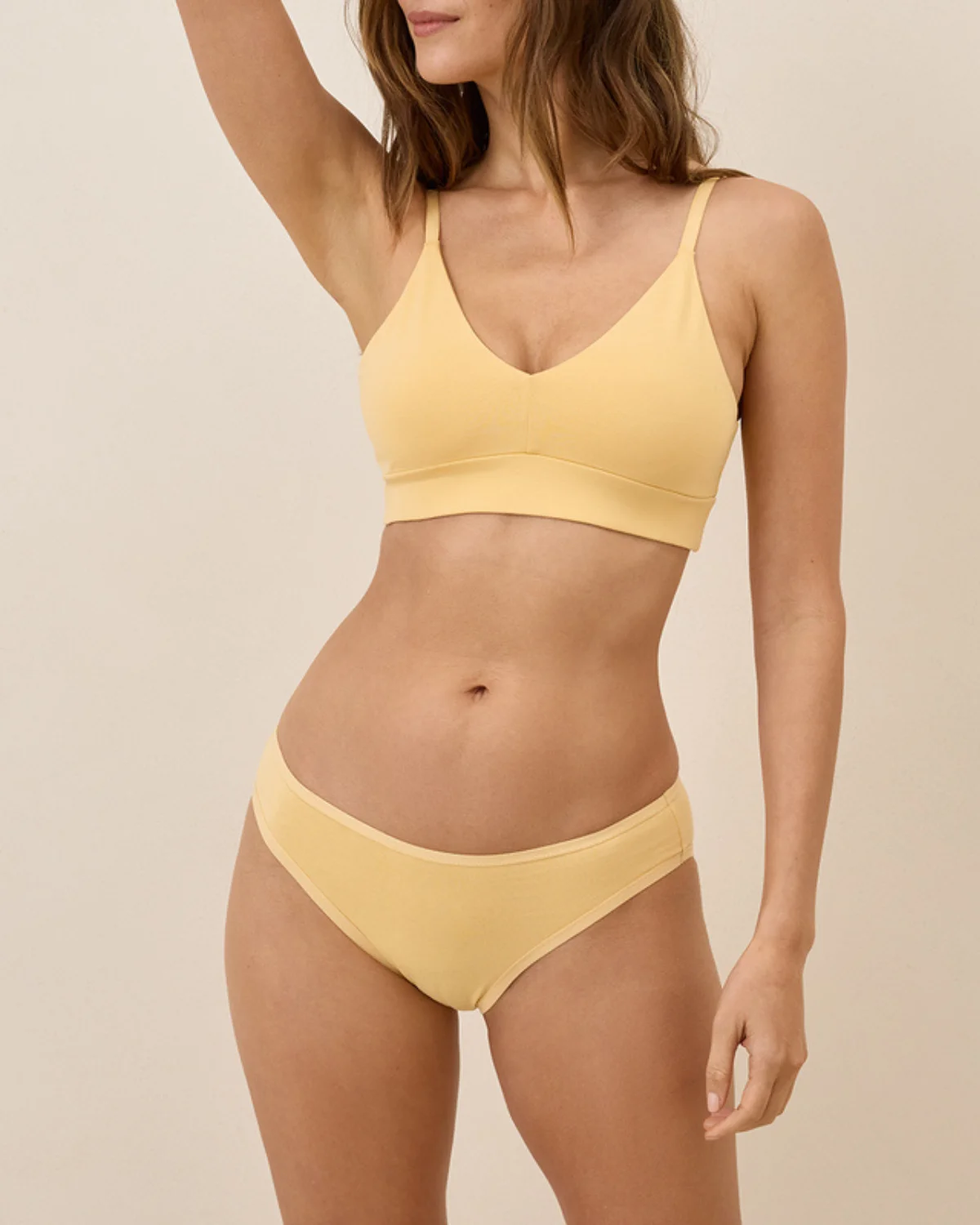
Pact focuses on everyday basics built around certified organic cotton, offering a more straightforward alternative to synthetic-heavy underwear.
Most styles use GOTS-certified cotton blended with a small amount of elastane to provide stretch and maintain shape over time.
While this adds functionality, it also introduces some synthetic content — a common tradeoff in modern underwear design.
The brand prioritizes simple construction, breathable fabrics, and accessible pricing, making organic cotton options more widely available.
Although Pact provides limited detail on dye systems and finishing processes, its consistent use of certified materials offers a more reliable baseline than many conventional alternatives.
Price
$16 per pair (bundles available at ~$13 per pair)
Materials
95% GOTS-Certified Organic Cotton | 5% Elastane
location/shipping
United States | Ships Internationally
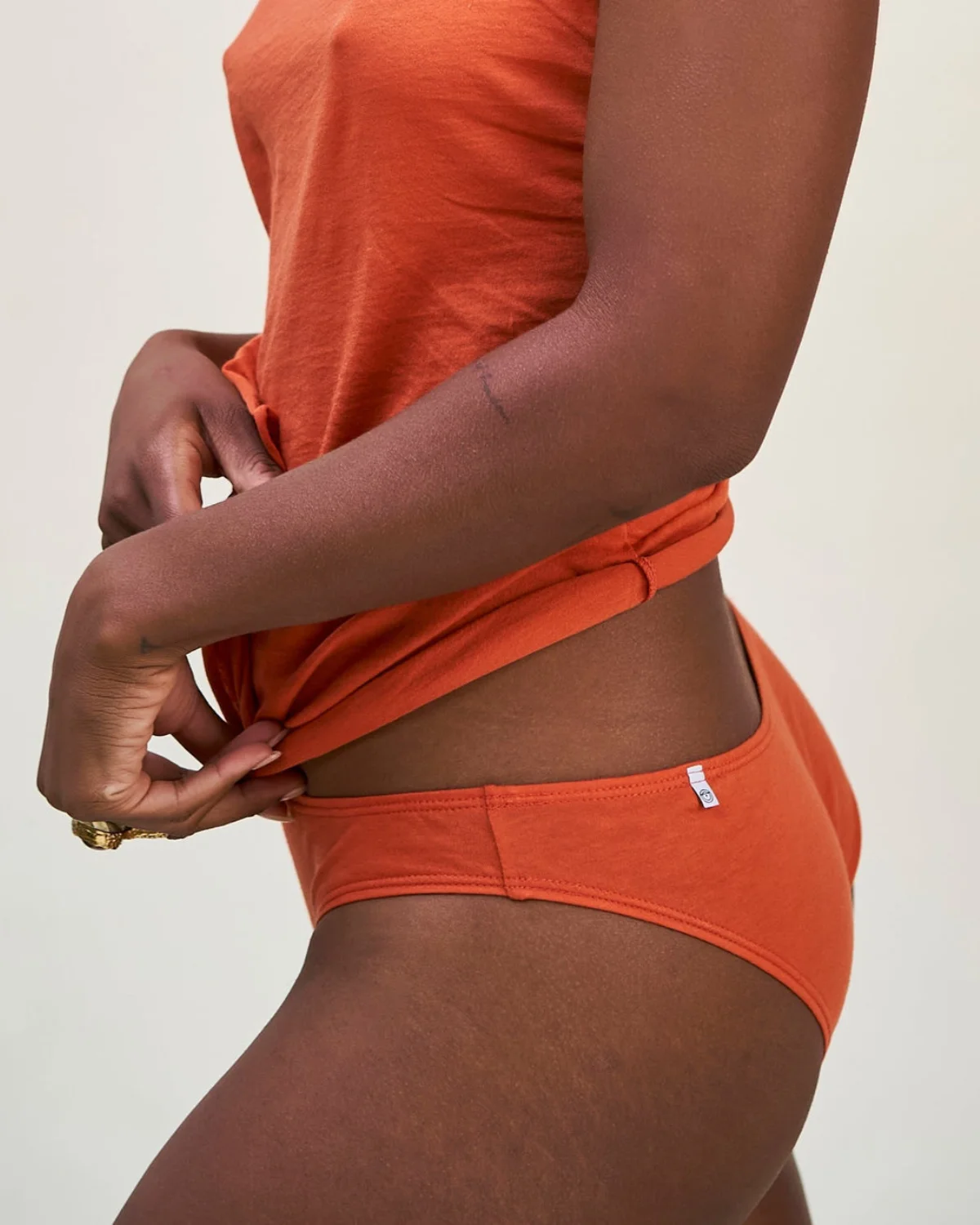
ODDOBODY focuses on minimalist underwear made from 100% GOTS-certified organic Pima cotton, prioritizing fiber quality and reduced chemical input over synthetic performance features.
The brand uses long-staple cotton sourced in Peru, which typically requires less processing and results in a smoother, more uniform fiber.
By avoiding synthetic blends, ODDO BODY maintains full natural fiber contact with the skin without relying on elastane for stretch.
Designs emphasize simple construction and low material complexity, allowing the fabric itself to provide flexibility.
While detailed dye information is limited, the consistent use of certified organic cotton makes it a more straightforward option compared to many conventional alternatives.
Price
$24.00
Materials
100% GOTS-certified Pima cotton
location/shipping
United States, ships to Canada

Built around a simplified material approach, KENT produces underwear using 100% GOTS-certified organic cotton, avoiding synthetic blends and petroleum-based inputs commonly found in conventional designs.
The brand uses long-staple Pima cotton, which typically requires less processing and provides a smoother, more breathable fabric.
By eliminating elastane and other stretch fibers, KENT maintains full natural fiber contact with the skin without introducing synthetic components.
Designs emphasize minimal construction and end-of-life considerations, including compostable materials and packaging.
While the lack of stretch may limit fit flexibility, the brand offers one of the more streamlined approaches to reducing overall material and chemical complexity.
Price
$24.00
Materials
100% GOTS-certified Pima cotton
location/shipping
United States, ships to select international countries.

Focused on durability and consistent material sourcing, Q for Quinn produces underwear using 100% GOTS-certified organic cotton, prioritizing reduced chemical input and long-term wearability.
The brand uses midweight organic cotton with azo-free dyes, aiming to limit exposure to common textile chemicals while maintaining color stability.
Construction includes covered elastic waistbands and flat seams, which help reduce direct skin contact with synthetic components while still providing structure.
Designs emphasize longevity and repeat wear, with reinforced stitching and stable fabric that holds shape over time.
While some elastic is still present for fit, Q for Quinn offers a more balanced approach between fully natural fibers and everyday durability compared to many conventional options.
Price
$25.00
Materials
100% GOTS-certified cotton
location/shipping
Canada, ships to Canada and the US.
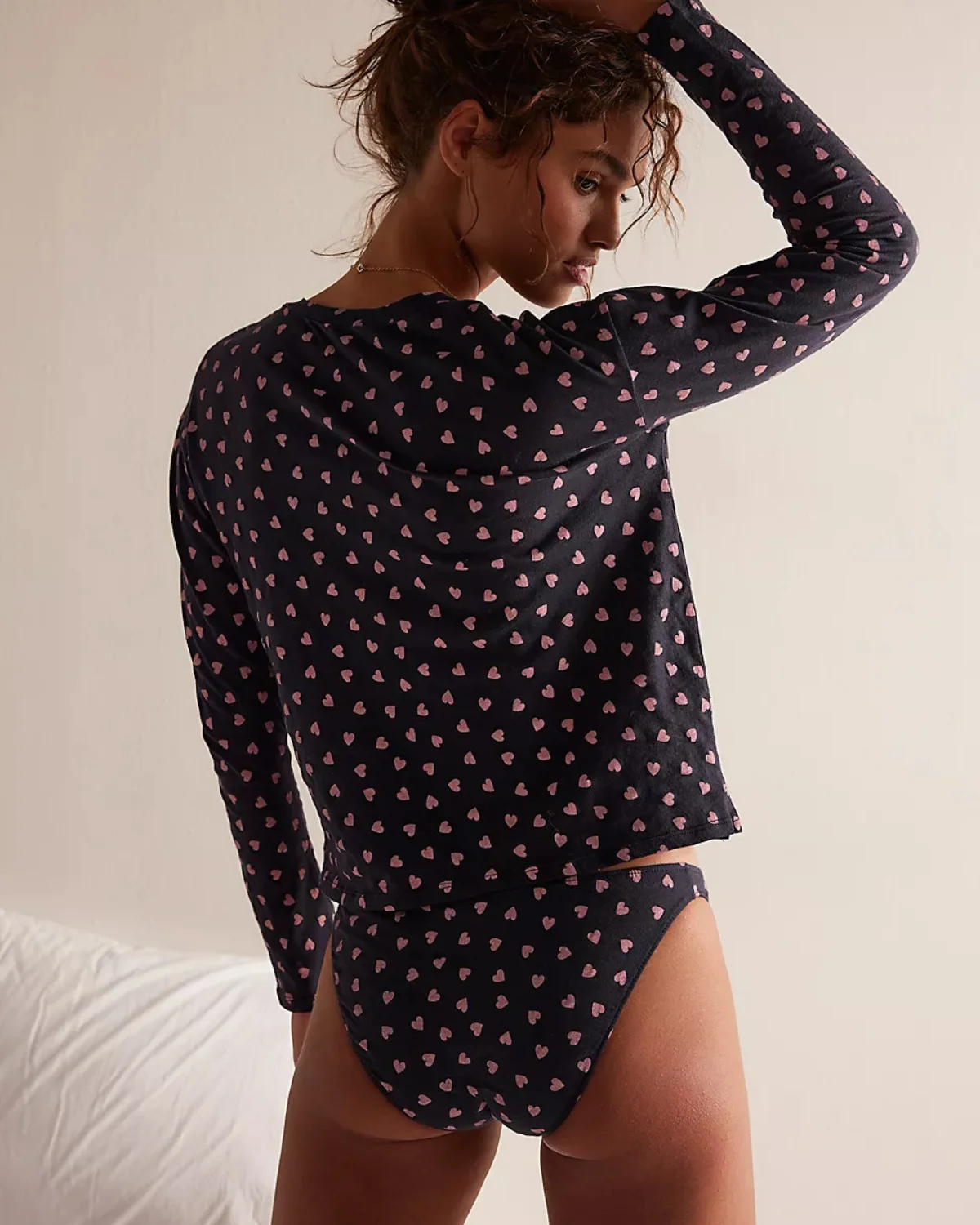
Only Hearts combines organic cotton with more design-focused construction, producing underwear that prioritizes style alongside natural fiber use.
The brand uses lightweight cotton fabrics in a range of cuts, often incorporating elastic components or blended materials to achieve specific silhouettes.
While organic cotton is present in many pieces, material composition can vary by design, and detailed information on dye systems or processing is limited.
Construction emphasizes form and variety over minimalism, resulting in a broader range of styles than utility-focused brands.
This approach offers more flexibility in design, but also introduces greater variability in synthetic content across the collection.
Price
$35.00
Materials
100% organic cotton
location/shipping
United States, ships to the US, Canada, Japan, United Kingdom, and Australia.

Produced using 100% cotton, HANRO’s underwear focuses on refined construction techniques, particularly its signature seamless design.
The brand uses lightweight cotton that undergoes additional softening processes to improve texture and flexibility.
While this enhances comfort, details around the specific treatments used are not always fully disclosed, which can make it difficult to assess overall chemical input.
Construction emphasizes minimal seams and smooth finishes, reducing bulk and friction against the skin.
This approach improves wearability under clothing, though the use of processing treatments and premium finishing techniques may introduce additional variables compared to more minimally processed options.
Price
€33.00
Materials
100% mercerized cotton
location/shipping
Austria, ships to select international countries.

Rawganique takes a more stripped-down approach to underwear design, removing synthetic materials entirely and relying on 100% organic cotton construction.
Unlike most brands, it avoids elastics and blended fibers altogether, instead using organic cotton drawstrings and looser silhouettes to achieve fit.
This eliminates common sources of synthetic exposure but also changes how the garment performs compared to stretch-based designs.
The result is a more utilitarian construction that prioritizes material simplicity over form-fitting structure.
While this approach may feel less tailored than conventional underwear, it represents one of the clearest reductions in synthetic input and processing complexity within this category.
Price
$32.95
Materials
100% organic US Pima cotton knit
location/shipping
United States, ships to the US, Canada, United Kingdom, and Italy.
What Type of Non-Toxic Underwear Do You Actually Need
Different materials and constructions serve different purposes, and the “best” option often depends on how the underwear is worn and what level of material simplicity is preferred.
If minimizing synthetic materials is your priority, Options made from 100% organic cotton without elastane or blends offer the most straightforward construction. These typically reduce exposure to synthetic fibers but may sacrifice stretch and fit flexibility.
If you want a balance between comfort and lower chemical input, Organic cotton underwear with a small amount of elastane can provide a more adaptable fit while still reducing reliance on fully synthetic fabrics.
If you have sensitive skin or irritation concerns: Simpler constructions with fewer seams, minimal dyes, and certified materials may help reduce potential triggers, particularly in garments worn for extended periods.
If durability and daily wear are the main focus, Brands that reinforce stitching and use slightly heavier cotton fabrics may hold their shape longer, though this often involves some tradeoff in material purity or softness.
Signs Your Underwear May Be Causing Irritation
In many cases, reactions to textiles are subtle and may not be immediately linked to clothing.
- Persistent itching or redness in high-contact areas
- Discomfort that worsens with heat or sweating
- Reactions after wearing tighter or synthetic fabrics
- Sensitivity to dyed or darker-colored garments
- Improvement when switching to simpler, cotton-based options
While these symptoms can have multiple causes, material composition and fabric treatments are one variable worth considering.
Common Questions About Non-Toxic Underwear
Underwear made with certified organic fibers and fewer synthetic inputs can reduce contact with certain dyes, finishes, and additives. While overall exposure from textiles is typically lower than from other sources, material differences may matter for individuals with sensitivities or prolonged wear.
Natural fibers such as organic cotton are generally considered a lower-exposure option due to reduced pesticide use and fewer synthetic additives. However, fabric safety also depends on dye processes, finishes, and overall construction.
Polyester is not inherently harmful, but it is a synthetic material that can trap heat and moisture and may involve additional chemical processing. Some individuals may experience irritation or discomfort, particularly with prolonged wear.
Yes. Certain dyes, finishing agents, and synthetic fibers have been associated with contact dermatitis or irritation in sensitive individuals. Heat, moisture, and friction can increase the likelihood of a reaction.
Most textile dyes are regulated, but some — particularly certain azo or disperse dyes — have been linked to irritation or allergic responses. Certifications such as OEKO-TEX can help indicate testing for harmful substances.
Bamboo fabric is typically processed into viscose or rayon using chemical solvents. While the final product may be soft and breathable, the manufacturing process can involve significant chemical input unless produced in a closed-loop system.
Look for certifications such as GOTS or OEKO-TEX, review material composition, and prioritize brands that disclose dye processes and manufacturing practices. Avoid relying solely on terms like “natural” or “eco-friendly.”
100% cotton reduces synthetic fiber exposure and tends to be more breathable. However, some designs include elastane for fit, which introduces a tradeoff between material simplicity and flexibility.
Organic certifications typically restrict pesticide use and limit certain chemical inputs during processing. However, not all stages of manufacturing are fully disclosed, so overall chemical exposure can still vary by brand.
Replacement depends on wear and fabric condition. Signs such as thinning fabric, loss of elasticity, or persistent odor may indicate it’s time to replace. Material breakdown can also affect comfort and performance over time.
Further Reading on Non-Toxic Materials and Textiles
Material safety considerations extend beyond underwear, particularly in products that come into direct and prolonged contact with the body. These guides examine similar material and exposure questions across related categories:
Final Assessment of the Best Non-Toxic Underwear
When evaluating the best non-toxic underwear, the most meaningful differences come down to material composition, chemical processing, and overall manufacturing transparency rather than marketing claims.
Underwear is not a primary source of chemical exposure, but it remains one of the most consistent points of skin contact. As a result, fabrics, dyes, and construction methods can still play a role in comfort and potential irritation, particularly over long periods of wear.
The strongest options tend to use certified organic fibers, simpler construction, and fewer synthetic inputs. At the same time, tradeoffs are common — designs that eliminate synthetic materials may reduce stretch and fit precision, while more flexible options often rely on blended fabrics.
In practice, a balanced approach is often the most realistic. Prioritizing organic cotton, minimizing unnecessary blends, and choosing brands with clearer material standards can reduce overall complexity without overcorrecting for performance or durability.
Sources & Scientific References
- European Chemicals Agency (ECHA). Restriction of azo dyes in textiles.
- OEKO-TEX®. Standard 100: Testing for harmful substances in textiles.
- World Health Organization (WHO). Guidelines on chemical exposure and human health.
- National Institute of Environmental Health Sciences (NIEHS). Endocrine disruptors and human health.
- U.S. Environmental Protection Agency (EPA). PFAS explained and associated health risks.
- Centers for Disease Control and Prevention (CDC). Phthalates and human exposure.
- National Institute for Occupational Safety and Health (NIOSH). Formaldehyde exposure and health effects.
- PubMed / Dermatology Research. Textile contact dermatitis and dye-related skin reactions.
- Textile Exchange. Organic cotton and global textile standards (GOTS overview).







Hi Jenna
Any thoughts or feed back on the brands Subset, Organic Basics, A very good Bra, Cottonique and Mate. Ive been researching for a week now and there are so many options it’s overwhelming. I have not purchased yet. Would love some advice.
Thanks so much!
Hi Lindsay, lucky for you I have tried ALL the brands you mentioned! Subset is really nice – they were once Knickeys (which I tried and wasn’t a huge fan of) and then they did a full luxury update that made their underwear much nicer. It’s thicker, fits way better and even my husband loves their men’s line. Organic basics has been in my underwear drawer for 10 years now _ I was a big fan of their tencel line until I made the decision to stick with organic cotton (breathability). I really enjoy their core rib – its super soft and fits great. A very good bra sent me some products to review when I was breast feeding and their line is SUPER soft and nice. I do not know if I’d recommend it over subset or OB, but it is lovely. Just a bit older style then I’m quite ready for (although I did appreciate it postpartum). Cottonique is one of those brands that I’m a bit obsessed with because they are SUPER non-toxic – they refuse to use ANY thing that is iffy (elastic/spandex). I do recommend trying their stuff out because if you like them, you won’t have to go anywhere else (it’s the saftest brand all around). I do love their basic bikini briefs a lot. Lastly, mate the label is LUXURY. Like – the thickest out of all and super durable. I’m obsessed with everything they make. I have yet to have one bad experience with them. For full transparency here, my current undie drawer is a mix of subset, cottonique, mate the label, OB, Terrera (this is organic bamboo which folks don’t love too much in the Non Tox space but GOODNESS do they fit nice) and ODDO body. I tend to wear my Terrera, Mate and OB the most 🙂
This is so helpful. Much appreciated! I can’t thank you enough right now. Last question promise.
So for just cotton undies and basic coverage would you recommend Quinn, Oddobody and Cottonique? or what two out of these three do like the best?
Then for a more fancy feel with thongs I’m completely at a loss and can’t decide between OB or Subset? What do you prefer best for thongs? If you have a few favorites let me know. I’m excited to try cottoninique however it wasn’t in your top four so a little nervous but relieved you love them! 🙂
Thank you again!
Lindsay
You are very welcome! For the basic coverage, I found that while oddobody was SUPER soft, it was a bit…odd fitting? So I recommend Quinn and Cottonique. For the fancy feeling, I am more inclined to Organic Basics because I just find them super flattering and comfortable! And yes, this article was super hard to pick any “top” because they are all really amazing haha.
This is so helpful! Thanks again! I literally was about to order from eight places. This is much more practical. 😉
Lindsay
Oops one make asking for a friend. Have you heard of intimissimi?
My apologies Jenna! I don’t think my first reply back to you ever got sent. My error. I thought I pressed submit. First and foremost thank you so much for your quick response, so helpful you have no idea. GREATLY appreciated! I’ve been overwhelmed with the amount of options there are. For someone who has tried several brands was hoping some more help to narrow it down. For just cotton, what would be your top two picks for; Quinn, Oddobody or Cottoninque. I am so happy you approved cottonique bc it was not on your top four list. As for fancy undies like thongs, I can’t decide between Subset, Organic Basics, Mate or Only hearts. Thanks again!
Do you know which website I can find nontoxic compression socks? Without BPA’s and harmful chemcials.?
Hi there!
Great question—and I’m so glad you’re looking into non-toxic compression wear. It’s so important, especially since socks are in constant contact with our skin (and often worn for hours at a time!).
Here are a few great options to check out:
🌿 Q for Quinn – They use GOTS-certified organic cotton and OEKO-TEX-certified dyes. Super soft, safe, and ethically made.
🧘♀️ Comrad Compression – OEKO-TEX certified, latex-free, and BPA-free. They’re not plastic-free, but they’re one of the cleanest options when it comes to true compression.
🧦 PACT – Great organic cotton socks with a snug fit (though not medical-grade compression). Their transparency and certifications are excellent.
When shopping, keep an eye out for OEKO-TEX Standard 100 or GOTS certifications to ensure you’re avoiding things like BPA, formaldehyde, and phthalates.
Let me know if you’re looking for medical-grade compression specifically—I’m happy to help dig deeper!