This post may contain affiliate links. By browsing this website, you agree to our disclaimer, privacy policy, and terms of use.
Most kids carry a water bottle five days a week — and for many, it’s the most-used food-contact item they own.
It gets tossed into backpacks, dropped on playground pavement, left in hot cars, and run through the dishwasher over and over again.
That kind of daily wear matters — especially with insulated stainless steel bottles, where construction details aren’t always obvious from the outside.
In recent years, some insulated bottles have been recalled due to lead used in vacuum-sealed base components.
The U.S. Consumer Product Safety Commission (CPSC) has issued formal recalls related to federal lead content violations in children’s drinkware — underscoring why construction details matter.
That lead does not touch water during normal use, but if the base becomes damaged or exposed, it can become accessible. For school-age kids who are hard on their gear, durability and transparency matter just as much as material safety.
P.S. Hydration is only one part of a safer back-to-school setup. If you’re upgrading daily-use items, it also makes sense to review your Non-Toxic Lunch Boxes and Non-Toxic School Supplies, since these items are handled just as frequently.
This guide focuses specifically on non-toxic kids’ water bottles for school — prioritizing:
- 18/8 (304) stainless steel
- Clear lead-free vacuum seal disclosure
- Leakproof lids for backpacks
- Replacement parts availability
- Dishwasher durability
- Kid-friendly sizing (12–18 oz, with 20 oz options for older students)
For toddlers still transitioning away from sippy lids, you may want to start with our guide to Non-Toxic Kids Cups, which focuses more on early developmental drinking stages rather than insulated school bottles.
Each bottle was reviewed against current FDA food-contact regulations, EU Regulation (EU) No 10/2011, and publicly available recall data from the U.S. Consumer Product Safety Commission (CPSC).
If you’re shopping for toddlers or looking for non-toxic sippy cups instead, see our full guide to Non-Toxic Kids Cups.
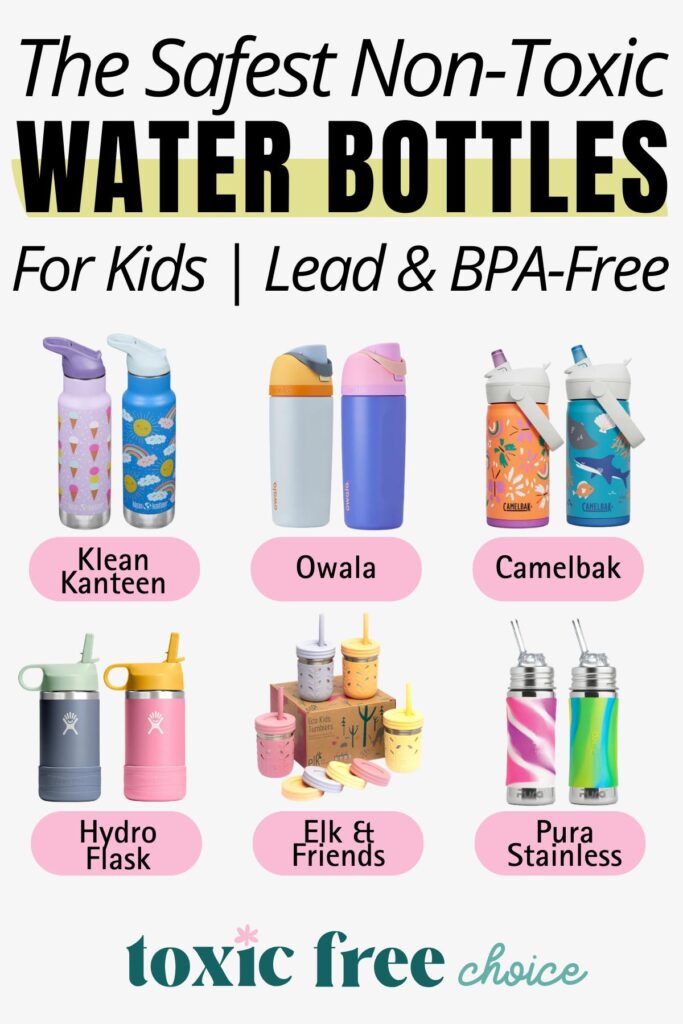
Why This List Includes Only 6 Bottles
Many widely sold insulated kids’ water bottles were reviewed but excluded from this list.
Brands that do not clearly disclose steel grade, vacuum seal construction, or lead-free insulation methods did not meet Toxic Free Choice transparency standards.
This is not a “top Amazon sellers” list. It is a materials-first review focused on construction, regulatory context, and real-world durability for school use.
If a brand does not openly explain how its bottle is built — steel grade, seal method, and lid materials — it does not appear here.
The 6 Best Non-Toxic Kids Water Bottles For School (Material & Safety Reviewed)
1. Klean Kanteen Kids Classic (12 oz / 16 oz)
Best For: Families prioritizing maximum transparency in an insulated school bottle
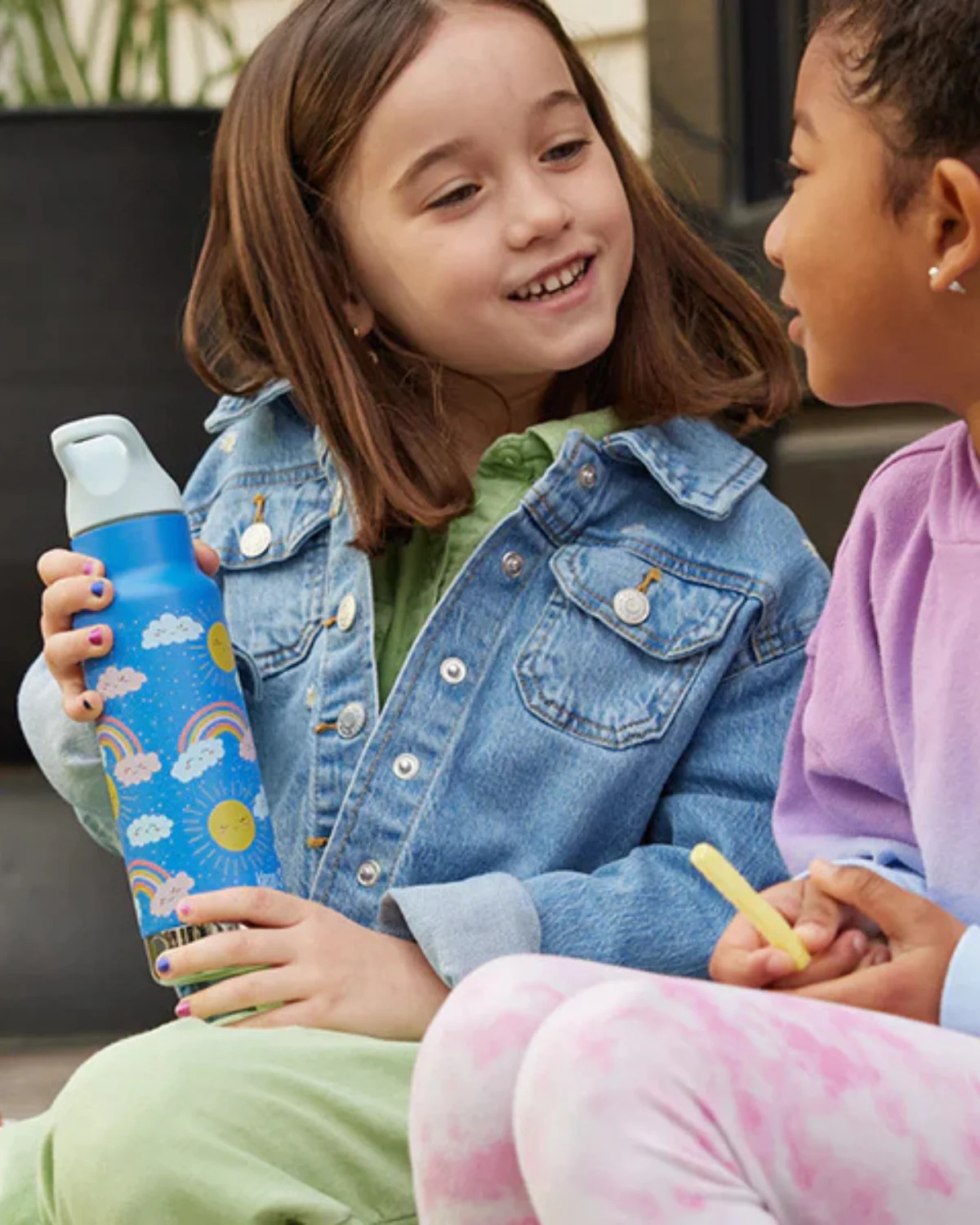
Klean Kanteen is one of the few brands that explicitly addresses how its vacuum insulation is sealed.
In its insulated lines, the company uses a silica-based sealing method— a more expensive manufacturing choice, but one that eliminates the traditional lead solder concern.
The bottle body is made from 18/8 stainless steel (90% post-consumer recycled), and the interior is unlined and uncoated.
Because the Classic Kids line also offers single-wall options, families who want to avoid vacuum seals entirely have that option.
Replacement caps are widely available, and the brand backs its bottles with a lifetime warranty — a strong signal of durability for daily school use.
Price
~$17–$30 depending on model
Materials
18/8 stainless steel body; polypropylene cap; food-grade silicone gasket; silica-based seal (no lead solder)
location/shipping
Ships within the U.S. and Canada
2. Pura Stainless Kiki Sport (11 oz / 18 oz)
Best For: Families who want to eliminate vacuum seals and plastic components entirely

Pura Stainless is one of the only stainless steel bottle systems that completely avoids the insulated vacuum-seal question.
Their bottles use single-wall 18/8 stainless steel construction, meaning there is no sealed base, no solder dot, and no insulation layer to evaluate.
The entire system is designed to be plastic-free.
The bottle body and collar are stainless steel, and the sport cap is made from 100% medical-grade silicone.
Pura also holds MADE SAFE® certification — one of the stricter third-party screening standards in consumer products — which adds another layer of transparency beyond general “BPA-free” claims.
Because the bottle is modular, you can swap lids as your child grows rather than replacing the entire bottle.
The tradeoff is insulation. As a single-wall bottle, it will not keep drinks cold for extended periods and may show condensation in warmer weather.
For families prioritizing construction simplicity over temperature retention, this is one of the cleanest options available.
Price
~$25–$32 depending on size
Materials
18/8 stainless steel bottle and collar; 100% medical-grade silicone sport cap; no plastic components; no vacuum seal
location/shipping
Ships within the U.S.
3. Hydro Flask Kids (12 oz / 18 oz)
Best For: Insulated performance with clear lead-free disclosure for all-day school use
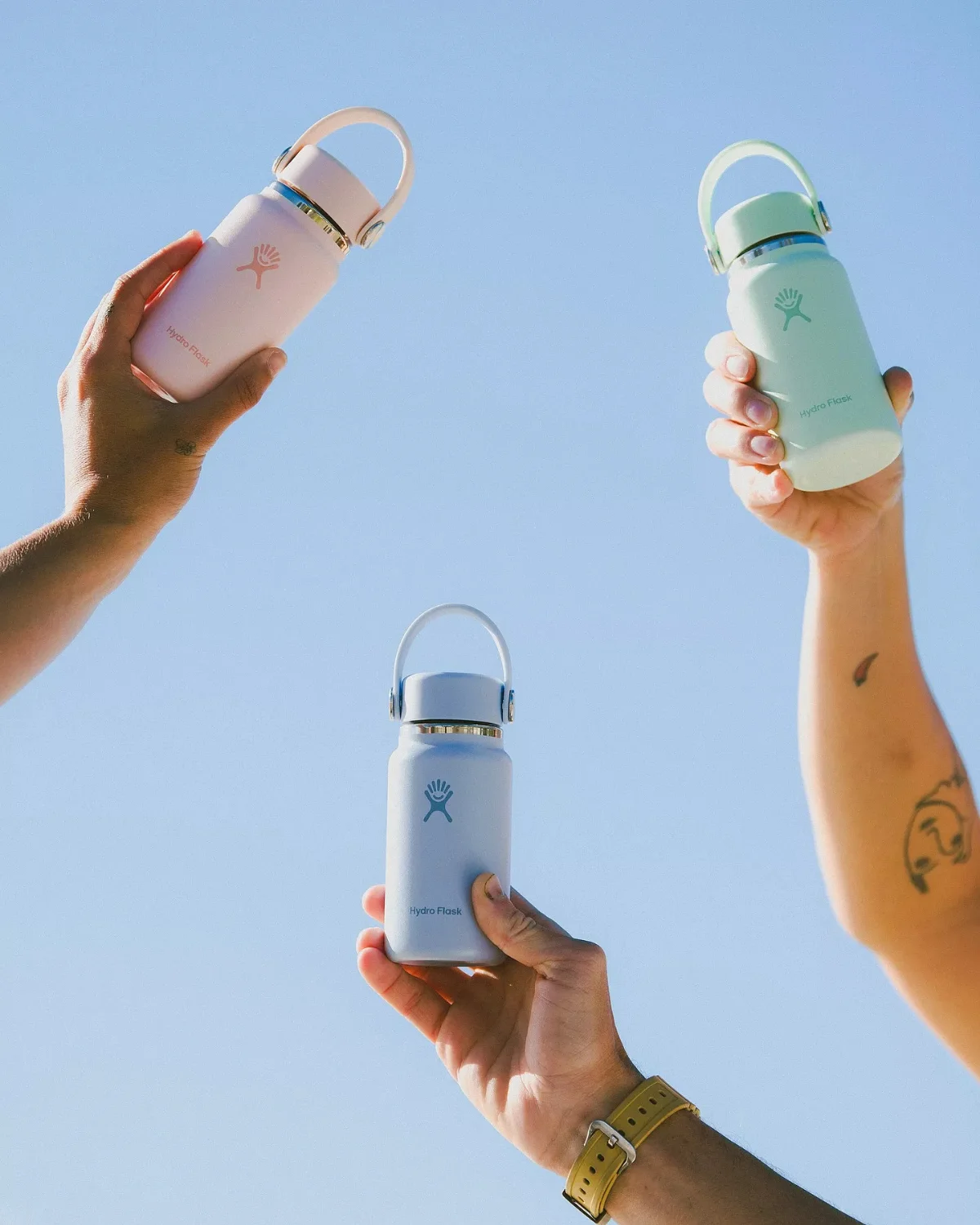
Hydro Flask is one of the few large brands that has publicly addressed the lead solder issue directly.
The company states that its current insulated bottles use a proprietary lead-free sealing method in the TempShield™ insulation process, eliminating traditional lead-based solder at the vacuum seal.
The Kids 12 oz and 18 oz sizes are well-suited for elementary school — insulated enough to keep water cold through the school day, but still manageable in weight for smaller hands.
The bottle body is made from 18/8 stainless steel with an unlined interior, and replacement straw lids and caps are readily available.
While lids do contain BPA-free plastic components and silicone gaskets (as most school bottles do), Hydro Flask clearly discloses materials and construction details more openly than many competitors.
For families who want strong insulation without sacrificing transparency, this remains one of the most balanced options for daily school use.
Price
~$29–$35 depending on size
Materials
18/8 stainless steel body; BPA-free polypropylene lid; food-grade silicone gasket; lead-free insulated sealing process
location/shipping
Ships within the U.S.
4. Owala Kids FreeSip (16 oz)
Best For: Older elementary kids who want both straw and chug options in one insulated bottle
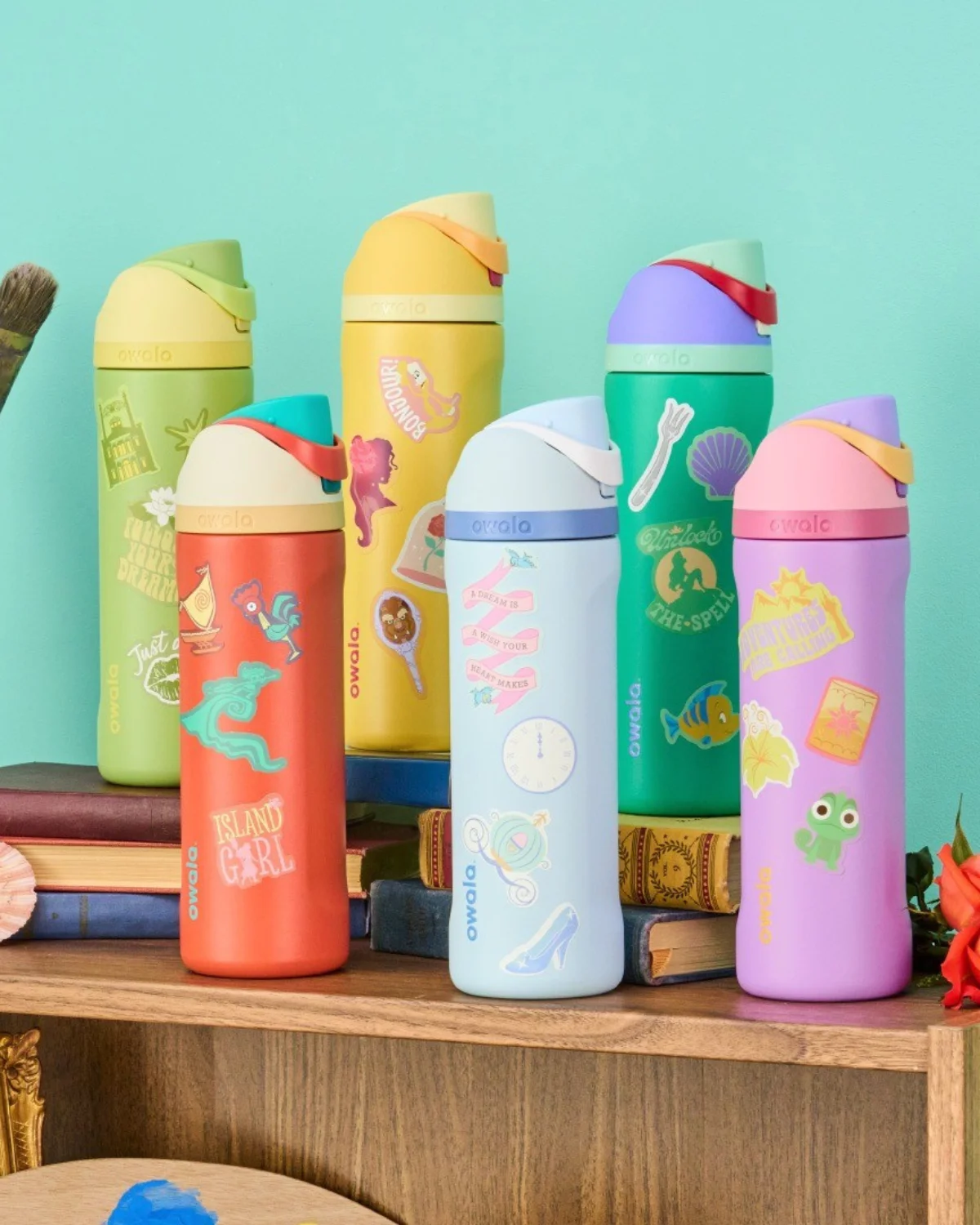
Owala publicly states that its insulated stainless steel bottles use a lead-free sealing process, which is a critical transparency point for vacuum-insulated designs.
The bottle body is made from 18/8 stainless steel, and the interior is unlined.
The 16 oz FreeSip model is particularly practical for school because it allows kids to sip upright through the internal straw or tilt back for a chug-style drink — without changing lids.
The locking push-button cover keeps the mouthpiece protected inside backpacks, and replacement lids and straws are available.
Like most insulated school bottles, the lid includes BPA-free plastic and silicone components, which require regular deep cleaning to prevent buildup in straw pathways.
While the lid design is slightly more complex than simpler sport caps, the brand’s material disclosures and lead-free statements make it one of the strongest insulated options for daily school use.
Price
~$28–$32
Materials
18/8 stainless steel body; BPA-free polypropylene lid; food-grade silicone straw and gasket; lead-free insulated sealing process
location/shipping
Ships within the U.S. and internationally
5. Camelbak Eddy+ Kids (12 oz)
Best For: Elementary school kids who prefer a soft straw with strong spill resistance
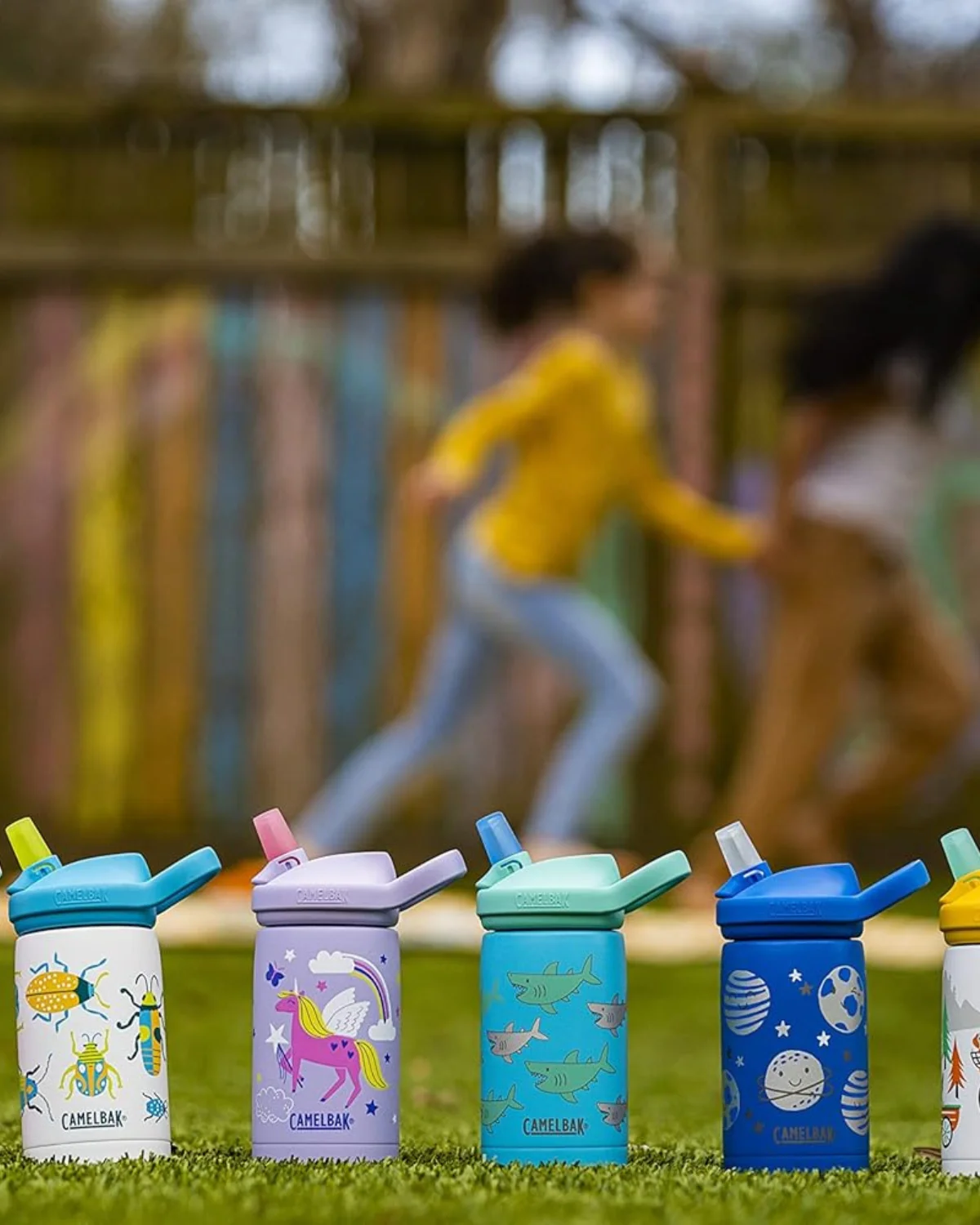
The Camelbak Eddy+ Kids Bottle uses 304 stainless steel in its insulated body and includes a bite-valve straw design that reduces spills inside backpacks.
The 12-oz size is appropriate for elementary school students and is lightweight enough for smaller hands to manage comfortably.
Camelbak states that its products meet U.S. and EU safety standards and that accessible components are free from BPA, BPS, and BPF.
Replacement straws and valves are widely available, which is important for long-term use since soft bite valves wear down over time.
While Camelbak is less explicit than Klean Kanteen about the exact insulation sealing method used at the vacuum base, the brand does confirm compliance with lead safety standards and conducts third-party testing.
For families who want a school-friendly straw design with reasonable material transparency, this remains a practical insulated option.
Price
~$22–$30
Materials
304 stainless steel insulated body; BPA-, BPS-, and BPF-free polypropylene lid; silicone bite valve; insulated vacuum construction
location/shipping
Ships within the U.S. and internationally
6. Elk and Friends Stainless Mason Bottle (10 oz / 14 oz)
Best For: Families who want stainless durability with clear material disclosure and simple construction
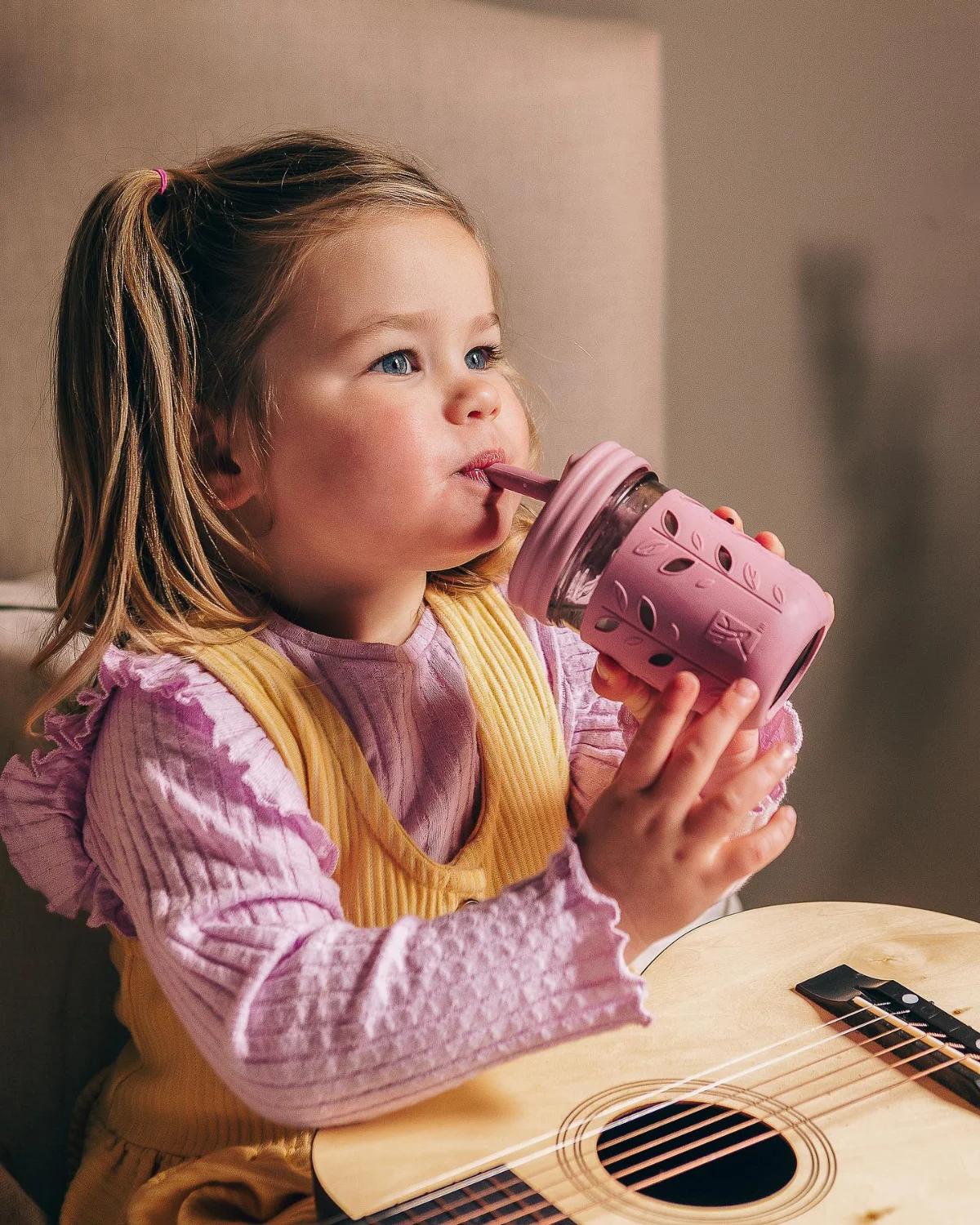
Elk and Friends uses 304 (18/8) stainless steel for its bottle body and clearly identifies core materials in both the bottle and lid components.
The interior is unlined, and the brand states that products are independently tested for lead and cadmium at CPSC-accredited laboratories.
The 10 oz and 14 oz sizes are appropriate for school use, and the wide-mouth design makes cleaning straightforward — an important factor for straw-based bottles.
Replacement lids, straws, and sleeves are available, which helps extend the usable lifespan and prevents worn components from staying in rotation too long.
While the lid assembly does include BPA-free plastic and silicone components (as most school bottles do), the brand is more specific about materials than many competitors.
For families who want stainless steel durability without vague “eco” marketing language, this is a practical and reasonably transparent option for everyday school hydration.
Price
~$28–$35 depending on size
Materials
304 (18/8) stainless steel body; BPA-free lid components; food-grade silicone straw and gasket; independently tested for lead and cadmium
location/shipping
Ships within the U.S. and select international locations
How We Evaluated These Kids’ Water Bottles
Every bottle in this guide was reviewed against Toxic Free Choice transparency standards.
Each product was evaluated for:
- Steel grade disclosure
- Insulation seal disclosure
- Lid material transparency
- Replacement part availability
- Recall history
- Regulatory alignment with FDA food-contact standards and EU Regulation (EU) No 10/2011, where applicable
Brands that failed to disclose material composition or sealing methods were excluded.
Why Some Popular Kids’ Water Bottles Didn’t Make This List
The following widely sold kids’ water bottle brands were reviewed but excluded due to incomplete material disclosure or lack of clear vacuum seal transparency at the time of writing:
- YETI Rambler Jr.
- Thermos Funtainer
- Simple Modern Summit Kids
- Takeya Kids
- Contigo Kids
- Iron Flask Kids
- Reduce Kids
- Hydro Cell
- SIGG Kids (Aluminum line)
In most cases, these brands:
- Do not clearly disclose the exact method used to seal insulated vacuum bases.
- Do not provide SKU-specific heavy metal or solder confirmation.
- Do not consistently specify stainless steel grade (18/8 or 304).
- Rely on general compliance statements rather than detailed construction transparency.
This does not automatically mean these bottles are unsafe. It means the brands do not currently provide the level of material disclosure required to meet Toxic Free Choice transparency standards.
If a brand updates its public documentation to clearly disclose steel grade and lead-free sealing methods, it will be reconsidered.
Kids’ Water Bottles For School vs. Sports vs. Travel
Not all hydration needs are the same.
Elementary School (Ages 5–10)
- 12–18 oz
- Insulated stainless steel
- Simple straw or flip lid
- Replacement parts available
- Lightweight
Middle School & Teens
- 18–20 oz
- Stronger insulation
- Leak-proof locking lid
- Durable powder coat
Sports & Outdoor Use
- 20 oz+
- High insulation performance
- Wide mouth for ice
- Impact-resistant base
Travel or Backup Bottle
- Collapsible silicone
- Single-wall stainless
- Lightweight glass for supervised use
For family hikes or adult use, see our full Lead-Free Water Bottle Guide covering larger sizes and performance bottles.
🚩 Red Flags When Choosing a Kids’ Water Bottle for School
Not every bottle needs to be replaced immediately. But certain signs — especially in insulated stainless steel designs — deserve attention.
Replace Immediately
- Loose, cracked, or missing base cap on an insulated bottle. The vacuum seal is typically located at the base. If that area is exposed or damaged, replace the bottle.
- Severe denting at the bottom seam of an insulated bottle. Playground drops happen. But deep base dents compromise structural integrity and warrant replacement.
- Visible metal exposure, corrosion, or residue at the bottom. Any exposed internal layer or irregularity at the base is a stop-use signal.
- Bottles involved in confirmed CPSC safety recalls. Always check recall databases before continuing use.
Monitor Closely
- Chipping powder coat near seams or base areas. Exterior coatings shouldn’t affect interior safety, but flaking around seams may signal structural wear.
- Deep interior scratches. While stainless steel is durable, heavily scratched interiors can trap residue and become harder to clean properly.
- Straw valves that are sticky, stretched, or difficult to clean. School bottles with hidden straw pathways require regular inspection. Worn silicone valves should be replaced, not ignored.
- Bottles that no longer maintain temperature properly. Loss of insulation may indicate compromised vacuum integrity.
Avoid Before Purchase
- No disclosure of steel grade (18/8 or 304). “Stainless steel” alone is not specific enough.
- No explanation of how the vacuum seal is made. Brands that avoid addressing insulation sealing methods lack transparency.
- Vague “BPA-free plastic” labeling with no polymer breakdown. Polypropylene? Tritan? Unknown resin? Transparency matters.
- Heavy decorative coatings with no material disclosure. Bright graphics and character wraps should come with material clarity.
- No replacement lids or straw components available. School bottles take wear. If you can’t replace parts, the whole bottle gets prematurely discarded.
- Oversized, heavy bottles marketed to elementary kids. Bottles above 18–20 oz may strain smaller hands and are more likely to be dropped frequently.
- No publicly stated lead-free claim for insulated kids’ water bottles.
💬 Frequently Asked Questions About Non-Toxic Kids Water Bottles
Yes — most insulated kids’ water bottles are safe when properly constructed and undamaged. The stainless steel itself is not the issue.
The concern relates to how the vacuum insulation at the base is sealed. Brands that clearly disclose lead-free sealing methods provide stronger transparency for daily school use.
Food-grade 18/8 (304) stainless steel does not contain lead in the liquid-contact surface.
The concern applies to some double-wall insulated designs where a small solder dot may be used to seal the vacuum base.
In certain recalled products, the solder contained lead. It does not touch the water, but if the base is severely damaged, it can become accessible.
The safest kids’ water bottle for school is made from 18/8 (304) stainless steel with a clearly disclosed lead-free vacuum seal — or a single-wall design that eliminates the insulation seal entirely.
Bottles that provide full material transparency, steel grade disclosure, and replacement lid availability rank highest under Toxic Free Choice standards.
For most elementary students, a 12–18 oz kids water bottle is ideal. It provides enough hydration without being too heavy for smaller hands or too large for backpack side pockets.
Middle school students may prefer 18–20 oz for longer school days or sports.
A 12-oz bottle is usually easier for kindergarten through early elementary students to manage independently.
An 18-oz bottle works well for older elementary students who need more hydration but can comfortably carry the added weight.
Single-wall stainless steel kids’ water bottles eliminate the vacuum seal entirely. This removes uncertainty about base sealing methods. The tradeoff is reduced temperature control and possible condensation.
“BPA-free” means bisphenol A is not used, but it does not clarify what material replaced it.
Plastic kids’ water bottles should be inspected regularly for scratching, clouding, or warping. Brands that disclose polymer types and provide replacement lids offer stronger transparency.
Straw lids are safe when made from clearly disclosed materials like food-grade silicone and polypropylene.
However, straw systems require regular cleaning. Hidden valves and narrow channels can trap moisture and residue if not properly maintained.
Most stainless steel bodies are dishwasher safe, but repeated high-heat cycles may degrade exterior coatings or lid components over time. Always follow manufacturer guidance, and inspect seals and valves regularly for wear.
Aluminum bottles typically use an internal liner to prevent metal contact with liquids. The safety depends on the liner material and its stability.
Brands that clearly disclose liner composition and testing standards provide stronger transparency than those that do not.
There is no fixed timeline. Replace immediately if the insulated base is damaged, the cap is cracked, interior surfaces are heavily scratched, or straw valves are stretched or sticky. Daily school use creates wear, so periodic inspection is important.
Minor side dents are usually cosmetic. Deep dents at the base of an insulated kids’ water bottle are more concerning because the vacuum seal is typically located there. If the base is severely compromised, replacement is recommended.
For most elementary students, yes. Larger 24-oz insulated bottles can become heavy when full and increase drop risk. They are better suited for teens or sports use rather than daily classroom hydration.
Yes. Children absorb lead more easily than adults, and their neurological systems are still developing.
The CDC has established that no safe level of lead exposure exists for children, which is why construction transparency and bottle integrity matter for products used daily.
Avoid:
-No steel grade disclosure
– No insulation sealing disclosure
– Painted interiors
– No replacement lids available
– Vague “BPA-free plastic” labeling
– Extremely low-cost insulated bottles with no brand transparency
Final Takeaway: Choose Transparency Over Trends
Most kids will go through multiple water bottles during their school years. The goal isn’t to panic or replace everything overnight — it’s to understand what you’re buying and make better decisions as items naturally wear out.
For daily school use, the safest kids’ water bottles prioritize:
- 18/8 (304) stainless steel construction
- Clear lead-free vacuum seal disclosure (for insulated models)
- Identified lid and straw materials
- Replacement parts availability
- Real transparency over marketing language
Single-wall stainless steel bottles eliminate insulation concerns entirely. Insulated bottles can be perfectly reasonable — but only when brands clearly disclose how the base is sealed.
Material clarity matters more than branding. After reviewing dozens of products, the most consistent signal of safety wasn’t price or popularity — it was transparency.
Start with the bottle your child uses most often. Inspect it periodically. Replace it when it shows structural wear. And prioritize brands that openly explain what their products are made of.
Pair Your Non-Toxic Kids’ Water Bottles With:
- 🥪 Non-Toxic Lunch Boxes → Safer lunch box options made without PVC, phthalates, lead, or PFAS-treated linings for everyday school meals.
- 🍎 Non-Toxic School Snacks → A vetted guide to cleaner snack options made without artificial dyes, questionable preservatives, or problematic food packaging materials.
- ✏️ Non-Toxic School Supplies → Back-to-school essentials made without heavy metals, toxic dyes, or high-VOC materials commonly found in conventional supplies.
- 🥤 Non-Toxic Kids Cups → Lead-free, BPA-free kids cups made from safer materials like stainless steel, silicone, and glass for daily hydration.
- 🚰 Lead-Free Water Bottle → A safety-focused guide to water bottles made without lead sealing components, with transparent construction and safer materials.
📌 Save This Pin For Later
If you’re shopping for a non-toxic, lead-free kids water bottle, this guide breaks down what actually matters — from stainless steel construction and sealing components to BPA-free lids and long-term durability.
Bookmark this pin so you can come back when it’s time for back-to-school, replacements, or safer everyday hydration for your kids.
Sources & Further Reading
The following regulatory guidance and safety resources informed this materials-based review:
- U.S. Consumer Product Safety Commission (CPSC)
Water bottle recalls related to federal lead content violations
https://www.cpsc.gov/Recalls - Centers for Disease Control and Prevention (CDC)
Lead exposure guidance and updated blood lead reference values
https://www.cdc.gov/nceh/lead/ - European Food Safety Authority (EFSA)
2023 reassessment of BPA tolerable daily intake
https://www.efsa.europa.eu/ - U.S. Food & Drug Administration (FDA)
Food-contact substance regulations and bisphenol guidance
https://www.fda.gov/food - European Commission – Regulation (EU) No 10/2011
Plastic materials intended for food contact
https://eur-lex.europa.eu/ - Electronic Code of Federal Regulations (21 CFR Part 177)
Indirect food additives: Polymers
https://www.ecfr.gov/current/title-21/chapter-I/subchapter-B/part-177