This post may contain affiliate links. By browsing this website, you agree to our disclaimer, privacy policy, and terms of use.
✅ Jump to:
- Why Make Homemade Body Wash
- Essential Oil Safety
- Homemade Body Wash Recipes
- Common Problems & Fixes
- Seasonal Recipe Ideas
Looking for a body wash that’s safe for your skin, free from toxins, and simple to make?
This guide walks you through why and how to make your own homemade body wash using clean ingredients you can trust — plus three skin-friendly recipes you’ll love.
Over a decade ago, I made it my mission to reduce the number of toxic chemicals in our home, especially in the products my family uses every day.
With sensitive skin all around, I knew we all could benefit from gentler, more natural products in our homes.
Some swaps were simple, bamboo toothbrushes instead of plastic, non-toxic laundry detergent, and reusable silicone snack bags. Others took a little more trial and error (homemade deodorant, I’m looking at you 👀).
One of the switches I wish I had made earlier was ditching store-bought body wash in favor of making my own homemade body wash versions at home.
I’ll admit, I used to be all about that “squeaky clean” feeling. I assumed the more foam and bubbles, the cleaner my skin was getting.
What I didn’t realize? That lather comes from harsh surfactants and synthetic ingredients that were stripping my skin’s natural oil, disrupting my microbiome, and possibly even affecting my hormones.
Once I switched to a homemade body wash my skin felt softer. Less irritated. And I had full control over every ingredient I used. The truth is, real cleansing doesn’t require foam, it requires balance.
In this guide, I’ll show you exactly how to make your own homemade body wash using gentle, effective ingredients you can trust.
I’ve also included some of my favorite DIY natural body wash recipes, tips, and everything I wish I had known when I first made the switch.
Why You Should Switch to Homemade Body Wash
So, body wash is probably one of those products that you’ve been buying for years without thinking twice about it.
But it’s worth giving that ingredient list a second look. If you’re using the average drugstore brand, chances are it looks like it’s written in an entirely different language.
Let me help you translate a little bit. Here are some of the worst toxic chemicals commonly found in a lot of body wash brands you definitely want to steer clear of:
- Sulfates (SLS/SLES): Are added to body wash to create that bubbly lather we’ve been trained to associate with “clean.” But sulfates are harsh detergents that can strip your skin’s natural oils and disrupt the skin barrier. They’ve also been linked to inflammation and long-term sensitivity, especially for people with eczema or acne-prone skin.
- Parabens: Are used to extend shelf life and prevent mold and bacteria from growing in products. The problem? Parabens can mimic estrogen in the body and have been linked with breast cancer. While science is still evolving, best just to avoid them altogether.
- “Fragrance”: Is a single word that can legally hide dozens (sometimes hundreds) of toxic synthetic chemicals that have been associated with headaches, skin irritation, and hormone disruption, especially in children and pregnant people.
- Formaldehyde Releasers (like DMDM Hydantoin): Are added to help prevent microbial growth. But they work by slowly releasing formaldehyde (a known human carcinogen) over time. Even small, repeated exposures to products like body wash have raised concern, especially when used on broken or sensitive skin.
Avoiding these nasty chemicals was one of the main reasons I decided to start making my own homemade body wash. I love that,
- I’m in charge of every single ingredient.
- I can customize the recipe to suit exactly what my skin needs, depending on the season (dry, sensitive, or somewhere in between).
- And for the price of one fancy bottle at the store, I can make multiple batches at home.
It’s simple. It’s satisfying. And it’s such peace of mind knowing exactly what I’m putting on my skin every day.
Why DIY Natural Body Wash Works (And What Makes It Effective)
- Honey: The secret weapon in many homemade body wash recipes, honey is both a natural humectant (draws moisture into the skin) and a mild surfactant. This means it can gently lift away dirt and grime without stripping your skin’s natural oils.
- Plant-Based Oils: Ingredients like jojoba, sweet almond, and avocado oil closely mimic the composition of our skin’s natural sebum. They work to replenish and protect the moisture barrier, keeping skin soft and supple while working in tandem with the castile soap to cleanse.
- Castile Soap: This do-everything ingredient, made from pure olive oil (or sometimes coconut or hemp oil), is unstoppable when it comes to natural cleansing. It effectively removes dirt and bacteria without harsh synthetic detergents, making it gentle enough for sensitive skin yet strong enough to tackle tough odors.
Supplies & Ingredients for Making Homemade Body Wash at Home
The beauty of making your own DIY natural body wash? You don’t need a lab or fancy equipment.
Just a few basic tools and ingredients, most of which you probably already have in your kitchen or bathroom cabinet.
Basic Supplies
- Mixing bowl
- Spoon or whisk
- Funnel (optional, but helpful for bottling without spills)
- Reusable bottles or glass jars (preferably amber glass to protect essential oils)
- Sometimes a blender or food processor can help to really incorporate the ingredients, but you can make all of these recipes without either.
Tip: If you’re gifting a batch, upcycle a pretty jam jar or grab a pump top for easy shower storage.
Key Ingredients
- Liquid Castile Soap: The star of the show. This biodegradable, plant-based soap (often olive- or coconut-oil-derived) is gentle, effective, and perfect for sensitive skin. It creates a light, non-stripping lather. No harsh sulfates are required.
- Raw Honey: Naturally antibacterial and deeply hydrating, honey also helps thicken the formula and boost natural suds. Plus, it’s packed with skin-loving enzymes and antioxidants.
- Carrier Oils (like jojoba, sweet almond, or avocado): These moisturizing oils add softness, vitamins, and nourishment to your wash. Start with 1–2 tablespoons per batch to avoid a greasy feel.
- Essential Oils: A drop or two of lavender, sweet orange, or eucalyptus can add aromatherapy benefits. But proceed with caution when opting to use essential oils. While they may be all-natural, they aren’t without risk. We’ll walk you through safe use in the next section.
- Dried or Fresh Citrus Peels (lemon, orange, grapefruit): These can be steeped in carrier oils or castile soap to add a natural scent boost and a light hit of brightening antioxidants. Just make sure the peels are thoroughly cleaned!
- Vitamin E or Rosemary Extract: These antioxidant-rich additions help naturally preserve oil-based recipes, especially if you’re making a larger batch. A little goes a long way (think 5–10 drops per 8 oz).
With your homemade body wash kit stocked and ready, you’re just a few steps away from a clean, customized, non-toxic body wash.
But before we dive into mixing, let’s take a moment to talk about essential oil safety, because not all “natural” ingredients are created equal.
Are Essential Oils Safe in Homemade Body Wash? What to Know
Recently, using essential oils has become pretty mainstream and they are often praised for their aromatherapy and skin health benefits.
But here’s the thing, just because something is natural doesn’t mean it’s automatically safe.
Essential oils are extremely concentrated plant extracts, often 75 to 100 times more potent than the original botanical.
Some studies have linked lavender and tree essential oils with weak estrogenic activity, which may contribute to hormone imbalances over time.
Some researchers have even raised concerns about potential long-term risks, but evidence linking lavender oil directly to cancer is still evolving and results aren’t conclusive yet.
And don’t get me wrong, essential oils have their place in DIY skincare. They can bring a lovely natural scent, some therapeutic benefits, and help to recreate those scents that so many love in store-bought body washes.
But essential oils need to be used with care, especially in products that you apply often like body wash.
Use Essential Oils With Caution in Your Homemade Body Wash
- Stick to 6 drops or less per 1 oz. of body wash base. More than that can irritate even healthy, resilient skin.
- Always do a patch test. Even “gentle” oils can trigger reactions depending on your skin, hormones, or immune system.
- Never apply undiluted EOs directly to the skin. Always mix them into a carrier oil or a product base like soap or lotion.
Best Essential Oils for Homemade Body Wash (And What to Avoid)
- Chamomile (Roman or German): Calming, anti-inflammatory, great for dry or sensitive skin.
- Frankincense: Supports skin repair and barrier strength.
- Sandalwood: Moisturizing and grounding, but use sparingly — it’s very potent.
Essential Oils to Use With Extra Care in DIY Non-Toxic Body Wash
- Cinnamon, Clove, and Oregano: Antibacterial powerhouses, but also very irritating in body wash. Better saved for cleaning.
- Tea Tree and Lavender: May interfere with hormone activity in children and pregnant people. Best to skip if you’re in either group.
- Citrus Oils (lemon, bergamot, grapefruit): Can increase your skin’s sensitivity to sunlight. Always pair with SPF and avoid direct sun after use.
When in Doubt, Leave Them Out of Your DIY Natural Body Wash
Here’s my stance. The safest scent option is no scent at all. I know, it’s not the most glamorous answer.
But if you’ve got sensitive skin, a house full of little ones, or you’re just playing it safe, unscented really is best when you’re aiming to go non-toxic. That doesn’t mean it’s boring.
A body wash made with castile soap, honey, nourishing oils, and a little aloe still feels rich, creamy, and luxurious without the added risk.
Or, if you just can’t live without a little scent I recommend making your own citrus peel infusions. I’ve included a DIY recipe below on how to do this.
3 Easy Homemade Body Wash Recipes (DIY Non-Toxic & Natural)
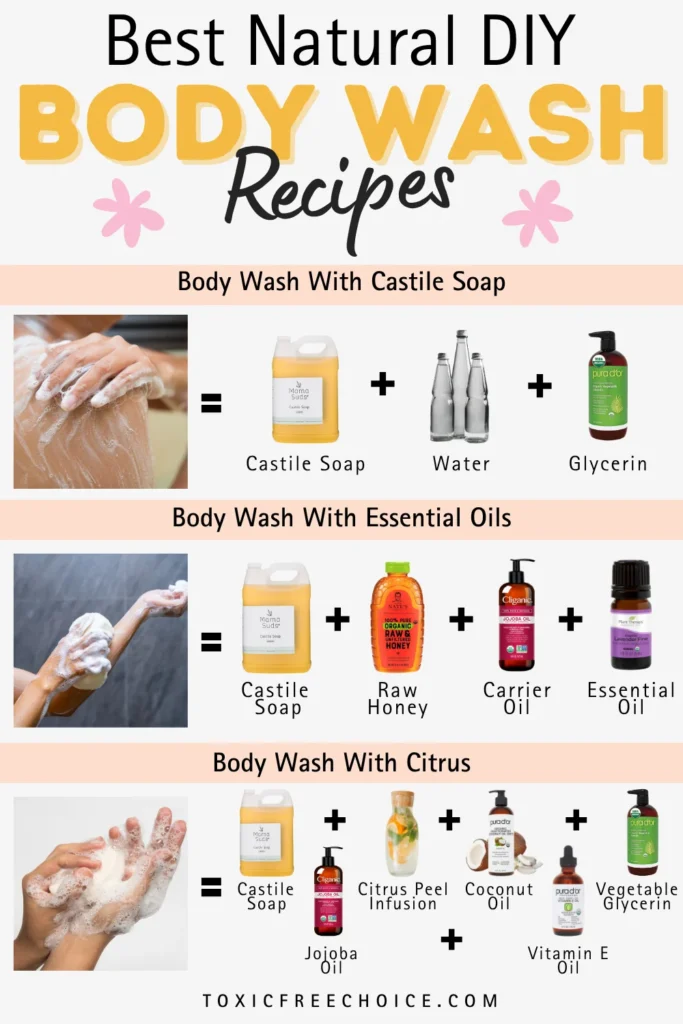
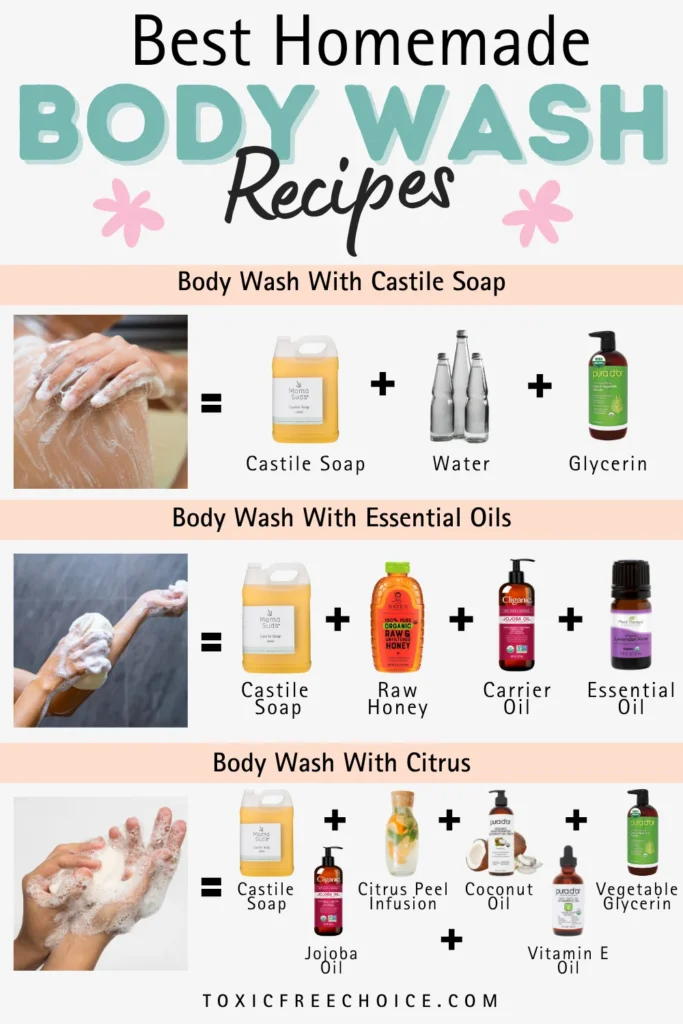
1. Homemade Body Wash With Castile Soap Base
From: Tried & True
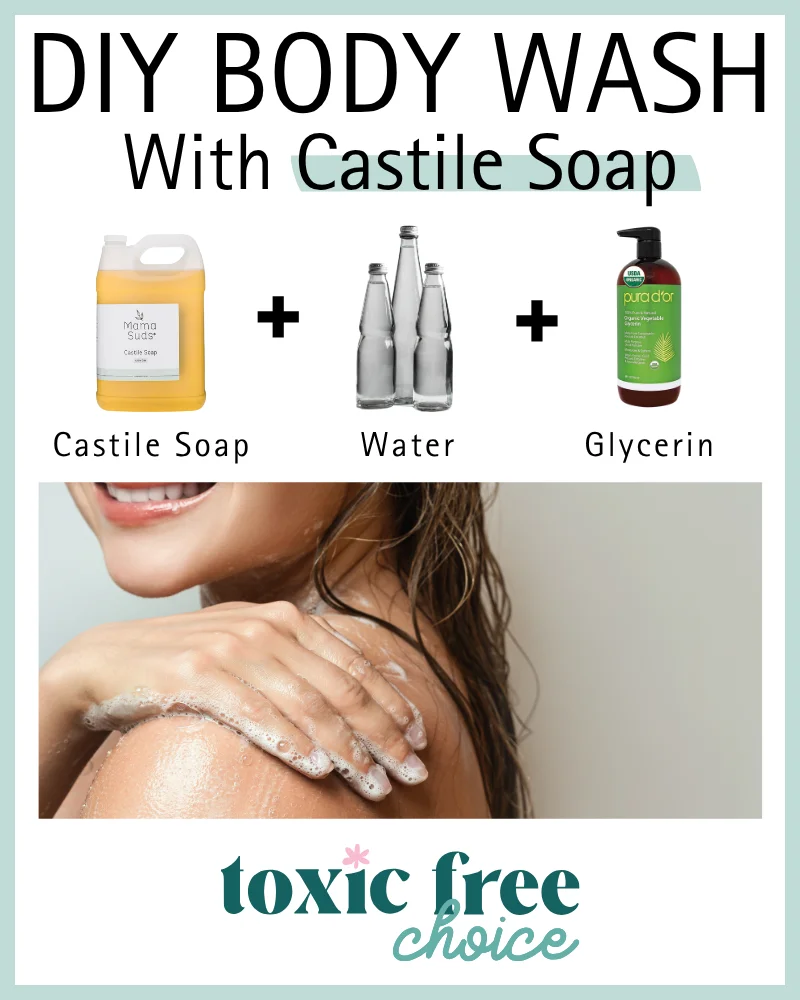
This homemade body wash recipe is simple, cost-effective (around $4 for a large batch), and produces a moisturizing body wash with a gentle lather
Ingredients
- 1 bar pure Castile soap, grated
- 12 cups water (3 quarts water)
- 2 tablespoons glycerin
Instructions
- Bring 12 cups of water to a soft simmer in a large pot.
- Add the grated Castile soap to the simmering water.
- Stir continuously until the soap is completely melted into the water.
- Turn off the heat and add 2 tablespoons of glycerin, mixing well.
- Cover the pot and let the mixture sit undisturbed for 24 hours.
- After 24 hours, the mixture will thicken. If it becomes too gelatinous, use a hand mixer to break it up until it reaches a smooth, pourable consistency.
- Pour the finished body wash into containers for use.
Optional
- Add a small amount of sunflower oil or your preferred carrier oil for extra moisturizing properties.
- Add a few drops of essential oils for fragrance if desired.
Tips
- If the body wash is too thick, add more hot water and mix thoroughly.
- If it’s too runny, melt it and add more grated soap.
- Shake before each use, as homemade body wash may separate over time.
2. Homemade Body Wash With Essential Oils
From: Mommypotamus
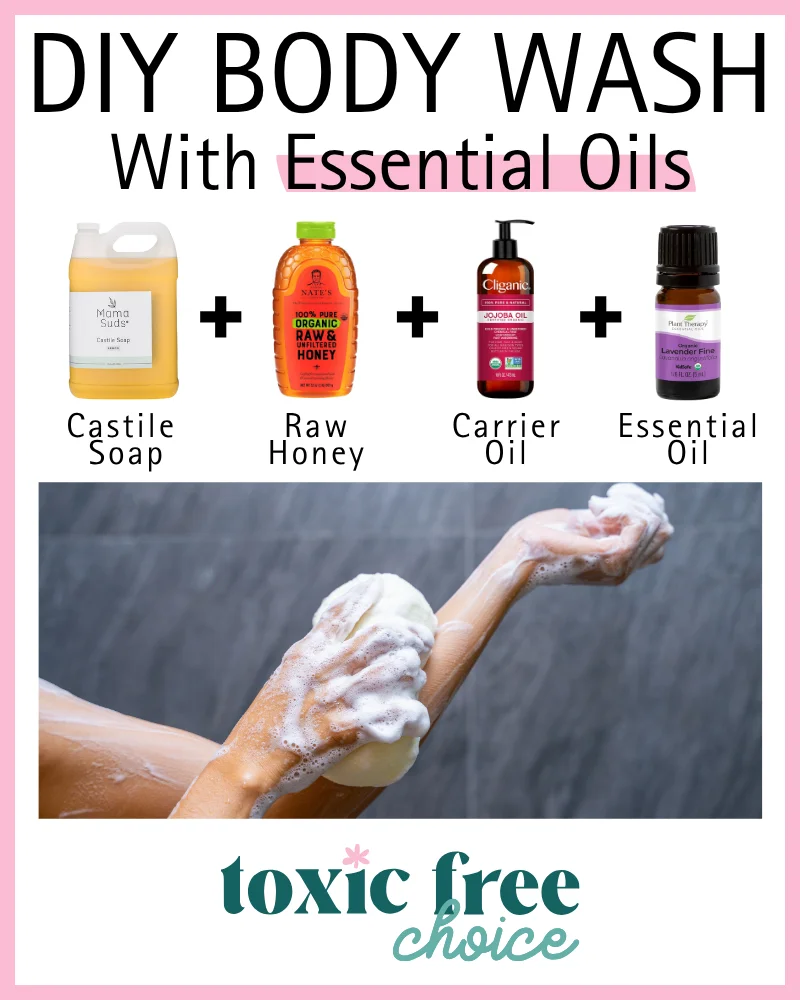
This homemade body wash recipe creates a moisturizing, bubbly lather that is gentle enough for most skin types and can be stored for up to a year.
Just keep it outside of the shower and in a cool dry place when not in use.
Ingredients
- ⅓ cup liquid castile soap
- ⅓ cup honey (preferably raw)
- ⅓ cup carrier oil (such as olive, jojoba, refined avocado, fractionated coconut oil, or sweet almond oil)
- 30–60 drops essential oil (optional)*
*I recommend using far fewer drops than this recipe suggests (around 6 drops per ounce) to avoid skin irritation, especially if you have sensitive skin.
Equipment
- Bowl or blender
- Mixing spoon
- Squeeze-top or pump-top soap dispenser
Instructions
- Combine all ingredients in a bowl and mix thoroughly, or place them in a blender and blend until fully combined.
- Pour the mixture into a squeeze-top or pump-top soap dispenser.
To Use
- Shake the dispenser well before each use, as the mixture may separate over time.
- Dispense onto a soft natural sponge, loofah, or washcloth and use as you would any body wash.
3. Citrus-Infused Homemade Body Wash
From: Hello Glow | With some adjustments
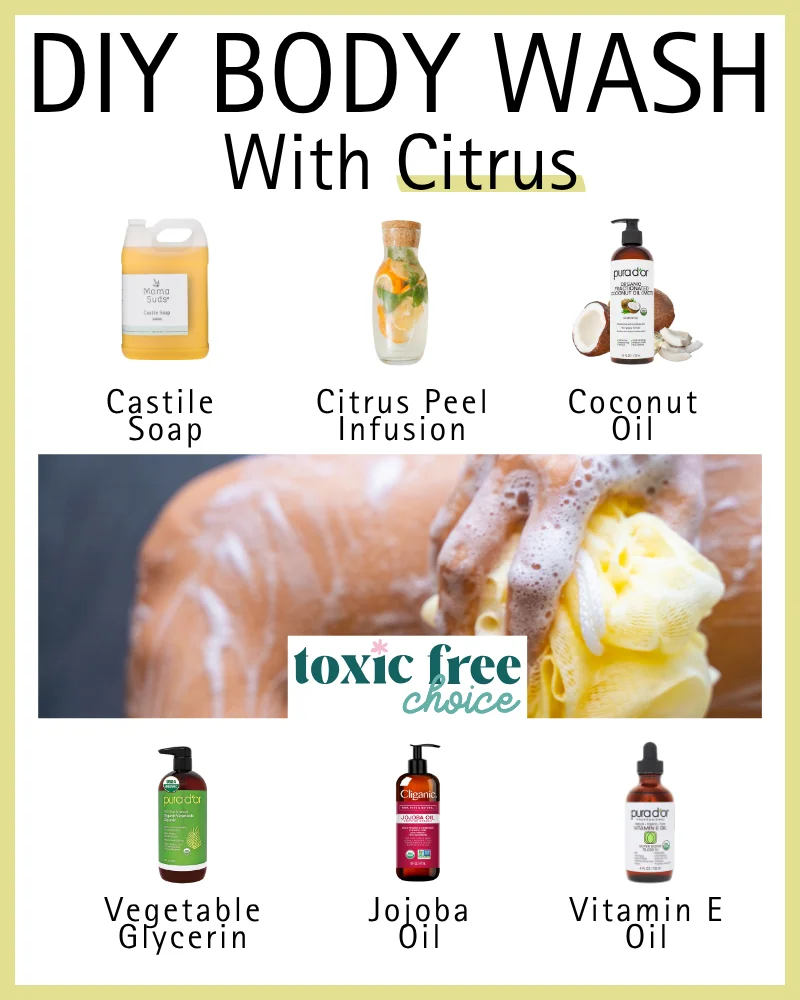
This DIY citrus peel-infused body wash is a gentle, moisturizing alternative to using essential oils to scent your body wash.
It’s great if you have easily irritated or sensitive skin.
The natural citrus infusion gives a fresh, light scent and a touch of vitamin C while nourishing oils leave your skin soft, smooth, and refreshed.
Ingredients
- ½ cup + 2 tablespoons liquid Castile soap (unscented or any variety)
- 2 tablespoons citrus peel infusion (see instructions to the right)
- 2 tablespoons fractionated coconut oil (or almond, olive, or grapeseed oil)
- 2 tablespoons vegetable glycerin (optional, for extra moisture)
- 1 tablespoon jojoba oil
- 1 tablespoon vitamin E oil
Equipment
- Small saucepan or heat-proof jar for infusion
- Fine mesh strainer or cheesecloth
- A small bowl or measuring cup for mixing
- Pump bottle or glass jar with pump dispenser
Citrus Peel Infusion Instructions
- Collect peels from organic oranges, lemons, or grapefruits. Rinse well to remove any residue.
- Place a handful of fresh or dried citrus peels in a small saucepan.
- Add ½ cup distilled water and bring to a simmer.
- Cover and let simmer for 10–15 minutes.
- Remove from heat and let the mixture steep until cool (about 1 hour).
- Strain the liquid through a fine mesh strainer or cheesecloth to remove all peel pieces. Measure out 2 tablespoons of the citrus infusion for your body wash.
Body Wash Instructions
- In a bowl or measuring cup, combine the liquid Castile soap, citrus peel infusion, fractionated coconut oil, vegetable glycerin, jojoba oil, and vitamin E oil.
- Stir well until fully blended.
- Pour the mixture into a pump bottle or jar.
- Shake well before each use, as the ingredients may separate over time.
Additional Tips
- Moisturizing benefits: Fractionated coconut oil, jojoba oil, and vitamin E oil nourish and hydrate skin without clogging pores.
- Glycerin helps draw moisture to the skin’s surface.
- Citrus infusion provides a natural, gentle citrus scent. Essential oils can be added for a stronger fragrance.
- Sun sensitivity: Citrus essential oils can increase sun sensitivity—use sunscreen if exposed to sunlight after use.
- If the body wash thickens or solidifies, add more Castile soap and stir to loosen it.
- Make fresh batches every 2–3 months to avoid bacterial growth, since there are no preservatives.
- Shake before use to keep the mixture well blended.
- For antibacterial properties, add essential oils like tea tree, cinnamon, or clove.
Homemade Body Wash Recipes for Every Season: Winter & Summer Skincare Tips
Just like your wardrobe, your homemade body wash routine can use a little seasonal tweaking too.
One of the best things about making homemade bodywash is that you can customize the ingredients to match exactly what your skin needs—whether it’s the middle of a cold and dry winter or you’re trying to beat the summer heat.
Best Homemade Body Wash Ingredients for Winter Skin
Winter woes is there anything worse than itchy, irritated winter skin?
The cold weather and dry indoor heat conspire to zap every last drop of moisture, leaving us flaky, ashy, and all-around uncomfortable.
To keep the scales at bay, I like to boost my DIY natural body wash blends with heavier, ultra-hydrating oils like,
All of these options are rich in skin-quenching fatty acids and vitamins that nourish parched skin back to supple radiance.
As much as I love coconut oil and cocoa butter for wintertime, I don’t recommend adding them to your homemade body wash since they tend to separate and solidify in colder temperatures.
If you want to up the cozy factor during the winter months, you could add warming essential oils like nutmeg, cinnamon, and vanilla.
Just remember to go easy on the cinnamon essential oil since it can burn dry, irritated skin.
Best Homemade Body Wash Ingredients for Summer Skin
Blazing sun, relentless humidity, sweat mingling with copious layers of SPF… our skin is working overtime, and the last thing it needs is a body wash that is going to feel heavy or oil on your skin.
When the summer months hit I like to include some cooling aloe vera gel or infuse my own castile soap with cucumber to help cool and refresh my skin when I’ve been out in the summer sun a little too long.
I also love to use peppermint castile soap for a little cooling effect when the summer heat gets to be unbearable.
I highly recommend steering clear of using essential oils in your summer body wash recipes since they can increase photosensitivity and increase your likelihood of getting sunburned.
Troubleshooting Your Homemade Body Wash: Texture, Lather & Separation
Separation Issues
If you notice your body wash separating into distinct layers, don’t worry. This is a common occurrence, especially in recipes that include oils.
The solution is simple: give the bottle a thorough shake before each use to recombine the ingredients.
Too Thin?
If your body wash turns out thinner than desired, you can easily thicken it by adding more honey, glycerin, or aloe vera gel.
These ingredients are natural humectants that will increase the viscosity of your blend without diminishing its cleansing properties.
Too Thick?
Conversely, if your body wash is too thick, you can thin it out by gradually stirring in small amounts of distilled water.
Add the water one tablespoon at a time, mixing thoroughly after each addition, until you achieve the desired consistency.
Low Lather
Keep in mind that natural ingredients, particularly castile soap, may not produce as much lather as commercial body washes that contain synthetic foaming agents.
However, rest assured that your homemade body wash is still effectively cleansing your skin.
If you prefer more lather, try applying the body wash with a loofah or washcloth, as the added friction can help create more foam.
Skin Reactions
In the event that your DIY body wash causes any skin irritation, such as itching, redness, or rash, stop using it immediately.
Review the ingredients you used and try to identify which one may be causing the reaction. Essential oils are often the most likely culprits.
To prevent future issues, always perform a patch test before using a new recipe, and remember that simpler formulas with fewer ingredients are often the safest option for sensitive skin.
True Clean Goes Deeper Than Suds!
When it comes to healthy skin, more foam doesn’t mean cleaner skin.
In fact, those rich, bubbly suds we’ve been trained to love often come at the cost of a disrupted skin barrier, hidden irritants, and synthetic chemicals we can’t even pronounce.
Instead of chasing lather, choose ingredients that truly support your skin’s natural health.
Make your own homemade body wash using plant-based cleansers, moisturizing oils, and soothing botanicals—ingredients that nourish and protect. And the benefits go beyond your skin!
Why Choose DIY Natural Body Wash?
- You’re reducing plastic waste.
- You’re protecting waterways.
- You’re making small, conscious choices that ripple outward into something bigger.
Best of all? You don’t need fancy tools, a chemistry degree, or a massive budget to make homemade bodywash at home.
That kind of empowerment over your health, your home, and your habits is exactly what non-toxic living is all about.
And if you don’t feel like making your own, you can always check out our article on the Best Non-Toxic Body Wash Brands.
Check out our other amazing Non-Toxic Personal Care articles:
- Organic After-Sun Lotions | DIY & Store-Bought
- Most Toxic Ingredients To Avoid In Skincare
- Non-Toxic DIY Natural Deodorant Recipes
- Non-Toxic DIY Natural Deodorant Recipes
- Non-Toxic Lotions | DIY & Store-Bought
- DIY Non-Toxic Makeup Recipes
- Non-Toxic & Organic Lip Balm
- Non-Toxic Liquid Hand Soaps
- Non-Toxic Body Soap Bars
- Ways To Use Castile Soap
- Non-Toxic Face Wipes
- Non-Toxic Body Wash
- Non-Toxic Face Wash
- Non-Toxic Deodorant
- Non-Toxic Skincare
Like It? Pin It!