


This post may contain affiliate links. By browsing this website, you agree to our disclaimer, privacy policy, and terms of use.
Dinnerware touches your food every single day. Yet many plates, bowls, and cups are still made with materials that can leach toxic chemicals under heat, acidity, or repeated use.
If you’re trying to reduce your everyday toxin exposure in your kitchen, choosing non-toxic dinnerware is one of the simplest and most impactful ways to start.
This guide breaks down:
- Which dinnerware materials are safest
- What to avoid (and why)
- How heat and acidity affect toxic chemical leaching
- Plus, trusted brands and safer alternatives for everyday use
Why Dinnerware Safety Matters
Chemical leaching happens when the materials in your dinnerware break down and release unwanted substances.
These trace chemicals can migrate from your plates and bowls directly into your food, and some may pose serious health risks over time. Heat, acidity, and time are the biggest triggers.
That means:
- Hot soups, coffee, or tea
- Acidic foods like tomato sauce or citrus
- Microwaving or repeated reheating
…can all increase exposure, depending on the material.
Heat, acidity, and time are the biggest triggers for chemical leaching—which is why hot soups, acidic tomato sauces, and repeated microwaving can increase exposure.
Dinnerware isn’t the only source of kitchen chemical exposure. Reducing leaching across your kitchen means also thinking about non-toxic cookware, plastic-free electric kettles, non-toxic coffee makers, and even non-toxic air fryers.
So let’s start with the basics: which materials to avoid, and which ones you can feel good about using every day.
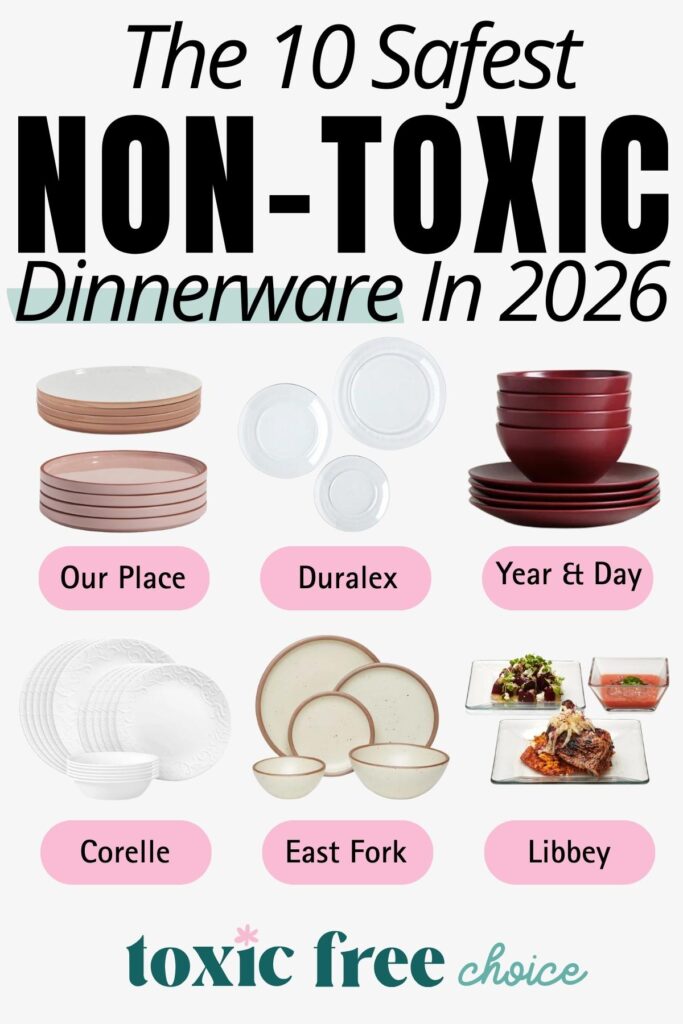
Materials To Avoid vs. Safer Alternatives
Here’s a quick visual breakdown to help you shop smarter.
🚫 Materials To Avoid
- 🔴 Melamine (especially for hot food)
- 🔴 Old or vintage ceramic
- 🔴 Heavily decorated glazes
- 🔴 Plastic dinnerware
- 🟡 Bamboo blends (often melamine-based)
✅ Safer Alternatives
- 🟢 Porcelain
- 🟢 Stoneware (lead-tested)
- 🟢 Plain white ceramic
- 🟢 Tempered or borosilicate glass
- 🟢 Stainless steel (for kids)
Now let’s get into why these materials matter and what to watch out for.
Melamine Dinnerware: What To Know
It’s easy to see the appeal of melamine plates. They’re lightweight and shatter-resistant, which makes them popular for kids and outdoor use.
The issue? Heat. Research and regulatory guidance show that melamine dinnerware can release harmful chemicals, including melamine monomers and formaldehyde, when exposed to:
- High temperatures
- Hot acidic foods
- Repeated heating over time
That’s why melamine is best reserved for cold foods and should not be used for hot meals or reheating.
Is Melamine Microwave-Safe?
Short answer: No. Regulatory guidance is clear that melamine tableware should never be heated in the microwave.
Microwave heating creates uneven hot spots, which accelerate material breakdown and increase toxic chemical migration, even during short heating cycles.
If you often reheat your food in the microwave, stick with dinnerware made from:
- Porcelain
- Plain ceramic
- Glass
These materials perform much better under heat and won’t break down over time.
Regulatory guidance is clear: melamine tableware should not be used in the microwave or for hot, acidic foods due to increased chemical migration.
Ceramic Dinnerware & Lead Concerns
Modern ceramic dinnerware is generally safer than vintage pieces, but not all ceramics are safe.
The FDA sets limits on how much lead is allowed to leach from ceramic dinnerware, but here’s what you should know:
- These are enforcement thresholds, not “safe” limits.
- Smaller vessels and pitchers have stricter standards.
- Compliance does not automatically mean “lead-free.”
Older or imported ceramics, especially those with bright colors or decorative patterns, are more likely to pose a health risk due to under-fired or lead-based glazes.
Dishes made before the 1980s may have used lead-based glazes, and some imported pottery from unregulated manufacturers may also be under-fired to save time and fuel, which compromises safety.
When in doubt, choose:
- Plain white ceramic
- Brands that disclose lead testing
- Modern manufacturing from reputable companies
For everyday meals, these options give you peace of mind without compromising style.
What About Cadmium?
Cadmium can also be present in ceramic glazes, particularly in decorative pottery. Cadmium concerns often overlap with lead risks, especially in brightly colored or decorative glazes.
The FDA maintains similar enforcement standards for cadmium migration, especially for imported pottery and decorative ceramics.
Because limits vary by product category, the safest approach is to:
- Avoid vintage or artisanal ceramics for food use.
- Choose brands that test for both lead and cadmium.
If you’ve inherited beautiful vintage dishes, they’re wonderful for display—just not for serving food.
A Quick Note on PFAS in Dinnerware
PFAS chemicals are most commonly associated with nonstick cookware and food packaging.
Current guidance from regulatory agencies and independent testing has not identified PFAS as a common component of reusable dinnerware materials.
That said, reducing PFAS exposure overall often overlaps with choosing safer kitchen essentials across the board:
- Non-Toxic Cookware
- Non-Toxic Water Filter Pitchers
- Non-Toxic Coffee Makers
- Plastic-Free Electric Kettles
All of these help reduce cumulative exposure from the kitchen as a whole.
The Best Non-Toxic Dinnerware Brands For 2026
Now that you know what to look for, here are our top picks for beautiful, durable, and safer dinnerware you can feel good about using every day.
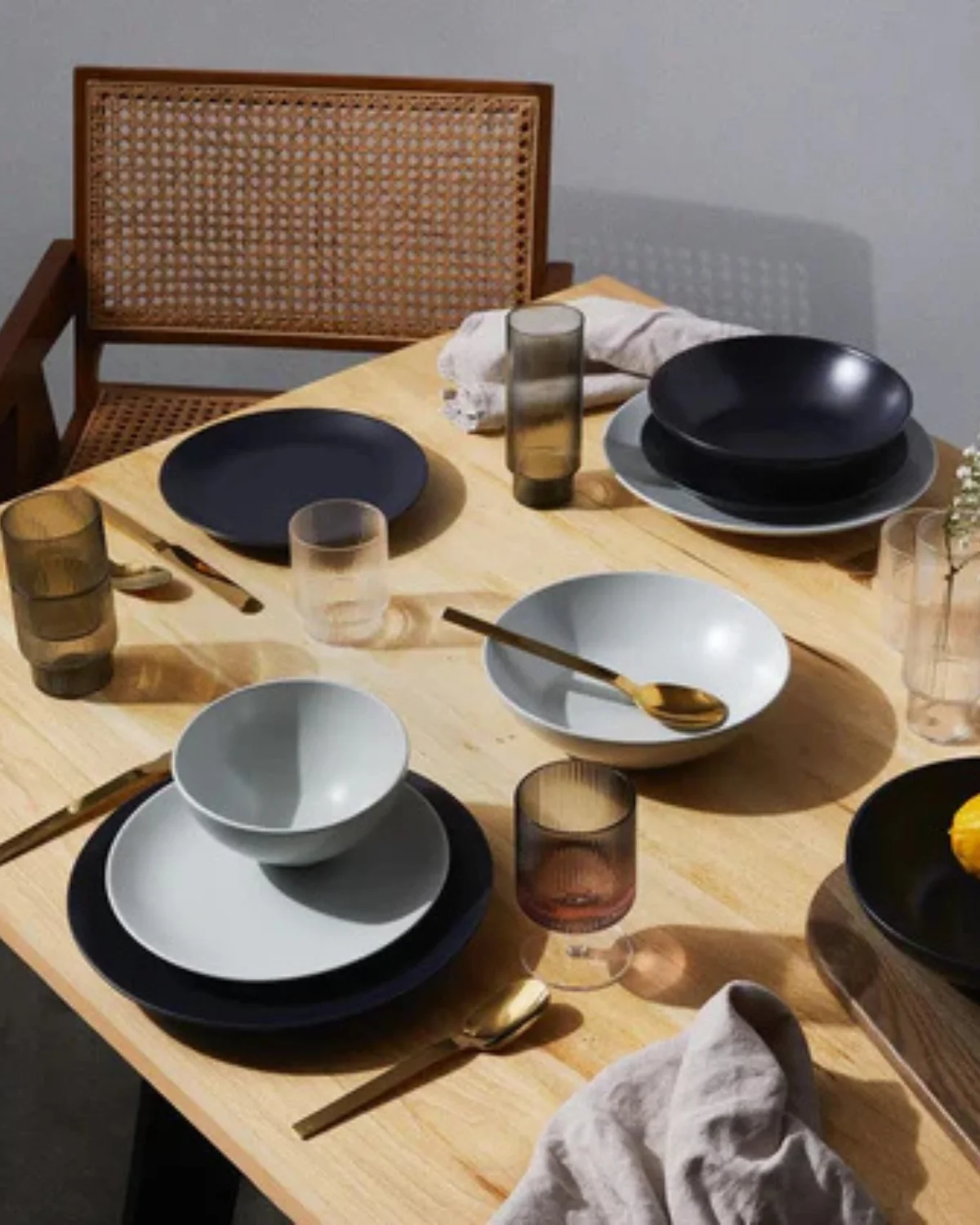
If you’re moving away from questionable ceramics, Year & Day’s Core 16-Piece Dinnerware Set is a solid upgrade.
The vitrified ceramic is fired at high temperatures using Portuguese clay, creating a dense, non-porous surface that resists staining and bacteria.
Third-party editorial reviews confirm the ceramics are free of lead, cadmium, and other heavy metals, with suppliers meeting California Prop 65 requirements.
The dinnerware is dishwasher, microwave, freezer, and oven-safe up to 480°F, so it easily stands up to day-to-day use.
While the brand doesn’t publish lab reports directly, Prop 65 compliance and consistent third-party assessments support its strong safety profile.
Price
$264 (16-Piece Set)
Notable Features
Ceramic | Locally Sourced Clay By Artisans In Portugal | Free From Lead, Cadmium & Heavy Metals | Dishwasher, Freezer & Oven Safe
location/shipping
United States, ships to Canada
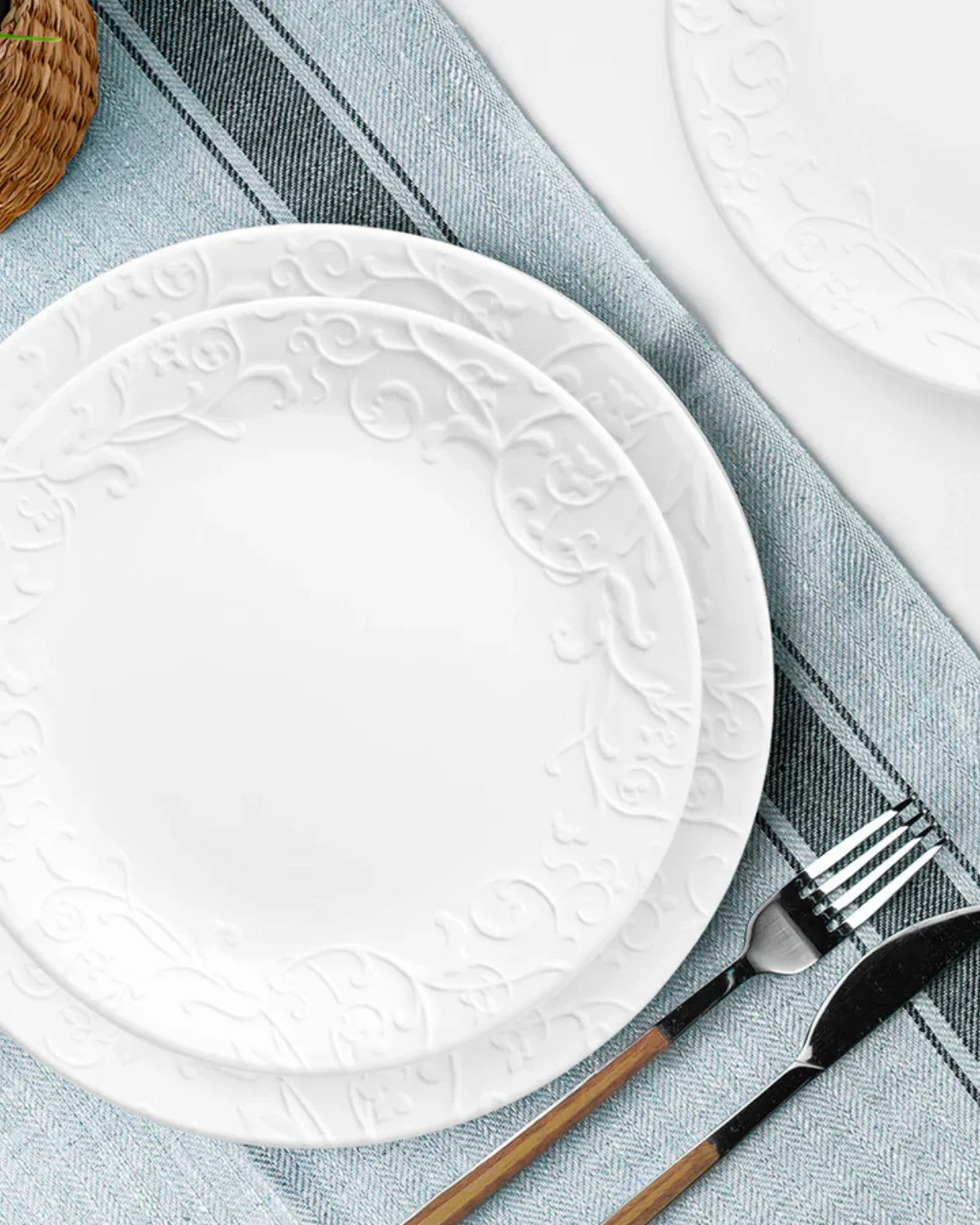
Corelle’s Bella Faenza 18-Piece Dinnerware Set stands out for one reason above all else: material choice.
Vitrelle glass avoids the glaze-related contaminant risks common in stoneware, and independent XRF testing on this exact pattern found non-detectable levels of lead, cadmium, arsenic, and mercury.
It’s microwave, dishwasher, and oven-safe up to 350°F, so it’s not only safe, but durable too.
This is one of the strongest options for a completely non-toxic dinnerware set on our list.
Price
$99.99 (18-Piece Set)
Notable Features
3-Year Warranty | Triple-Layer-Strong Glass | Ultra-Hygienic | Non-Porous | Easy-To-Clean | Dishwasher & Microwave Safe
location/shipping
United States
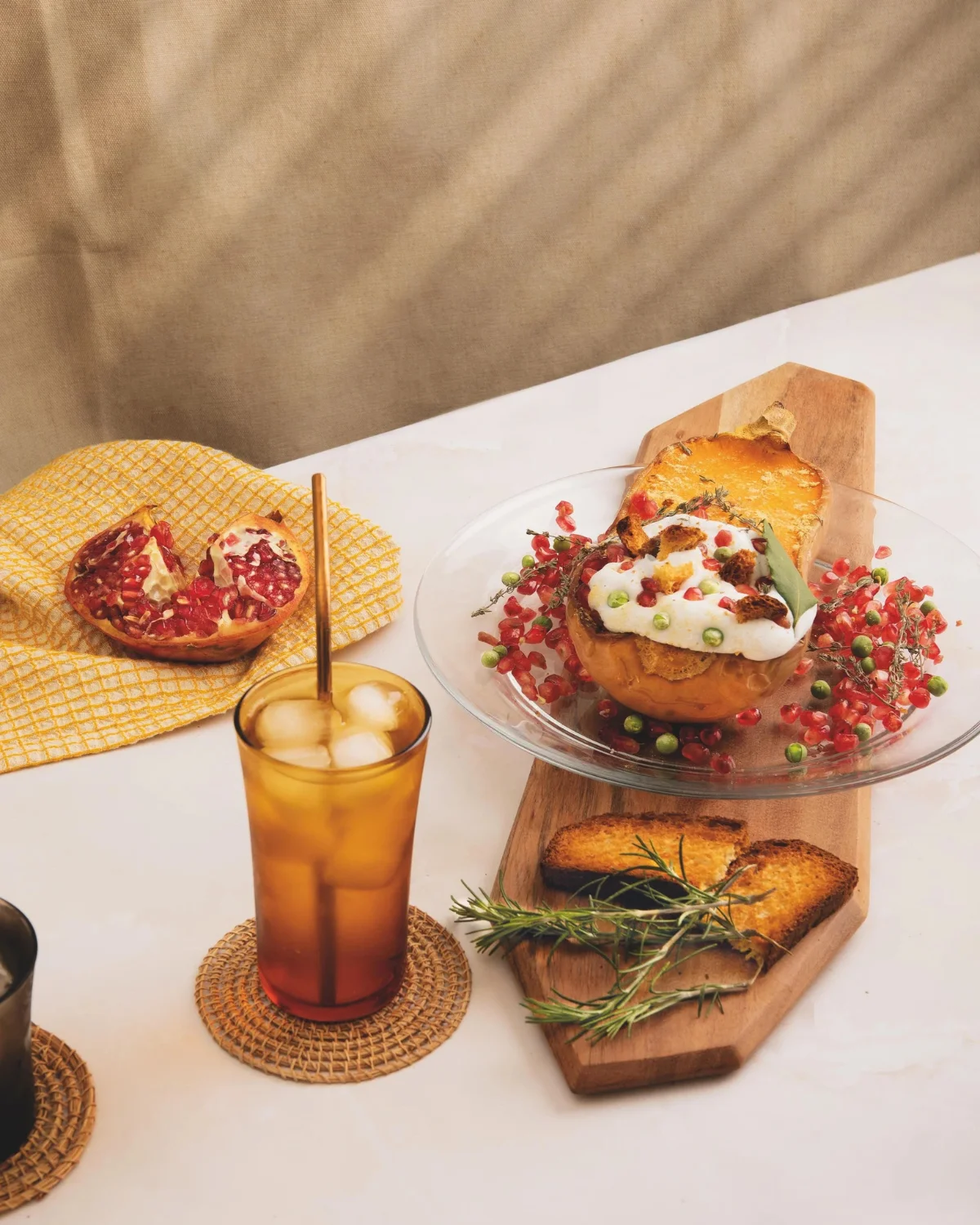
Duralex has a long history of making durable glass dinnerware, and the Duralex Lys plates are a good example of why.
Made from tempered glass in France, the brand states they’re lead-free, cadmium-free, BPA-free, and Prop 65 compliant, with independent XRF testing on similar Duralex products showing non-detectable heavy metals.
They’re microwave, freezer, and dishwasher-safe, and hold up well to temperature changes.
For everyday glass dinnerware with a strong safety track record, this is a reliable, budget-friendly choice.
Price
$129.99-$139.99 (18-Piece Set)
Notable Features
Duralex® Tempered Glass | Non-Porous | Free From Lead & Cadmium | Microwave, Freezer & Dishwasher Safe
location/shipping
United States
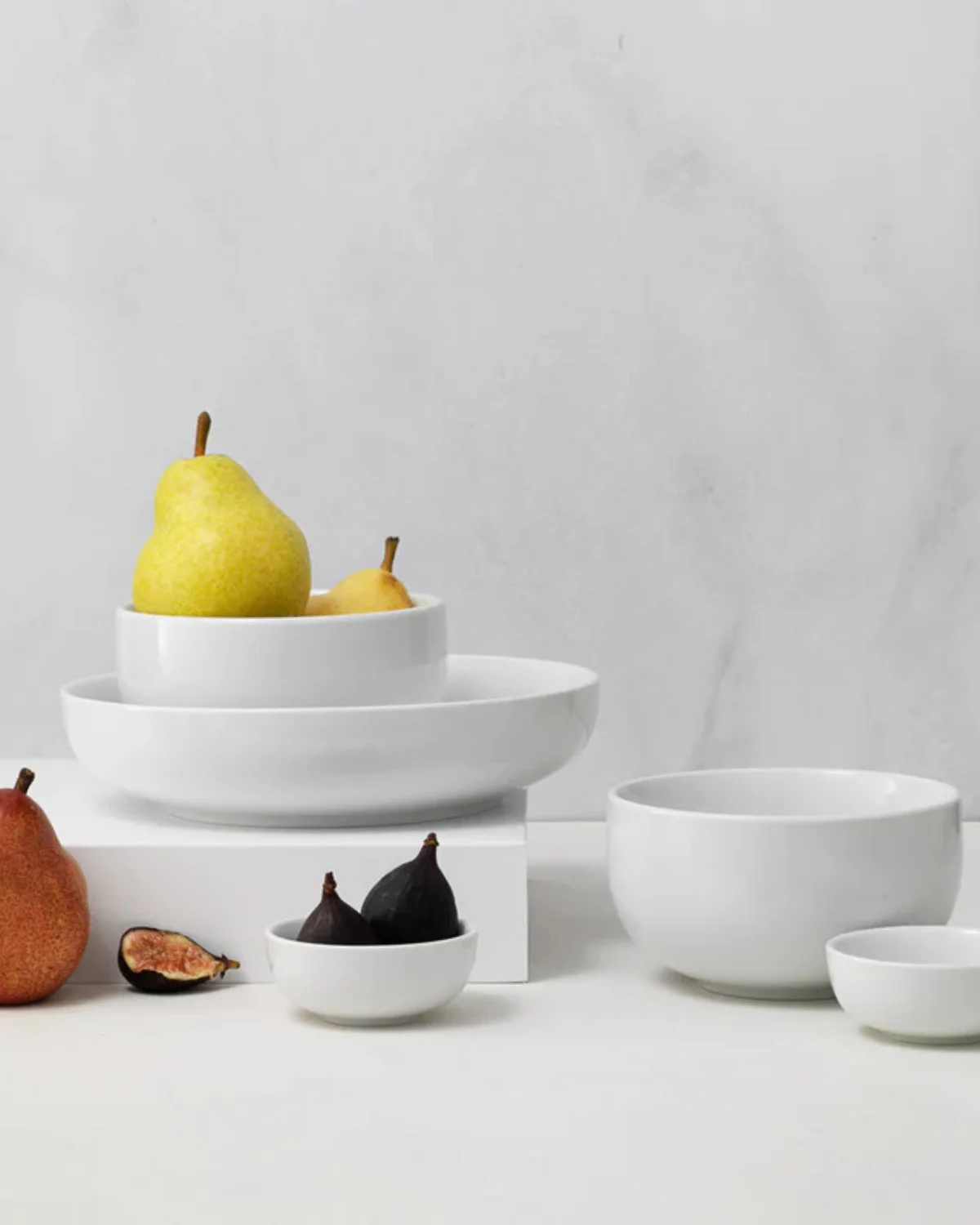
Public Goods’ Ceramic Dinner Bowls are made from high-fire porcelain and are Prop 65 compliant, meeting California’s strict limits for leachable heavy metals.
Independent XRF testing detected some trace lead (75 ppm) in the material itself, though this level is below regulatory thresholds and complies with international safety standards.
Oven-safe to 350°F and microwave, dishwasher, and freezer-safe—versatile enough for daily use.
Glass options like Corelle or Duralex are a better fit when you want truly zero-detectable lead levels.
Price
$69.95 (4-Piece Set)
Notable Features
High-Fire Porcelain | Lead-Free | Oven, Microwave, Freezer & Dishwasher Safe
location/shipping
United States, ships to select international countries
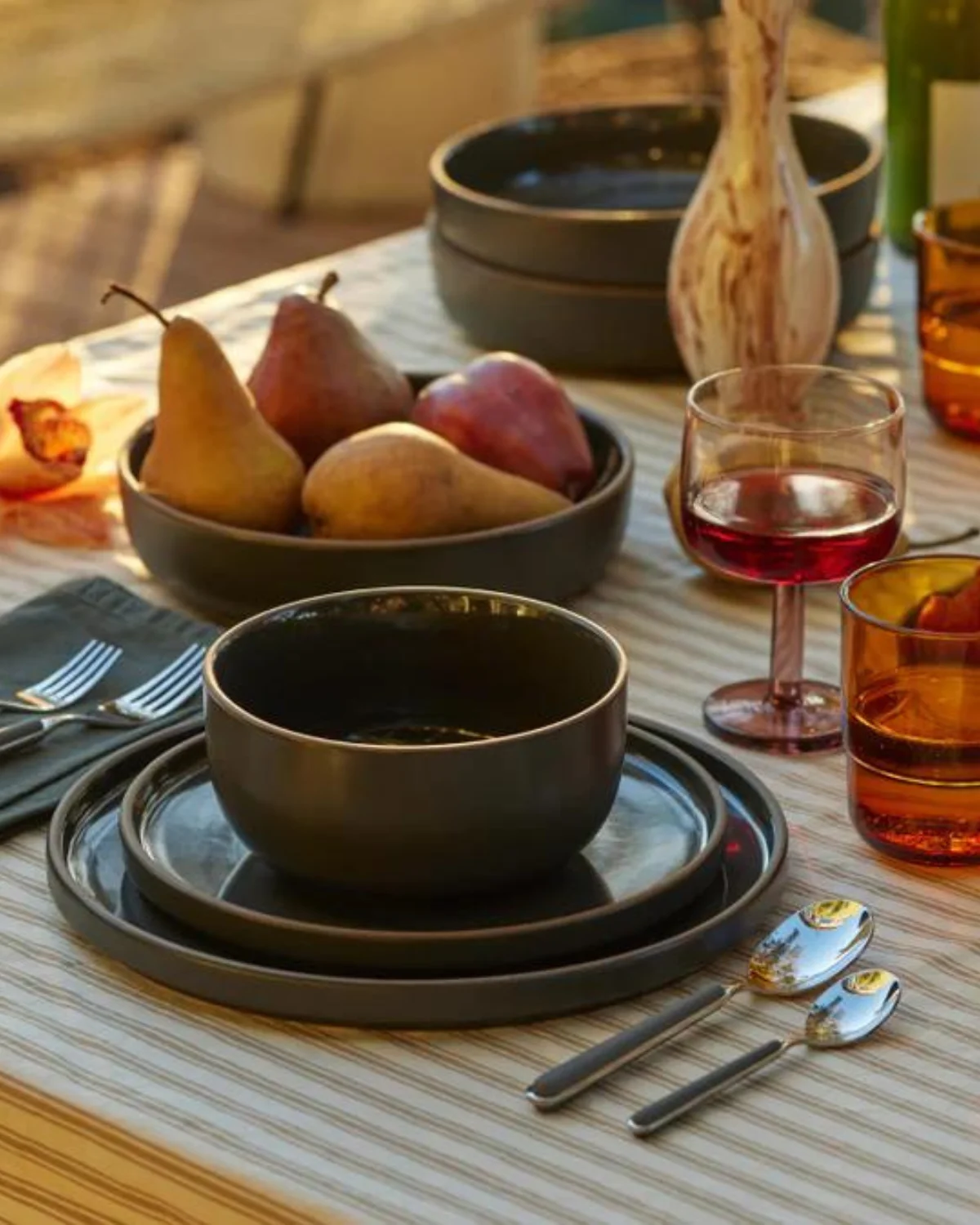
Our Place is best known for its non-toxic cookware, and their safety-first approach carries over into its stoneware Complete Dinnerware Set too.
The chip-resistant ceramic handles dishwasher and microwave use well, though the brand’s PFAS- and lead-language applies to cookware, not this dinnerware line.
While this set doesn’t come with verified lead-free documentation, Our Place has a trustworthy history of using safety-tested materials.
However, if verified test results and safety disclosures are a priority, you may prefer the certified glass or ceramic picks below.
Price
$690 (36-Piece Set)
Notable Features
Limited Warranty | Premium Ceramic Stoneware | Chip-Resistant | Dishwasher, Microwave & Oven Safe |
location/shipping
United States
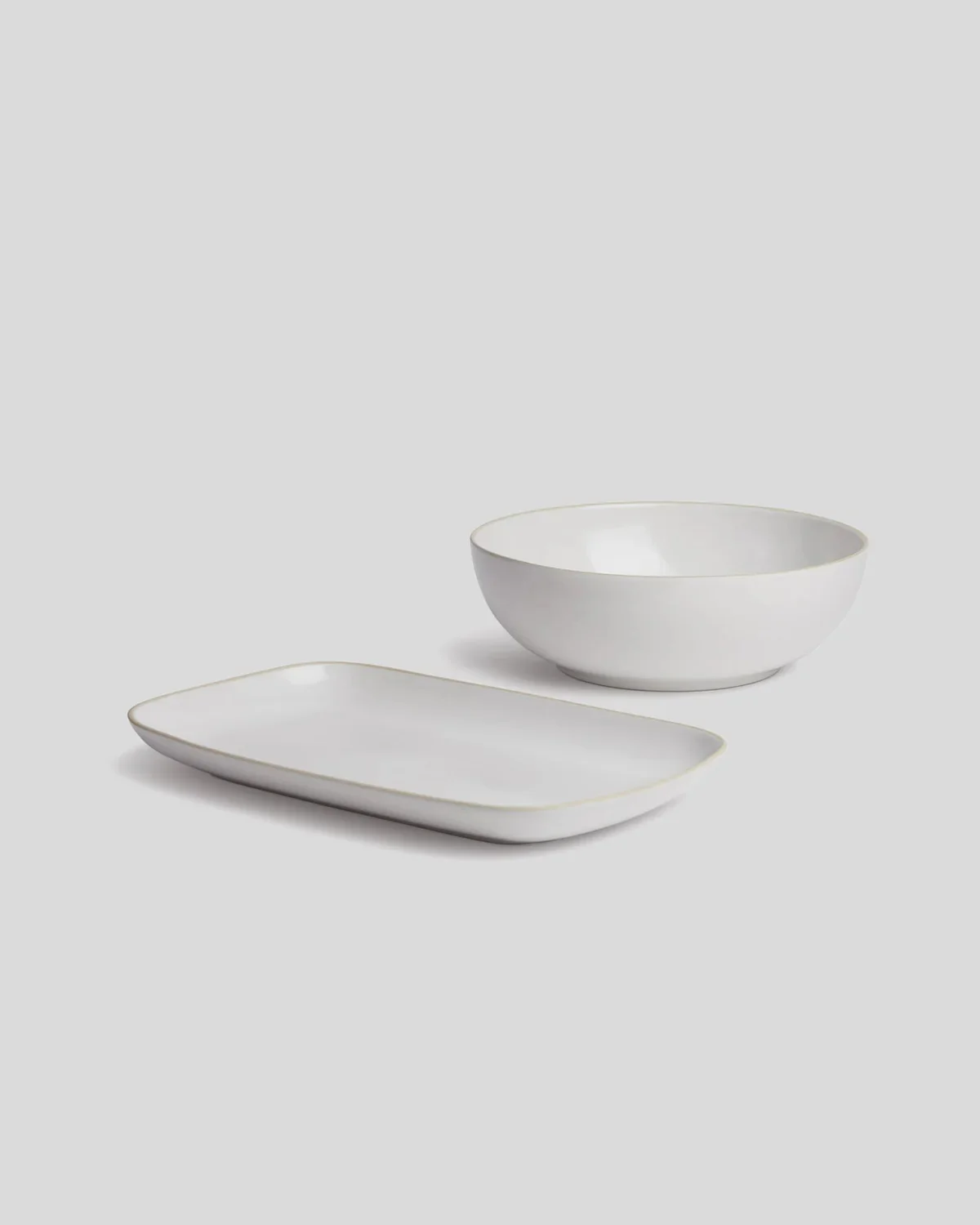
Just like their organic sheets, Parachute’s Stoneware Serveware has that premium, handcrafted feel we love.
Made in Portugal, it’s designed to withstand use in the oven, microwave, freezer, and dishwasher.
Not only does it look beautiful, but this set is also going to last you for years.
The one limitation is transparency. Parachute doesn’t publish lead or cadmium testing or third-party certifications.
If verified lab testing results are important to you, we recommend options like Corelle or Duralex.
Price
$49 (Bowl) | $69 (Tray)
Notable Features
Ceramic Stoneware | Non-Toxic, Food Safe Material | Handmade In Portugal | Oven, Microwave, Freezer & Dishwasher Safe
location/shipping
United States, ships to Canada
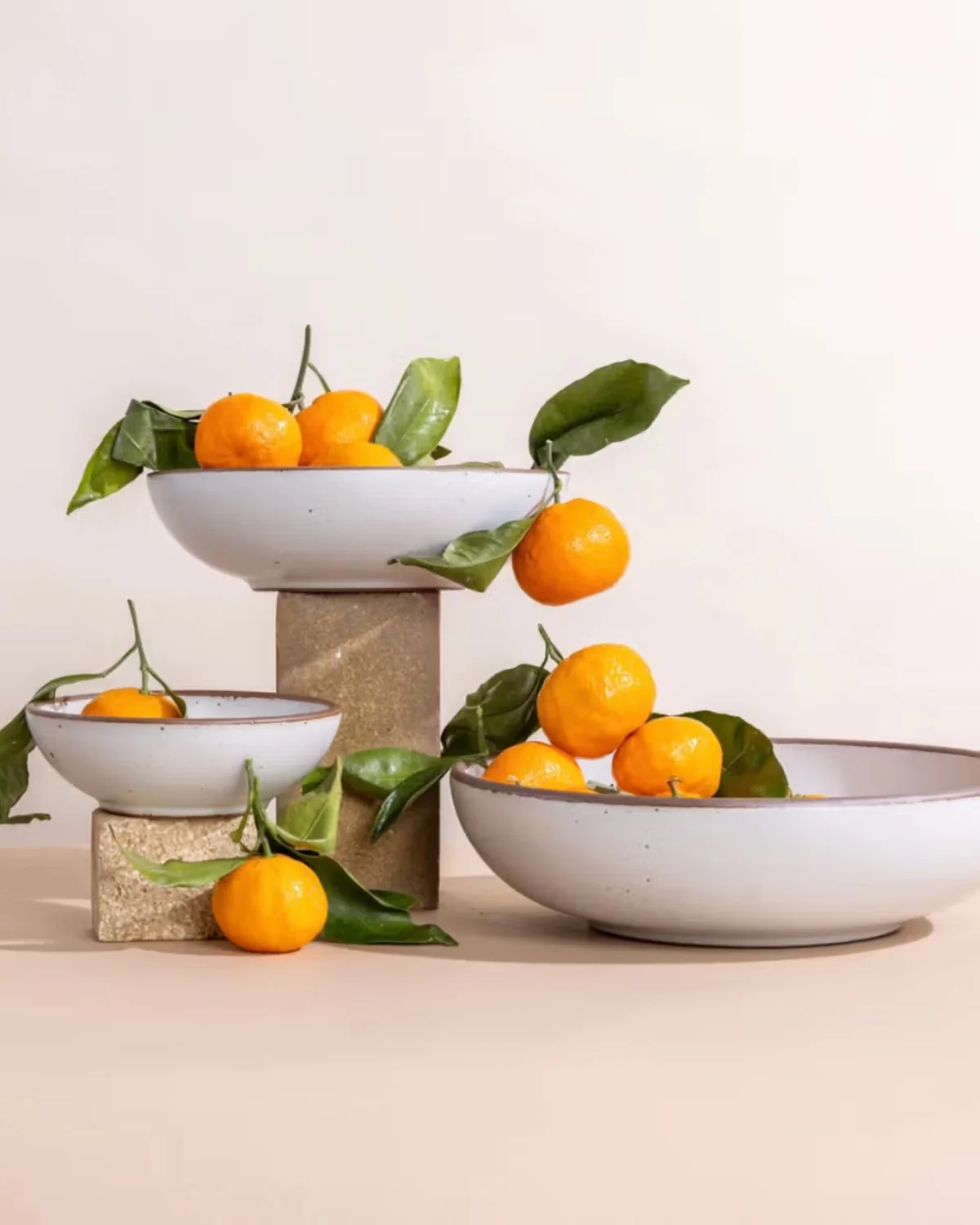
East Fork takes a fully transparent approach to creating completely safe dinnerware.
Their Potter’s Dinner Set is crafted entirely in Asheville, North Carolina, where the company can control every step of production—from sourcing regional clays to formulating their own glazes in-house.
This control matters because it eliminates the guesswork common with overseas manufacturing.
East Fork backs up their lead-free and cadmium-free claims with independent lab testing, including acid leaching analysis that goes beyond basic compliance.
Their dishes meet FDA standards and California Proposition 65 requirements, with full documentation available.
The stoneware handles daily dishwasher and microwave use well, though you’ll want to avoid shocking the material with drastic temperature swings.
If you’re willing to invest in U.S.-made ceramics with a fully traceable supply chain, East Fork delivers both craftsmanship and accountability.
Price
$182 (5-Piece Set)
Notable Features
100% Lead-Free Stoneware | Dishwasher & Microwave Safe
location/shipping
United States, ships to select international countries
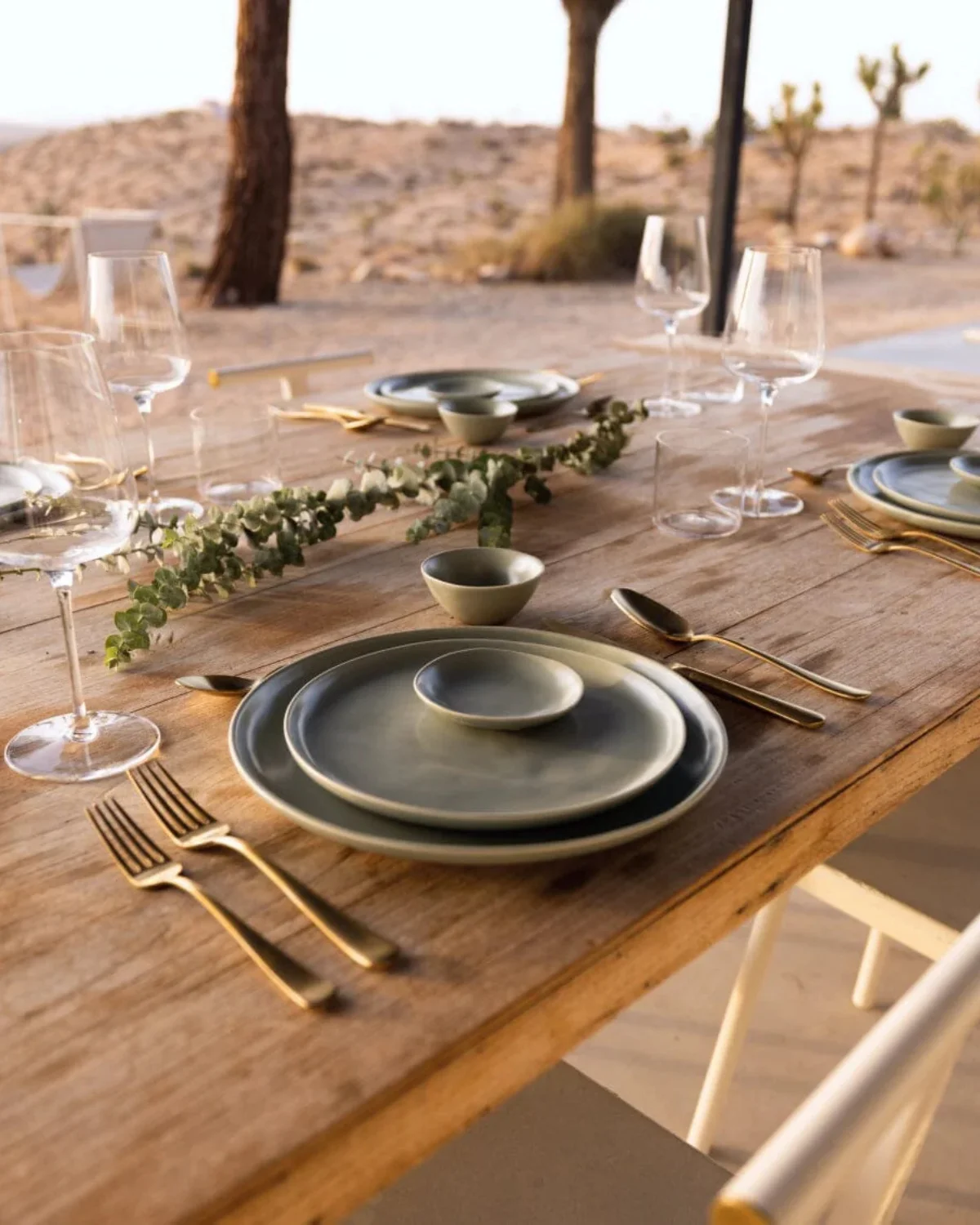
Fable’s Stoneware Plates are made in Portugal with local clay and have passed ASTM C738 testing—the main test for whether heavy metals can transfer from dishes into your food.
But, there’s a catch. While there aren’t any concerns around toxic materials leaching into your food, XRF testing has found small amounts of lead in the glaze material itself.
Fable acknowledges this openly and explains that there’s a difference between lead being present in the dish and lead actually getting into your food.
The plates work well in the dishwasher, microwave, and oven up to 450°F.
Whether this is safe enough depends on what you’re comfortable with—some people only care that nothing transfers to food, while others want zero lead anywhere in the product.
Fable deserves credit for being upfront about their test results rather than hiding them.
Price
90 (4-Piece Set)
Notable Features
Stoneware | Hand-Finished In Portugal | Lead-Safe Glaze | Dishwasher, Microwave & Oven Safe
location/shipping
United States
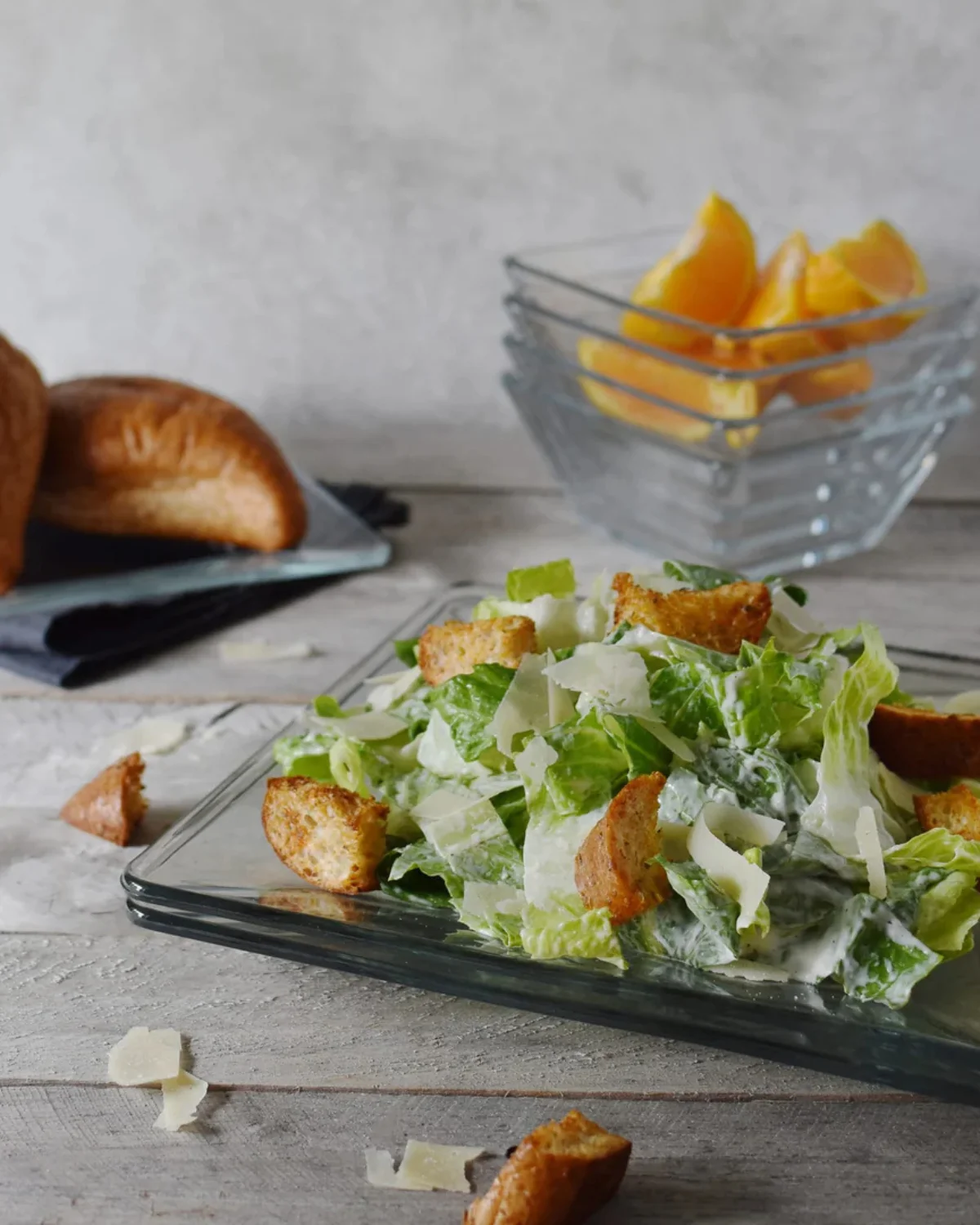
We like that this budget-friendly Glass Dinnerware Set from Libbey is made from lead-free, tempered soda-lime glass.
What gives us pause is that the plates aren’t microwave- or oven-safe.
They work well for cold foods like salads or cut fruit, but should be kept away from heat, as repeated exposure can cause them to break.
For similar pricing with better durability and heat tolerance, Corelle or Duralex are stronger picks.
Price
$64.99 (12-Piece Set)
Notable Features
Glass | BPA & Lead-Free | Dishwasher Safe
location/shipping
United States, ships internationally via Amazon USA
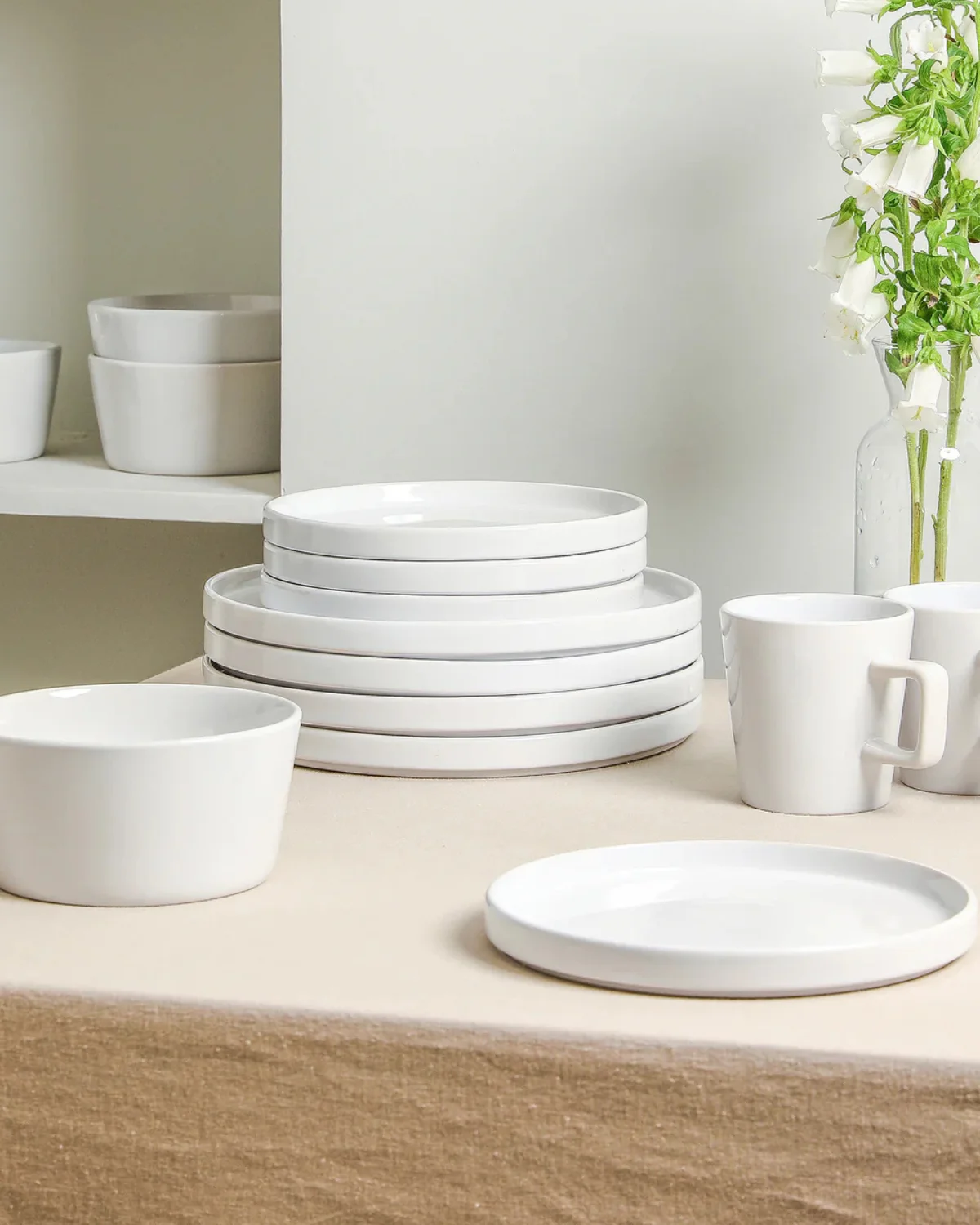
Stone + Lain’s Celina Stoneware Dinnerware Set offers clean, modern stoneware that can be used in the oven and the microwave, and is dishwasher-friendly.
From a usability standpoint, it checks the basic boxes.
Stoneware itself is generally considered a safer material, especially compared to plastics or melamine, and when it comes from a brand using quality materials and modern manufacturing, it can be a reasonable choice for everyday meals.
The tradeoff here is transparency. Stone + Lain doesn’t publish lead or cadmium test results or third-party certifications.
Price
$64.99 (16-Piece Set)
Notable Features
Stoneware | BPA-Free | Microwave & Disjwasher Safe
location/shipping
United States, ships internationally via Amazon USA
💬 Frequently Asked Questions About Non-Toxic Dinnerware
Melamine is best reserved for cold foods only and should never be microwaved or used for hot or acidic meals. For everyday hot meals, stick with ceramic or glass.
Additional considerations:
– Heat accelerates chemical breakdown and increases formaldehyde release
– Best used for outdoor dining with cold salads or snacks
– Not recommended for children’s hot meals
Some is, some isn’t. Modern ceramic brands that disclose lead testing are your safest bet, while vintage or heavily decorated pieces pose higher risks.
What to look for:
– Plain white ceramic from reputable manufacturers
– Brands that explicitly test for lead and cadmium
– Avoid dishes made before the 1980s or imported pottery without safety certifications
Plain, undecorated glass is one of the lowest-risk choices for everyday use. It doesn’t leach chemicals, handles heat well, and lasts for years with proper care.
Watch out for:
– Painted or printed decorations on rims
– Metallic trims that may contain lead
– Lead crystal used for food or drink storage
Stainless steel, tempered glass, or lead-tested ceramic are better options than melamine or plastic for hot foods. They’re durable enough for daily use and safe for everything from mac and cheese to hot soup.
Top picks for families:
– Corelle (lightweight and shatter-resistant)
– Stainless steel divided plates (no breakage risk)
– Tempered glass bowls (handles drop better than regular glass)
Check for bright colors (especially yellows and reds), inspect the glaze for cracks or chips, and look for labels indicating lead-free or cadmium-free materials. When in doubt, use a home lead test kit on suspicious dishes.
Red flags:
– Vintage dishes from before 1980
– Deep scratches or divots that trap bacteria
– Uneven or deteriorating glaze
– Bright decorative patterns, especially on eating surfaces
Yes, if they’re modern ceramics from reputable brands without metallic decoration. Always check manufacturer guidance, and avoid microwaving vintage ceramics or dishes with chips or cracks.
Microwave-safe materials:
– Plain porcelain and stoneware
– Tempered glass
– Modern lead-tested ceramics
– Never microwave: melamine, dishes with metal trim, or cracked/damaged ceramics
Ready to Upgrade Your Dinnerware?
Choosing safer dinnerware is one of those simple swaps that actually makes a difference. You use these plates and bowls every single day, so why not feel good about what they’re made of?
The good news? You don’t have to sacrifice style or durability to make the switch. Whether you fall in love with the clean lines of tempered glass, the artisan feel of Portuguese stoneware, or the timeless look of lead-tested ceramics, there are beautiful options that work for real life.
So go ahead—set the table, gather your people, and enjoy your meals knowing you’ve made a choice that supports your family’s health. Here’s to many more delicious, worry-free dinners ahead.
Explore More Articles For A Toxic-Free Kitchen
- 🧂 Non-Toxic Kitchen Utensils → A materials-focused review of utensils, examining silicone quality, stainless steel alloys, wood finishes, and plastic additives that can migrate into food under heat.
- 🪵 Non-Toxic Cutting Boards → A materials-based analysis of cutting boards, comparing plastic, bamboo, composite, and solid wood options, with attention to microplastic shedding and adhesive binders.
- 🥪 Non-Toxic Lunch Boxes → A materials-first review of lunch containers, focusing on plastic-free food contact, stainless steel grades, silicone seals, and chemical migration risks.
- 🍟 Non-Toxic Air Fryers → A construction-based breakdown of air fryers, examining PFAS-free claims, interior coatings, metal baskets, and hidden nonstick components.
- 🍳 Non-Toxic Cookware → A toxicology-informed comparison of cookware materials, highlighting coating stability, metal leaching risks, and performance under high heat.
📌 Save This Pin For Later
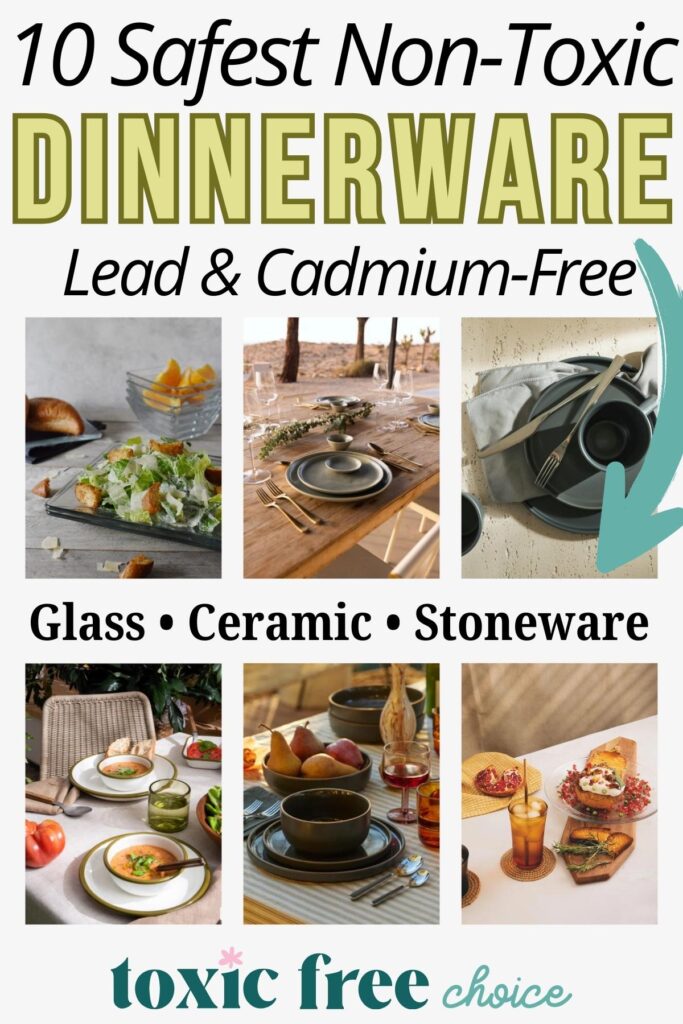
Save this pin for later if you’re researching safer dinnerware. This guide breaks down common dinnerware materials, what coatings and glazes can leach into food, and which materials are considered lower risk for everyday use—so you can make informed, evidence-based choices.






Would like to know if a company tells you item is safe from so many things yet is not saying lead free
even say micro wave safe. what does that mean??? dishwasher safe etc..
what is that suppose to mean????
Hi Janice. Microwave safe means that an item can be placed in the microwave without getting destroyed (for instance, you never place aluminium foil in microwaves). Dishwasher safe means that an item can safely be placed in a dishwasher without getting destroyed (for instance, you never place wooden cutting boards in dishwashers). Neither of these have to do with the “safety” of a product- it is just telling you if it is safe for the product to be microwaved or placed in the dishwasher 🙂