


This post may contain affiliate links. By browsing this website, you agree to our disclaimer, privacy policy, and terms of use.
Coffee is one of the most widely consumed beverages in the world, but not all coffee is evaluated according to the same standards for sourcing, testing, and contaminant control.
Beyond flavor, roast level, and origin, many consumers are increasingly asking a different question: what contaminants might be present in their coffee?
Coffee can be exposed to a variety of contaminants throughout cultivation, processing, storage, transportation, and roasting.
Depending on sourcing and handling practices, concerns may include mycotoxins such as ochratoxin A, pesticide residues, glyphosate, heavy metals, and roasting byproducts like acrylamide.
Consumers interested in broader contaminant issues may also want to understand what PFAS are, BPA plastic alternatives, and common examples of greenwashing in product marketing.
This has led to growing interest in so-called “non-toxic” coffee.
In practice, non-toxic coffee does not mean a coffee is completely free of contaminants.
Rather, it typically refers to coffee sourced, processed, and tested with the goal of reducing exposure to unwanted substances while providing greater transparency about product quality.
While regulatory agencies monitor food safety risks, testing standards and transparency can vary significantly between coffee brands.
The challenge for consumers is that many companies make broad claims about being clean, mold-free, or toxin-free without providing meaningful evidence.
Certifications, sourcing practices, and testing protocols can differ substantially from one brand to another, making it difficult to determine which products are backed by verifiable data and which rely primarily on marketing.
To identify the strongest options, we evaluated coffee brands based on factors such as contaminant testing, organic certification, sourcing standards, manufacturer transparency, and the availability of public testing information.
The brands that made this list stood out for their commitment to quality control, testing programs, and efforts to provide consumers with greater visibility into what ends up in their cup.
Best Non-Toxic Coffee Brands: Comparison Table
Mobile Users: Scroll to see full comparison →
| Brand | Best For | Certifications | Tested For | Price |
|---|---|---|---|---|
| Bulletproof | Established Clean Coffee Brand | Rainforest Alliance Certified | Mold Toxins & Other Contaminants | $18.99 |
| Lifeboost Coffee | Organic Coffee + Extensive Contaminant Screening | USDA Organic Certified | Mold, Mycotoxins, Heavy Metals, Pesticides, Glyphosate & Acrylamide | $30 |
| Isagenix | Functional Coffee Blend + Contaminant Testing | USDA Organic Certified | Pesticides, Heavy Metals & Mycotoxins | $20 |
| Purity Coffee | Research-Backed Coffee Quality | USDA Organic Certified | Smithsonian Bird Friendly® Certified | Mold, Mycotoxins, Pesticide Residues & Other Contaminants | $29-$32 |
| Truista Coffee | Maximum Testing Transparency | USDA Organic Certified | Mold, Mycotoxins, Heavy Metals, Pesticides, Acrylamide + Batch-Specific COAs | $35 |
Hidden Contaminants Found In Coffee
Coffee is an agricultural product, which means potential contaminants can be introduced during cultivation, processing, storage, transportation, and roasting.
While coffee is generally considered safe for most consumers, research has identified several contaminants that are commonly discussed in coffee safety and quality evaluations.
Understanding these contaminants can help consumers better evaluate coffee brands, test claims, and transparency practices.
Mycotoxins
Mycotoxins are naturally occurring compounds produced by certain molds.
In coffee, the most commonly discussed mycotoxins are ochratoxin A and aflatoxins, which may develop when beans are improperly dried or stored.
Many coffee brands market themselves as “mold-free,” but the stronger indicator is whether they conduct mycotoxin testing and disclose their quality control practices.
Heavy Metals
Heavy metals such as lead, cadmium, and arsenic can occur naturally in soil and may be absorbed by plants during cultivation.
While coffee is not typically considered a major source of heavy metal exposure, testing can provide additional insight into product quality and contaminant monitoring.
Pesticide Residues
Conventional coffee production may involve the use of pesticides to protect crops from insects, weeds, and plant diseases that can affect yield and quality.
While organic certification can reduce the use of many synthetic pesticides, brands that conduct pesticide residue testing generally provide a higher level of transparency.
Questions about agricultural chemical exposure extend beyond coffee and are also common when evaluating non-toxic kids’ snacks, organic lawn fertilizer, and other food-related products.
Glyphosate
Glyphosate is a widely used herbicide used to control weeds in agriculture.
It is sometimes discussed in relation to coffee because consumers are increasingly interested in pesticide residues and agricultural chemical exposure.
While organic certification restricts glyphosate use, some consumers prefer brands that also conduct residue testing and provide information about their screening practices.
Acrylamide
Unlike the other contaminants discussed here, acrylamide forms during the coffee roasting process. It is a naturally occurring byproduct of high-heat cooking and roasting.
Some coffee companies monitor acrylamide levels as part of their broader quality and contaminant testing programs, though disclosure practices vary considerably across the industry.
What Research Says About Coffee Contaminants
Research has identified contaminants such as mycotoxins, pesticide residues, heavy metals, and acrylamide in coffee and coffee-based products.
Because contaminant exposure can occur from multiple sources throughout daily life, many consumers evaluate coffee alongside other household exposure categories, such as non-toxic water filters, non-toxic cookware, and broader non-toxic living strategies.
However, the presence of a contaminant does not automatically indicate a significant health concern, as researchers also consider the amount detected and the level of exposure over time.
Studies suggest that contaminant levels can vary based on growing conditions, agricultural practices, processing methods, storage conditions, and roasting techniques.
For consumers, the most practical takeaway is not that coffee should be avoided, but that testing transparency can provide additional insight into product quality and quality-control practices.
Similar transparency considerations apply to non-toxic tea, where sourcing standards, contaminant testing, and quality-control practices can vary significantly between manufacturers.
How We Evaluated These Coffee Brands
To identify the strongest non-toxic coffee brands, we focused on factors related to contaminant control, testing transparency, and quality assurance rather than flavor profiles or marketing claims.
Our evaluation considered several factors, including:
- Organic certification
- Mycotoxin testing
- Heavy metal testing
- Pesticide residue testing
- Glyphosate screening
- Acrylamide monitoring
- Third-party verification
- Public lab reports or Certificates of Analysis (COAs)
- Sourcing transparency and quality-control practices
We also gave greater weight to brands that clearly explain what they test for and how that testing is performed.
Companies that provide public testing data or detailed contaminant screening information generally received stronger consideration than brands that rely primarily on certifications or marketing language.
No single certification, laboratory result, or testing program can guarantee that a coffee is completely free of contaminants.
Instead, this guide prioritizes brands that demonstrate stronger transparency, verification practices, and overall quality-control systems relative to others in the category.
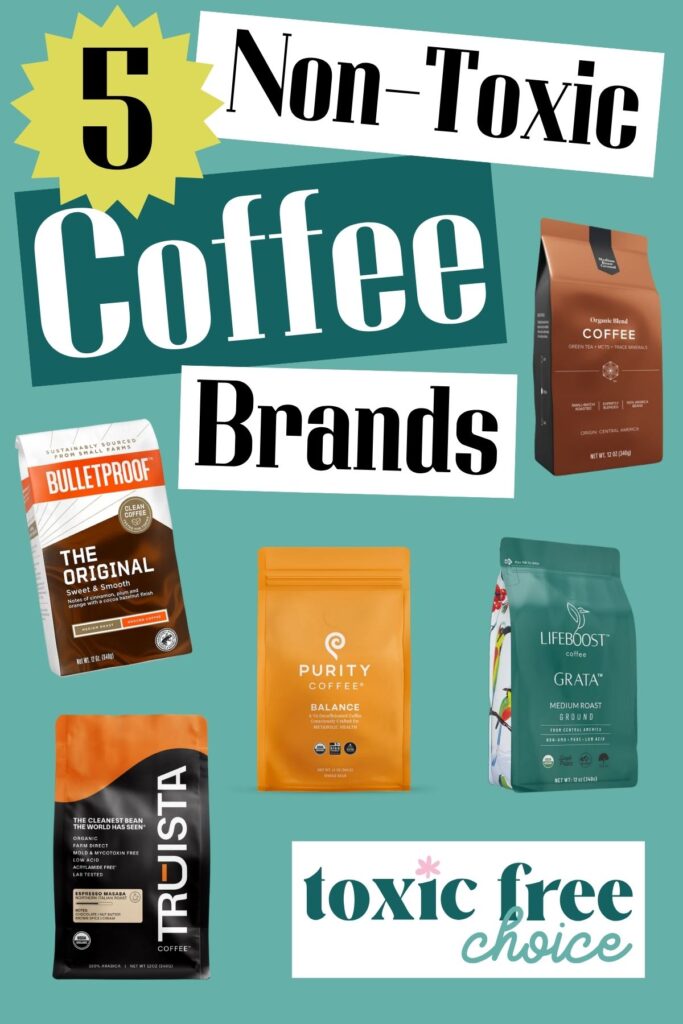
The Best Non-Toxic Coffee Brands In 2026
After reviewing dozens of coffee brands, I found that the biggest difference wasn’t whether a company called its coffee “clean.” It was whether the company could explain why.
Many brands make impressive claims, but only a handful provide meaningful information about sourcing, testing, or quality standards.
The brands below are the ones I believe are doing the best job of backing up their claims with real transparency.
1. Bulletproof — Established Clean Coffee Brand
Best For: Consumers seeking a well-established, clean coffee brand with a long history of contaminant awareness and specialty-grade sourcing
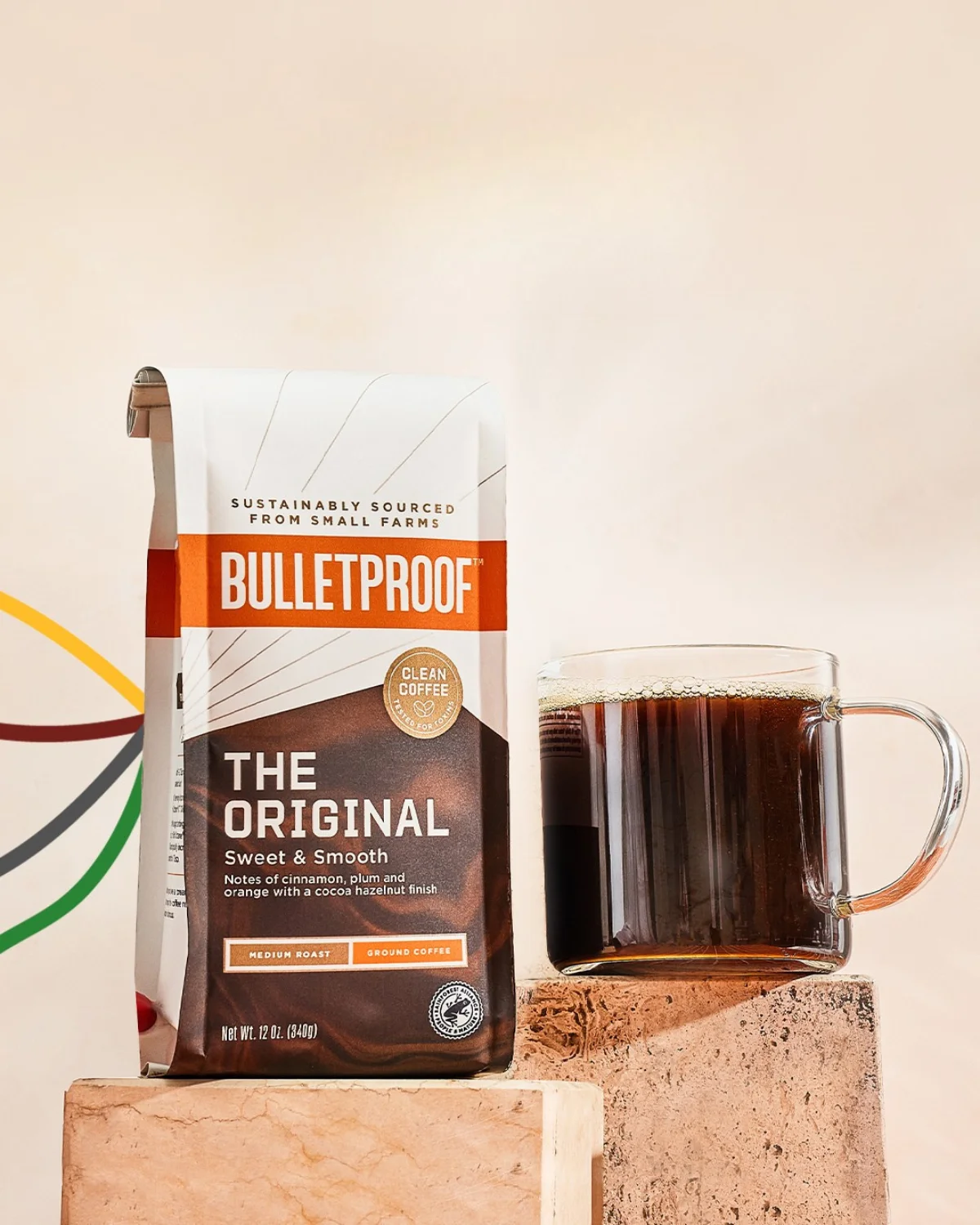
Bulletproof helped popularize the idea that coffee quality involves more than flavor alone.
Long before discussions about mold, mycotoxins, and coffee testing became mainstream, the company was encouraging consumers to think about sourcing standards and bean quality.
Today, Bulletproof continues to focus on specialty-grade Arabica beans and carefully selected growing regions.
While some newer brands provide more detailed public testing information, Bulletproof remains one of the most recognizable names in the clean coffee category.
For consumers who want a trusted, widely available brand that helped shape the conversation around coffee quality, Bulletproof remains a solid starting point.
Price
$18.99
Testing & Certifications
Rainforest Alliance Certified | Arabica Coffee Beans | Tested For Mold Toxins & Other Contaminants | Sustainably Sourced
location/shipping
United States | Ships To Canada & Select International Countries
2. Lifeboost Coffee — Organic Coffee With Extensive Contaminant Screening
Best For: Consumers looking for organic coffee backed by extensive contaminant testing and quality-control practices
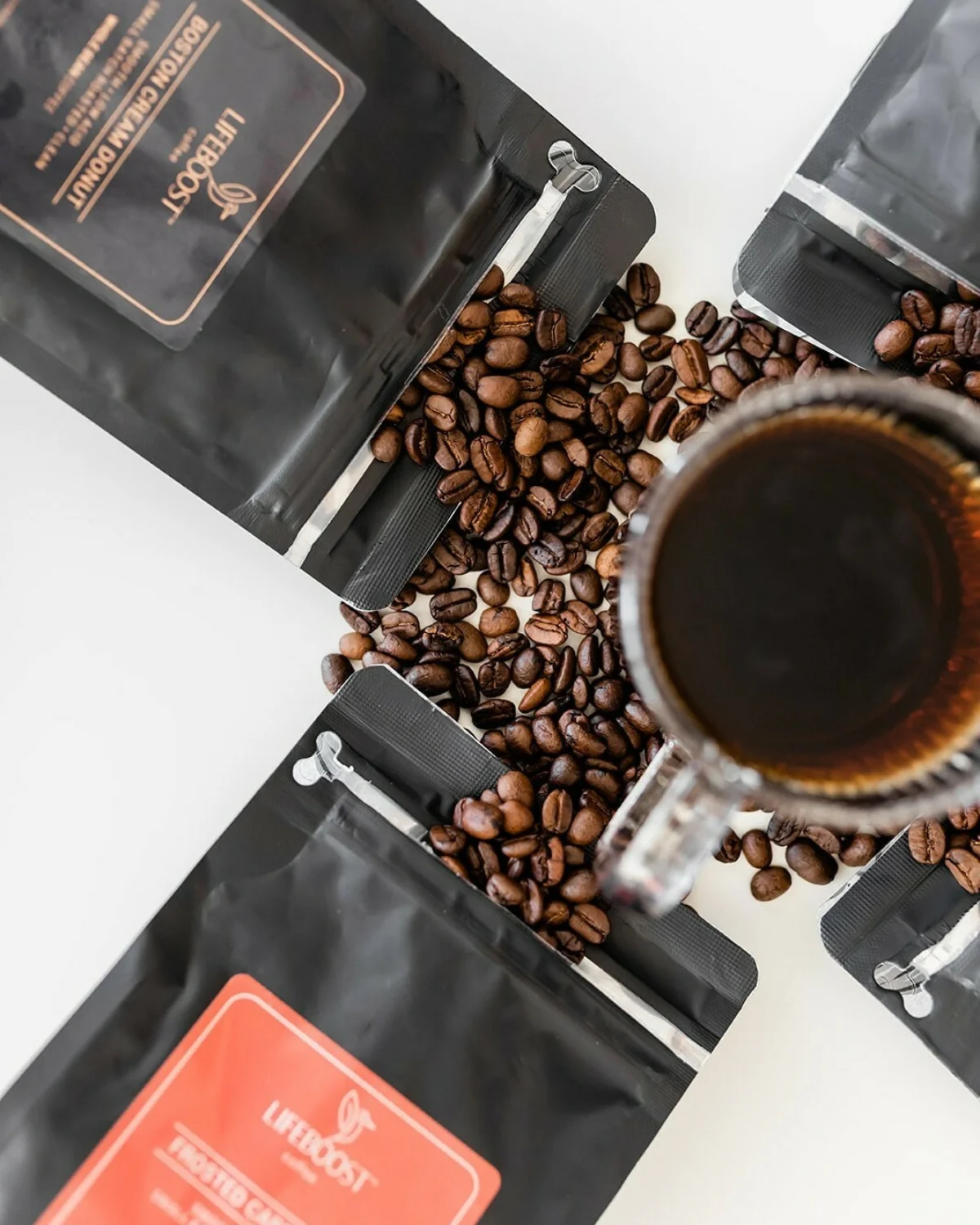
Lifeboost Coffee has built its reputation around one simple idea: if you’re going to make premium coffee claims, you should be able to back them up.
The company sources single-origin, high-elevation Arabica beans and pairs its organic certification with one of the more comprehensive screening programs in the industry.
Rather than focusing solely on flavor or sustainability, Lifeboost Coffee puts significant emphasis on how its coffee is grown, processed, and evaluated before reaching consumers.
The result is a coffee that appeals to shoppers who want as much information as possible about what is and isn’t in their cup.
Price
$30
Testing & Certifications
USDA Organic Certified | Single-Origin Arabica Beans | Third-Party Tested For Mycotoxins, Mold, Heavy Metals, Pesticides, Glyphosate & Acrylamide
location/shipping
United States | Ships To Canada
3. Isagenix — Functional Coffee With Contaminant Testing
Best For: Consumers who want a functional coffee blend with disclosed testing and wellness-focused ingredients
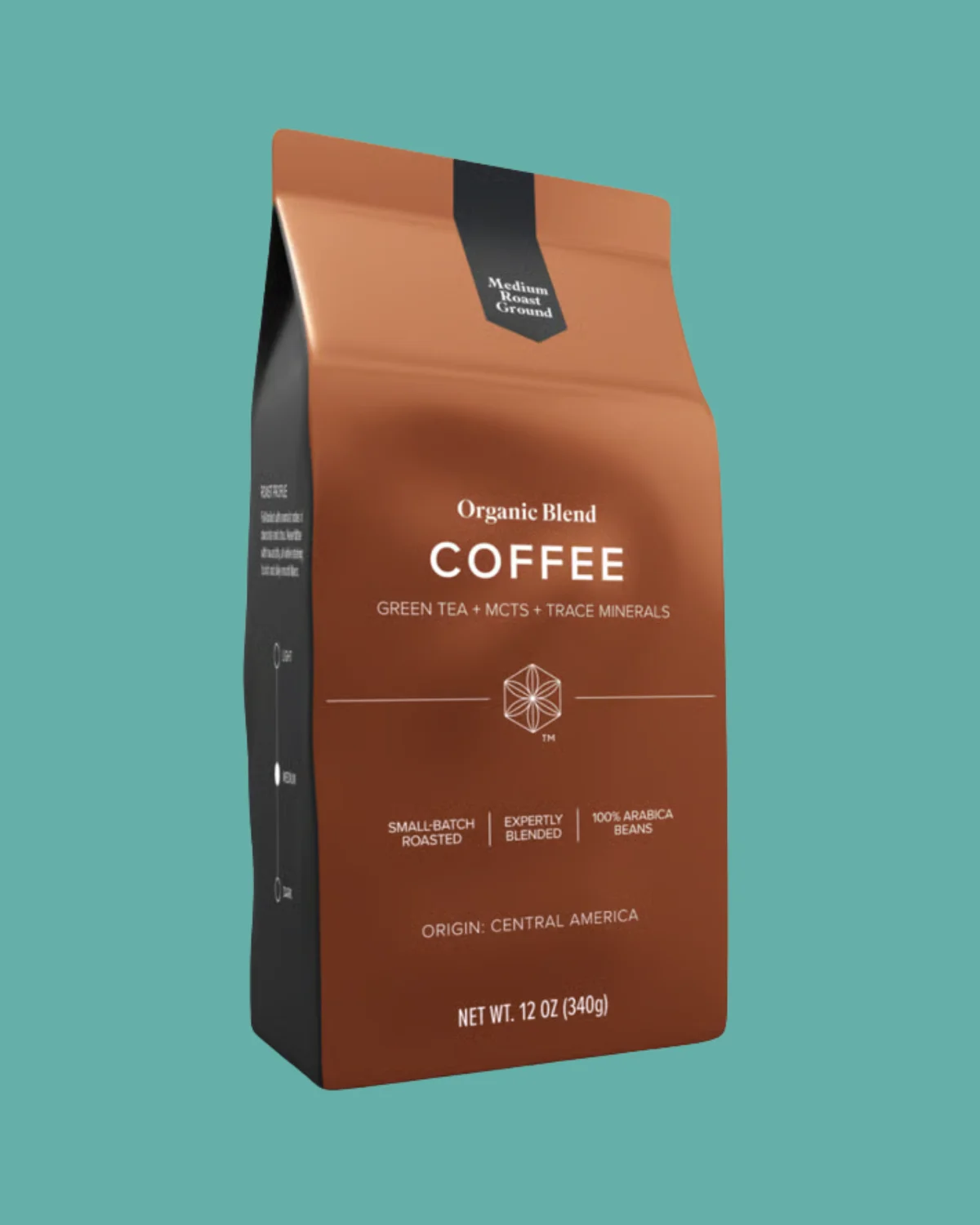
Isagenix takes a noticeably different approach from the other brands in this guide.
Rather than offering a traditional bag of coffee beans, the company combines organic coffee with ingredients such as green tea, MCTs, and trace minerals to create a more wellness-focused beverage.
The goal is not simply to provide caffeine, but to create a product that fits into a broader health routine.
For consumers who enjoy functional beverages and want more than a standard morning coffee, Isagenix offers a unique alternative to conventional coffee brands.
Price
$20
Testing & Certifications
USDA Organic Certified | 100% Arabica Coffee Beans | Third-Party Tested For Pesticides, Heavy Metals & Mycotoxins | Non-GMO | Gluten-Free | Vegan | Kosher
location/shipping
United States | Ships Internationally
4. Purity Coffee — Research-Driven Coffee Brand
Best For: Consumers who value research-driven sourcing, roasting, and coffee quality practices
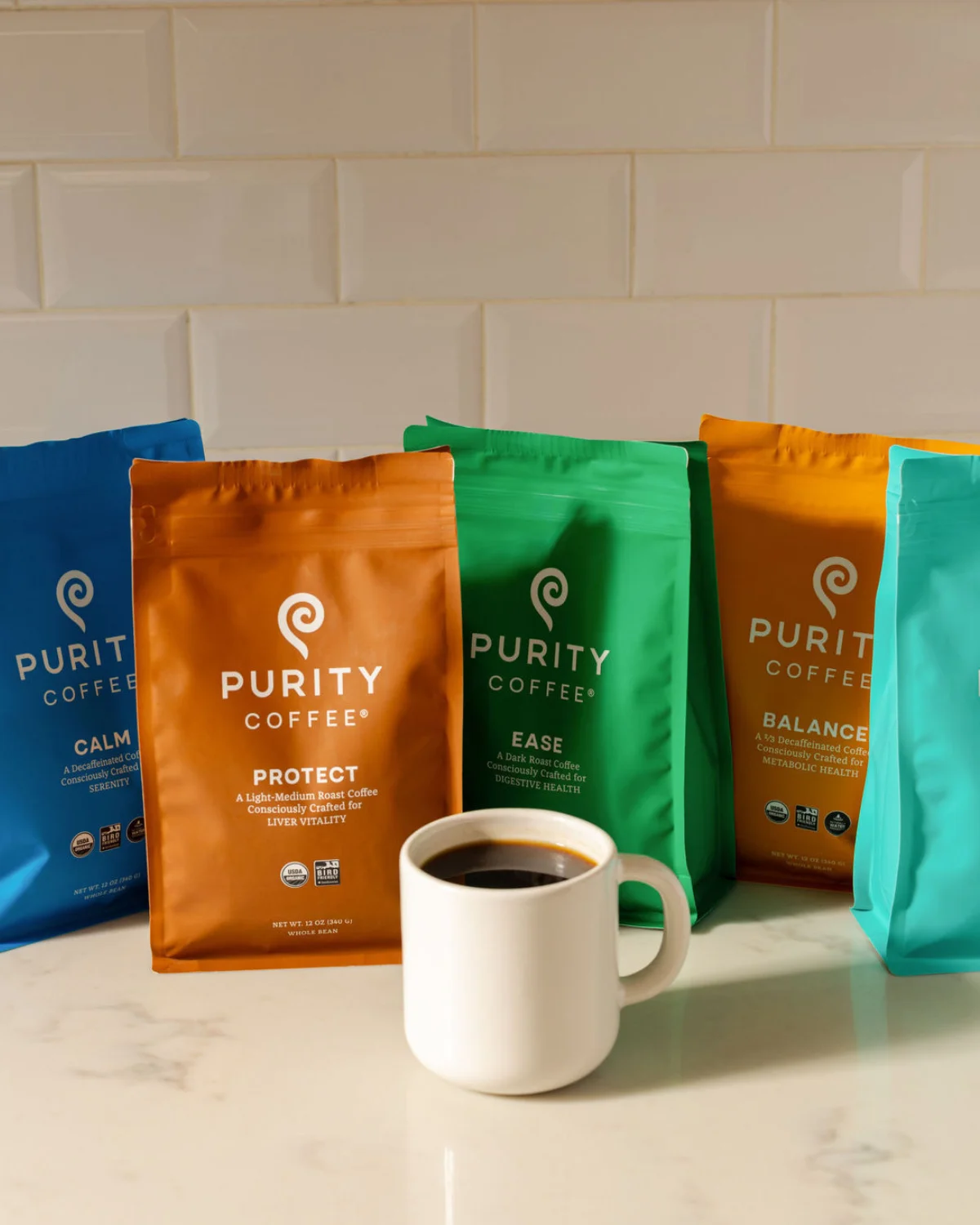
Purity Coffee approaches coffee more like a health-focused food company than a traditional coffee roaster.
The brand spends considerable time discussing roasting methods, traceability, beneficial plant compounds, and the factors that influence coffee quality beyond taste alone.
This science-forward approach has helped it develop a loyal following among consumers who enjoy understanding the details behind how their food is produced.
If you’re the type of person who reads ingredient labels, research studies, and sources information before making a purchase, Purity Coffee will likely feel right at home.
Price
$29-$32
Testing & Certifications
USDA Organic Certified | Fully Traceable Specialty-Grade Arabica Beans | Third-Party Tested For Mold, Mycotoxins, Pesticide Residues & Other Contaminants | Smithsonian Bird Friendly® Certified | Regenerative Agriculture Focus | Testing For Antioxidants & Bioactive Compounds (Including CGAs)
location/shipping
United States | Ships Internationally
5. Truista Coffee — Testing Transparency Leader
Best For: Consumers who prioritize public lab reports, batch-specific COAs, and maximum testing transparency
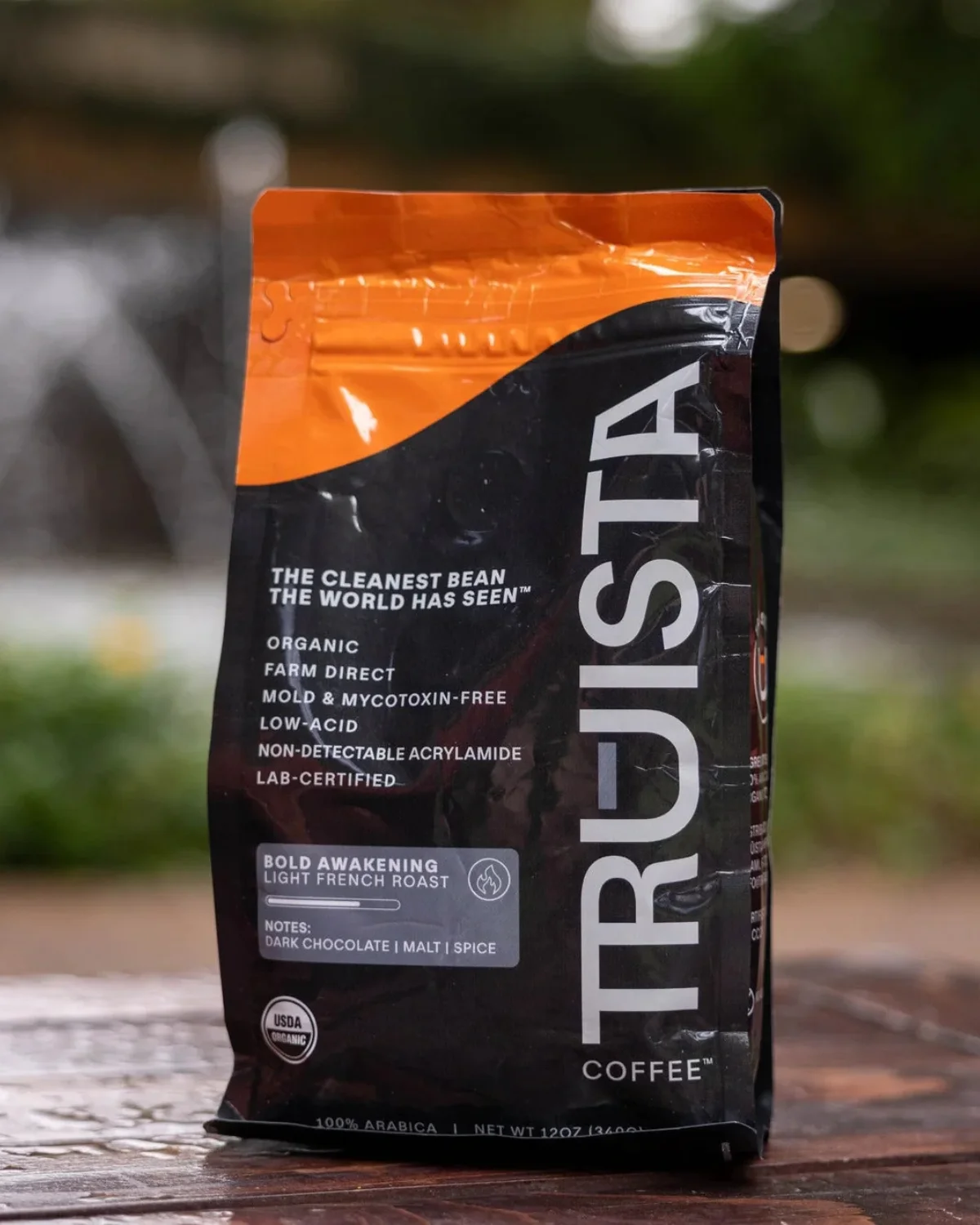
Many coffee companies talk about testing. Truista Coffee focuses on showing its work.
The brand stands out by providing batch-specific Certificates of Analysis and making testing information easier for consumers to access.
In an industry where many claims require a leap of faith, Truista Coffee attempts to give customers a clearer view into how its coffee is evaluated.
For shoppers who value documentation and verification over marketing language, Truista Coffee offers one of the more transparent approaches currently available.
Price
$35
Testing & Certifications
USDA Organic Certified | Specialty-Grade Organic Arabica Beans | Batch-Specific COAs | Third-Party Tested For Mold, Mycotoxins, Heavy Metals, Pesticide Residues & Acrylamide
location/shipping
United States
Where Many Coffee Brands Fall Short
One of the biggest challenges in the coffee industry is that consumers are often asked to trust claims they cannot independently verify.
Terms such as “clean coffee,” “mold-free coffee,” and “toxin-free coffee” have become increasingly common, yet many brands provide little information about how those claims are substantiated.
In practice, coffee quality is difficult to evaluate without transparency.
A certification logo, sourcing claim, or marketing promise may provide part of the picture, but it does not necessarily explain what contaminants were tested, how testing was performed, or what standards were used to evaluate the final product.
This does not mean that brands must publish every laboratory result.
However, consumers should be able to understand what a company tests for, whether testing is conducted internally or by a third party, and how quality-control claims are supported.
The strongest coffee brands are not necessarily the brands making the boldest claims. They are often the brands providing the clearest information.
When consumers can see how a company approaches sourcing, testing, and quality control, they are in a much better position to evaluate coffee quality for themselves.
What Coffee Certifications Actually Tell You
Coffee certifications can provide useful information about sourcing, farming practices, and production standards.
However, certifications do not all evaluate the same criteria, and many consumers mistakenly assume that a certification automatically means a coffee has been tested for contaminants.
USDA Organic
USDA Organic certification restricts the use of many synthetic pesticides and fertilizers and establishes standards for how coffee is grown, processed, and handled.
While this can provide insight into agricultural practices, it does not automatically confirm that a coffee has been tested for contaminants such as mycotoxins, heavy metals, glyphosate, or acrylamide.
Rainforest Alliance
Rainforest Alliance certification focuses on sustainable farming practices, environmental stewardship, biodiversity, and social responsibility throughout the supply chain.
Although these standards can provide valuable information about how coffee is produced, they do not indicate whether a coffee has undergone contaminant screening or laboratory testing.
Smithsonian Bird Friendly®
Smithsonian Bird Friendly® certification promotes shade-grown coffee production designed to support bird habitats and biodiversity.
The certification is focused on environmental and ecological standards rather than contaminant testing, making it more useful for evaluating farming practices than product testing or quality-control programs.
Specialty-Grade Coffee
Specialty-grade coffee is evaluated based on factors such as flavor, aroma, acidity, and overall bean quality.
While specialty-grade status can be an indicator of higher-quality coffee, it is not a testing program and does not provide information about contaminant levels or laboratory screening.
Why Certifications Are Only Part of the Picture
Certifications can provide valuable insight into farming practices, sustainability standards, and coffee quality.
However, most certifications do not evaluate the contaminant categories commonly discussed in non-toxic coffee conversations.
For consumers concerned about mycotoxins, heavy metals, pesticide residues, glyphosate, or acrylamide, testing transparency often provides more useful information than certification logos alone.
This is one reason we placed greater emphasis on contaminant testing, public disclosures, and manufacturer transparency when evaluating the brands in this guide.
Frequently Asked Questions About Non-Toxic Coffee
No. Organic certification establishes standards for how coffee is grown and handled, but it does not automatically confirm testing for mycotoxins such as ochratoxin A or aflatoxins.
Consumers concerned about mold toxins should look for brands that provide testing information in addition to organic certification.
Certifications can provide useful information about farming practices, sustainability standards, and production methods.
USDA Organic, Rainforest Alliance, and Smithsonian Bird Friendly® each evaluate different criteria, but none are designed to replace contaminant testing or laboratory verification.
The most commonly discussed coffee contaminants include mycotoxins, heavy metals, pesticide residues, glyphosate, and acrylamide.
Testing practices vary by brand, which is why transparency around testing protocols can be just as important as the results themselves.
A Certificate of Analysis (COA) is a laboratory document that summarizes the results of product testing.
Depending on the manufacturer, a COA may include information about contaminants, quality-control standards, or other testing metrics used to evaluate the product.
Both can be valuable, but they provide different information. Organic certification focuses on agricultural practices, while contaminant testing evaluates the finished product. For consumers focused on coffee safety, testing transparency often provides a more complete picture.
Consumers should look beyond broad terms such as “clean,” “pure,” or “mold-free.”
The strongest claims are typically supported by testing disclosures, quality-control information, third-party verification, or publicly available laboratory data.
A useful lab report should clearly identify what was tested, how testing was performed, and which laboratory conducted the analysis.
Reports that provide specific contaminant categories and testing parameters generally offer greater transparency than broad marketing claims alone.
There is no single testing standard that applies to every coffee company. However, brands that conduct routine testing and clearly explain their quality-control processes generally provide consumers with more confidence than brands that offer little testing information.
Roasting can influence certain compounds found in coffee, but it should not be viewed as a universal solution for contaminant control. The impact of roasting varies depending on the contaminant and the production process involved.
There is no widely recognized regulatory definition for “mold-free coffee.” Because terminology can vary between brands, consumers should look for testing information and supporting evidence rather than relying on marketing language alone.
Choosing The Right Non-Toxic Coffee
The best non-toxic coffee brands are not necessarily the brands with the most certifications or the strongest marketing claims.
Instead, they are the brands that combine responsible sourcing with meaningful contaminant testing and transparent quality-control practices.
While contaminants such as mycotoxins, pesticide residues, heavy metals, glyphosate, and acrylamide are commonly discussed in coffee safety conversations, testing transparency can provide a clearer picture than certification logos alone.
Ultimately, consumers should focus on brands that provide clear information about what they test for, how they test, and how those results are communicated.
For many households, coffee is only one component of a broader effort to reduce unnecessary chemical exposures through safer food, beverage, and household product choices.
Resources covering ways to reduce toxins in your home, non-toxic living for beginners, and hidden toxic chemicals in the home can provide a broader framework for evaluating everyday products.
Explore Safer Choices Beyond Your Coffee Cup
Coffee is only one part of the exposure equation.
The water used to brew it, the equipment used to prepare it, and the materials that come into contact with food and beverages can all play a role in the products we use every day.
- Non-Toxic Coffee Makers: Evaluates coffee makers based on materials, brewing components, and potential chemical exposure considerations.
- Non-Toxic Tea Brands: Examines sourcing, testing practices, certifications, and transparency considerations for tea products.
- Non-Toxic Tea Kettles: Reviews common kettle materials, including stainless steel, glass, and plastic components that come into contact with drinking water.
- Non-Toxic Water Filters: Reviews water filtration technologies and the contaminants they are designed to reduce.
- Non-Toxic Water Bottles: Compares common water bottle materials, including stainless steel, glass, and plastic alternatives.
📌 Save This Guide For Later
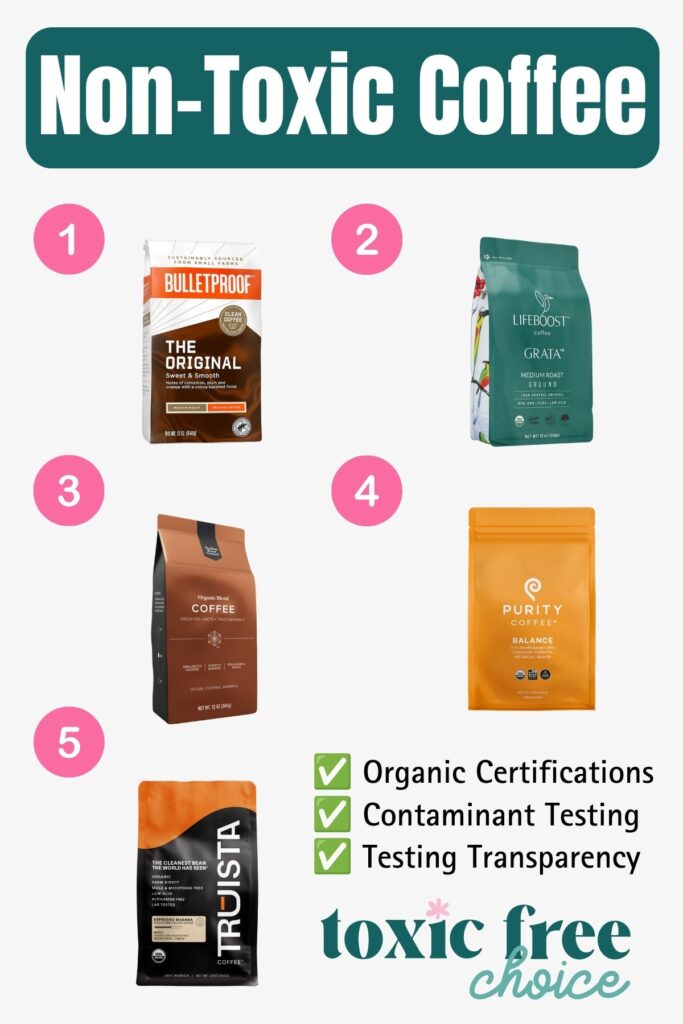
Not all coffee brands approach testing the same way. Save this guide to compare certifications, contaminant screening practices, and the top non-toxic coffee brands evaluated in this review.
Sources & Scientific References
- World Health Organization (WHO) — Research on mycotoxins, food safety, dietary contaminant exposure, and public health risk assessment.
- European Food Safety Authority (EFSA) — Scientific assessments of mycotoxins, food contaminants, exposure levels, and food safety risk evaluation.
- U.S. Food and Drug Administration (FDA) — Research and guidance on environmental contaminants in food, heavy metals, acrylamide, and food safety standards.
- U.S. Environmental Protection Agency (EPA) — Research on glyphosate, pesticide regulation, agricultural chemical exposure, and environmental risk assessment.
- United States Department of Agriculture (USDA) National Organic Program — Federal standards governing organic farming practices, pesticide restrictions, and organic certification requirements.
- Rainforest Alliance — Sustainability certification standards related to biodiversity, environmental stewardship, and responsible coffee production.
- Smithsonian Bird Friendly® Certification — Standards for shade-grown coffee production, habitat conservation, and biodiversity protection.
- Specialty Coffee Association (SCA) — Industry standards for specialty-grade coffee classification, quality evaluation, and coffee production best practices.
- National Cancer Institute (NCI) — Research on acrylamide exposure, dietary sources, and potential health considerations.
- Peer-Reviewed Studies — Research on mycotoxins in coffee, pesticide residues, glyphosate, heavy metals, acrylamide formation during roasting, contaminant exposure assessment, and coffee quality-control practices.





Thank you for your info, very thorough, however can you please email me back with your thoughts and reviews on Black Rifle Coffee Company and there coffee?? You have all the expertise and experience and I would be grateful for your personal and professional evaluation
thank you, David Best
Hi David, we just added them to our list of vetting and we will get back to you!
Is there a mold free instant coffee?
Hi Lana! We recommend Mount Hagen’s instant coffee. It’s organic, non-toxic and they do third party testing to ensure there is no mold. It’s a little on the pricey side, but worth it for the peace of mind.
I just saw something n coffee covering DD, McD, the green one with the mermaid, the Rifle coffee and Death Wish were just that. I saw this on my yahoo app ads just a day ago. Maybe you can find it. I.m looking now as I like my coffee I think I’ll be changing I think Folgers was there too.
Hi there!
Thanks so much for sharing this — we’re with you! We love our coffee too, and it’s so important to stay updated as new testing and reports come out, especially with popular brands like Dunkin’, McD’s, Starbucks, Death Wish, Rifle, and Folgers.
We haven’t seen that specific report yet, but we’ll definitely look into it! If you happen to find it again, feel free to drop the link here or email us directly — we love diving into the data and updating our guides to reflect the latest info.
In the meantime, switching to organic and mold-free certified brands is a great step. We’ll keep digging and continue to share what we learn.
Warmly,
Danielle
What are The 2025 Best Coffee Brands
And
Are They Free Of Chem-Trail Poisons