This post may contain affiliate links. By browsing this website, you agree to our disclaimer, privacy policy, and terms of use.
The BPA-Free Lie: What if “BPA-free” doesn’t mean safe?
For decades, we’ve been told to avoid BPA — but recent research shows that its replacements, like BPS and BPAF, may be just as toxic (if not worse).
This guide pulls back the curtain on the science, the marketing deception, and the truth about plastic safety.
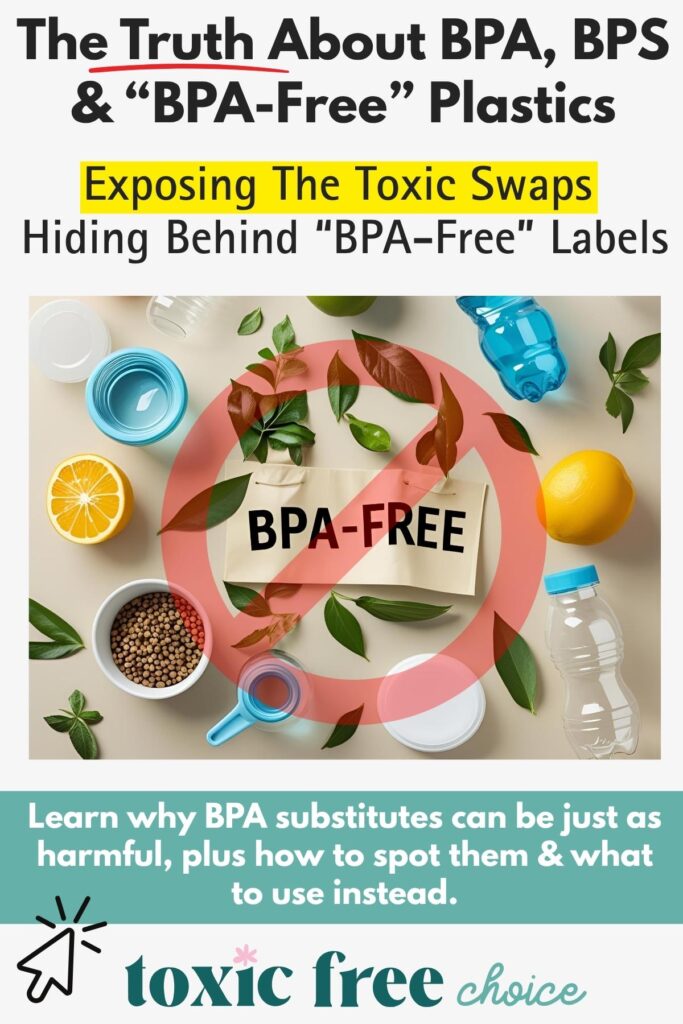
BPA-Free? You Might Be Getting Played
You’ve seen the label: “BPA-free.”
It sounds like a safer choice—especially for water bottles, food containers, and baby gear. But shocking new research shows many “BPA-free” plastics are actually more toxic than the BPA they replaced.
Scientists tested four common alternatives—including BPS—and found some caused irreversible cell damage in just 10 minutes at doses we encounter in everyday life.
📉 Here’s the truth:
For nearly a century, manufacturers knew that BPA mimics estrogen and disrupts hormones. But it was cheap, convenient, and wildly profitable—so they kept using it in everything from baby bottles to can linings.
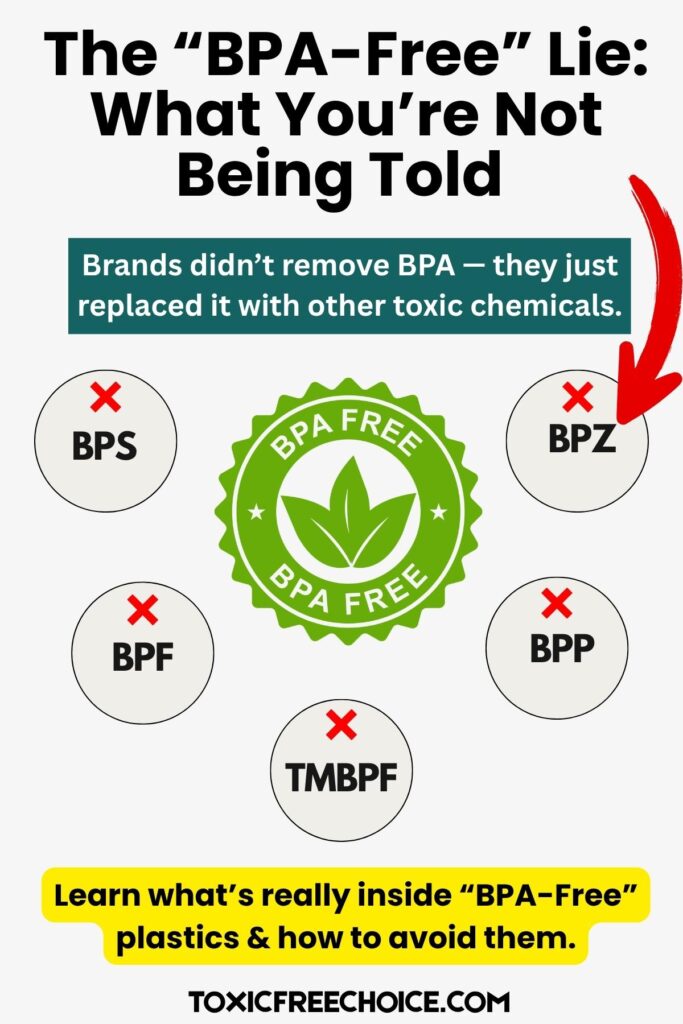
When regulators started banning BPA, the plastics industry didn’t switch to safer options. They exploited a loophole. They rolled out chemical cousins like BPS and BPF, slapped on a “BPA-free” label, and kept selling the same risk—just rebranded.
👉 The kicker? These “alternatives” were tested even less than BPA.
Today, 81% of people in 8 countries have BPS in their bodies—even those who actively tried to avoid it. Scientists now call this the largest uncontrolled chemical experiment in modern history—and we’re all unwitting participants.
What Is BPA? Why It’s Been Banned from So Many Products
BPA (bisphenol A) is the base material for polycarbonate plastic and epoxy resin, one of the most produced chemicals on the planet. You’ll find it in water bottles, food storage containers, and the lining inside almost every can in your pantry.
Scientists have known that BPA acts like estrogen in the body since the 1930s. It’s been nearly a century since we’ve understood that this chemical disrupts hormones. Yet it took until 2008 for the first country to act.
😬 BPA Should Have Been Banned Decades Earlier
Canada was the first North American country to ban BPA in baby bottles in 2008 after mounting evidence of the negative health effects. France followed in 2010. The European Union joined in 2011.
Each ban came after the same realization: that BPA doesn’t just mimic estrogen, it rewrites your body’s chemical messaging system.
The documented health impacts include:
- Breast cancer
- Prostate cancer
- Endometriosis
- Heart disease
- Type 2 diabetes
- Obesity
- Reproductive problems
- Brain‑development issues
But the real bombshell dropped in 2023.
What 800+ Studies Revealed About Misguided “BPA Safety”
The European Food Safety Authority (EFSA) reviewed over 800 scientific studies and reached a startling conclusion: the “safe” level of BPA exposure needed to be slashed by 20,000 times compared to their 2015 guidelines.
That’s not a typo. That’s not an adjustment. It’s an admission that we’ve been massively underestimating the danger of BPA exposure.
The Numbers That Prove We’re All Exposed
Recent biomonitoring data show the true scope of contamination:
- 92% of adults in 11 European countries have BPA in their system
- 71-100% exceed levels that pose potential health concerns
- Children face the greatest exposure since they consume more food per pound of body weight than adults. Most concerning, their developing bodies are far more sensitive to endocrine disruption during critical windows of brain development.
The European Environment Agency didn’t mince words about these findings. In some countries, literally every single person tested had concerning levels of BPA.
And here’s where it gets worse. While regulators were slowly banning BPA, the plastic industry was one step ahead, coming up with a chemical replacement.

BPA-Free ≠ Safe: Why BPS Is No Better (and May Be Worse)
When “BPA-free” plastics hit the market, it seemed like a win. Finally—products that gave us all the convenience of plastic, without the hormone-disrupting risks. Right?
Wrong.
Most of these “BPA-free” alternatives are part of what scientists now call regrettable substitutions—chemicals that are just as toxic (or worse) and completely unregulated.
“A regrettable substitution is when we replace a known toxic chemical with another that’s equally or more harmful—without proper testing.” — Endocrine Society Statement on BPA Alternatives
Instead of finding a safe solution, the plastics industry simply swapped one endocrine disruptor for another, slapped on a new label, and called it progress.
🧪 BPS: Same Poison, Different Name
BPS (bisphenol S) is now one of the most widely used BPA replacements—and the science is clear:
- Disrupts male hormones and testosterone balance
- Increases fat accumulation in cells (linked to obesity)
- Activates the caspase-6 pathway—a trigger for irreversible cell death
Even high-end “BPA-free” plastics like Tritan™ aren’t immune. In lab tests, only 1 in 3 Tritan bottles showed no estrogenic or androgenic activity under perfect conditions.
But once you add real-life stress—UV light, hot dishwashers, scratches from everyday use—the risk skyrockets.
🔬 New Study: The Most Toxic BPA Alternatives Ranked
In a head-to-head lab study, four common BPA substitutes were tested for their ability to kill living cells. Here’s how they ranked:
- BPAF (Bisphenol AF) – Most toxic
- TMBPF (Tetramethyl Bisphenol F)
- BPA (Bisphenol A)
- BPS (Bisphenol S) – Still toxic, just slightly less so
🧬 Every single one triggered cell death within 10 minutes—at real-world exposure levels.
Let that sink in: Touching a receipt. Heating leftovers in a “BPA-free” container. Drinking from a water bottle left in the sun.
These aren’t theoretical risks—they’re daily habits linked to immediate cellular damage.
⚠️ Key Takeaway: Replacing BPA with other bisphenols doesn’t make your product safe. It just makes the chemical problem harder to see.
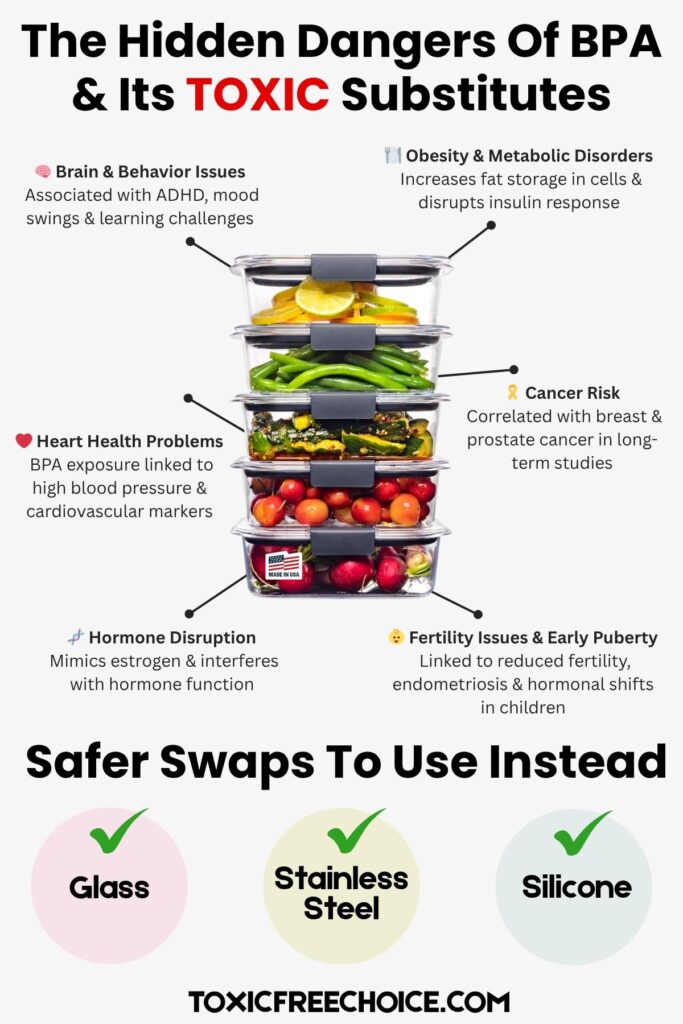
Health Risks of BPA, BPS & Plasticizers in Everyday Products
Your Body Can’t Tell the Difference — And That’s the Problem
“BPA-free” plastics aren’t harmless. In fact, your body responds to their chemical substitutes in exactly the same way.
Think of your hormones as a lock, and BPA as a key that fits and turns that lock—triggering false signals in your body.
Now picture what manufacturers did: They created new keys like BPS, BPF, and BPAF—slightly reshaped, but still able to turn the same biological locks.
🔬 Lab tests show:
- These bisphenol substitutes bind to human hormone receptors just like BPA
- Some actually activate those receptors more aggressively than BPA
- The result? Incorrect hormonal messages that affect metabolism, brain development, fertility, and more
👉 Swapping one bisphenol for another doesn’t reduce risk. It just gives you the same harm with a different label.
Why Children Are at the Greatest Risk
Children aren’t just “mini adults” when it comes to toxins. Their bodies are more vulnerable—and they’re exposed more often. Here’s why:
- Higher relative intake: Kids eat and drink more per pound of body weight than adults
- Behavioral exposure: They chew, mouth, and handle plastic items constantly
- Critical brain development: Tiny doses of endocrine disruptors during early growth can alter neural pathways permanently
📊 Studies show that infants, toddlers, and young children consistently have the highest dietary BPA exposure across all age groups.
The Full Spectrum of Health Impacts
When multiple studies examined BPA and its alternatives, they found associations with:
- Reproductive issues: Decreased fertility, altered hormone levels, endometriosis
- Metabolic disorders: Type 2 diabetes, obesity (BPS shows even higher lipid storage than BPA)
- Cardiovascular disease: High BPA levels directly correlate with heart disease markers
- Neurodevelopmental problems: Lower IQ, ADHD symptoms, behavioral issues in children
- Cancer risks: Particularly breast and prostate cancers
These aren’t rare side effects. They’re predictable outcomes when chemicals designed to be stable in plastic interact with the delicate hormone systems that regulate every aspect of human health.
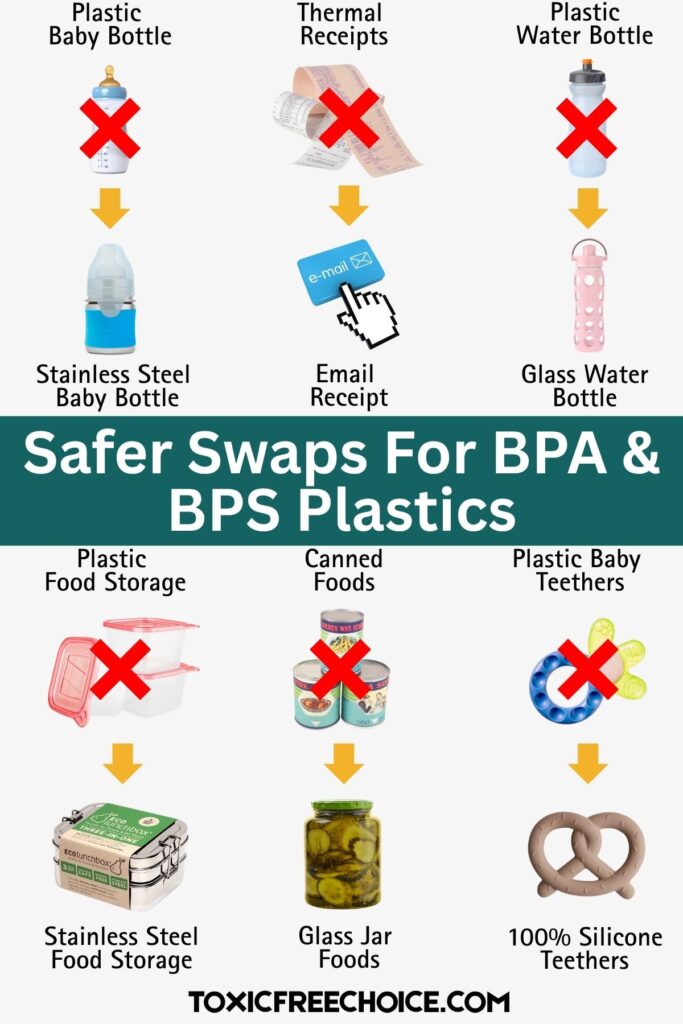
Where BPA and BPS Are Hiding in Your Home + SWAPS!
BPA and its toxic replacements—like BPS, BPF, and BPAF—hide in far more places than most people realize.
Even products labeled “BPA-free” often use unregulated substitutes that still disrupt hormones and harm your health.
If you’re serious about reducing exposure, it’s time to know where these chemicals lurk—and what to swap them for instead.
Baby Bottles, Sippy Cups, and Food Pouches
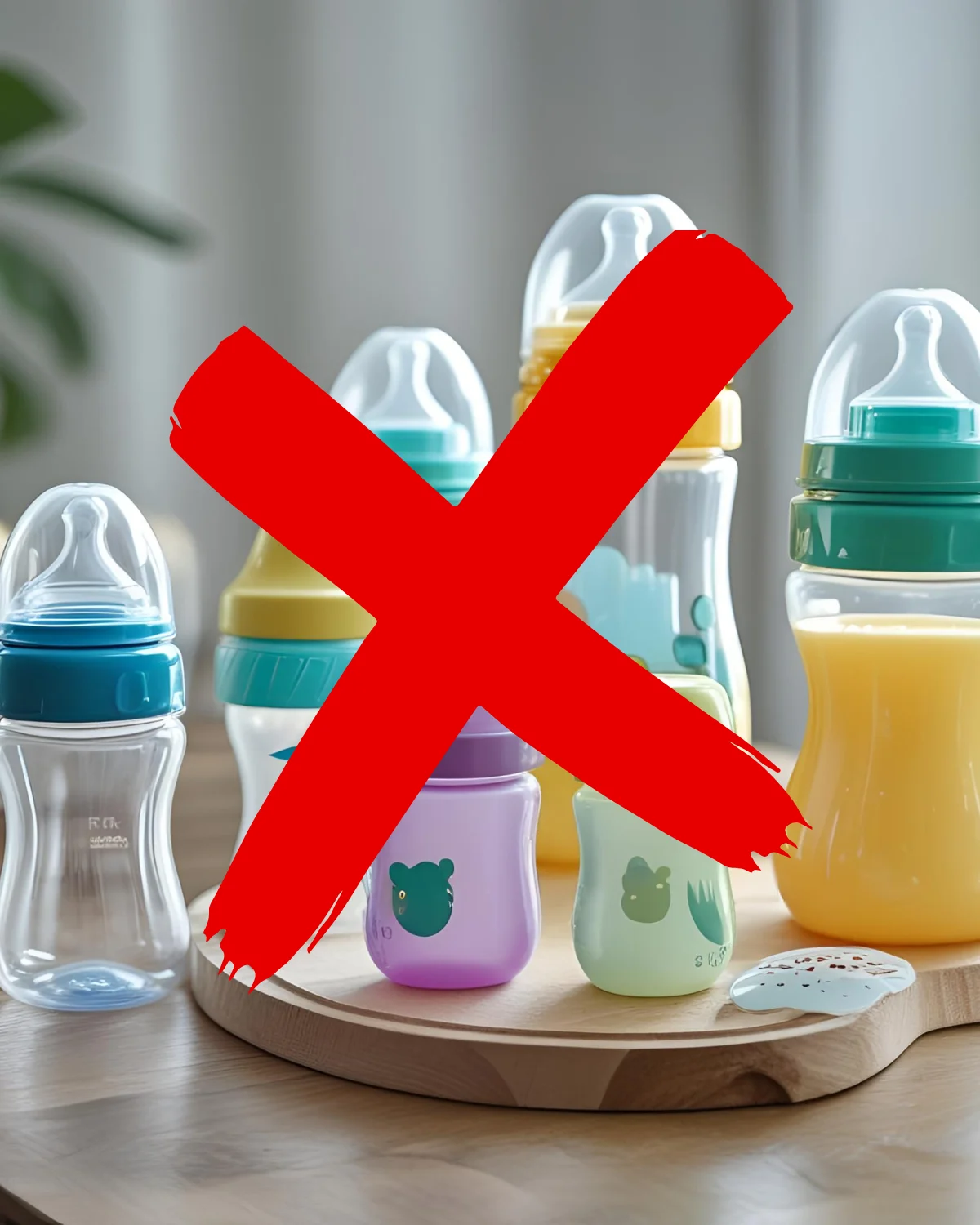
Although BPA was banned in baby bottles in 2008, manufacturers quickly replaced it with BPS or BPF.
Today’s “BPA-free” baby bottles are often made from polypropylene (#5), which can still leach when heated or scratched.
Sippy cups and store-bought baby food pouches aren’t any better.
The Safer Swap: Choose glass baby bottles with silicone sleeves or stainless steel alternatives that are durable and inert. For toddlers, use stainless steel sippy cups with silicone lids.
And instead of plastic squeeze packs, try reusable, food-grade silicone pouches you can fill and wash at home.
👉 Explore the Best Non-Toxic Baby Bottles for safe, tested options.
Plastic Food Storage and Lunch Gear
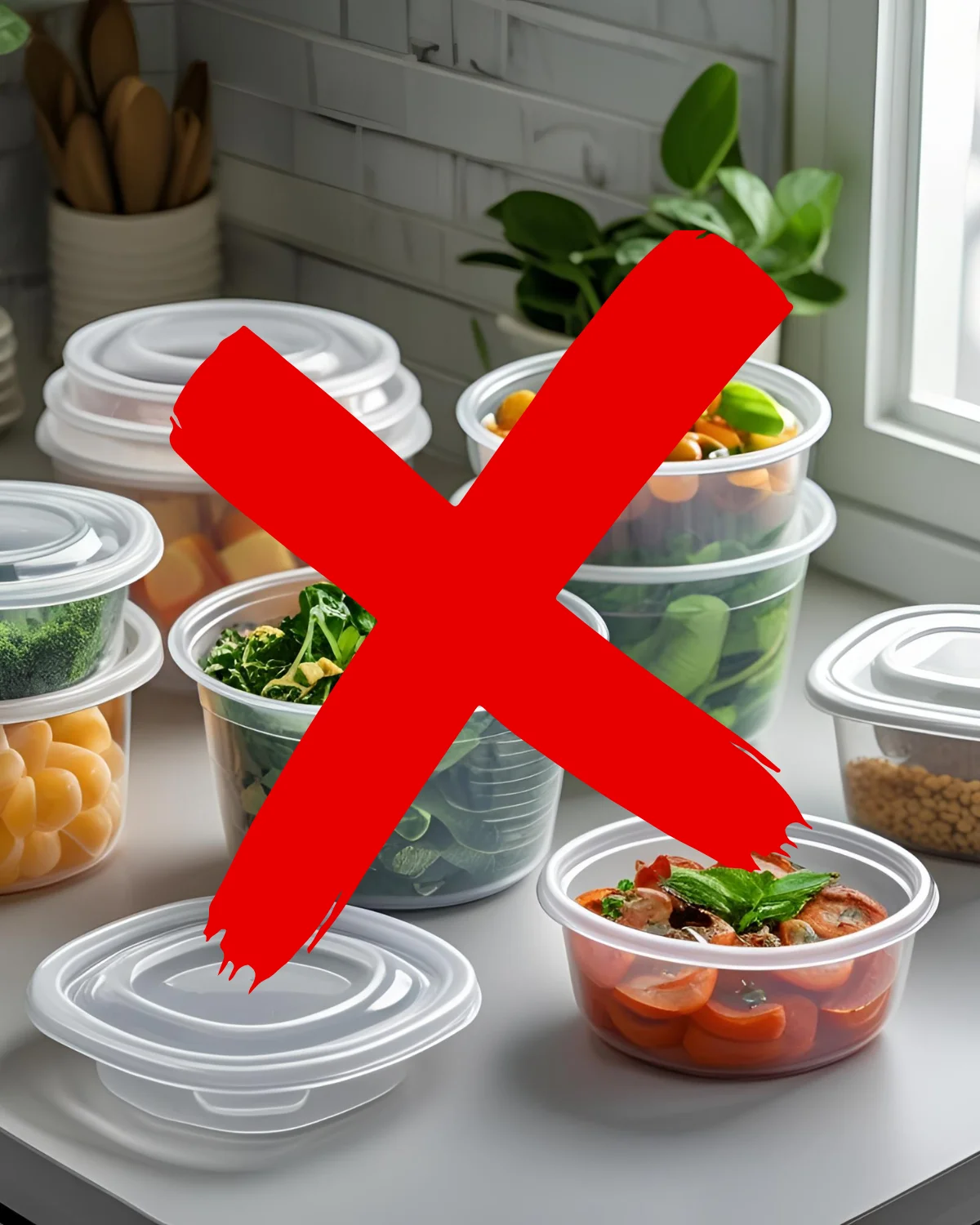
Diet is the leading source of BPA exposure.
When plastic meets heat, acid, or fat, leaching intensifies—especially with leftovers or takeout.
Even “microwave-safe” plastic containers release hormone-disrupting chemicals.
The Better Choice: Switch to tempered glass or stainless steel food storage.
These materials are non-leaching, odor-resistant, and last for years with proper care.
👉 Browse our top picks in the Best Non-Toxic Food Storage guide.
Canned Foods and Jar Linings
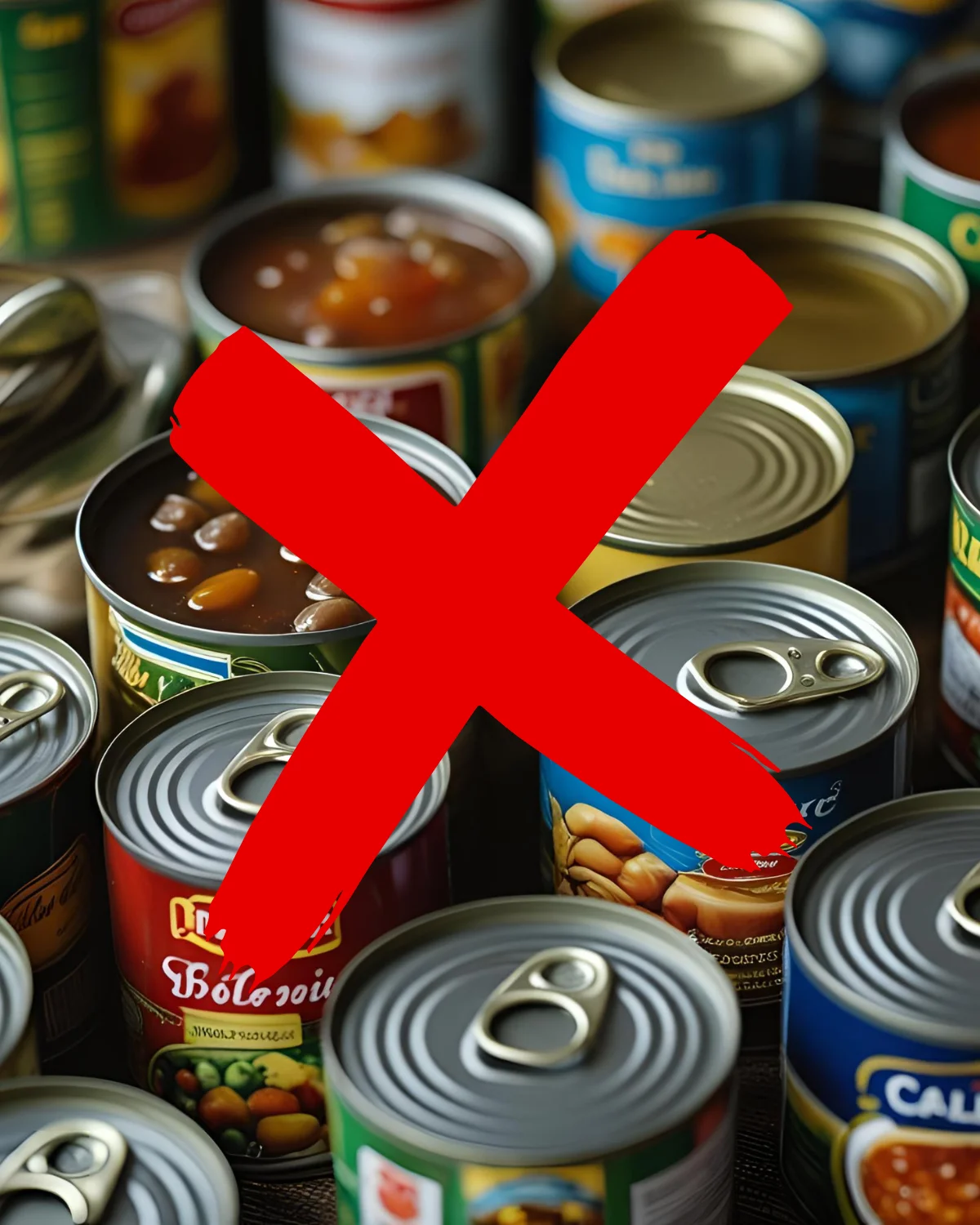
Most canned goods still use BPA-based epoxy linings—or similar chemicals like BPS.
Even cans labeled “BPA-free” don’t disclose what’s used instead, and brands aren’t required to reveal their lining materials.
The Safest Route: Choose fresh, frozen, or jarred foods whenever possible.
Look for brands that name their lining materials and commit to bisphenol-free packaging.
Thermal Receipts and Paper Products

Those shiny receipts from stores are coated in BPA or BPS, which transfers through your skin—especially after applying hand sanitizer or lotion.
Cashiers and regular shoppers are most at risk, but exposure adds up quickly even from occasional contact.
Minimize contact when possible. Say yes to digital receipts, and never handle them with moist skin.
Reusable Plastic Water Bottles (Especially Tritan™)
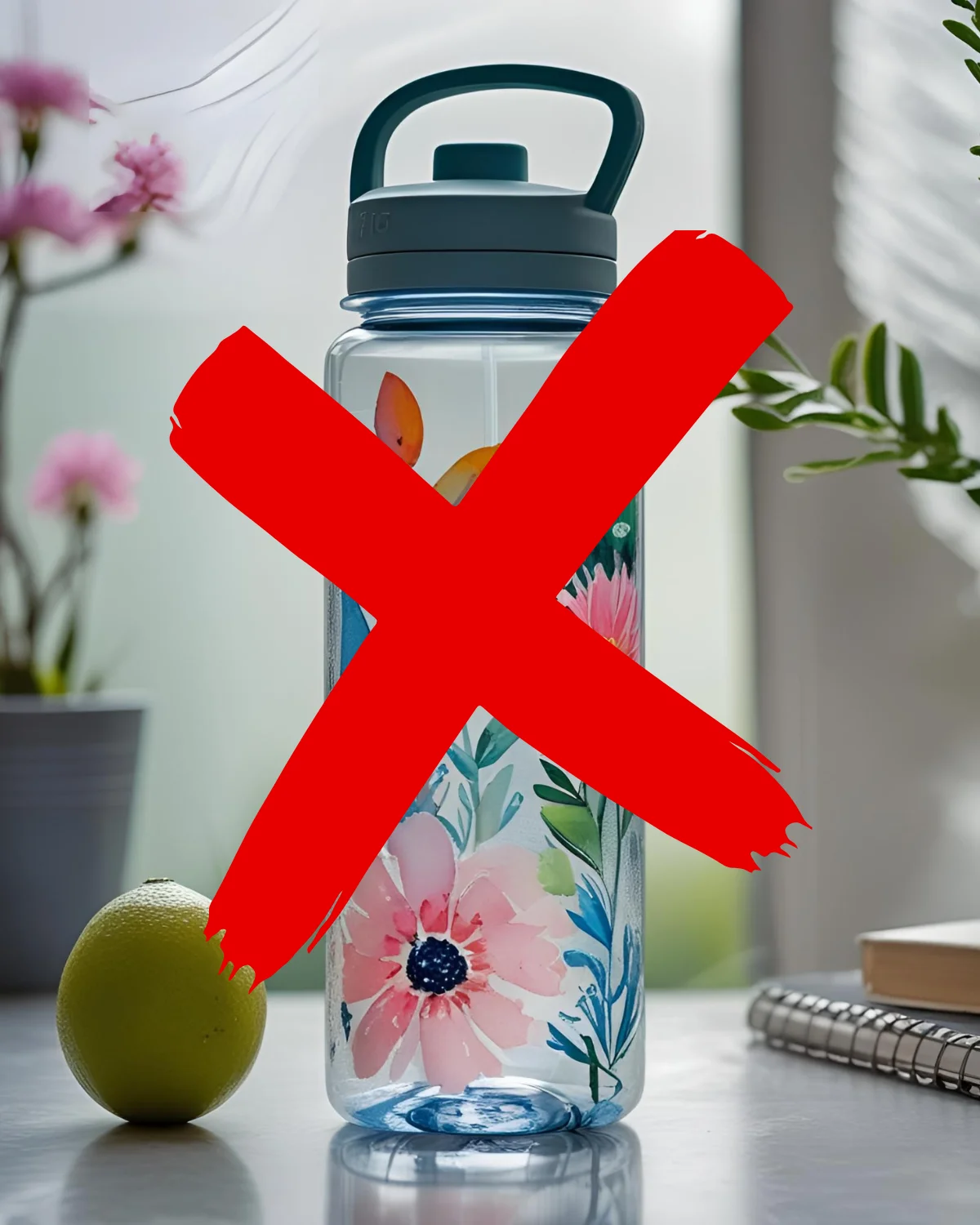
Tritan plastic is widely marketed as a safe BPA-free alternative.
But lab studies show most Tritan bottles still leach estrogen-like chemicals when exposed to UV light, heat, or wear and tear.
Real-world use can undo any “lab-safe” claims.
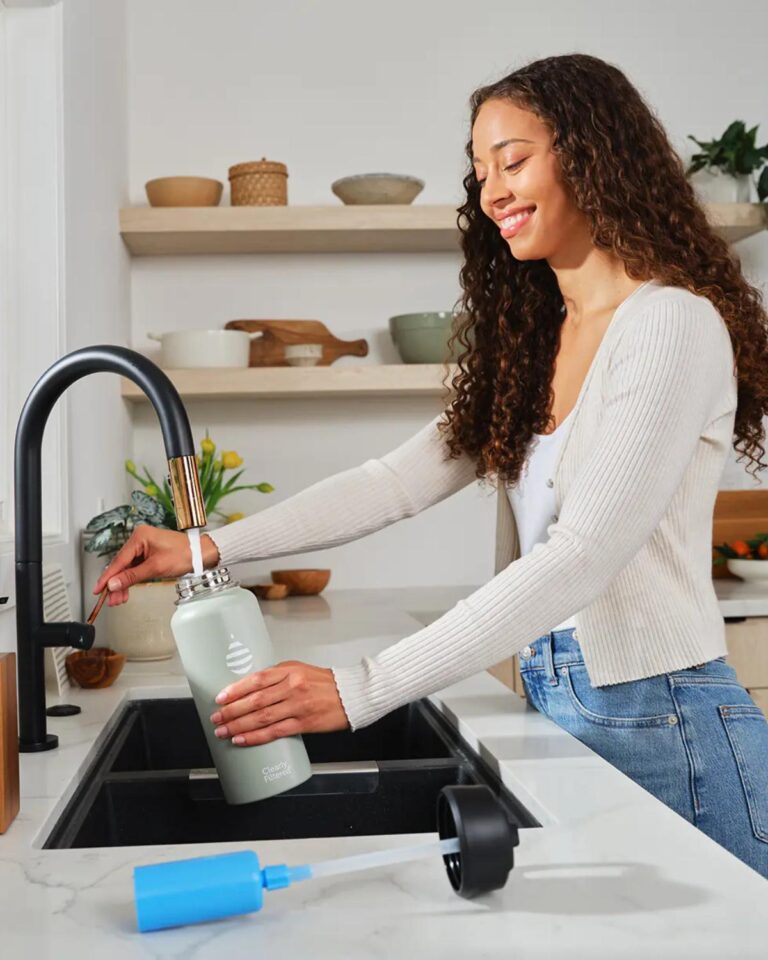
Skip The Risk: Use stainless steel water bottles made from 304 or 18/8 steel, or ones lined with glass.
👉 See our top-rated picks in the Best Non-Toxic Water Bottles guide.
Black Plastic Kitchen Utensils and Takeout Trays
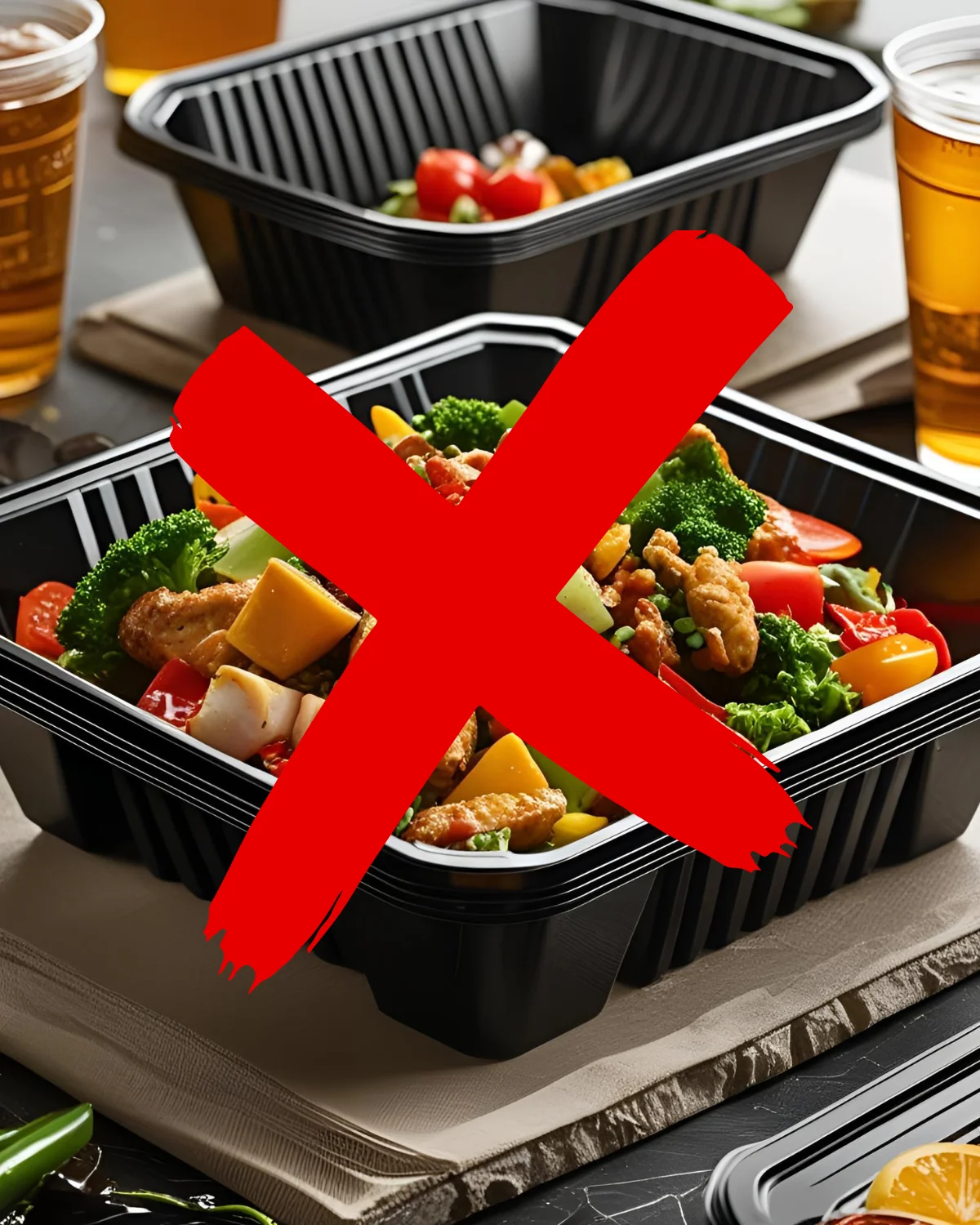
Black plastic is especially concerning—it’s often made from recycled electronics, which may contain heavy metals, flame retardants, and PVC.
When exposed to hot food, those toxins can migrate straight into your meal.
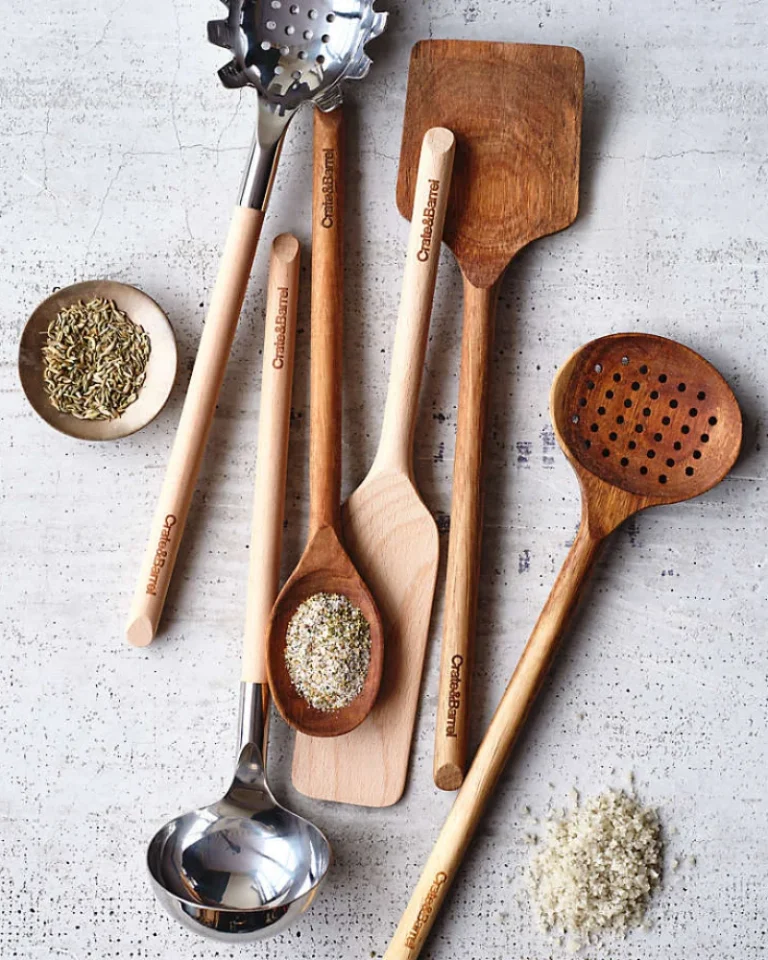
The Smart Upgrade: Choose cooking utensils made from food-grade silicone (safe up to 428°F) or natural wood.
👉 Shop the safest alternatives in our Best Non-Toxic Kitchen Utensils guide.

Know Your Plastics (Identifying Safe & Toxic Plastics)
Understanding Plastic ID Numbers
Every plastic container has a number inside the recycling symbol. This isn’t just helpful for recycling; it can also help you avoid the most toxic plastics.
The Safer Plastics
- #1 PET/PETE – Generally safe for single use, but never reuse or heat. Water bottles and food packaging made from PET don’t contain BPA or phthalates, but they can harbor bacteria and break down with repeated use.
- #2 HDPE – The safest plastic option. High-density polyethylene is stable, doesn’t leach chemicals, and is OK to reuse. Look for milk jugs, detergent bottles, and some food containers with this number.
- #4 LDPE – Safe for use but rarely recycled. Found in squeeze bottles, bread bags, and some food wraps. No known hormone disruptors, but limited recycling availability.
- #5 PP – Polypropylene is generally safe, but skip the microwave. Despite microwave-safe labels, heating can still cause chemical breakdown. Common in yogurt containers and bottle caps.
The Danger Zone
- #3 PVC – AVOID completely. Contains phthalates and releases dioxins. Never use for food contact. Found in some cling wraps, cooking oil bottles, and plumbing pipes.
- #6 PS – AVOID. Polystyrene leaches styrene, a neurotoxin and possible carcinogen. This includes all Styrofoam products and some disposable cups and plates.
- #7 Other – The wild card category. This “catch-all” includes everything manufactured since the 1980s. Unless specifically labeled as BPA-free (and remember, that’s meaningless), assume it contains bisphenols. Many baby bottles, water cooler jugs, and food containers fall here.
The Truth About Tritan, Not the Hero We Hoped For
Tritan plastic emerged as the premium “safe” alternative, marketed as free from all bisphenols with no estrogenic or androgenic activity.
The reality is more complicated. Testing revealed that only 1 out of 3 Tritan products showed no hormone activity when unstressed.
Add real-world conditions—UV exposure, dishwasher heat, normal wear—and even this “safest” plastic alternative shows mixed results.
Does this mean Tritan is dangerous? Not necessarily. But it means even our best plastic options come with asterisks and unknowns.

Safer Alternatives to Plastic
When you can, it’s best to skip plastic entirely. We like the following since they have been safely used for centuries:
Glass
- Zero chemical leaching at any temperature
- Dishwasher safe, freezer safe, oven safe
- Lasts forever with proper care
- Only downside: breakability (offset with silicone sleeves)
Stainless Steel
- Look for food-grade 304 or 316 steel
- No chemical migration, even with acidic foods
- Lightweight, unbreakable, perfect for kids
- Avoid aluminum or non-food-grade options
Food-Grade Silicone
- Stable up to 428°F (220°C)
- No BPA, phthalates, or other plasticizers
- Perfect for baby products, bakeware, and food storage
- Ensure it’s 100% silicone, not silicone-coated plastic
Can’t quit plastic? Follow these steps for safety!
Can’t afford all-new everything? Focus on these free changes if you continue to use plastic containers:
- Never microwave plastic, even “microwave-safe” types
- Let food cool before storing in any plastic
- Hand-wash plastics to avoid dishwasher heat
- Choose fresh or frozen vegetables over canned
- Save glass jars from pasta sauce and pickles for food storage
Frequently Asked Questions
BPA is a chemical used in plastics that mimics estrogen and disrupts hormones, even at low doses. It’s been linked to fertility issues, obesity, and developmental problems.
Despite decades of use, recent research prompted health authorities to drastically lower safe exposure limits, revealing BPA is far more harmful than once believed.
“BPA-free” means the product doesn’t contain Bisphenol A, but it often contains other bisphenols like BPS or BPF, which can be just as toxic.
This label is not a guarantee of safety—it simply means a chemical swap was made, often without transparency or regulation.
No, BPS is not safer than BPA.
Studies show that BPS can disrupt hormones in similar or even stronger ways. It has been linked to obesity, reproductive harm, and cell damage.
Choosing products made with BPS instead of BPA offers no meaningful health benefit.
Yes, BPA and BPS can leach into food and drinks—especially when plastic is exposed to heat, acids, or fats. Even microwave-safe or dishwasher-safe plastics can release chemicals under real-world conditions.
Some plastics are more hazardous than others. PVC, polystyrene, and any plastic labeled #7 often contain toxic additives or bisphenols. Even safer plastics can become risky when heated, scratched, or used for acidic or fatty foods.
Tritan is marketed as a safe plastic, but testing shows it may still release hormone-disrupting chemicals under heat or wear.
It may be safer than older plastics, but it’s not risk-free—especially when better alternatives like glass or stainless steel exist.
Glass and stainless steel are the safest options for food and drink storage. They do not leach chemicals, even with heat, and they’re durable and reusable. Food-grade silicone is also a safe alternative when properly certified.
Avoid canned foods, plastic containers, and anything labeled #7 or “BPA-free” without details. Use glass or stainless steel instead, never microwave plastic, and skip receipts when possible. Demand transparency in labeling and material safety.
Research Shows “BPA Free” and Its “Safer” Alternatives Are Toxic For Your Health
After years of trusting “BPA-free” labels, we’ve learned that swapping one chemical cousin for another does not guarantee safety.
Science shows that BPA look‑alikes such as BPS, BPAF, and TMBPF can mimic hormones, damage living cells in minutes, and end up in our bodies just like BPA itself.
Real‑world testing and biomonitoring confirm these replacement compounds are everywhere, from food containers and receipts to water bottles and baby gear.
The good news is you can take control. Choosing materials like glass, stainless steel, or certified food‑grade silicone cuts bisphenol exposure to zero.
When plastic is unavoidable, focus on clearer labeling, stick with recycling codes two, four, and five, and avoid plastics labeled three, six, and seven.
Cooling food before storage, hand‑washing plastic, and steering clear of heated or scratched containers are simple steps that make a big difference.
Armed with this knowledge, you can move beyond marketing claims, make informed choices, and protect your family from hidden chemical hazards.
Looking for more non-toxic living tips? Check out these other amazing articles:
- Non-Toxic Water Filters
- Non-Toxic Home Checklist
- Non-Toxic Cookware
- Non-Toxic Tea Kettles
- Non-Toxic Kitchen Utensils
- Non-Toxic Water Bottles
- Non-Toxic Kids Cups
- Zero VOC Paint Brands
- Ways To Decrease Toxins
Like It? Pin It!
Sources
- Edaes, F. S., & de Souza, C. B. (2022). BPS and BPF are as carcinogenic as BPA and are not viable alternatives for its replacement. Endocrine, Metabolic & Immune Disorders Drug Targets, 22(9), 927–934. https://doi.org/10.2174/1871530322666220316141032
- Villalaín, J. (2024, November 18). Study finds ‘safe’ BPA alternatives may still pose health risks. Phys.org. Retrieved July 30, 2025, from https://phys.org/news/2024-11-safe-bpa-alternatives-pose-health.html
- Pelch, K., Wignall, J. A., Goldstone, A. E., Ross, P. K., Blain, R. B., Shapiro, A. J., Holmgren, S. D., Hsieh, J.-H., Svoboda, D., Auerbach, S. S., Parham, F. M., Masten, S. A., Walker, V., Rooney, A., & Thayer, K. A. (2019). A scoping review of the health and toxicological activity of bisphenol A (BPA) structural analogues and functional alternatives. Toxicology, 424, 152235. https://doi.org/10.1016/j.tox.2019.06.006
- European Food Safety Authority. (2023). Re-evaluation of risks to public health related to the presence of bisphenol A (BPA) in foodstuffs. EFSA. https://www.efsa.europa.eu/en/plain-language-summary/re-evaluation-risks-public-health-related-presence-bisphenol-bpa-foodstuffs
- European Food Safety Authority. (2013). Bisphenol A safe exposure levels are under review. https://www.efsa.europa.eu/en/press/news/130725
- Thompson, J. (2019). Harmful chemicals removed from products are often replaced with something as bad or worse. Harvard T.H. Chan School of Public Health. Retrieved July 30, 2025, from https://hsph.harvard.edu/news/harmful-chemicals-removed-from-products-often-replaced-with-something-as-bad-or-worse/
- NutritionFacts.org. (n.d.). Are the BPA-free plastics like Tritan safe? Retrieved July 30, 2025, from https://nutritionfacts.org/blog/are-the-bpa-free-plastics-like-tritan-safe/
- BreastCancer.org. (n.d.). Exposure to chemicals in plastic and breast cancer risk. Retrieved July 30, 2025, from https://www.breastcancer.org/risk/risk-factors/exposure-to-chemicals-in-plastic
- Minnesota Department of Health. (n.d.). Bisphenol A (BPA). Retrieved July 30, 2025, from https://www.health.state.mn.us/communities/environment/risk/chemhazard/bisphenola.html
- Minnesota Pollution Control Agency. (n.d.). BPA and BPS in thermal paper. Retrieved July 30, 2025, from https://www.pca.state.mn.us/business-with-us/bpa-and-bps-in-thermal-paper