


This post may contain affiliate links. By browsing this website, you agree to our disclaimer, privacy policy, and terms of use.
Back-to-school season always comes with a to-do list, and new shoes are usually at the top, along with art supplies and backpacks.
It sounds simple until you’re staring at shelves full of options that smell more like a plastic factory than something your child should wear all day.
Most parents never think about what their kids’ shoes are actually made of. And as costs rise, more brands are relying on questionable materials like PVC, VOC-loaded adhesives, synthetic foams, and PFAS-based waterproofing.
That “new shoe smell”? It’s chemicals off-gassing into the air your child breathes and sitting against their skin.
Kids spend eight or more hours a day in their shoes. Heat, sweat, and constant contact make it easier for unwanted chemicals to be absorbed, especially concerning their small, developing bodies.
This guide breaks down what’s really inside most kids’ shoes and how to choose safer alternatives without giving up comfort, style, or durability.
You’ll learn which materials to avoid, which certifications matter, and which brands actually walk the talk. Let’s make sure those little feet are supported, protected, and nowhere near unnecessary chemicals.
Why Shoe Materials Matter More For Kids
Heat & Moisture Increase Contact
Shoes create a warm, humid environment that stays against the skin for hours.
Heat softens materials, moisture increases skin permeability, and friction helps chemicals migrate to the surface.
Most kids wear the same shoes daily through school, sports, and play, so even low-level exposures add up during key growth stages.
Kids Absorb More Than Adults
Children interact with materials differently because their bodies are still developing. A few key differences make exposures more meaningful:
- Thinner skin allows more chemicals to be absorbed through the skin.
- Faster metabolism processes substances quickly, which can increase sensitivity.
- A Higher surface-area-to-body-weight ratio means even small exposures have a bigger impact.
These factors make material quality more important during childhood.
Toxic Materials in Kids’ Shoes
Most kids’ shoes spend more than eight hours a day against the skin, which means whatever they’re made from matters.
Unfortunately, many mainstream styles still rely on materials that can release unwanted chemicals, especially with heat, sweat, and constant movement.
Common chemicals to watch for include:
- PVC & Phthalates: PVC often contains phthalates to stay flexible, and those chemicals don’t stay put. Some are linked to hormone disruption and developmental concerns.
- PFAS (Forever Chemicals): These water-repellent coatings are used in many “weatherproof” shoes. PFAS can accumulate over time and have been associated with detrimental immune and thyroid effects.
- Formaldehyde-Based Adhesives: Strong glues help shoes stay together, but older formulations can release low levels of formaldehyde, a known irritant that can trigger skin and respiratory reactions.
- VOCs (Volatile Organic Compounds): These evaporate into the air and contribute to that “new shoe smell.” VOCs may cause headaches, fatigue, or irritation in sensitive children.
- Heavy Metals: Bright dyes, painted soles, and some metal hardware can hide traces of lead, cadmium, or chromium.
Even small amounts can negatively affect cognitive development. Many brands don’t disclose every material they use, and some rely on eco-sounding marketing to appear safer than they are.
Misleading Labels & Greenwashing Terms
Labels like “eco-friendly,” “natural,” “recycled,” or “vegan leather” can sound reassuring, but they often refer to packaging or a single component rather than the full shoe.
“Eco-friendly” doesn’t equal healthy. Recycled synthetics, for example, may still contain residues from past treatments or PFAS-based coatings.
Knowing what to look for helps you quickly sort through options and avoid unnecessary exposures, especially when your child wears the same pair day after day.
👉🏼 Want to make the barefoot switch as a family? Explore the Best Barefoot Shoe Brands For Adults in our SKL guide.
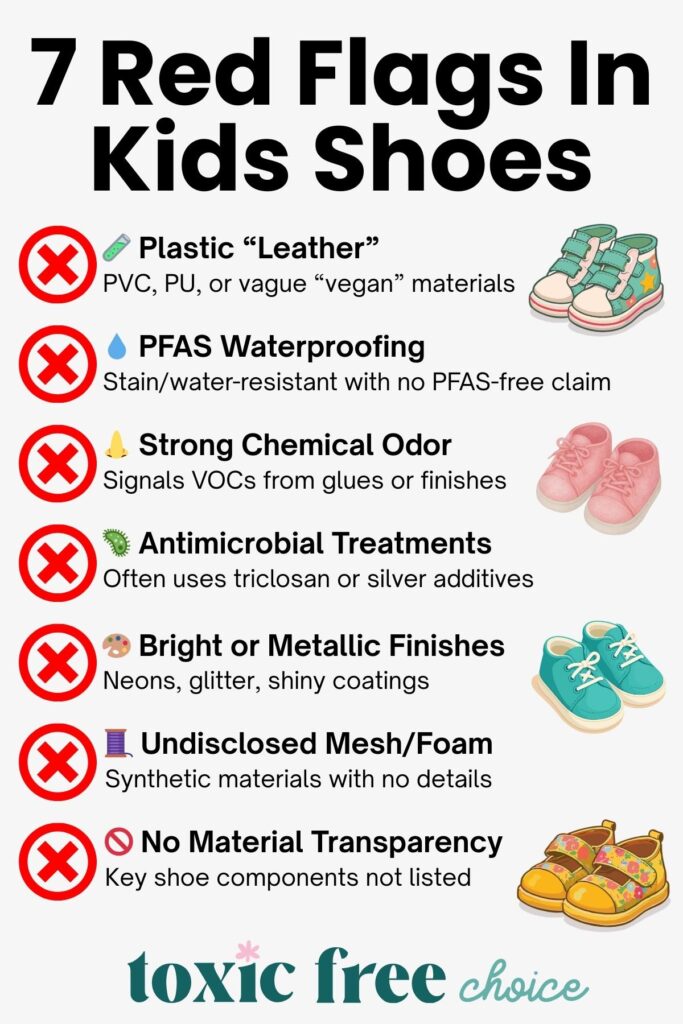
7 Warning Signs of Toxic Kids’ Shoes
🚩 Red Flags
- 🧪 Plastic-Based “Leather” (PVC, PU, or Unverified Vegan Leather) → Most synthetic leathers rely on plasticizers like phthalates, which can migrate with heat and wear.
- 💧PFAS-Based Waterproofing → If a shoe promises to be waterproof or stain-resistant, it likely uses PFAS. Look for “PFAS-free” labels or natural alternatives like waxed cotton or untreated leather.
- 👃Strong Chemical Odor → A lingering “new shoe smell” indicates VOCs from adhesives or finishes.
- 🦠 Chemical Treatments For Odor or Antimicrobials → Shoes marketed as “antimicrobial” or “odor-resistant” often use treatments like triclosan or silver nanoparticles that can disrupt the skin microbiome.
- 🎨 Bright or Metallic Finishes → Though they may look cool, highly saturated dyes, neon soles, glitter, or shiny embellishments can hide heavy metals like lead, cadmium, or chromium. These materials are common in budget-friendly shoes.
- 🧵Synthetic Mesh or Foam With No Material Disclosure → Petroleum-based foam or mesh can release VOCs, especially with heat and sweat.
- 🚫 Lack of Transparency → If a brand doesn’t share materials for uppers, linings, soles, or adhesives, that’s a red flag. Safer brands clearly list their components and certifications.
Now that you know what to avoid, here are the brands that actually make the grade.
These companies prioritize safer materials, transparent sourcing, and thoughtful construction so your child’s shoes support their health and their movement.
The Safest Non-Toxic Kids’ Shoe Brands in 2026
Every brand in this list has been evaluated based on material disclosures, certifications, and product transparency. We also reviewed safety documentation when available.
✅ All recommended shoes meet the following minimum safety criteria:
- PFAS-free
- PVC-free
- No formaldehyde adhesives
- No known phthalates or heavy metals
- Transparent material disclosures
1. Wildling Shoes
Best For: Barefoot-style movement
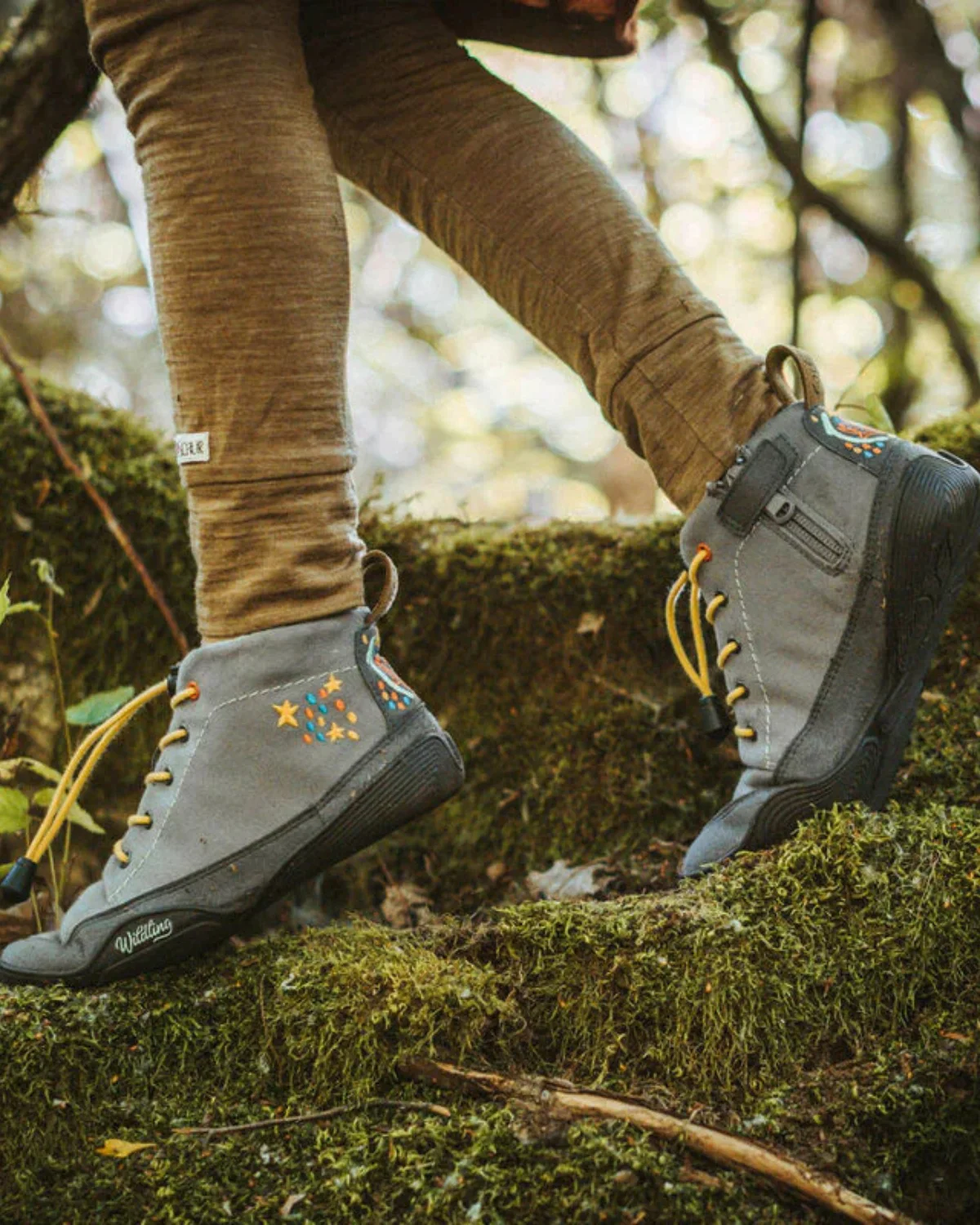
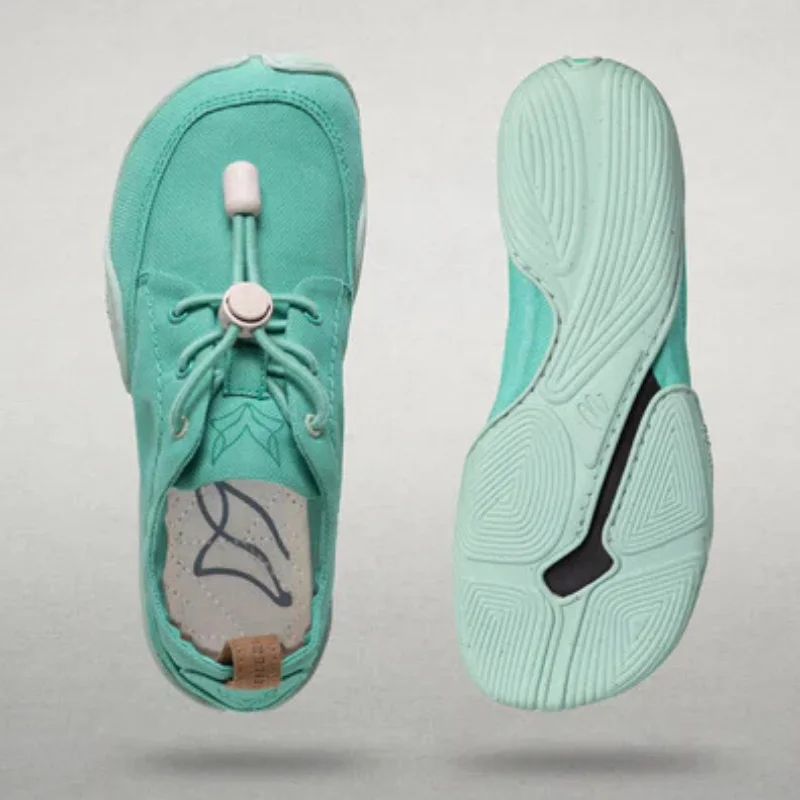
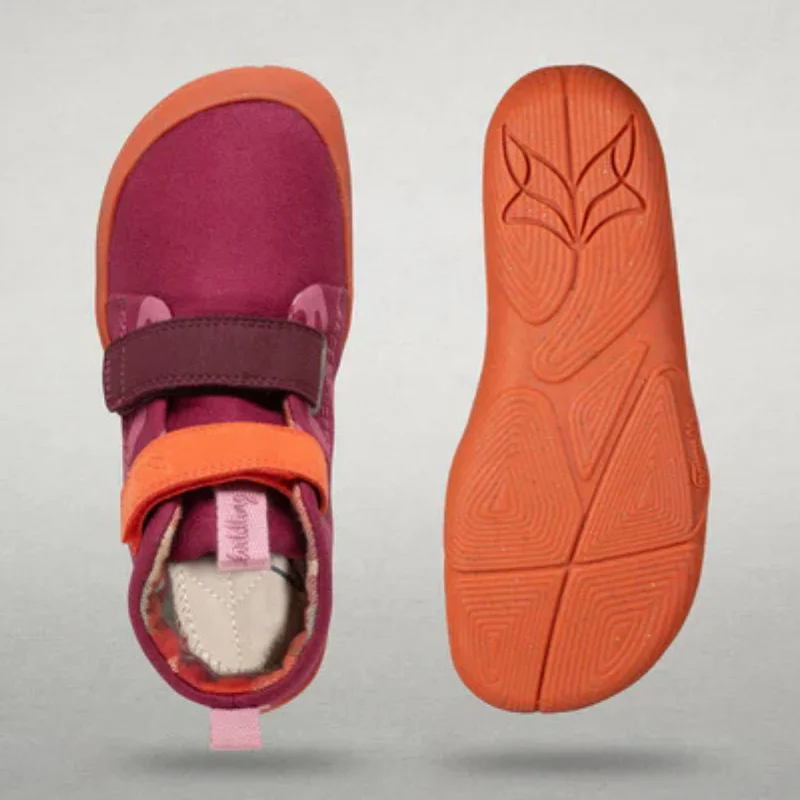
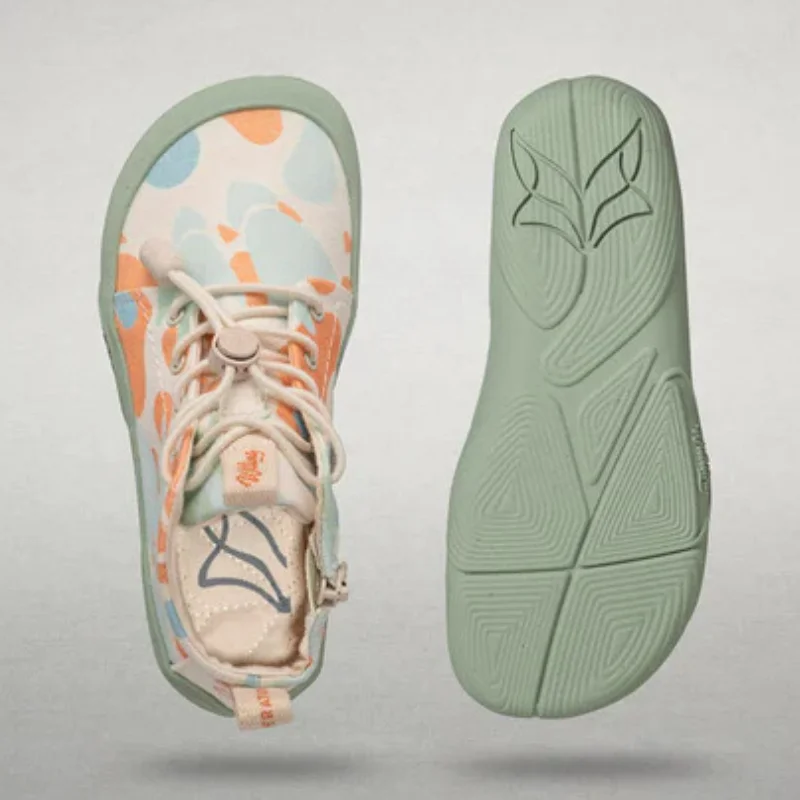
Wildling Shoes has mastered the art of letting kids’ feet actually move the way they’re meant to.
Their minimalist designs feel light and natural, almost like your kid is running around barefoot but with protection that actually lasts.
The fabrics breathe well, the soles flex easily, and nothing feels stiff or plasticky.
For parents who want a genuinely low-tox option without sacrificing comfort, Wildling Shoes is one of the most reliable picks out there.
These are the shoes kids forget they’re wearing because they just… work.
Price & Size Range
$89 | C7-C13
Materials
Upper: Recycled Cotton Canvas | Lining: Organic Cotton | Insole: Hemp + Flax | Outsole: Natural Rubber (Partially Recycled) | Adhesives: Non-Toxic
Location/Shipping
Portugal, ships to the United States & Canada
Our Favorites from Wildling Shoes:
2. Origo Shoes
Best For: Everyday school wear
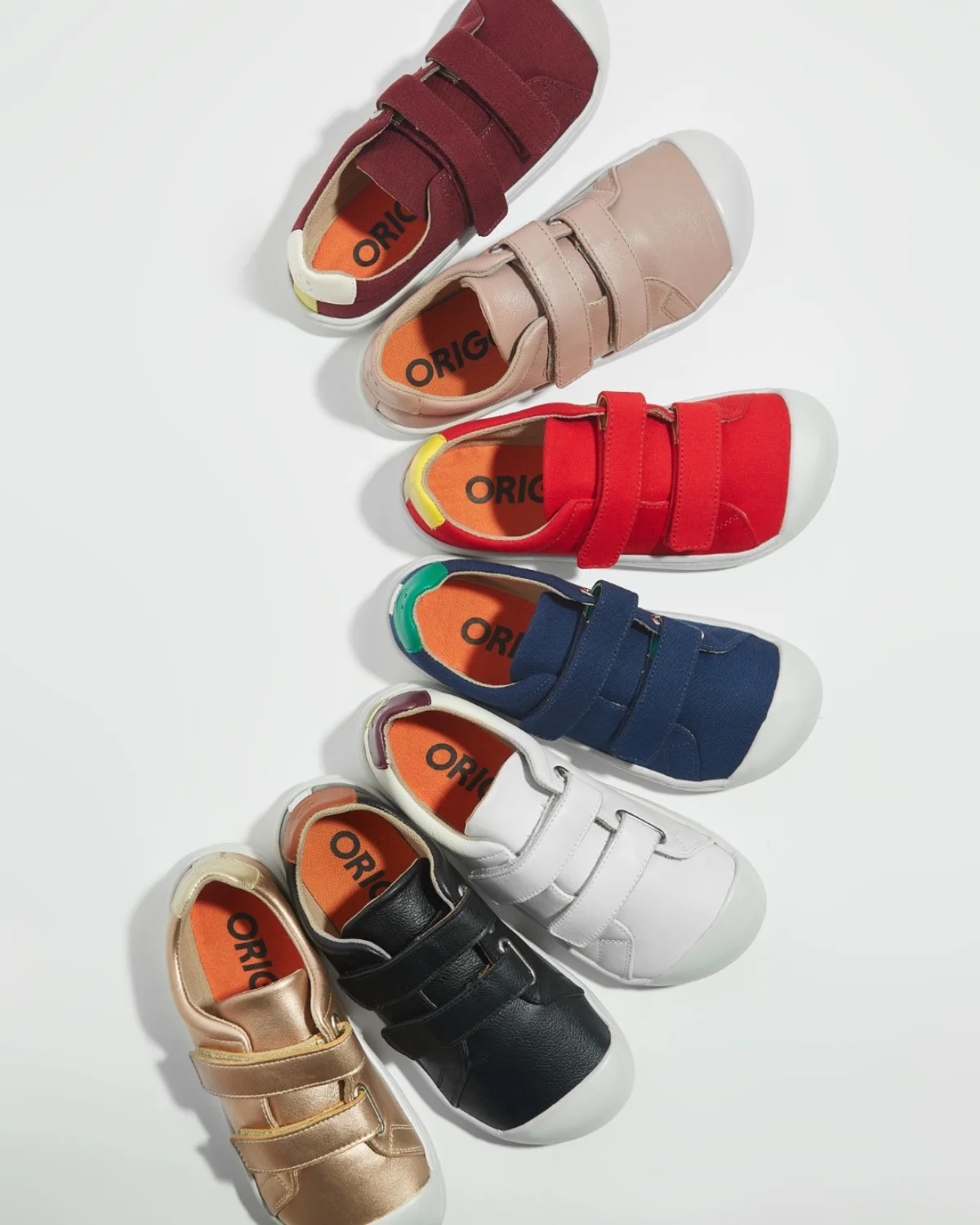
Origo Shoes takes a straightforward approach to non-toxic kids’ sneakers that feels refreshing in a crowded market.
Their leather styles are sturdy without being heavy, and the simple construction means no hidden gimmicks or questionable extras.
They hold up well for everyday school wear, and the fit has an easy, broken-in feel that kids tend to love.
If you want a pair that’s truly low-tox, durable, and honest about its materials, Origo Shoes is one of the safest bets.
A reliable, no-drama shoe that handles real life beautifully.
Price & Size Range
$69 | 8C-4Y
Materials
Upper & Lining: LWG-Certified Natural Leather | Outsole: Rubber + Soy-Based Blend | Adhesives: Non-Toxic
location/shipping
United States, ships to Canada, the United Kingdom, Germany & Australia
3. Ten Little
Best For: Wide, growing feet
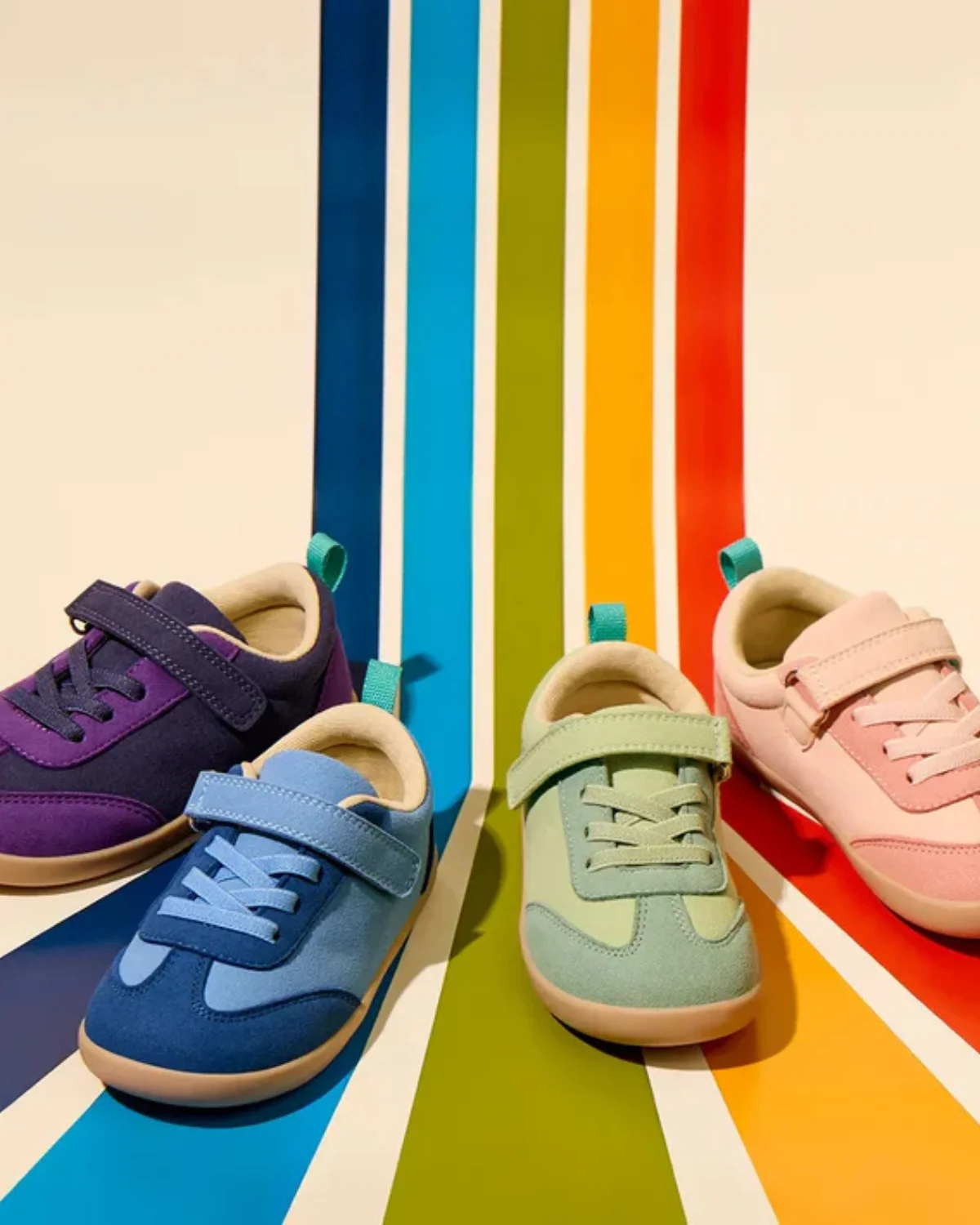
If your kids prioritize comfort more than anything else, Ten Little is one of the best options out there.
Nothing pinches, nothing feels tight, and the whole design moves with their feet instead of against them.
You’ll appreciate the quality materials, but the real magic is the intuitive sizing and shape that actually support their healthy foot development.
These shoes will hold up through daily wear, playground scrambles, and endless loops around the living room. Comfortably made for real kid life.
Price & Size Range
$44 | 4C-2Y
Materials
Upper: 100% Recycled Cotton Canvas | Lining: 100% Cotton | Outsole: Natural Rubber With Protective Rubber Toe Cap | Closure: Hook & Loop
location/shipping
United States
4. L’Amour
Best For: Dressing occasions
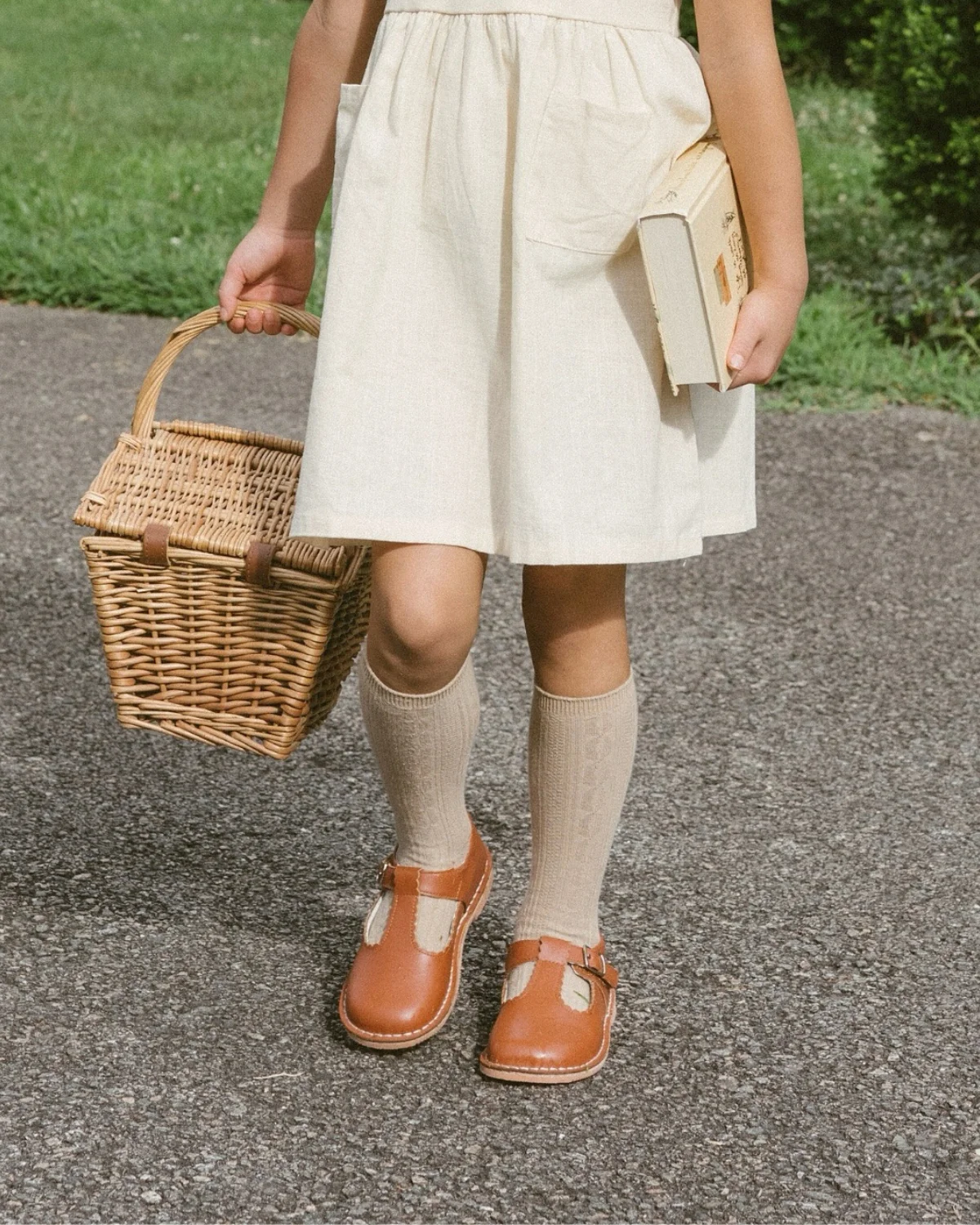
You don’t find many 100% leather kids’ shoes these days, but L’Amour knows how to make genuine leather shoes that feel as good as they look.
Their styles land right in that sweet spot between polished and practical, which is why they work so well for uniforms, picture days, and holidays.
Their shoes wear comfortably without requiring a breaking-in period, and no stiff synthetics to get in the way of their comfort.
If you want something timeless that won’t fight your kid’s feet, this is an elegant, low-tox pick.
Price & Size Range
$58 | C8-2Y
Materials
Upper: Genuine Leather | Lining: Pigskin Leather | Outsole: Rubber
location/shipping
United States
5. Footmates
Best For: All-day wear
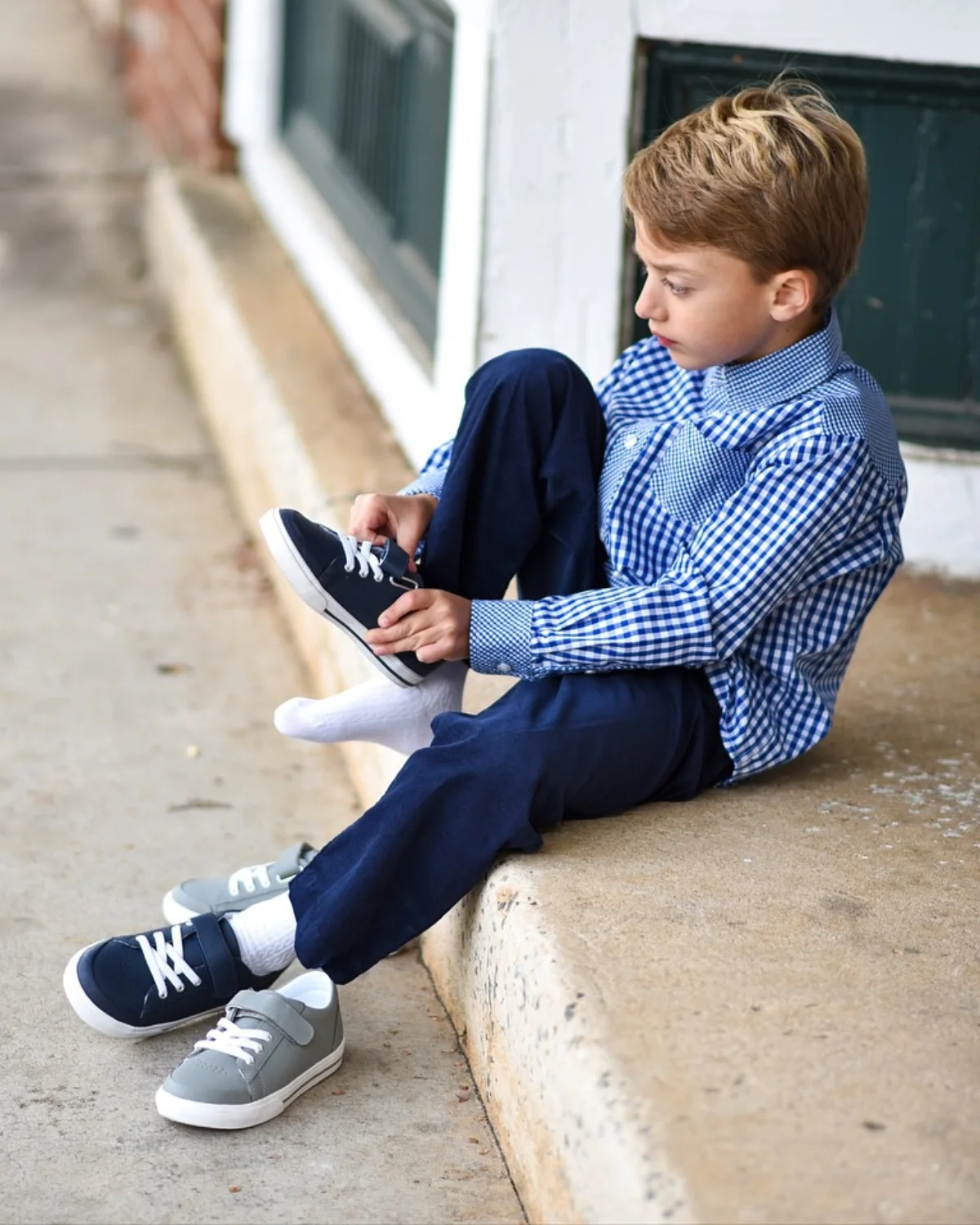
If you’ve been burned by stiff, clunky school shoes that fall apart too fast, Footmates are a refreshing reset.
Their traditional silhouettes are built solidly enough to handle whatever your kids throw at them, but they’re made to comfortably accommodate growing feet.
The roomy toe box gives kids the space they need to balance and grip naturally.
Footmates are everything you could want in a non-toxic shoe: supportive, durable, and made with the best materials. No trendy gimmicks, just classic design done well.
Price & Size Range
$64.95 | 3C-1Y
Materials
Upper, Lining & Insole: Genuine Leather | Outsole: Non-Marking Rubber
location/shipping
United States
6. Natural World
Best For: Warm-weather play
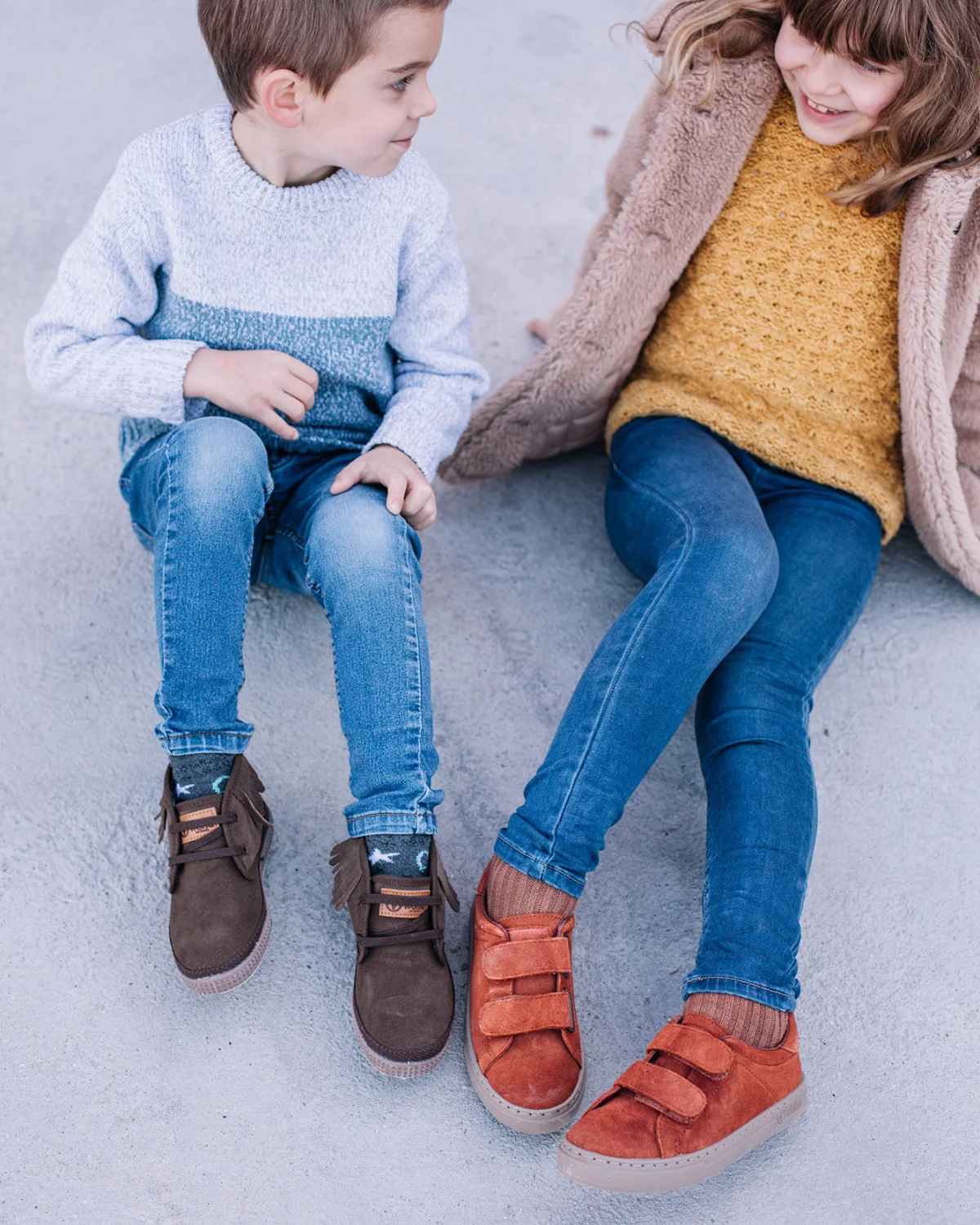
The organic cotton uppers and glue-free construction are what make Natural World’s shoes a standout for parents looking for simple, breathable shoes that can keep up with their kids.
Perfect for summer time adventures, each pair feels light and flexible, giving kids enough freedom to run and climb without fighting stiff materials.
The look is classic canvas but made with high-quality materials and a level of transparency you don’t often see for similarly styled shoes.
Price & Size Range
$60 | EU 18-27
Materials
Upper: GOTS-Certified Organic Cotton | Outsole: Natural Rubber (Vulcanized) | Adhesives: None
location/shipping
Spain, ships to the United States & select international countries
7. Mukishoes
Best For: Sensory-sensitive kids
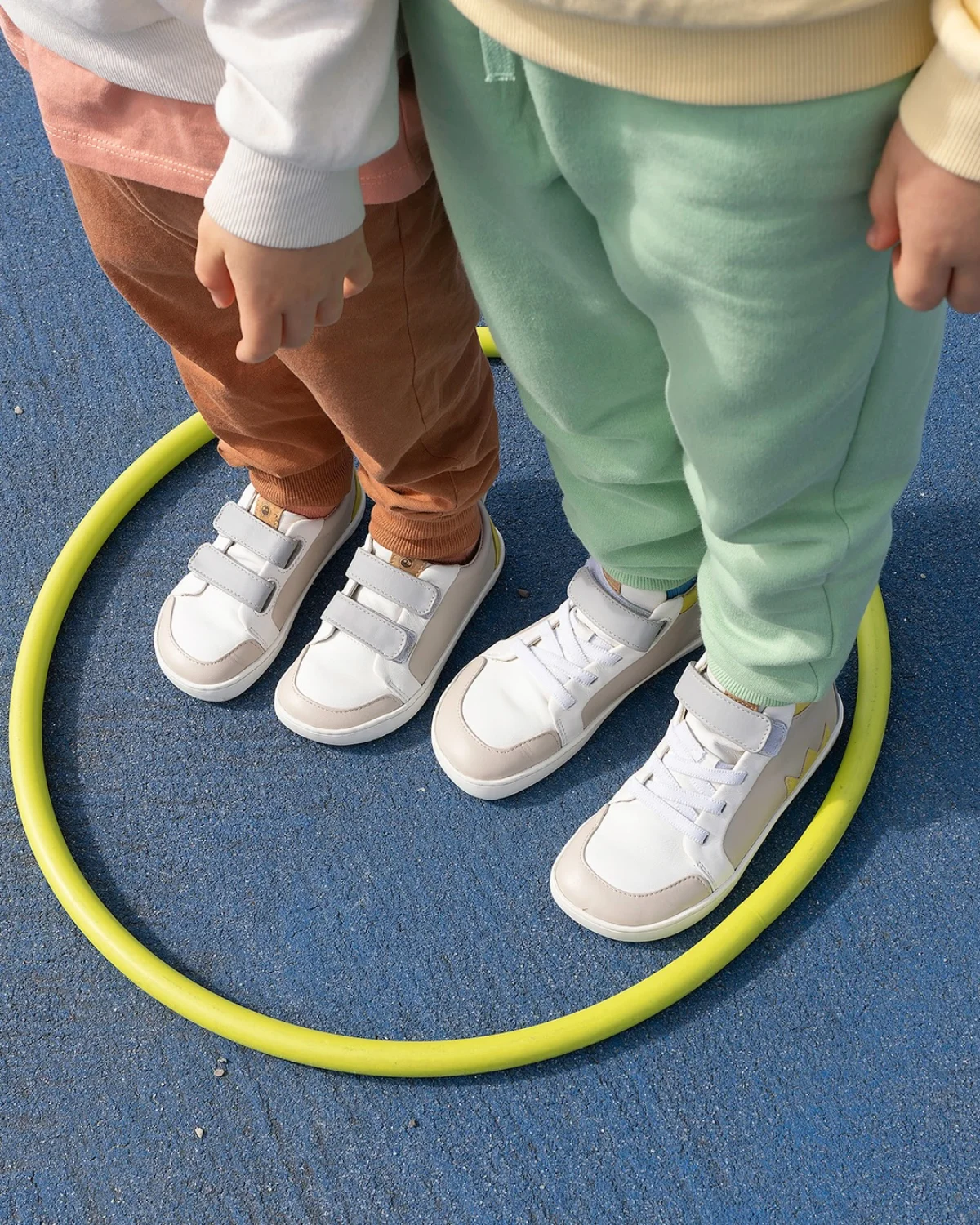
Despite the cute name, Mukishoes are built tough.
Made for hopping between puddles, playground mulch, and games of neighborhood tag, Mukishoes handles it all without feeling clunky or stiff.
If your kids would rather run barefoot, these are the next best thing.
They will keep your child’s foot protected while providing them with the wide-footed toe box sensory-sensitive kids need.
Price & Size Range
$100 | EU 24-35
Materials
Upper: Hemp Canvas | Lining: Organic Cotton | Outsole: Natural Rubber (PVC-Free)
location/shipping
Portugal, ships within Europe & select international countries
8. Adelisa & Co
Best For: Cooler Weather
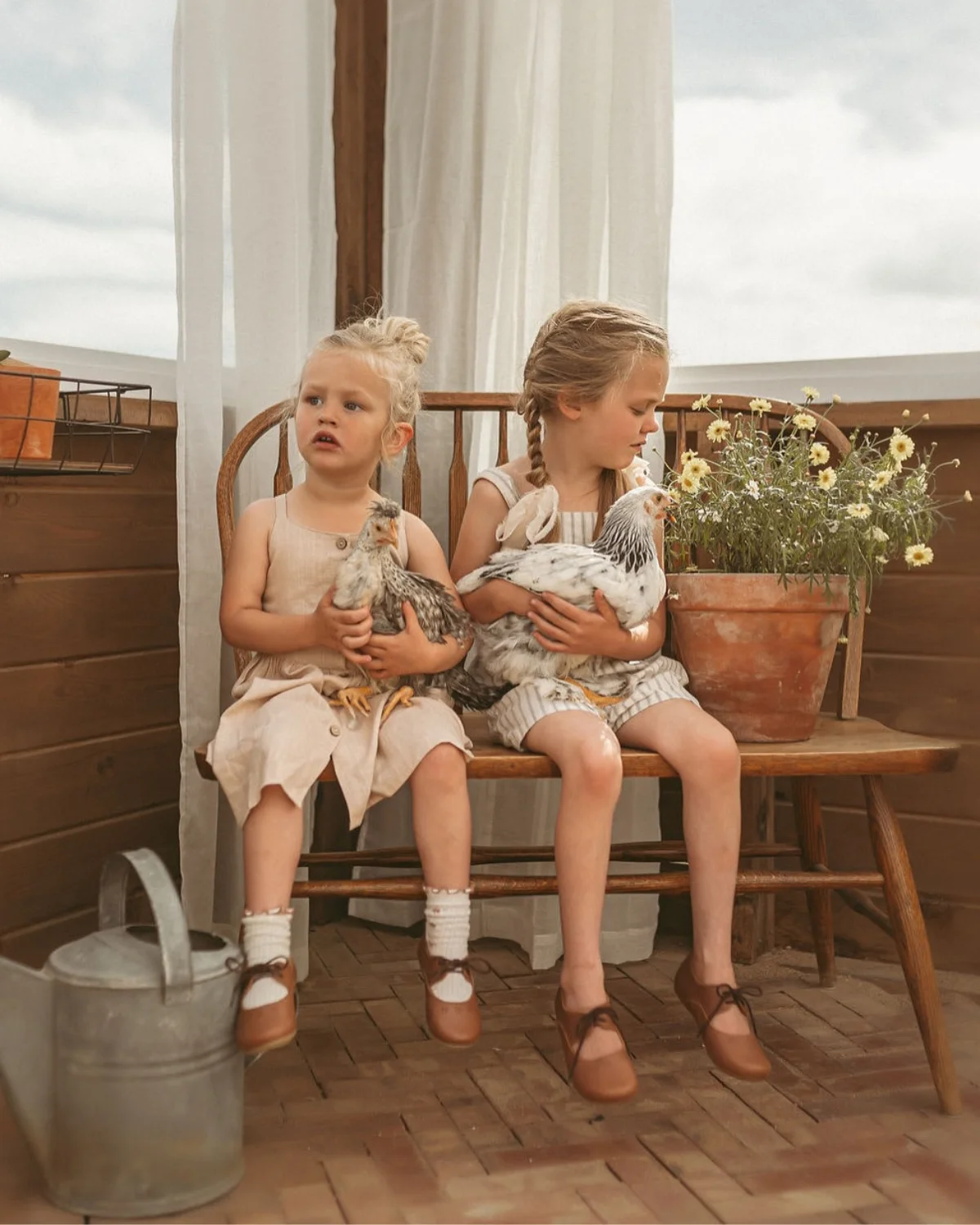
Adelisa & Co. prides itself on creating handcrafted shoes with naturally tanned leather made by artisans who treat footwear like a true craft.
The result is beautiful boots that feel warm, sturdy, and shaped just right for little feet.
There’s nothing flashy here — just thoughtful design that lets kids explore wild terrain comfortably.
These are great for cooler months, family hikes, or kids who prefer the stability of a boot-style feel.
Price & Size Range
$95 | C9-4Y
Materials
Upper/Lining: Vegetable-Tanned Full-Grain Leather (LWG Gold-Rated) | Outsole: Natural Rubber
location/shipping
United States
9. Pepa London
Best For: School events
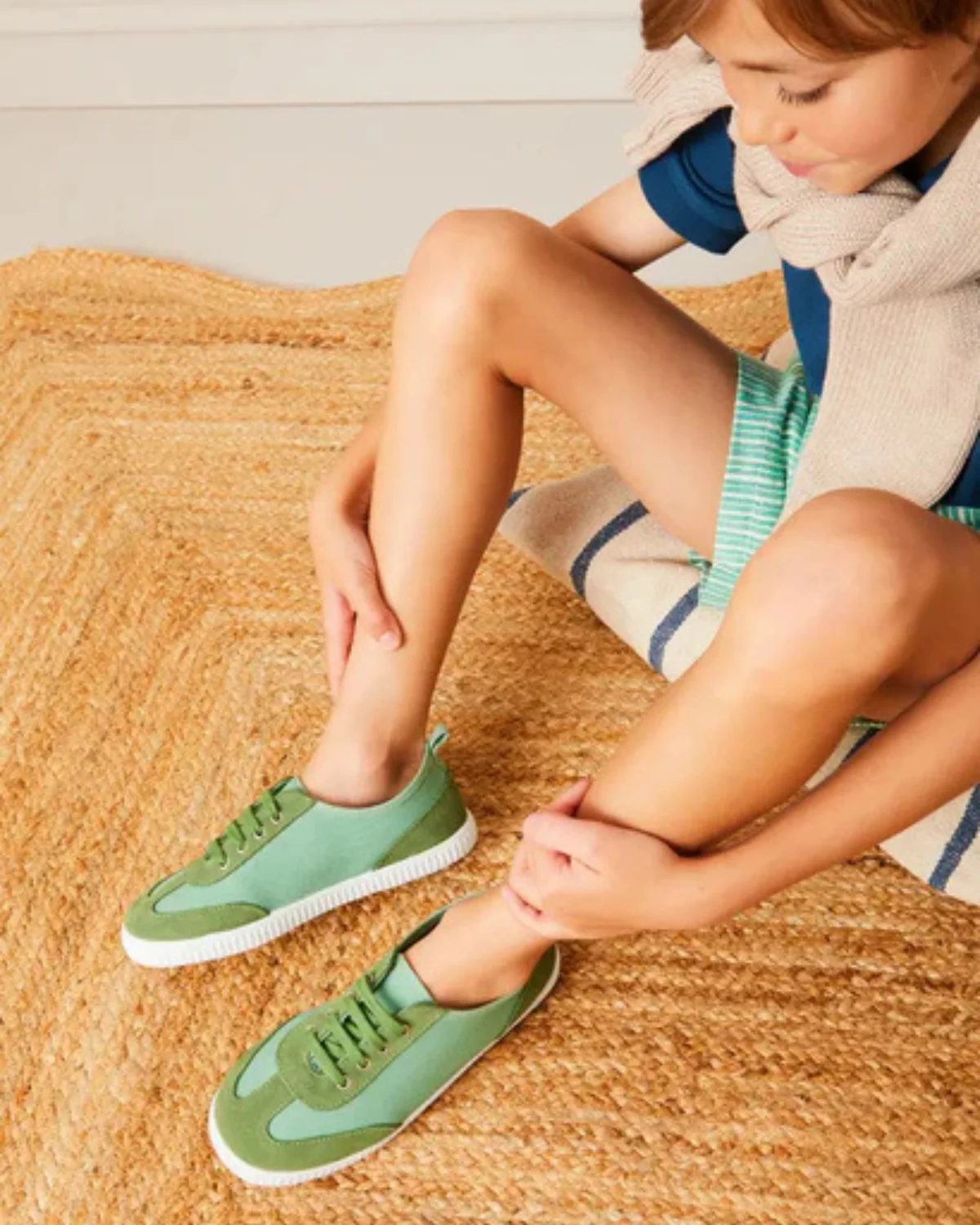
When you need something polished for school events or dress-up days, Pepa London delivers that classic Mary Jane look without the sweaty, uncomfortable synthetic leather.
Their leather styles feel soft from the start, and the simple strap makes them easy for little hands to manage.
The construction is clean, breathable, and well-balanced, giving little ones enough flexibility to move comfortably, even on long days.
If you need a traditional dress-up shoe made with high-quality leather, Pepa London has exactly what you’re looking for.
Price & Size Range
$140 | 8C-2.5Y
Materials
Upper: 100% Leather | Outsole: Rubber
location/shipping
Spain, ships to the United States, Canada & the United Kingdom
10. La Coqueta
Best For: Classic leather styles
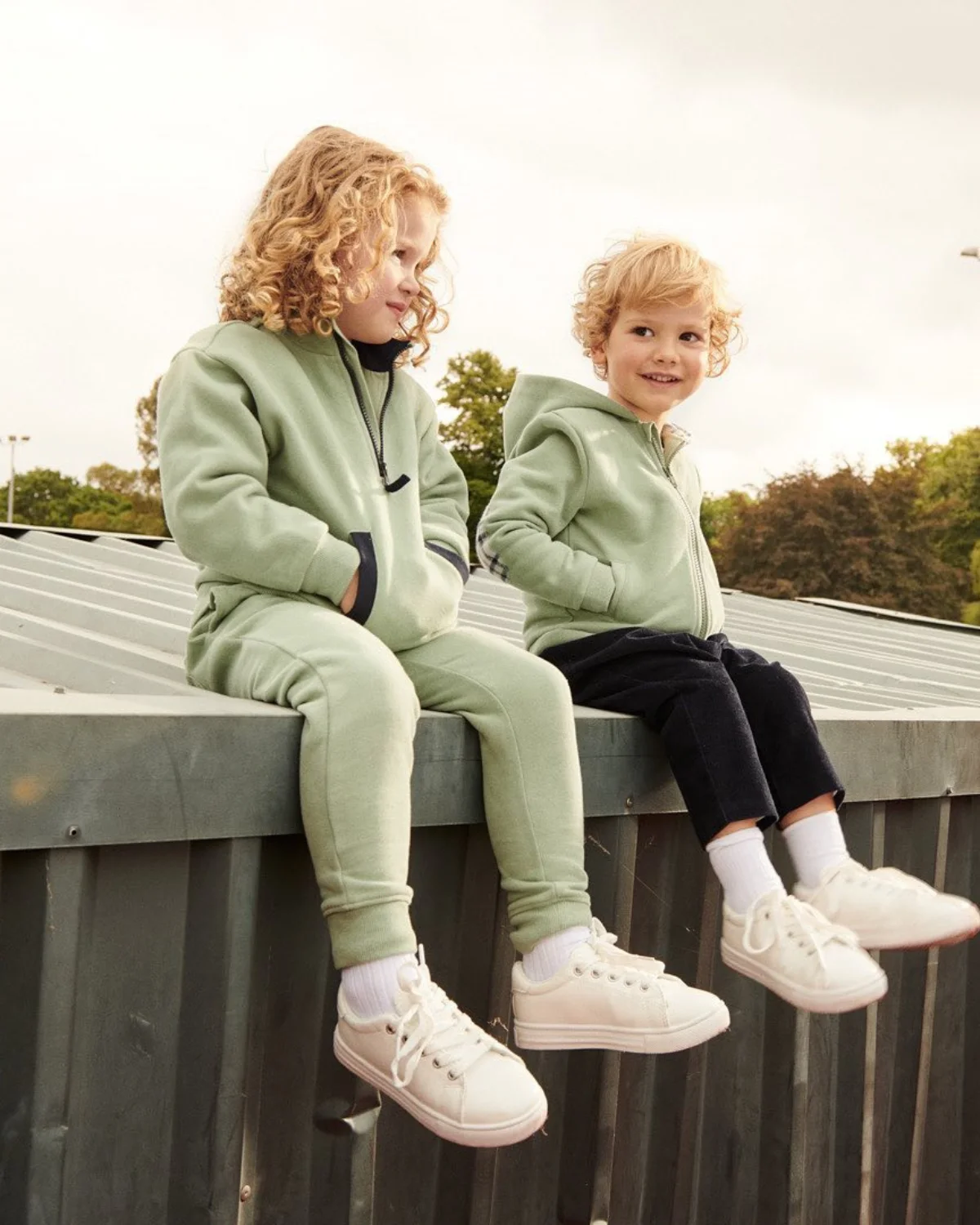
La Coqueta shoes are another great option if you are looking for durable leather shoes.
The leather is smooth and pliable, the stitching is precise, and the fit has that comfortable structure European-made shoes tend to nail.
They move easily with little feet without feeling flimsy, which makes them great for school, church, or family outings.
If you appreciate thoughtful craftsmanship, you’re going to love La Coqueta.
Price & Size Range
$92 | C9-2.5Y
Materials
Upper/Lining: Full-Grain Nappa Leather | Outsole: Rubber | Adhesives: Water-Based
location/shipping
Spain, ships to the United States & select international countries
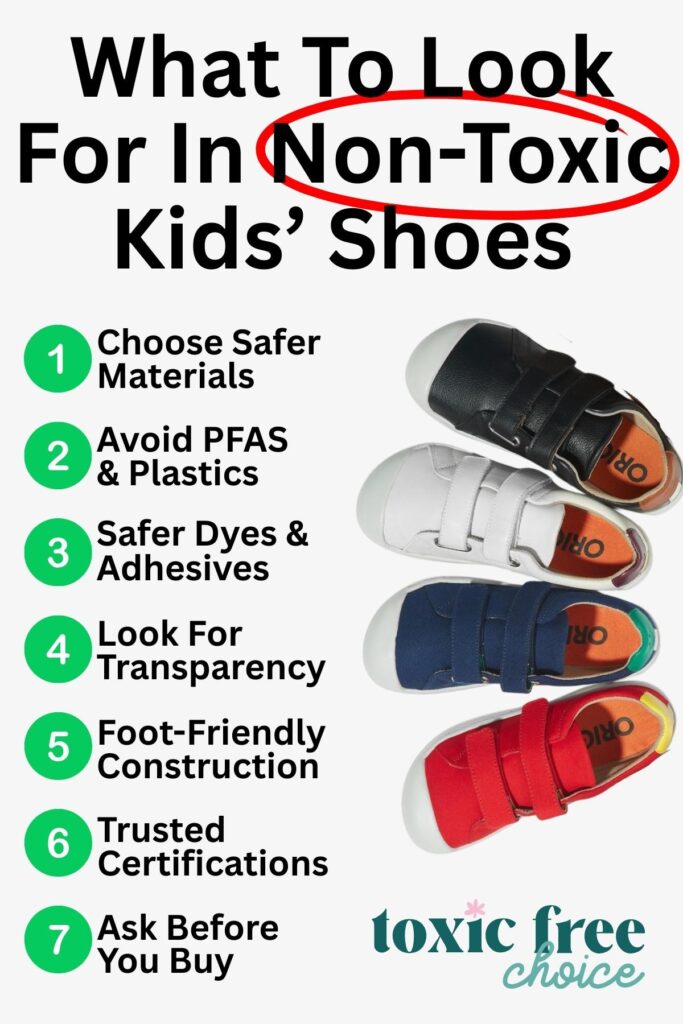
What To Look For In Non-Toxic Kids’ Shoes
1. Choose Safer Materials
- Vegetable-tanned or chrome-free leather
- Organic cotton or hemp uppers
- Natural rubber soles
- Wool, cork, or plant-based linings
2. Avoid PFAS & Plastic-Heavy Designs
- PFAS-free waterproofing (or no waterproof coating at all)
- No PVC
- No PU (“vegan leather”)
- No high-VOC foams
3. Choose Safer Dyes & Adhesives
- Water-based or formaldehyde-free glue
- Low-tox or plant-based dyes
- Minimal off-gassing when unboxed
4. Look For Transparent Brands
- Full material list on product page
- Clear disclosure for uppers, linings, soles, and adhesives
- No vague claims like “eco-friendly” without details
5. Prioritize Foot-Friendly Construction
- Wide, roomy toe box
- Flexible sole that bends at the ball of the foot
- Minimal stiff overlays or hard foam blocks
- Allows natural movement, balance, and toe splay
6. Check For Trusted Certifications
- OEKO-TEX® Standard 100 → Tests textiles for harmful substances.
- GOTS → Certifies organic fibers and safer processing.
- LWG-Certified → Audited leather using vegetable tanning.
- REACH-Compliant → Meets EU chemical safety rules.
7. Ask These Five Questions Before Buying
- Are these shoes PFAS-free? If they dodge the question, that’s a red flag.
- What kind of adhesives are used? Look for water-based or formaldehyde-free.
- Do they have third-party material certifications? Trustworthy brands will name them proudly.
- Where are the materials sourced and assembled? Transparency = credibility.
- What’s the return policy if the shoes don’t work out? A good brand will back its safety claims with real customer support.
These are also great questions to ask when shopping for a safe, organic backpack for back-to-school.
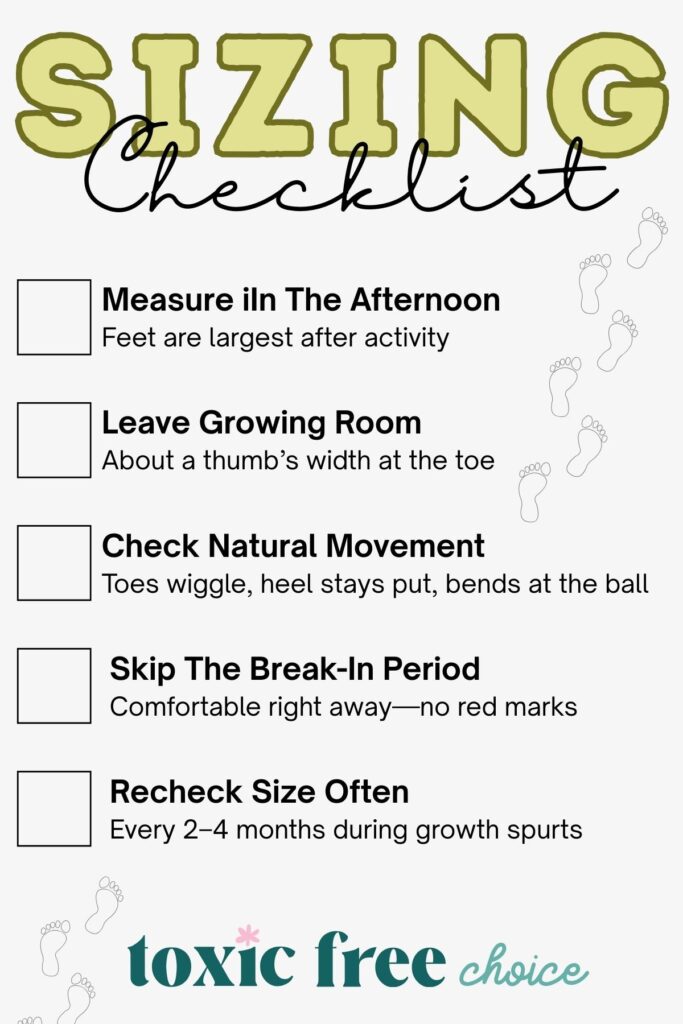
Fitting & Sizing Guide For Kids’ Shoes
Getting the right fit matters just as much as choosing safe materials. Here are the essentials:
💬 Frequently Asked Questions About Non-Toxic Kids’ Shoes
Yes. Non-toxic shoes reduce exposure to harmful chemicals and are made with higher-quality materials that last longer.
This means better comfort, fewer replacements, and less unnecessary chemical contact during key growth stages.
The safest choices are vegetable-tanned leather, organic cotton, hemp, natural rubber, and water-based adhesives.
These materials breathe well and avoid harsh chemicals found in synthetics. Look for brands that clearly list all components. Transparency signals safety.
Avoid PVC, PU (synthetic “vegan leather”), PFAS-based waterproofing, formaldehyde adhesives, VOC-heavy foams, and bright dyes with unknown origins.
These materials can contain phthalates, heavy metals, or treatments that sit against the skin all day.
Yes. Many waterproof or stain-resistant shoes use PFAS-based coatings that can build up in the body and environment.
Look for “PFAS-free” labeling or materials like natural rubber, untreated leather, or waxed cotton.
Not necessarily safer—barefoot shoes support natural movement and balance, but only when made with clean materials.
Look for barefoot styles made from leather, organic cotton, or certified textiles rather than PVC or synthetic “vegan leather” that can contain phthalates and VOCs.
Not always. Many “vegan leather” shoes are actually made from PVC or PU plastics, which can contain phthalates, VOCs, or other additives.
Vegan shoes made from plant-based materials or certified textiles are a safer alternative.
Look for simple designs in natural materials like canvas, cotton, or basic leather; they’re often more affordable than heavily structured styles.
One high-quality everyday pair stretches your budget further. Sales, off-season shopping, and gently used pairs from trusted brands help reduce costs without compromising safety.
When It Comes To Your Kids’ Shoes, Every Step Counts!
When choosing kids’ shoes, material quality is as crucial as proper fit. The wrong materials can introduce unnecessary, harmful chemicals that your child wears for eight or more hours a day.
Conversely, the right pair will support natural movement, allow their skin to breathe, and exclude ingredients that do not belong near developing bodies.
You don’t have to replace every pair at once. Start with the shoes they wear the most—school sneakers, everyday play shoes, or seasonal styles. Small, consistent choices add up, especially during the years when their bodies are rapidly developing.
And remember, transparency is your best guide. Brands that clearly list their materials, share their certifications, and avoid vague “eco-friendly” claims are the ones you can trust.
Explore More Non-Toxic Essentials For Kids
- 👕 Non-Toxic Fashion Brands For Kids → A vetted list of clothing brands using safer fabrics and finishes, with fewer chemical treatments and better transparency.
- 👟 Non-Toxic Barefoot Shoes For Kids → A materials-focused guide to flexible, foot-shaped shoes made without PVC, PFAS, or heavy-metal dyes.
- ✏️ Non-Toxic School Supplies → A practical guide to classroom essentials made without PVC, phthalates, heavy metals, or solvent-based inks.
- 🌧️ Non-Toxic Rain Gear For Kids → A breakdown of rain jackets and boots made without PFAS waterproofing or toxic surface treatments.
- 🩴 Non-Toxic Sandals For Kids → Safer warm-weather footwear options designed without plasticizers, PFAS coatings, or synthetic foams that contact skin.
📌 Save This Pin For Later
Searching for truly non-toxic kids’ shoes? This 2026 guide breaks down the best PFAS-free children’s footwear, explains which materials and treatments to avoid, and highlights safer options made for growing feet. A must-save for healthier, more thoughtful kids’ shoe shopping.




My Daughter needs specific shoes due to flat feet and overpronation, she has been wearing new balance. Is there a shoe that is nontoxic that can still help her with those issues?
Hi Julia, Thanks so much for commenting! Here’s my thoughts: For kiddos with flat feet and overpronation, support and alignment are key — but finding options that also prioritize non-toxic materials? It’s a challenge, but not impossible.
Here’s what I’d recommend:
1. Wildling Shoes
Wildling is one of my favorite brands when it comes to minimal, foot-health-forward design — and they’re deeply committed to natural materials. Their shoes are:
Made with organic cotton, wool, and eco-certified leather
Free from formaldehyde, flame retardants, PVC, and harmful glues
Lightweight and designed to let the foot move naturally
🌱 However, they’re considered “barefoot shoes” — which may not offer the arch or motion control your daughter needs right now. Some parents with similar concerns have added non-toxic orthotic inserts (like soft cork-based ones from Birkenstock or Tread Labs) to offer that extra support.
2. Plae Shoes
Plae is a family-favorite in the non-toxic community and especially great for active kids:
They’re APMA-certified (a great sign for kids needing structure and support!)
Use eco-friendly and tested materials (free from PVC, BPA, phthalates)
Many models have removable insoles so you can swap in an orthotic
I’ve heard great things from readers whose kids have orthotic needs and have worn these comfortably.
3. Ten Little
Ten Little is another wonderful option that focuses on: Natural, safe materials (no harmful dyes or glues), A foot-shaped toe box for healthy foot development, Pediatric podiatrist-designed shoes — including options with more support!
They also offer “Fit Finder” tools for personalized suggestions, which could be really helpful in finding a model that works with overpronation support.
⚠️ A quick word about New Balance:
While some of their kids’ shoes offer orthopedic-level support, they don’t always disclose all materials — and many models do use synthetic glues, foams, and plastics that may off-gas or contain endocrine disruptors.
If she’s currently doing well in New Balance, you could look into phasing in non-toxic options slowly or balancing her use between structured supportive shoes and “free movement” shoes (like Wildling) to strengthen her feet over time.