


This post may contain affiliate links. By browsing this website, you agree to our disclaimer, privacy policy, and terms of use.
Are you looking for the best organic nursing bras made with safer, lower-toxin materials?
Many conventional nursing bras are made with synthetic fabrics, polyurethane foam padding, chemical dyes, and petroleum-based stretch materials that remain in close contact with sensitive skin for hours at a time during pregnancy and postpartum recovery.
That prolonged exposure may matter more than many consumers realize, especially during postpartum recovery when nursing bras are worn for extended periods against sensitive skin.
👉🏼 This becomes even more relevant during postpartum recovery, which I cover more in depth in my guide to Non-Toxic Postpartum Essentials: Safer Recovery & Self-Care for New Moms.
Nursing bras are often worn around the clock during the early postpartum period, when hormonal changes, moisture retention, friction, and skin sensitivity are already heightened.
At the same time, nursing fabrics remain in constant direct contact with both mother and baby throughout daily feeding, often for hours at a time during the early postpartum period.
While some brands now prioritize certified organic cotton and lower-impact materials, the category as a whole still relies heavily on synthetic fabrics for stretch, support, and durability. Truly low-toxin or plastic-free nursing bras remain surprisingly rare.
The brands featured in this guide vary significantly in overall material purity. Some focus almost entirely on organic fibers and plastic-free construction, while others balance cleaner fabrics with pumping functionality, structured support, or everyday flexibility.
While research surrounding long-term exposure to textile chemicals is still evolving, some materials commonly used in conventional bras have raised concerns related to skin irritation and volatile organic compound (VOC) emissions.
These materials can include formaldehyde-based fabric treatments, synthetic dyes, and polyurethane foams, which have also been studied for potential endocrine-disrupting effects in some research settings.
👉🏼 These issues overlap with broader concerns around textile processing, which I cover in PFAS Explained: What They Are and Where They Show Up in Everyday Products.
As a result, more consumers are looking for nursing bras made with GOTS-certified organic cotton, natural fibers, low-impact dyes, and more transparent manufacturing standards.
At the same time, the term “organic nursing bra” can be misleading. Many products marketed this way still contain substantial amounts of nylon, polyester, elastane, synthetic lace, or foam lining, while others provide very little transparency around textile processing or fabric treatments.
To identify the best options currently available, this guide prioritized brands using higher percentages of organic materials, simpler fabric construction, and more transparent sourcing standards whenever possible, while still considering nursing functionality, comfort, and long-term wearability.
Best Organic Nursing Bras: Comparison Table
Mobile Users: Scroll to see full comparison →
| Brand | Best For | Organic Content | Synthetic Content | Certifications |
|---|---|---|---|---|
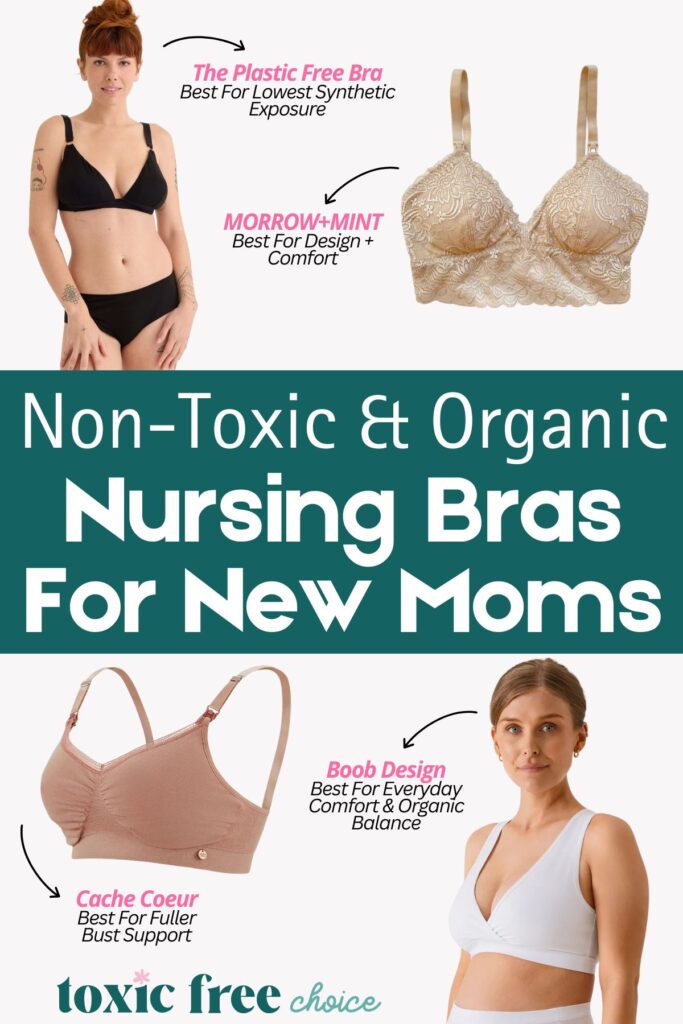
| The Very Good Bra | Lowest Synthetic Exposure | Very High | Very Low | GOTS & OEKO-TEX® Certified |
| Boob Design | Everyday Balance | High | Low-Moderate | GOTS-Certified (Some Styles) |
| Cache Coeur | Fuller Bust Support | High | Moderate | GOTS & OEKO-TEX® Certified |
| MORROW+MINT | Design + Comfort | Moderate | Moderate | GOTS-Certified |
| Kindred Bravely | Pumping Functionality | Low | High | OEKO-TEX® (Limited Styles) |
| Quince | Budget Option | Low | High | OEKO-TEX® Certified |
What’s Actually In Conventional Nursing Bras
Most conventional nursing bras are made with synthetic materials like polyester, nylon, spandex, and polyurethane foam.
These fabrics help improve stretch, support, and shape retention, but they can also trap heat and moisture against already-sensitive postpartum skin.
👉🏼 I break this down further in Non-Toxic Bras: Understanding Materials, Fit, and Chemical Exposure.
Many bras are also treated with chemical dyes, wrinkle-resistant coatings, antimicrobial finishes, and fabric softeners during manufacturing.
Foam-lined bras may contain polyurethane padding, which can emit low levels of volatile organic compounds (VOCs), while some textile treatments and synthetic dyes have been linked to skin irritation and endocrine-disrupting concerns.
Because nursing bras are worn for long hours and remain in close contact with both mother and baby during feeding, many consumers now prefer options made with certified organic cotton and lower-impact materials.
While most nursing bras still rely on at least some synthetic components for stretch and durability, brands using higher organic fiber content and more transparent manufacturing standards generally reduce exposure to many of the chemicals commonly found in conventional maternity wear.
What Research Says About Textile Chemicals & Skin Exposure
Research on textile exposure is still evolving, but some studies have raised concerns about prolonged contact with certain chemicals commonly used in synthetic fabrics and textile processing.
Conventional bras may contain formaldehyde-based finishes, synthetic dyes, phthalates, and polyurethane foam.
These materials have been associated with skin irritation, allergic reactions, volatile organic compound (VOC) emissions, and potential endocrine-disrupting effects in some research settings.
Postpartum skin can also become more reactive due to hormonal changes, friction, moisture, and frequent nursing, making fabric choice especially important during this stage.
For that reason, many consumers now prioritize nursing bras made with GOTS-certified organic cotton, low-impact dyes, and simpler fabric construction that reduces unnecessary chemical treatments and synthetic materials.
Where Many Organic Nursing Bras Fall Short
As demand for organic maternity wear has grown, many brands have started using terms like “natural,” “eco-friendly,” and “organic blend” without offering much transparency around the actual materials used.
In many cases, a nursing bra marketed as “organic” may still contain significant amounts of nylon, polyester, elastane, synthetic lace, or polyurethane foam padding.
Some certifications also apply only to the cotton fabric itself, rather than the finished bra as a whole, which means the dyes, elastic, hardware, foam components, and other synthetic materials may not be covered under the same standards.
👉🏼 This is one of the most common forms of greenwashing in apparel, which I explain in my Greenwashing Guide: How Brands Mislead Consumers About “Clean” Materials.
Support and stretch are another challenge. Because nursing bras need flexibility and recovery, most brands still rely on at least some synthetic materials to maintain fit and durability.
That’s why this guide focused on brands using higher percentages of certified organic fibers, more transparent manufacturing standards, and simpler material construction whenever possible.
How We Evaluated These Organic Nursing Bras
The best organic nursing bras need to balance two things that do not always work well together: lower-toxin materials and real postpartum functionality.
For this guide, priority was given to brands using higher percentages of organic fibers, more transparent material sourcing, and stronger textile certifications like GOTS.
Bras were also evaluated based on comfort during long-term wear, nursing accessibility, overall construction quality, and how heavily they relied on synthetic fabrics, foam padding, or chemically treated materials.
While a small number of brands now offer nearly plastic-free construction, most nursing bras still incorporate at least some synthetic materials for stretch, durability, and support.
The brands that ranked highest generally used simpler material construction, fewer unnecessary additives, and more transparent manufacturing standards than conventional nursing bras.
The 6 Best Organic Nursing Bras (2026 Picks)
Finding a truly lower-toxin nursing bra can be surprisingly difficult.
Many products marketed as “organic” still rely heavily on synthetic fabrics, foam padding, or petroleum-based stretch materials that are not always clearly disclosed.
The brands below stood out for using higher percentages of certified organic fibers, more transparent material sourcing, and nursing-friendly designs that balance comfort, support, and everyday practicality.
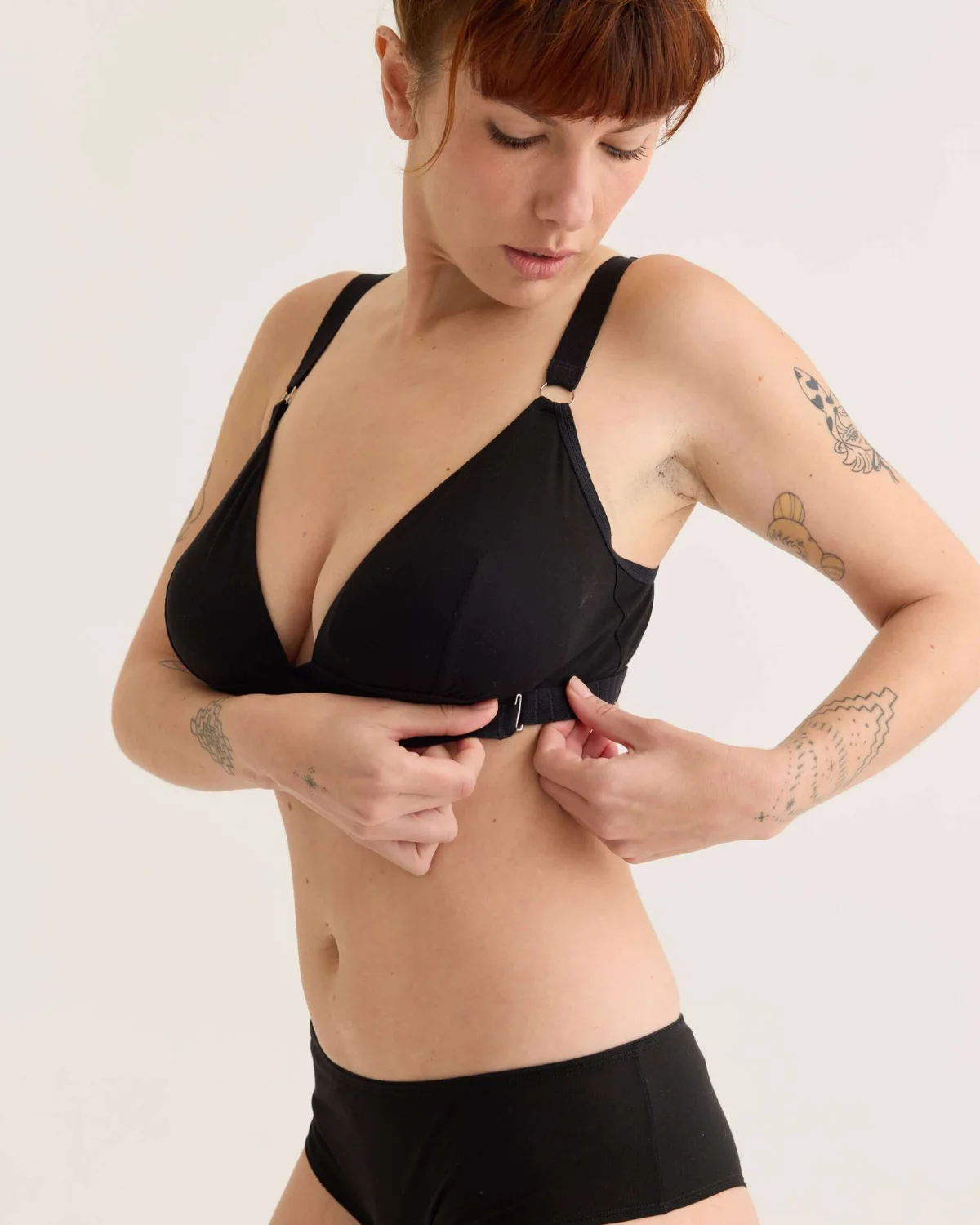
The Very Good Bra stands out for taking one of the most restrictive approaches to material safety in this category.
It minimizes synthetic inputs almost entirely, relying on GOTS-certified organic cotton, natural rubber elastic, and biodegradable components instead of conventional petroleum-based fabrics, polyurethane foam, or synthetic padding.
This is less about structured support and more about material simplicity.
The design prioritizes breathability and fiber transparency over shaping, lift, or compression.
As a result, it may feel less engineered than mainstream nursing bras, particularly for those used to molded cups or reinforced support zones.
Price & Sizing
$82 | 1-5 (B-F Cups)
Materials
Lenzing TENCEL™ | GOTS-Certified Organic Cotton | Natural Rubber Elastic | 100% Cellulose Thread | Nickel-Free Metal Hardware | OEKO-TEX® Certified Inks & Metals
location/shipping
Australia | Ships Internationally
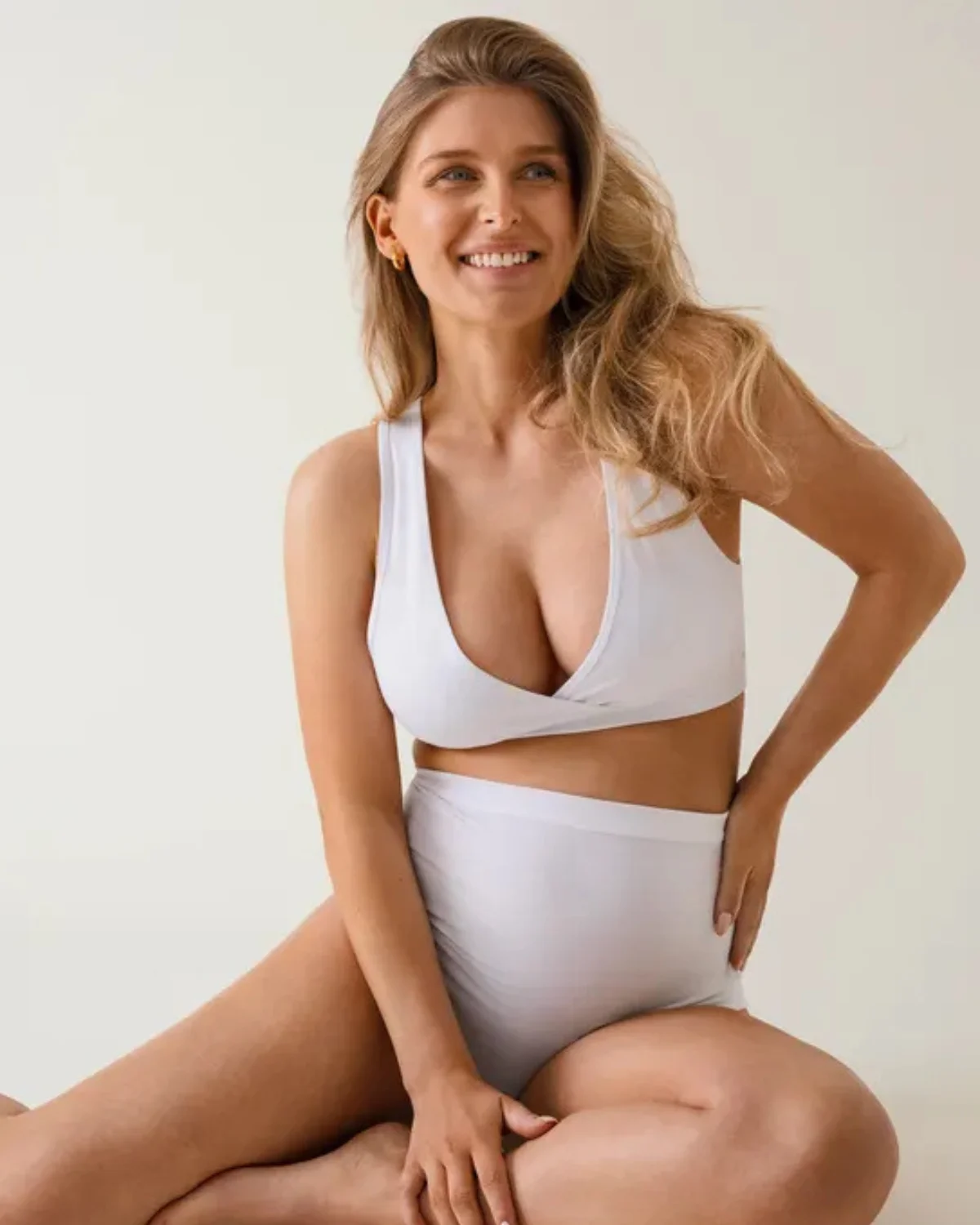
Boob Design is better understood as a mixed-material maternity brand rather than a fully organic nursing bra company.
While a few styles use predominantly organic cotton blends, much of the line still relies on recycled synthetics, polyamide, elastane, and TENCEL™ fabrics to improve stretch, moisture management, and long-term fit retention.
The Essential Maternity and Nursing Bra is one of the cleaner options within the collection, using primarily organic cotton with limited elastane for flexibility.
Compared to many heavily engineered nursing bras, the construction remains relatively simple and avoids thick foam padding or rigid structural reinforcement.
That said, material composition varies significantly across the brand, making product-by-product review important before purchasing.
Some bras lean much more heavily into synthetic performance fabrics than the marketing initially suggests.
Price & Sizing
$39 | S-XL (A-E Cups)
Materials
GOTS Certified Organic Cotton | Elastane
location/shipping
Sweden | Ships To The United States & Internationally
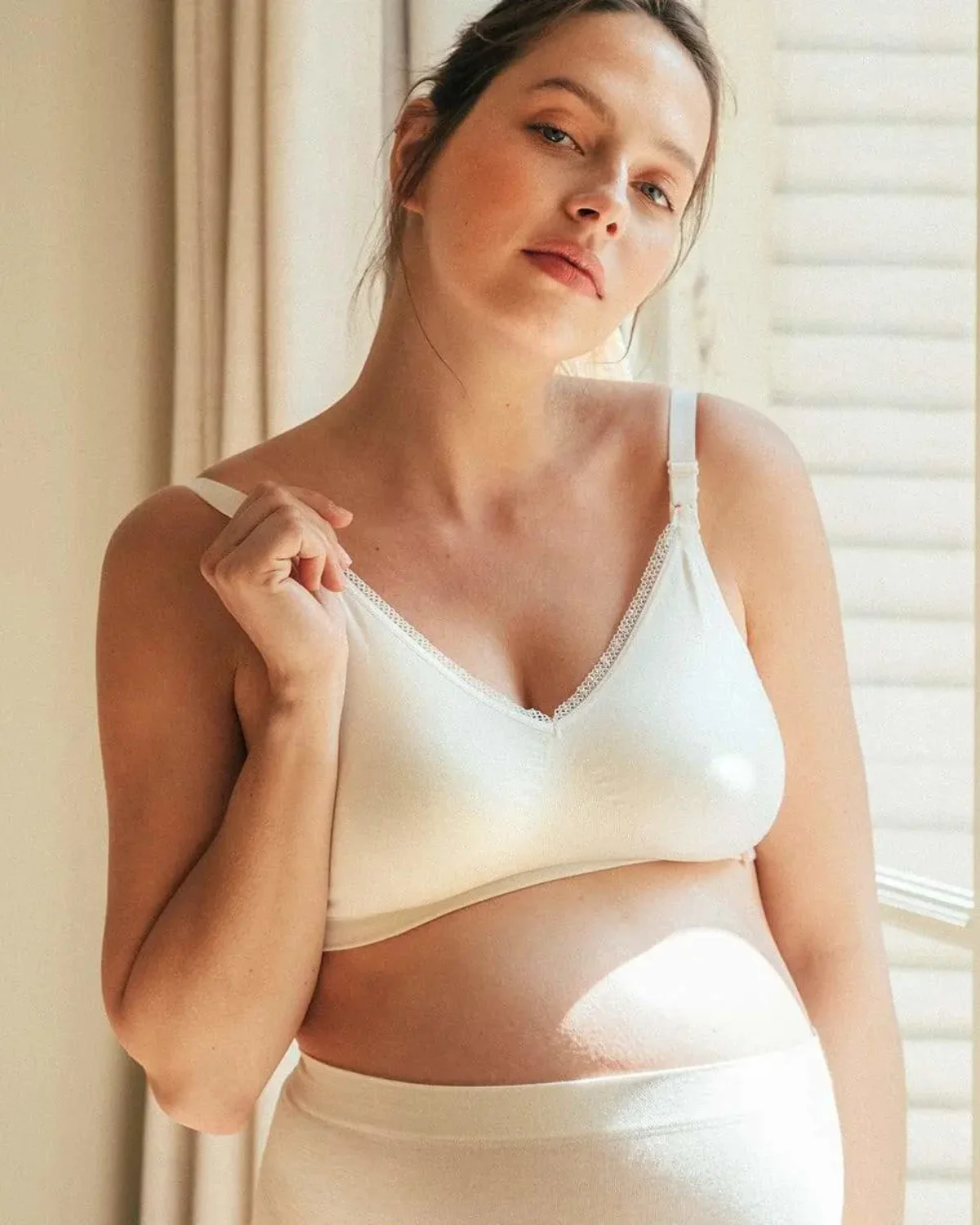
Where most organic nursing bras lean soft and unstructured, Cache Coeur introduces more shaping and support into the category.
Its organic collection combines certified organic cotton with synthetic support materials that improve lift, durability, and stretch recovery.
This makes it one of the more structurally supportive options in the organic space, particularly for fuller bust sizes that often struggle with softer designs.
The trade-off is material purity: while the cotton base is certified organic, synthetic reinforcement is still used throughout the construction to maintain structure and longevity.
Price & Sizing
€49 | S-XL (B-J Cups)
Materials
GOTS-Certified Organic Cotton | Polyamide Lace | Elastane | OEKO-TEX® Certified Components
location/shipping
France | Ships To The United States & Internationally
Use discount code TFC15 to save 15%!
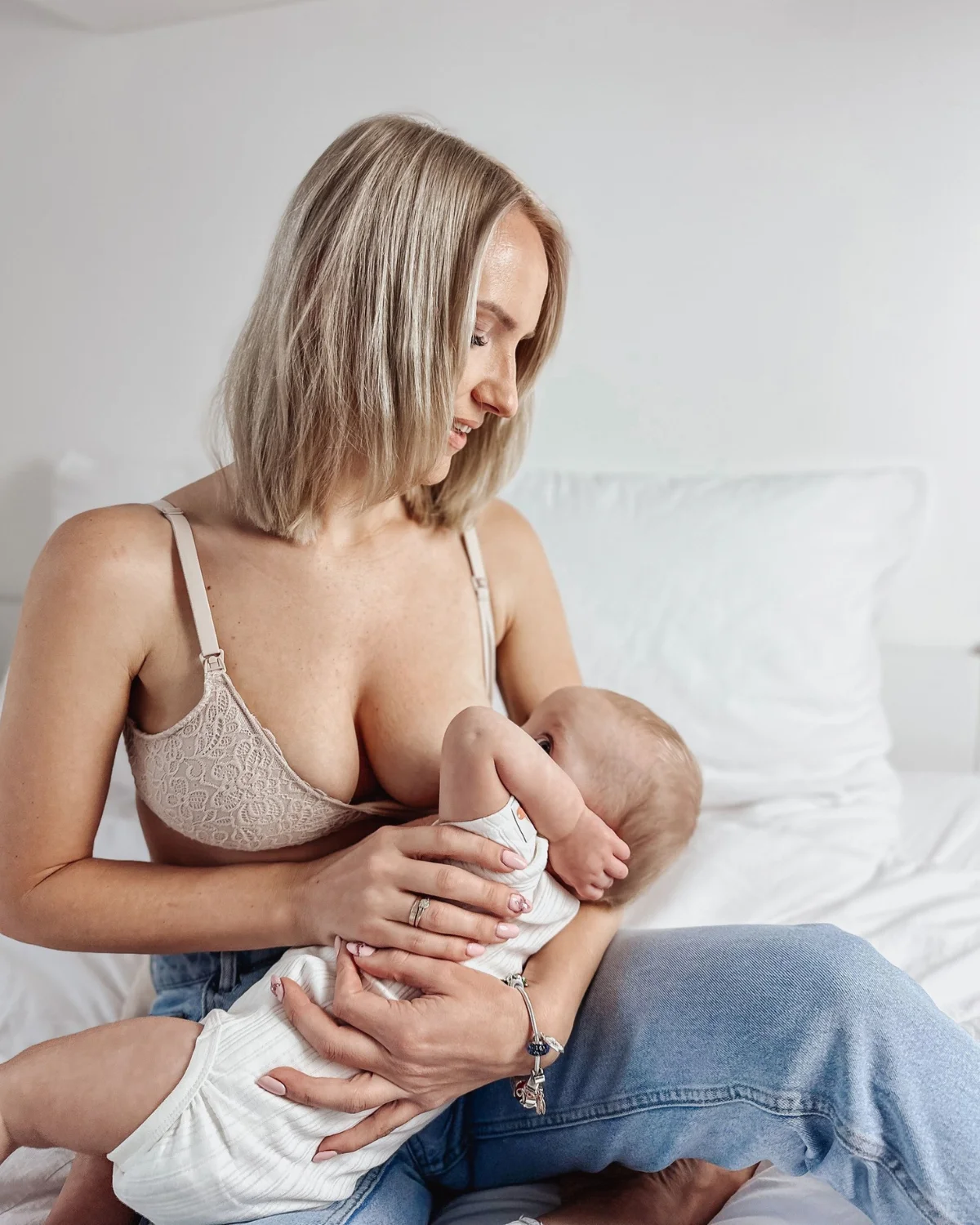
MORROW+MINT takes a more design-led approach to nursing bras.
Some styles use high percentages of organic cotton alongside synthetic lace and elastane for softness, flexibility, and visual detail.
While not fully organic across the entire collection, the overall material profile is still simpler than many mainstream maternity lingerie brands.
The wire-free designs and flexible sizing also make the bras more adaptable during postpartum transitions.
However, the inclusion of synthetic lace and stretch fabrics places the brand in more of a hybrid category rather than a strictly low-synthetic one.
Price & Sizing
$50-$55 | S-XXL (A-F Cups)
Materials
GOTS-Certified Organic Cotton | Nylon | Spandex
Note: Some styles use organic cotton as the primary body fabric, while others use organic cotton only in the lining alongside nylon and spandex blends.
Location/Shipping
United States | Ships To Select International Countries
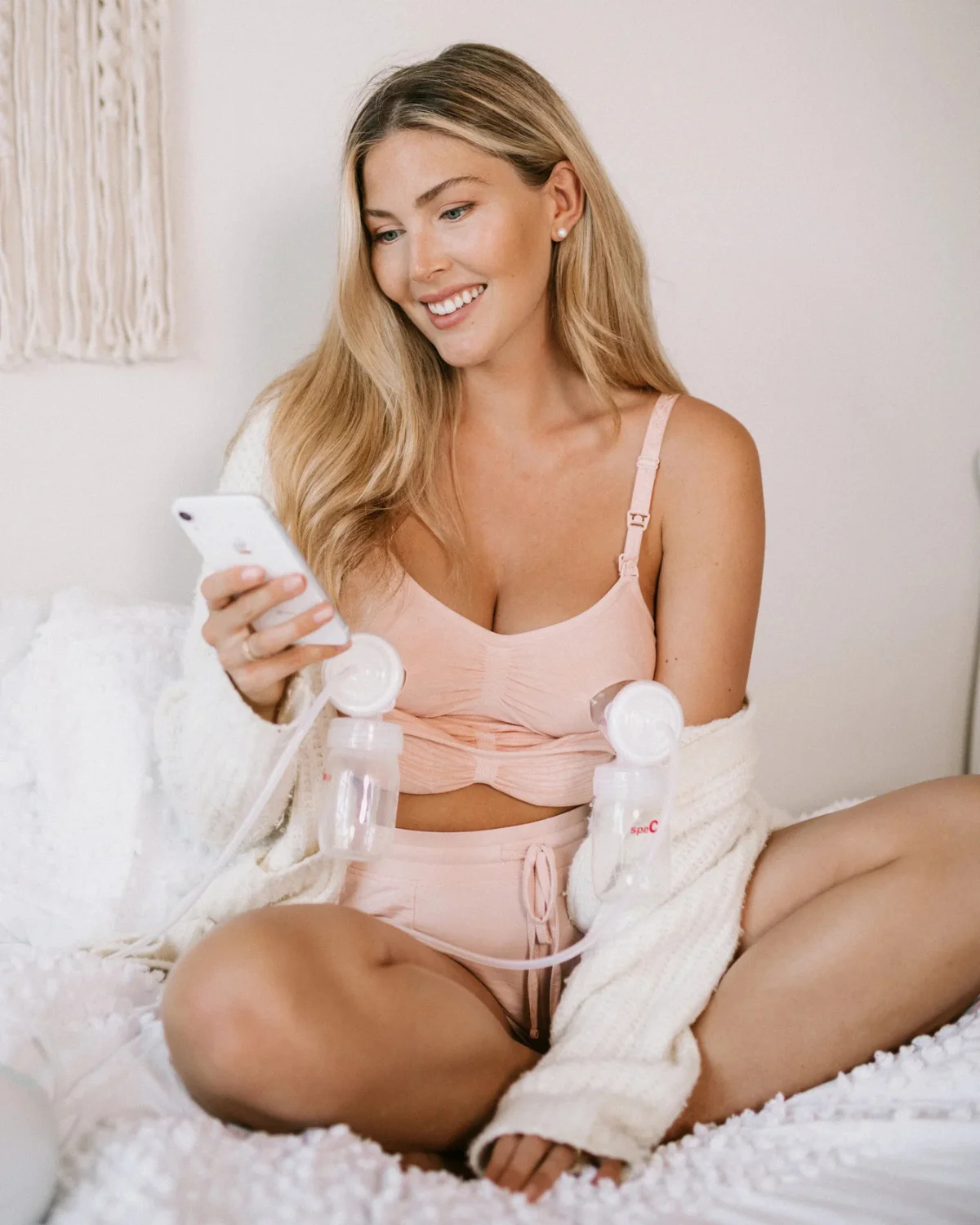
Kindred Bravely is best understood as a functionality-driven maternity brand rather than a strictly material-focused one.
Most styles rely heavily on synthetic fabrics like nylon, polyester, and elastane to improve pumping access, stretch recovery, and structural support throughout pregnancy and postpartum wear.
While the brand has previously offered some organic cotton styles, the current lineup is centered far more around usability and convenience than lower-synthetic material construction.
That said, a small number of products, including styles like the French Terry Nursing Sleep Bra, are OEKO-TEX® certified, though certification is not consistent across the full collection.
Because of this variation, fabric composition and certifications should be reviewed carefully on a product-by-product basis.
Where the brand performs particularly well is in practicality: pumping accessibility, all-day comfort, flexible sizing, and nursing support during the early postpartum period.
Price & Sizing
$40-$70 | S-1X (B–I Cups)
Materials
Nylon | Polyester | Spandex/Elastane | Rayon/Bamboo Viscose (Some Styles) | Small Amounts Of Cotton In Select Bras | OEKO-TEX® Certified (Select Products Only)
location/shipping
United States
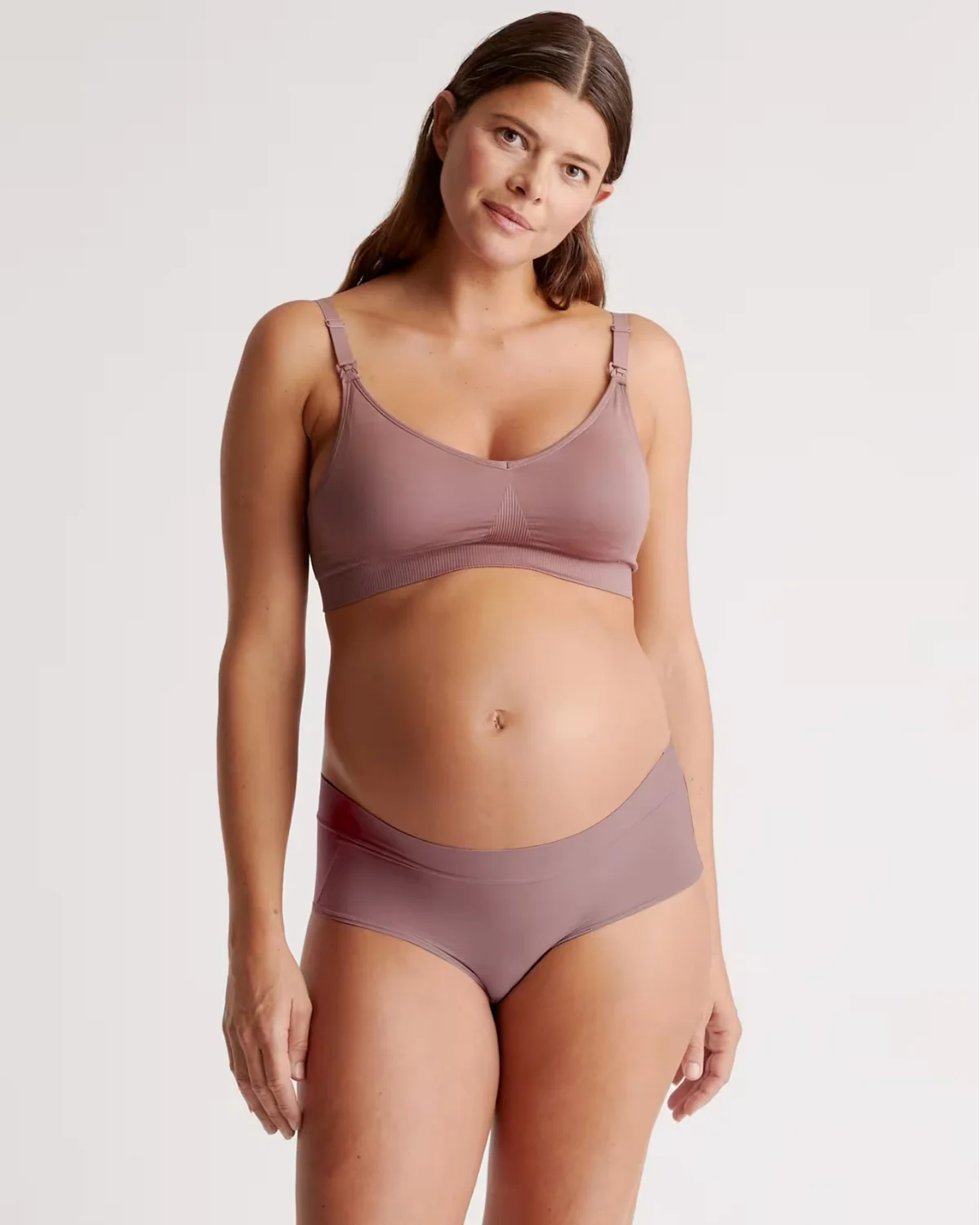
Quince takes a more affordability-focused approach than most brands in this category, with nursing bras designed around softness, stretch, and everyday practicality rather than material purity.
The Seamless Nursing Bra is made primarily from recycled nylon, nylon, and spandex rather than organic cotton, though the fabric is OEKO-TEX® Standard 100 certified.
Compared to many mainstream nursing bras, the material profile is still somewhat simplified and avoids overly engineered foam-heavy construction.
However, the brand relies heavily on synthetic fabrics throughout much of its maternity collection, placing it firmly in the “lower-cost functional” category rather than the low-synthetic or organic category.
Price & Sizing
$25 | XS-XL (A-D Cups)
Materials
Recycled Nylon | Nylon | Spandex | OEKO-TEX® Certified
location/shipping
United States | Ships To Canada
What Type of Nursing Bra Do You Actually Need
The best nursing bra for one person may not work well for another.
Breast size fluctuations, pumping frequency, skin sensitivity, and support needs can all change significantly throughout pregnancy and postpartum recovery.
If minimizing synthetic exposure is your top priority, brands like The Very Good Bra and some Boob Design styles generally use higher percentages of organic fibers and simpler material construction than most conventional nursing bras.
For mothers who pump frequently, more functional options like Kindred Bravely may be worth the tradeoff of slightly higher synthetic content in exchange for flexibility, accessibility, and all-day comfort.
👉🏼 The same material tradeoffs appear across maternity clothing more broadly, which I cover in Non-Toxic Maternity Clothing: Materials, Chemicals, and Safer Alternatives.
If support and shaping are more important, structured styles from Cache Coeur may provide a better fit than softer minimalist bras, especially for fuller bust sizes.
Meanwhile, brands like MORROW+MINT balance cleaner fabrics with a more elevated aesthetic for those looking for nursing bras that feel less clinical or utilitarian.
Because no nursing bra is completely perfect from a material standpoint, the goal is often to find the best balance between comfort, support, practicality, and lower overall synthetic exposure.
Signs Your Nursing Bra May Be Irritating Sensitive Skin
Postpartum skin is often far more sensitive than usual due to hormonal changes, friction, moisture, and frequent nursing.
In some cases, heavily synthetic fabrics or chemically treated textiles may contribute to irritation, discomfort, or overheating during long wear.
Some common signs your nursing bra may not be working well for your skin include:
- Itching or redness along the band or straps
- Trapped heat and excessive sweating
- Chafing around the nipples or under the band
- Lingering chemical or “plastic-like” odors
- Increased discomfort during long nursing sessions
- Irritation that improves when switching to natural fabrics
While fabric sensitivity varies from person to person, many consumers find that softer organic cotton fabrics and simpler bra construction feel noticeably more breathable and comfortable during postpartum recovery.
Frequently Asked Questions About Organic Nursing Bras
Organic nursing bras are typically made with fewer synthetic pesticides and chemical textile treatments than conventional bras, especially when they use GOTS-certified organic cotton and follow stricter environmental and manufacturing standards during textile processing.
However, most nursing bras still contain at least some synthetic materials for stretch, support, fit retention, and long-term durability, since fully natural fiber construction often lacks the flexibility needed for daily postpartum wear.
Some nursing bras may contain synthetic dyes, stain-resistant treatments, foam padding, or other chemical finishes, though most brands disclose very little about textile processing.
Simpler organic cotton construction generally reduces unnecessary chemical exposure and often relies on fewer synthetic materials, coatings, and fabric treatments than conventional nursing bras.
Small amounts of elastane are extremely common in nursing bras because they help improve stretch and fit retention during postpartum size fluctuations.
Many lower-toxin brands still use limited elastane blends to balance comfort, flexibility, support, and long-term durability during daily wear.
Usually, yes. Foam padding and molded cups tend to trap more heat and moisture than unlined organic cotton bras, especially during long wear or overnight nursing.
An organic nursing bra uses mostly certified organic fibers, while an organic blend combines organic cotton with synthetic materials like elastane or nylon.
Fully natural fabrics often lack the stretch, recovery, and support needed for nursing bras, which is why blended fabrics remain so common throughout the category.
GOTS certification helps verify that organic cotton was grown and processed using stricter environmental and chemical standards throughout production.
It’s considered one of the strongest and most widely recognized certifications currently available for organic textiles and textile processing.
Yes. Even brands using organic cotton often incorporate synthetic elastic, clips, lace, or stretch panels to improve durability and support during nursing.
Not necessarily. Many bamboo fabrics are heavily processed into rayon or viscose using chemical solvents during manufacturing, even when marketed as “natural.”
Most mothers do well with three to five nursing bras in rotation. Frequent washing, leaking, and daily wear can cause bras to wear out faster during the postpartum period.
Cold water and gentle detergent are usually best for preserving organic cotton fabrics and elastic components. High heat drying can break down stretch fibers faster and shorten the lifespan of the bra.
Choosing The Right Organic Nursing Bra
Most nursing bras still rely on a mix of synthetic fabrics, elastic fibers, and foam-based construction to achieve support, stretch, and long-term durability.
While this makes them more functional for daily postpartum wear, it also means that fully low-toxin or plastic-minimized options remain relatively limited.
Within the current market, a small number of brands stand out for prioritizing higher organic fiber content, simpler construction, and greater transparency around materials.
The Very Good Bra represents the most material-pure approach, while Boob Design offers a more practical balance between organic cotton use and everyday functionality.
More budget-focused brands like Quince prioritize affordability and stretch performance, though they rely more heavily on synthetic fabrics.
Function-driven options like Kindred Bravely and design-led hybrids like MORROW+MINT expand the category for different postpartum needs, even when they incorporate more synthetic materials.
Ultimately, the most suitable option depends on what you are prioritizing most during postpartum recovery: material simplicity, functional support, pumping convenience, affordability, or design.
In most cases, the tradeoff is not between “safe” and “unsafe,” but between higher material transparency and greater engineering for comfort and performance.
Related Non-Toxic Pregnancy, Postpartum & Baby Guides
If you’re evaluating nursing bras, you are likely also making decisions across pregnancy, postpartum recovery, and early baby care.
These guides explore the connected product categories where materials and chemical exposure also matter:
Postpartum & Maternity System
- Non-Toxic Postpartum Essentials: Safer Recovery & Self-Care for New Moms
- Non-Toxic Maternity Clothing: Materials, Chemicals, and Safer Alternatives
- Non-Toxic Bras & Bralettes: Understanding Materials, Fit, and Chemical Exposure
- Non-Toxic Underwear: Safer Everyday Base Layers
Baby & Early Life Products
- Non-Toxic Baby Products: A Full Guide to Safer Essentials
- Non-Toxic Baby Wash: Ingredients, Fragrance, and Safer Options
- Non-Toxic Baby Wipes: Ingredients and Safer Alternatives
- Non-Toxic Diapers: What’s Actually in Disposable and Eco Options
Chemical Exposure & Marketing Claims
- PFAS Explained: What They Are and Where They Show Up in Everyday Products
- Greenwashing: How Brands Mislead Consumers About “Clean” Materials
📌 Save This Guide For Later
If you’re comparing organic nursing bras or researching lower-toxin maternity fabrics, this guide breaks down the materials, certifications, and synthetic tradeoffs behind today’s most popular nursing bra brands.
It also explains how different nursing bras balance organic cotton, synthetic stretch fabrics, pumping functionality, structural support, breathability, and postpartum comfort, while highlighting where many “organic” maternity products still rely heavily on synthetic materials and blended construction.
Sources & Scientific References
- U.S. Environmental Protection Agency (EPA) — Textile chemical exposure research
- National Institutes of Health (NIH) — Endocrine disruption and skin exposure research
- OEKO-TEX® Standard 100 — Textile safety certification standards
- Global Organic Textile Standard (GOTS) — Organic textile certification standards
- European Chemicals Agency (ECHA) — Textile chemical safety research
- World Health Organization (WHO) — Chemical exposure and endocrine disruption research
- Peer-Reviewed Studies — Research on synthetic textiles, VOCs, and skin irritation



Please be more accurate about the products offered by Kindred Bravely. I’ve been duped by a separate article that also claimed this company sells nursing bras made of “organic cotton and bamboo” material. They do have a *SMALL* number of nursing bras of these materials, but the vast majority are synthetic blends. Because of misleading articles like this, I didn’t think to double check the material list of a few bras I bought. PLEASE, at least update this article to clarify that not all bras from Kindred Bravely are made of organic cotton or bamboo.