


This post may contain affiliate links. By browsing this website, you agree to our disclaimer, privacy policy, and terms of use.
You bought a reusable stainless steel water bottle to make a healthier, more sustainable choice — and in most ways, that was the right move.
What you may not have known is that some insulated stainless steel bottles use lead-based solder to seal the vacuum layer at the base.
That lead doesn’t touch your water — but if the bottle is damaged, it can become exposed.
I’ve spent years researching product safety and materials for families, and this is one of those issues that’s confusing, poorly labeled, and easy to miss.
This guide breaks down what actually matters — and which bottles avoid this issue altogether.
What You Need To Know First
- The lead concern is not in stainless steel itself.
- It applies primarily to double-wall insulated stainless steel bottles.
- Lead may be used in a sealed solder dot at the base.
- Risk increases if the bottle is dented, dropped, or the base cap loosens.
Not all insulated bottles use lead, but brands are inconsistent about explaining how their bottles are sealed, which is where confusion around lead starts.
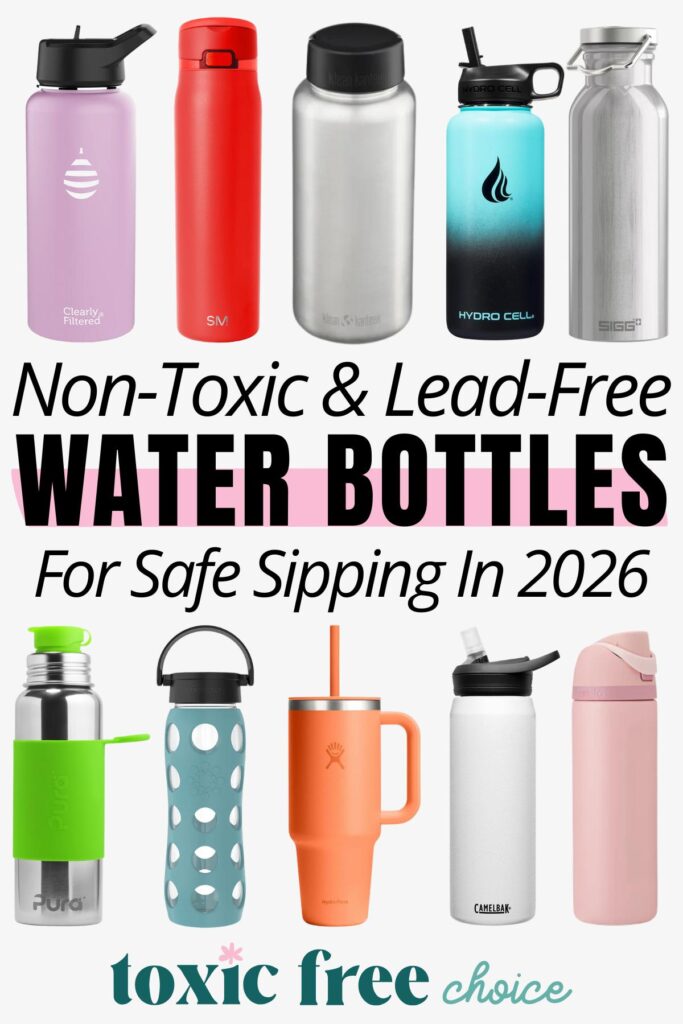
Top 15 Lead-Free Water Bottles For Safe Hydration
Tier 1: Top Picks
These bottles represent the clearest answers to lead-related questions. They either pioneer lead-free manufacturing methods, use materials that avoid the concern entirely, or offer explicit transparency about sealing processes.
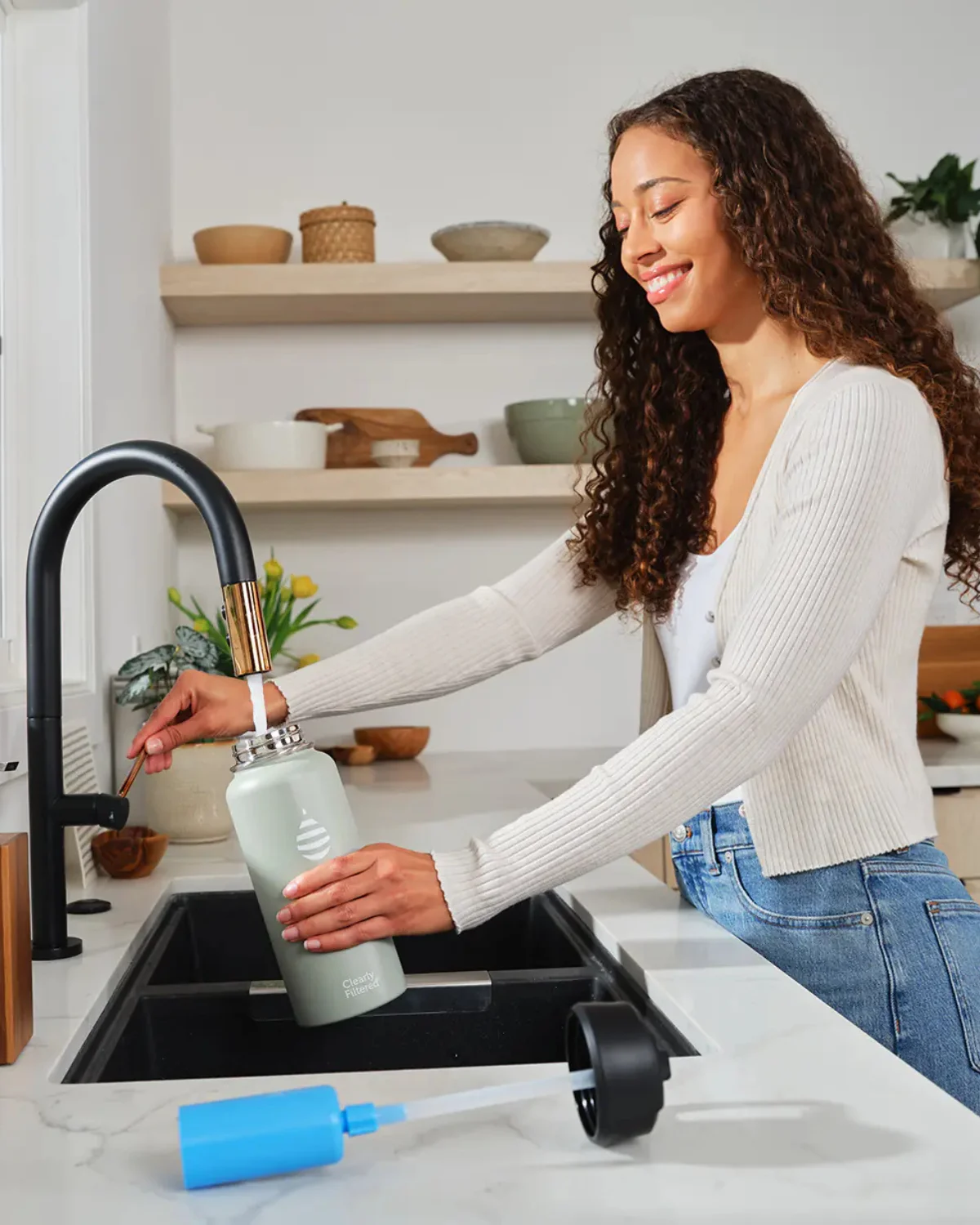
Not only is this Clearly Filtered Stainless Steel Water Bottle lead-free, but it also tackles the nastiest chemicals often lurking in tap water.
After testing countless ‘filtered’ bottles, this made my top list because it’s built to not only improve the taste of water, but also improve its safety.
The built-in filter reduces contaminants and improves the water quality itself.
It’s great for when I’m traveling or refilling from unfamiliar taps, I feel confident that I’m drinking truly clean water.
Built from food-grade 18-8 steel, these bottles are FDA-certified lead-free.
More importantly, the filters are independently tested against NSF/ANSI standards, ensuring they actually remove the contaminants they claim to.
If you’re concerned about your tap water quality, exploring whole-house non-toxic water filters may also make sense for your household.
Price
$75
Materials
Food-grade, 18/8, non-magnetic, corrosion-resistant, FDA-certified lead-free stainless steel
location/shipping
Made in the USA, ships to the US, Canada, UK, Czechia, and Australia
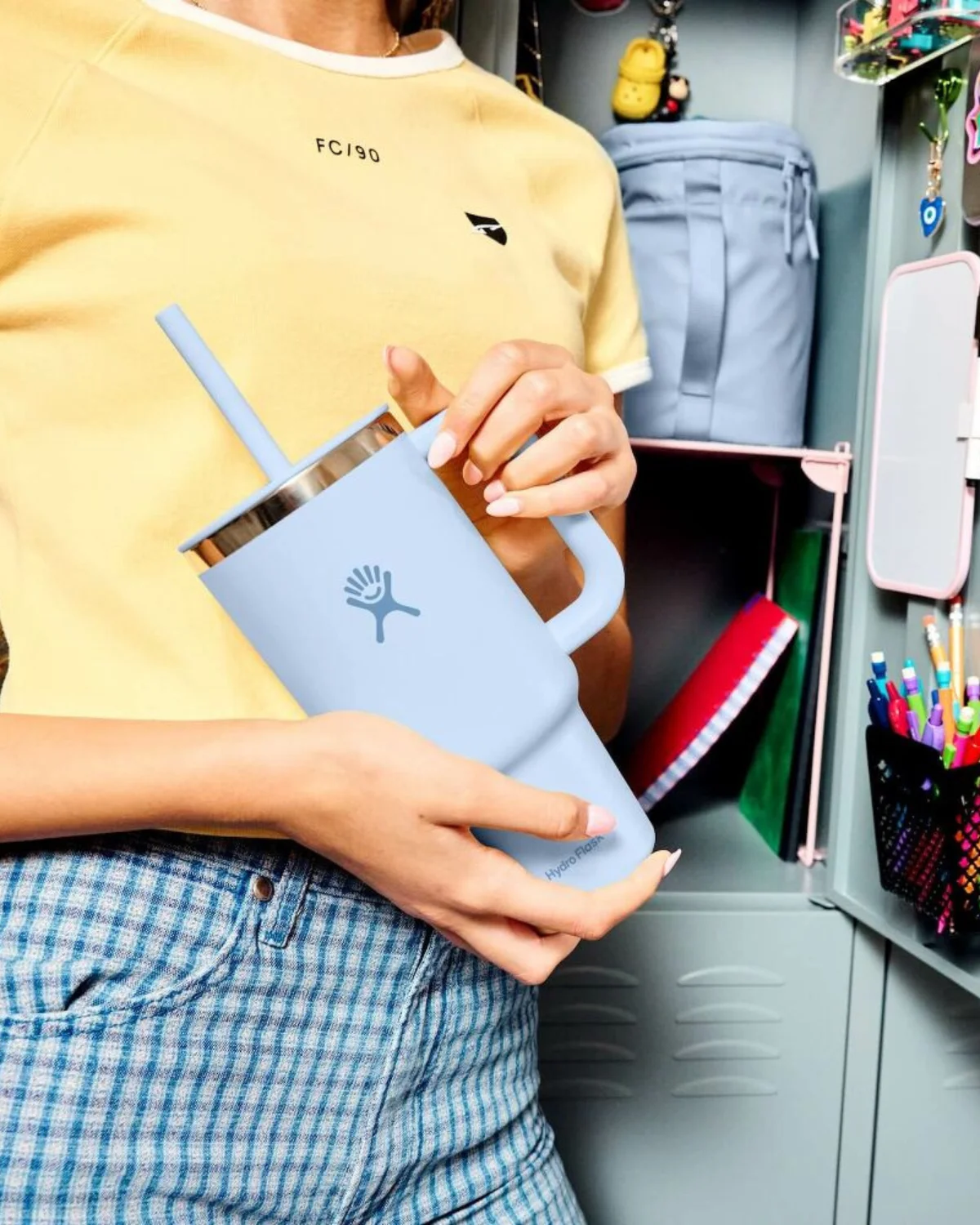
There’s a reason I reach for my Hydro Flask again and again.
Beyond its great insulation, the company has a standout reputation for being transparent about their materials—specifically their commitment to being 100% lead-free, which they address more openly than most brands.
Hydro Flask’s Bottles and Tumblers also tend to outlast the competition.
I’ve dropped, overfilled, and tossed mine into bags without a single leak, and even after taking a beating, the powder coating remains remarkably intact compared to other brands I’ve tested.
To top it off, the dishwasher-safe lids make cleanup effortless.
Hydro Flask eliminated lead from its insulation sealing process over ten years ago when it debuted TempShield insulation.
While all current models are confirmed lead-free, older vintage bottles may not share the same construction.
If you’ve been loyal to the same bottle since before 2013, it might finally be time for an upgrade.
Price
$49.95
Materials
Stainless steel, BPA-free plastic components, lead-free temp shield insulation
location/shipping
United States, ships within the US
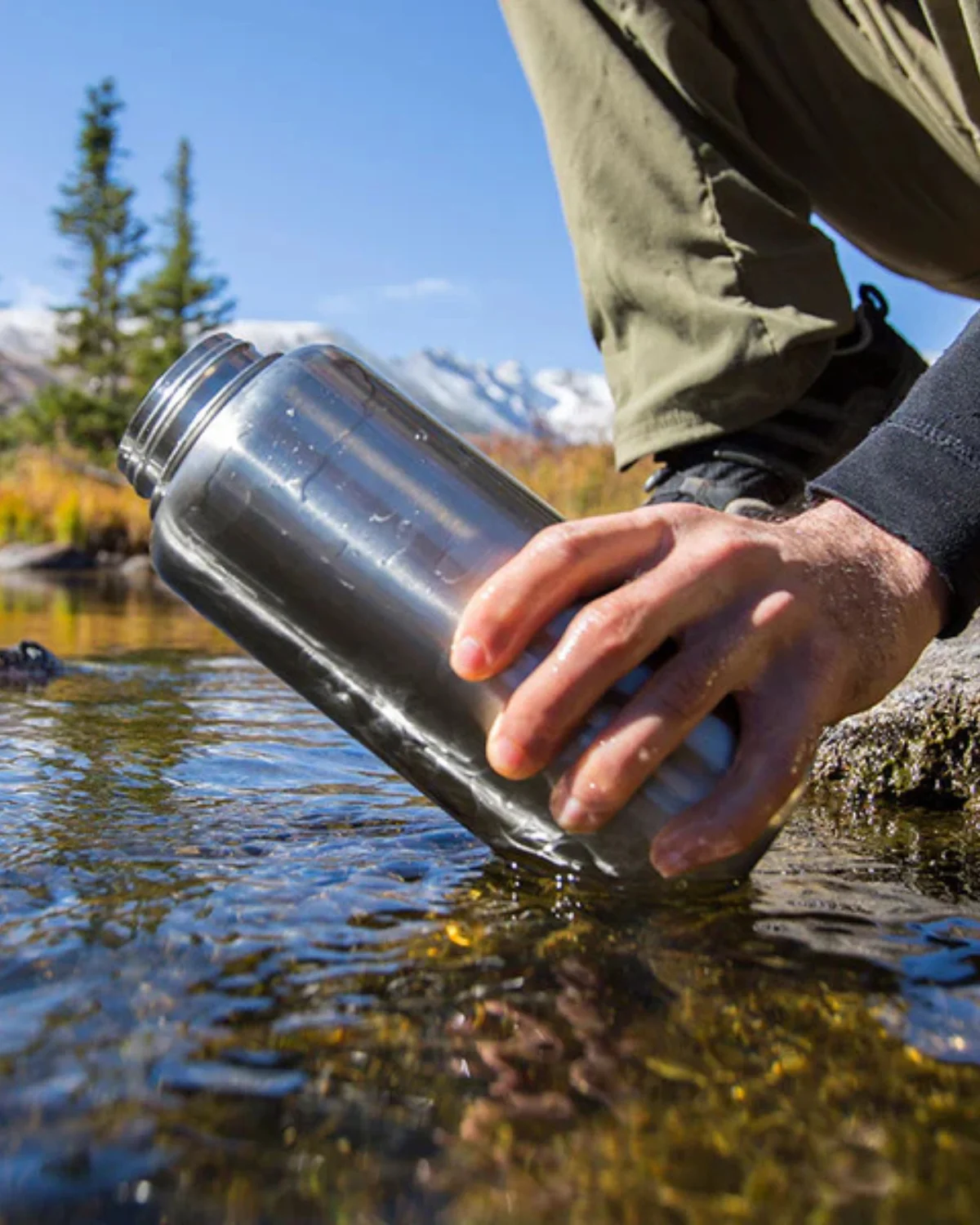
This is one of the bottles my family uses on hikes here in Italy—it’s sturdy, easy to clean, and the lead-free sealing gives me peace of mind when the boys inevitably drop it 100 times.
Klean Kanteen explicitly uses silica/glass plugs instead of lead-based solder in their vacuum-insulated bottles—a more expensive manufacturing choice, but a much safer one.
They’re transparent about this decision and offer both insulated and single-wall options, so you have flexibility depending on whether insulation matters to you.
Their Wide Water Bottle is made from 90% post-consumer recycled 18/8 stainless steel; the bottles are completely free of BPA, lead, phthalates, and heavy metals.
The extra-wide mouth makes it easy to add ice or use it with backcountry water filters, which is why it’s popular for camping and outdoor adventures.
Lightweight, dishwasher-safe, it’s backed by a Strong as Steel Lifetime Limited Warranty.
Price
$31.95
Materials
90% post-consumer recycled 18/8 stainless steel, BPA-free and lead-free
location/shipping
United States, ships to the US and Canada
Use discount code TFC10 to save 10%!
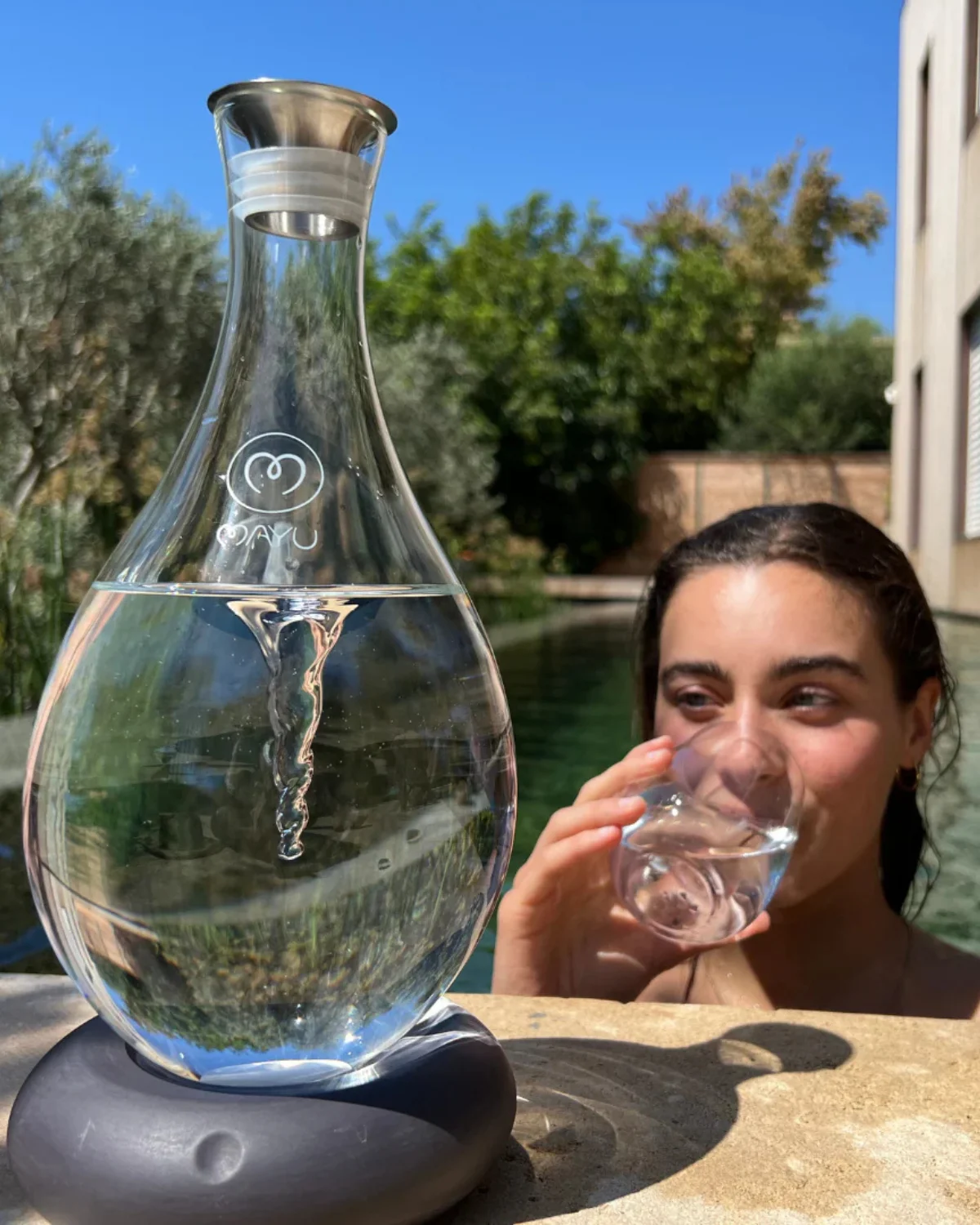
This Borosilicate Glass Bottle is my go-to for my home office.
It’s beautiful and simple, and I never have to second-guess what I’m drinking from.
Because it’s just straightforward glass, there’s no vacuum insulation or metal sealing to worry about.
That peace of mind is core to MAYU’s mission.
They were founded to find the cleanest water options for children and maintain rigorous third-party testing.
While you trade off insulation and some durability compared to steel, glass eliminates the guesswork for anyone seeking an all-glass reusable bottle.
Price
$39
Materials
100% grade A, lead-free, borosilicate glass
Location/Shipping
United States, ships to the US, Israel, the United Kingdom, and Australia
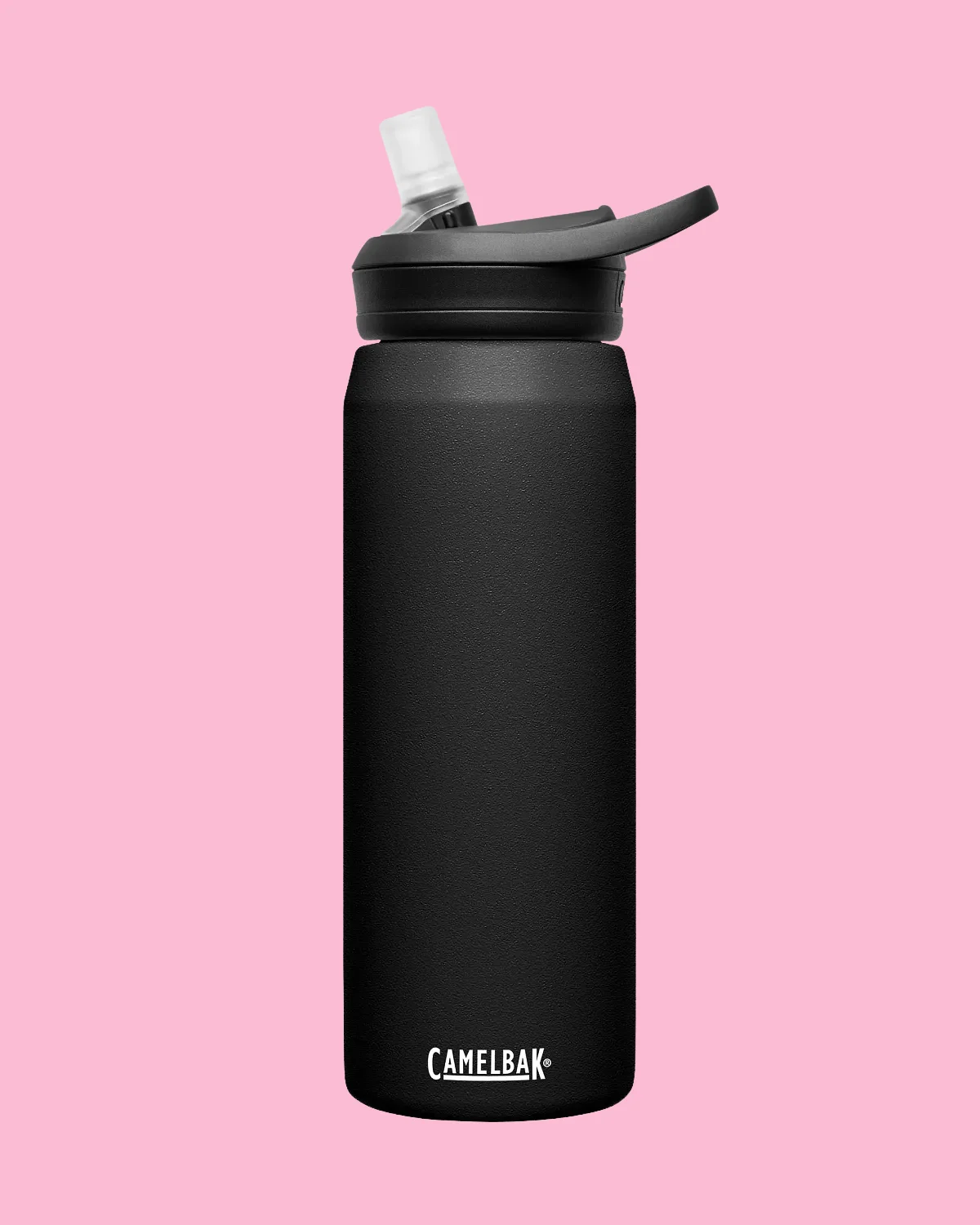
If your child is ready for a bigger bottle but not quite ready to ditch the straw? The CamelBak Eddy+ is the perfect middle-ground.
It’s tough enough to survive the playground pavement, yet the bite-valve makes it easy to use and prevents accidental spills.
Between the grippy powder coating and the built-in carry handle, it’s designed with smaller hands in mind.
Plus, the insulation is solid enough to keep water cold from the first bell until the end of sports practice.
While it’s leak-proof, the straw components definitely need a deep clean once a week.
Also, it’s a bit wider than your average bottle, so it might be a tight squeeze in some car seat cup holders.
CamelBak confirms the lid is BPA, BPS, and BPF-free, which is great. However, they are less ‘open book’ than brands like Hydro Flask or MAYU.
Their bottles do meet US and EU safety standards and undergo third-party testing to ensure your drinks aren’t exposed to lead, but they don’t go so far as saying their water bottles are completely lead-free.
Because they don’t currently provide SKU-specific third-party testing for heavy metals, this is a solid, durable choice, but perhaps not the ‘total transparency’ pick if you’re extra cautious.
Price
$33
Materials
Double-wall vacuum insulated 304 stainless steel body, polypropylene lid, LDPE and silicone gaskets
location/shipping
Engineered, designed, and tested in California. Manufactured in the Philippines and Vietnam. Ships within the US
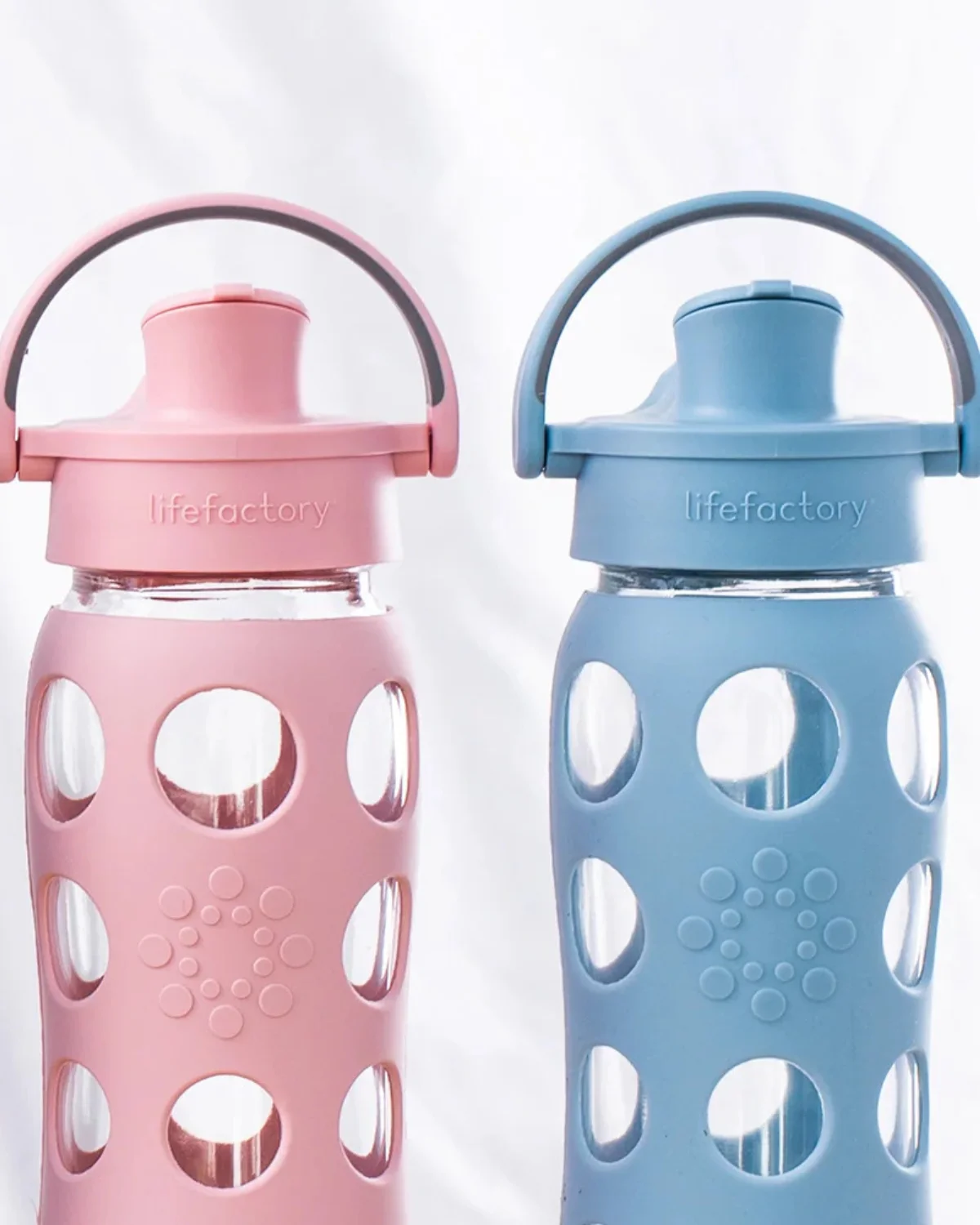
Lifefactory Glass Water Bottles were my go-to when the twins were toddlers.
The silicone sleeve saved us from so many breaks, and I loved being able to see inside the bottle to check for any gunk.
Made in the USA and France, Lifefactory uses lead-free, cadmium-free glass paired with a protective silicone sleeve that adds grip and impact resistance.
The BPA-free polypropylene screw cap and food-grade silicone sleeve are both safe secondary components, and the simple construction means there are no lead concerns.
The wide-mouth design makes it easy to add ice, citrus slices, or non-toxic tea, and it’s dishwasher-safe (with the cap on the top rack).
Families often choose this for school, the gym, or everyday use because the glass is transparent and easy to clean, and the silicone sleeve reliably keeps it from breaking.
Price
$22.99
Materials
Lead-free, cadmium-free glass bottle, BPA-free polypropylene screw cap, silicone Protective sleeve
location/shipping
Glass made in France, Cap and sleeve made in the U.S. Ships within the U.S
Tier 2: Also Solid Options
These bottles are well-made and address the same core safety concerns, but they’re designed for more specific use cases—like families with growing kids, travelers who need collapsible designs, or anyone prioritizing features like built-in straws or ultra-portability.
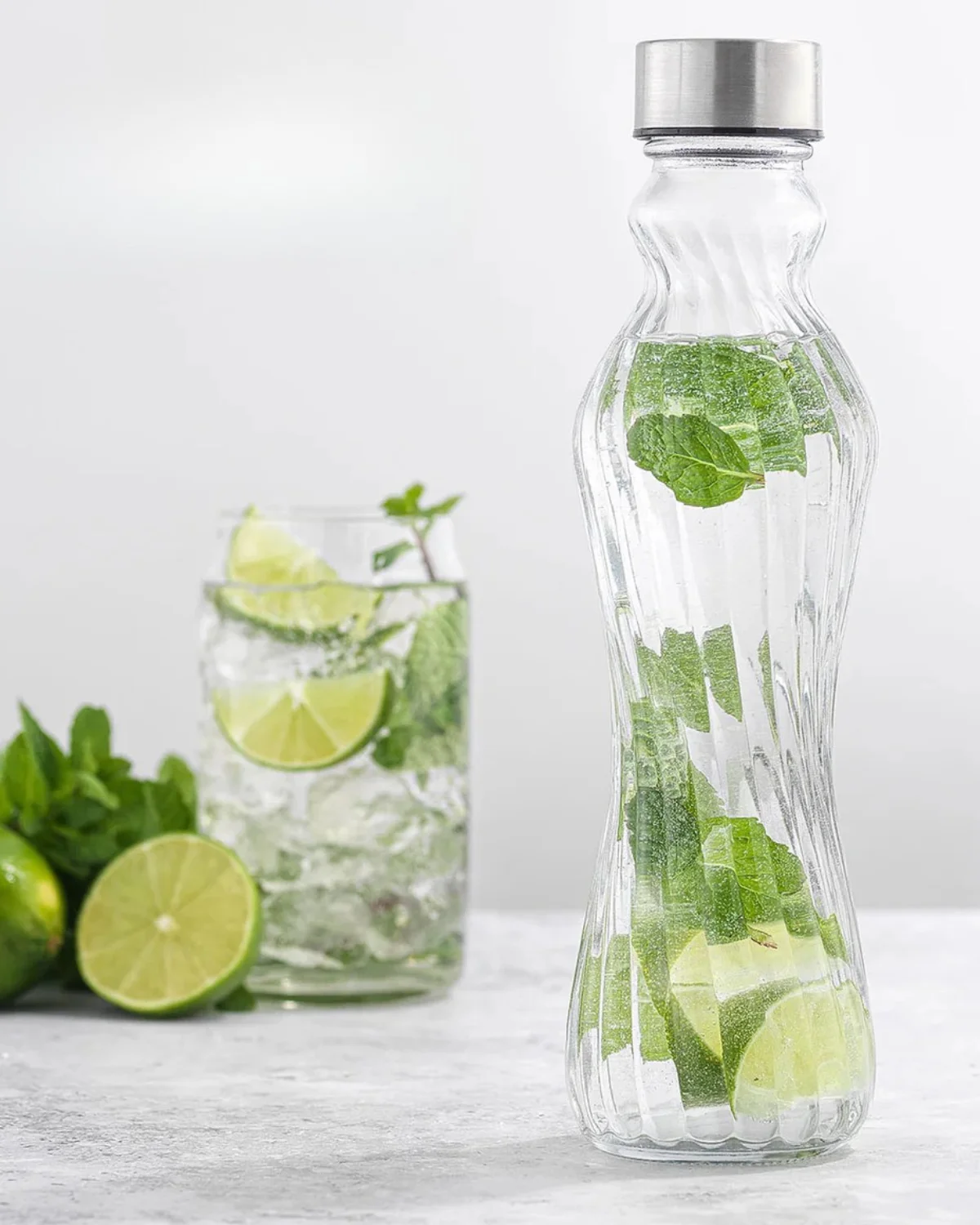
I think of JoyJolt as my ‘home base’ bottle.
This one lives in my fridge or on my nightstand because it keeps my water tasting the cleanest possible without any metallic notes.
Because this 17-oz Spring Bottle is made from lead-free glass with a simple stainless steel cap, it’s an effortless way to move away from plastic.
The fluted design is a nice touch, too.
It looks beautiful, but more importantly, it provides a much better grip than smooth glass.
While it lacks insulation and requires a bit more care than steel, there are no lead-soldered vacuum seals to worry about.
Price
$24.95
Materials
Lead-free glass, stainless steel lid
location/shipping
United States. Ships within the US
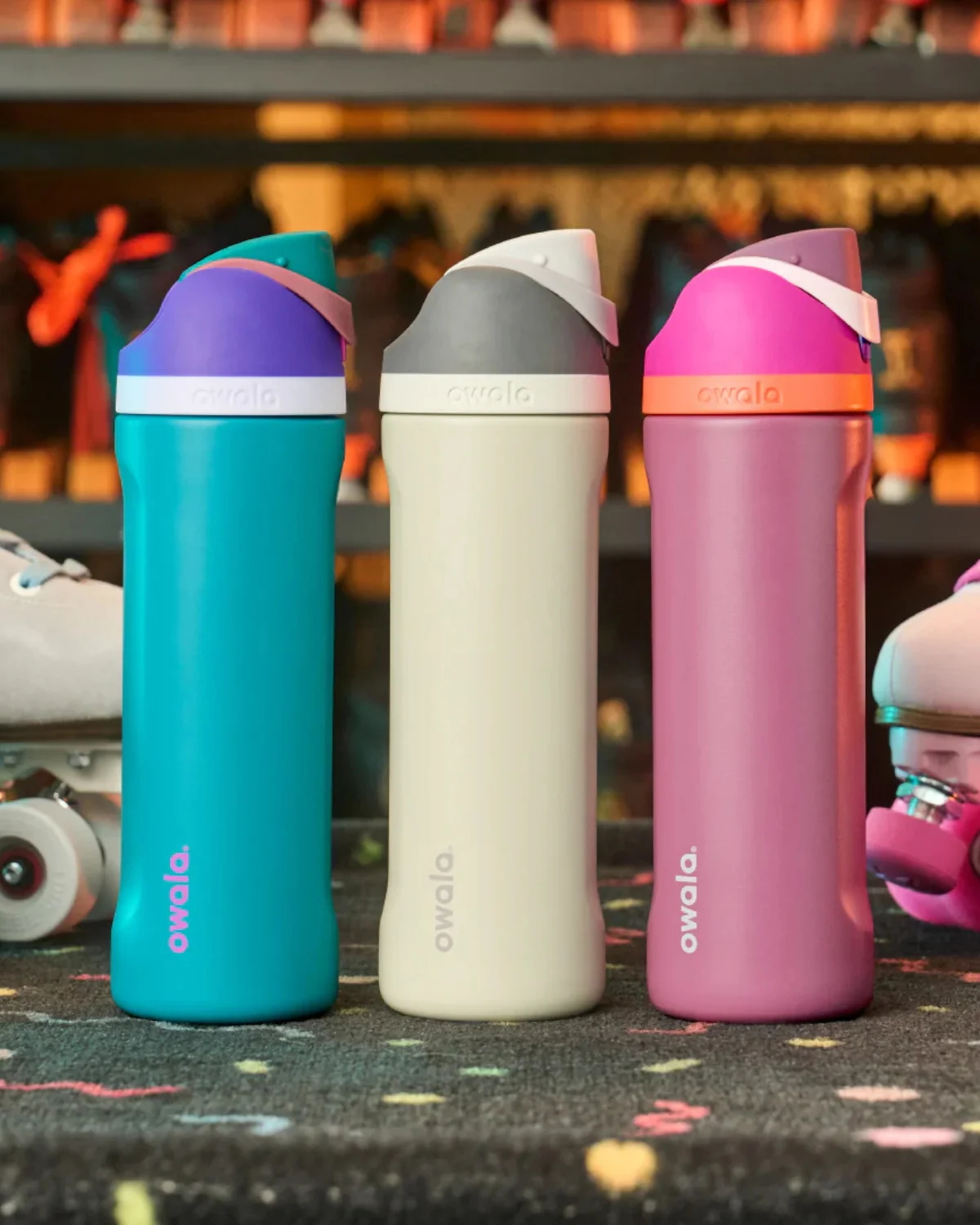
I’ve gone through a lot of straw-top bottles, but Owala is one of the few I’ve stuck with because it handles the ‘sip versus chug’ dilemma without making me swap lids.
It’s become my go-to for days that start at the office and end at the gym.
The FreeSip lid is really what makes Owala bottles different.
I can use the straw while driving without taking my eyes off the road, but tilt it back for a deep drink when I’m actually working up a sweat.
The push-button cover is easy to flick open with one hand, and I appreciate that the lock keeps the mouthpiece completely covered and dirt-free.
The only real issue with this one is the cleaning.
You’ll want to be diligent about taking the lid components apart to keep things thoroughly clean.
Owala uses a lead-free sealing process in its insulated stainless steel bottles and has publicly published lead-free disclosures.
Price
$29.99
Materials
Lead-free, phthalate-free stainless steel, BPA-free plastic components, food-grade silicone straw
location/shipping
United States, ships to the US, UK, Australia, Canada, Belgium
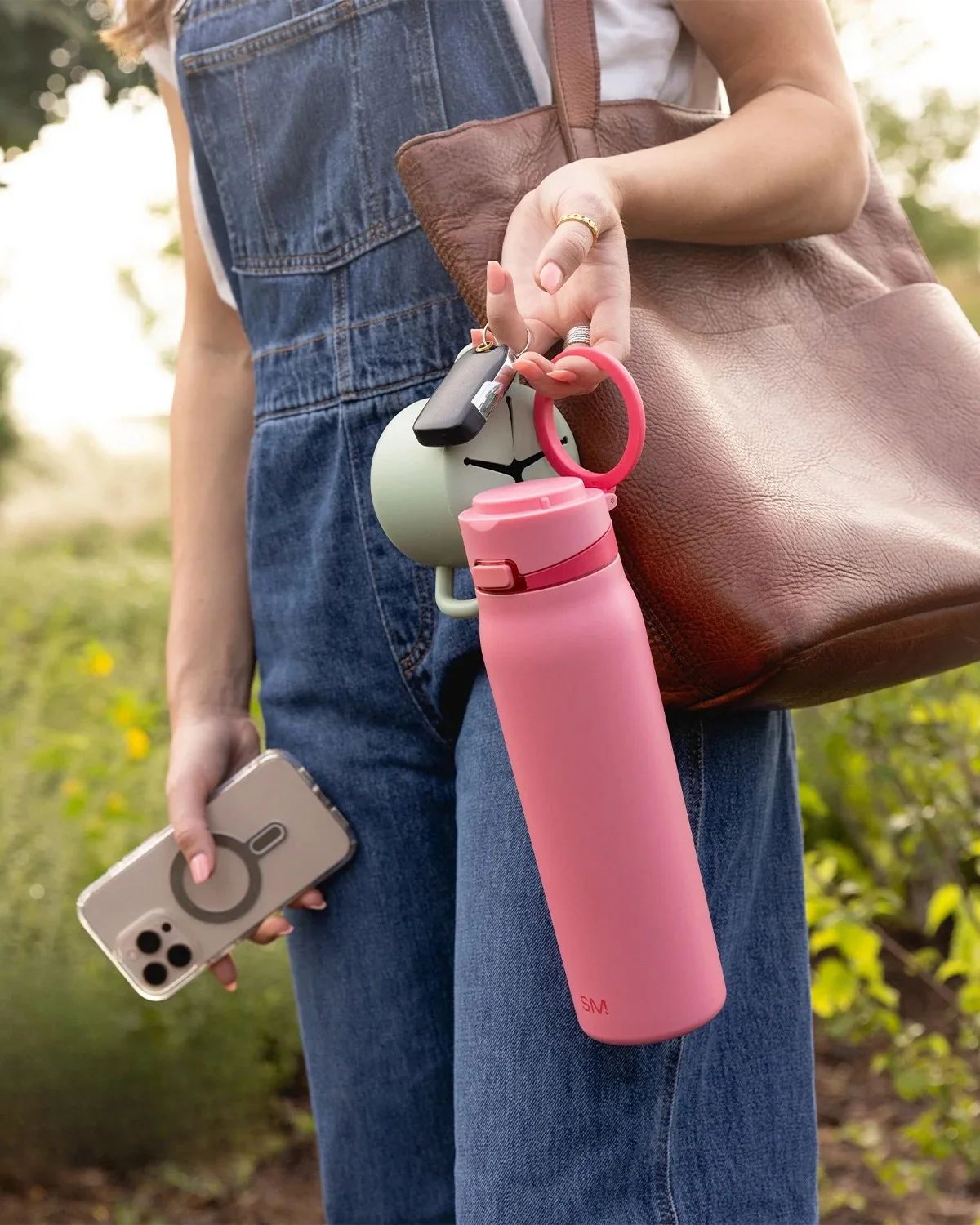
One of my biggest pet peeves with stainless steel bottles is how loud they are, so the fact that the Simple Modern Mesa Water Bottle comes with a silicone base that keeps it quiet immediately stood out.
If you need something quiet, look no further!
The silicone base makes a noticeable difference. It softens impact and keeps things quiet, and the integrated handle is genuinely useful when my hands are full or I’m clipping it onto a bag.
The bottle fits easily into cupholders, the locking lid has held up well in bags, and insulation keeps drinks cold through long days without any fuss.
Simple Modern bottles are made without BPA, phthalates, lead, or cadmium.
Like many insulated designs, the brand doesn’t publicly detail the exact sealing method used in the insulation, but all accessible components are lead-free.
Price
$35.99
Materials
Lead-free, phthalate-free, lead, cadmium-free stainless steel, and BPA-free components
location/shipping
United States, ships to the US and Canada
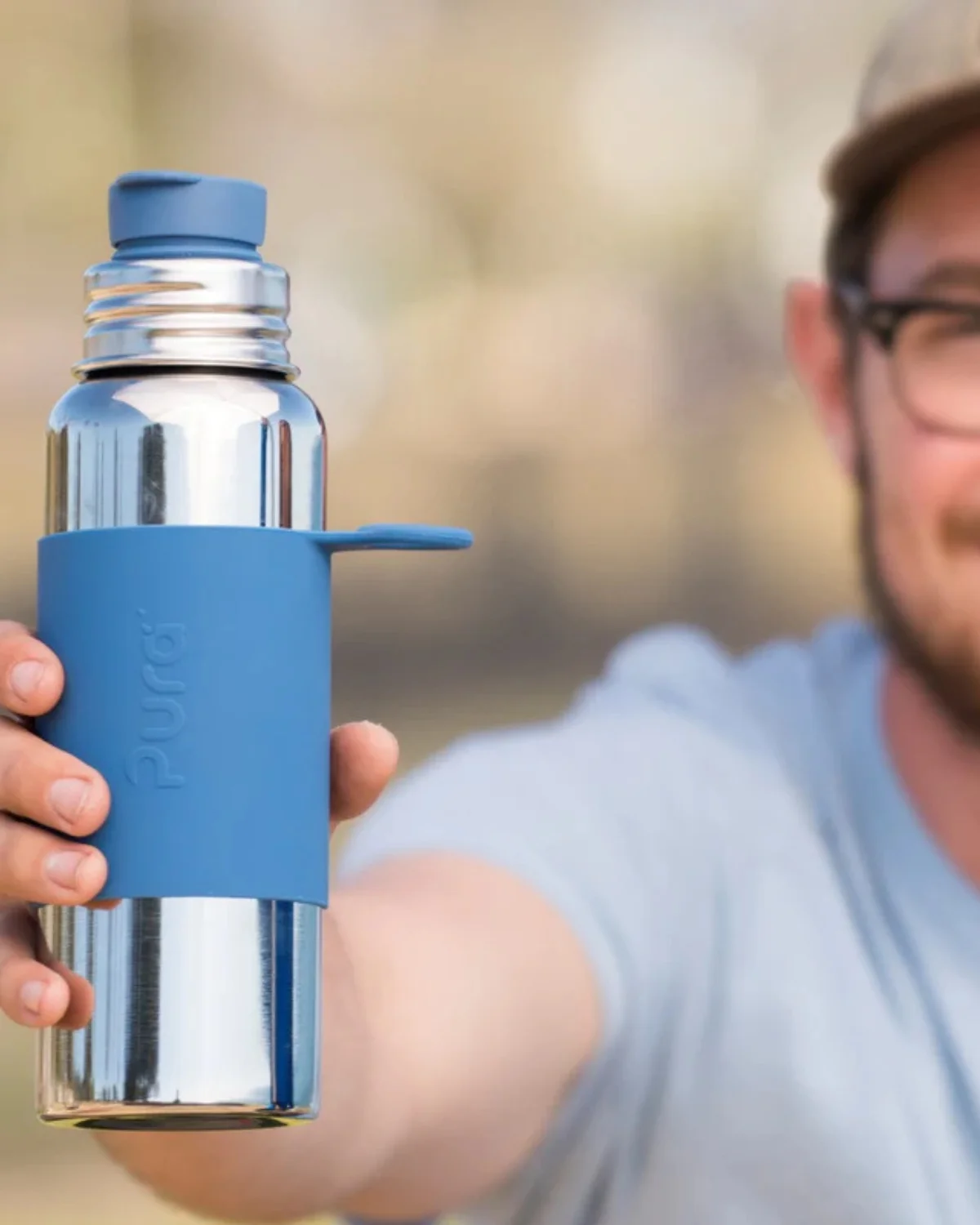
As a parent, I prioritize gear that lasts. Pura Stainless stands out because their bottles are designed to grow with your child.
Instead of buying a new one every few years, you simply swap the lid.
I’ve included the Big Mouth Sport on this list because you never have to replace the stainless steel base, just the cap as your child grows.
We started with the Baby Nipple, then swapped to a Sippy Lid, and eventually the sport cap, without ever having to replace the bottle itself.
It sounds small, but small wins like this add up fast when you’re constantly cycling through new gear.
It’s completely plastic-free and MADE SAFE® certified, which gives me real peace of mind.
I also appreciate how easy it is to clean. No hidden valves or tricky parts, and I can boil everything when I want a true deep clean.
It’s a great option when paired with non-toxic lunch boxes and non-toxic kids cups.
Price
$30.49
Materials
Lead-free, 18/8 stainless steel bottle with 100% medical-grade silicone lid
location/shipping
United States, ships within the US
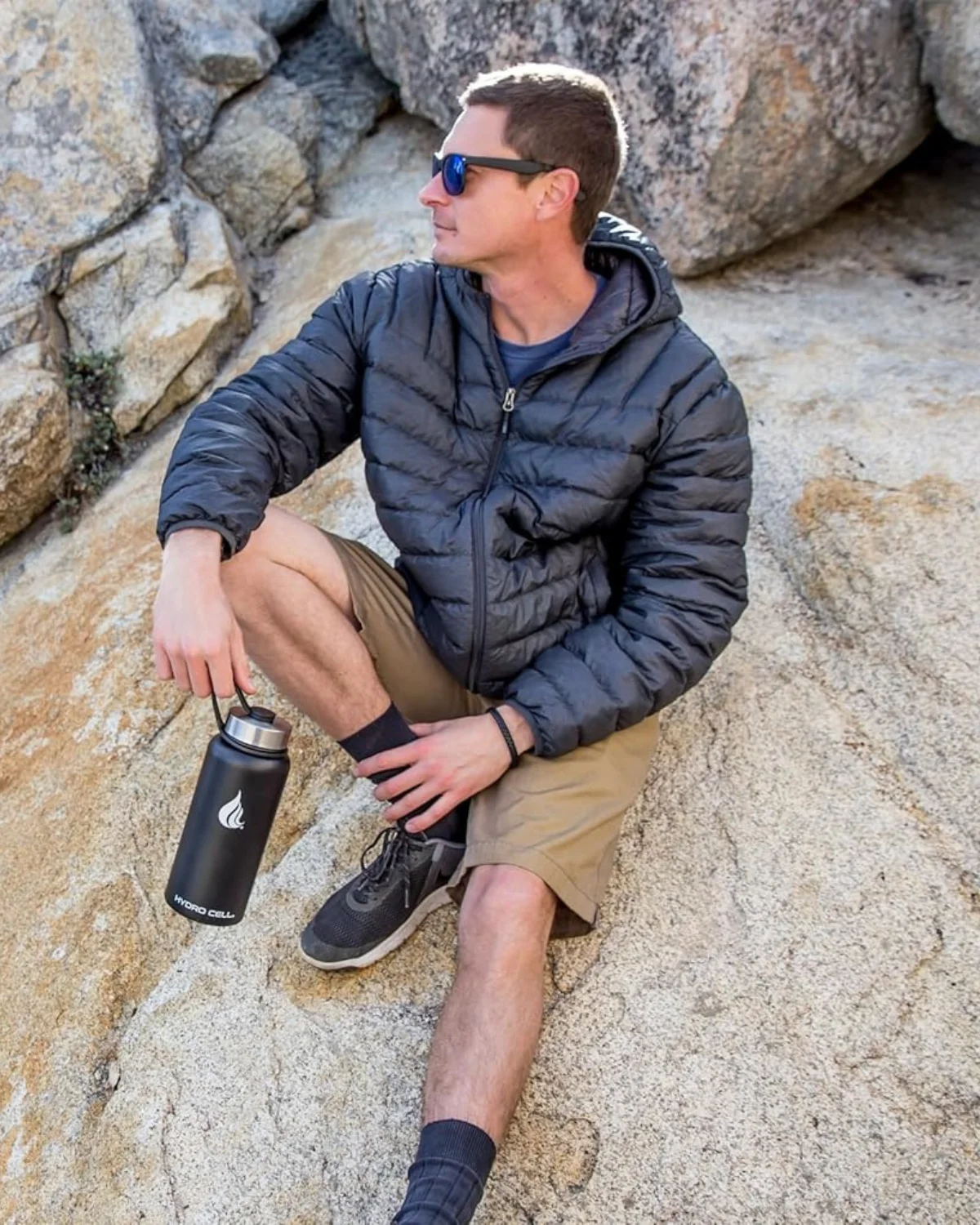
The Wide Mouth Stainless Steel Water Bottle from Hydro Cell is my go-to for HITT classes and hot yoga when having ice-cold water is a must.
This is also a great bottle for middle schoolers and high schoolers who are rough on their gear.
These bottles are built tough and can easily withstand banging around in the bottom of backpacks, lockers, and sports bags.
It’s a great non-toxic essential for a safe summer or everyday use.
The stainless steel body uses triple-layer construction, with a copper layer sealed between two layers of steel, so it never touches your water.
It’s FDA-certified, Prop 65-compliant, and made with BPA-free lids and straws, which checks the boxes I care about for daily use.
Price
$21.54
Materials
California Prop 65 approved triple-layer construction- exterior powder-coated 18/8 stainless steel wall, an interior copper lining, and another interior 18/8 stainless steel wall.
location/shipping
Made in the USA.
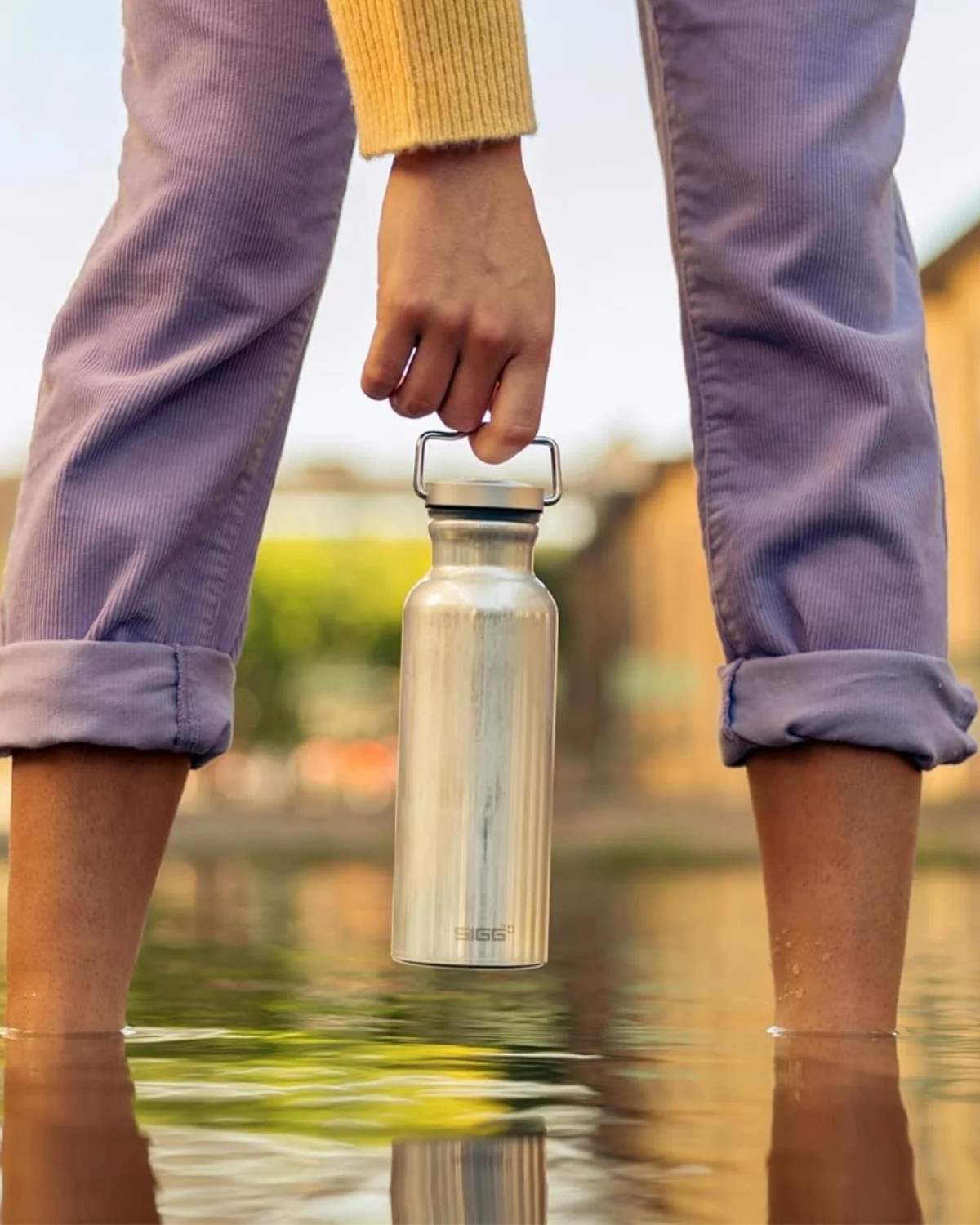
If you need a lightweight water bottle that you can take anywhere, SIGG’s Aluminum Bottle is one of your best lead-free options.
The simple Swiss design is made from uber-light recycled aluminum, and its narrow profile fits easily into cup holders and backpacks.
The bottles have a BPA-free internal lining and are tested to meet strict EU and U.S. safety standards.
Since they aren’t insulated, they’re best suited for cold or room-temperature drinks.
Keep in mind that you do need to handle these bottles with care since aluminum can dent more easily than steel.
Be sure to avoid abrasive scrubbers and use a gentle, non-toxic dish soap.
Price
$22.05
Materials
100% recycled aluminum.
location/shipping
Made in Switzerland, available on Amazon USA.
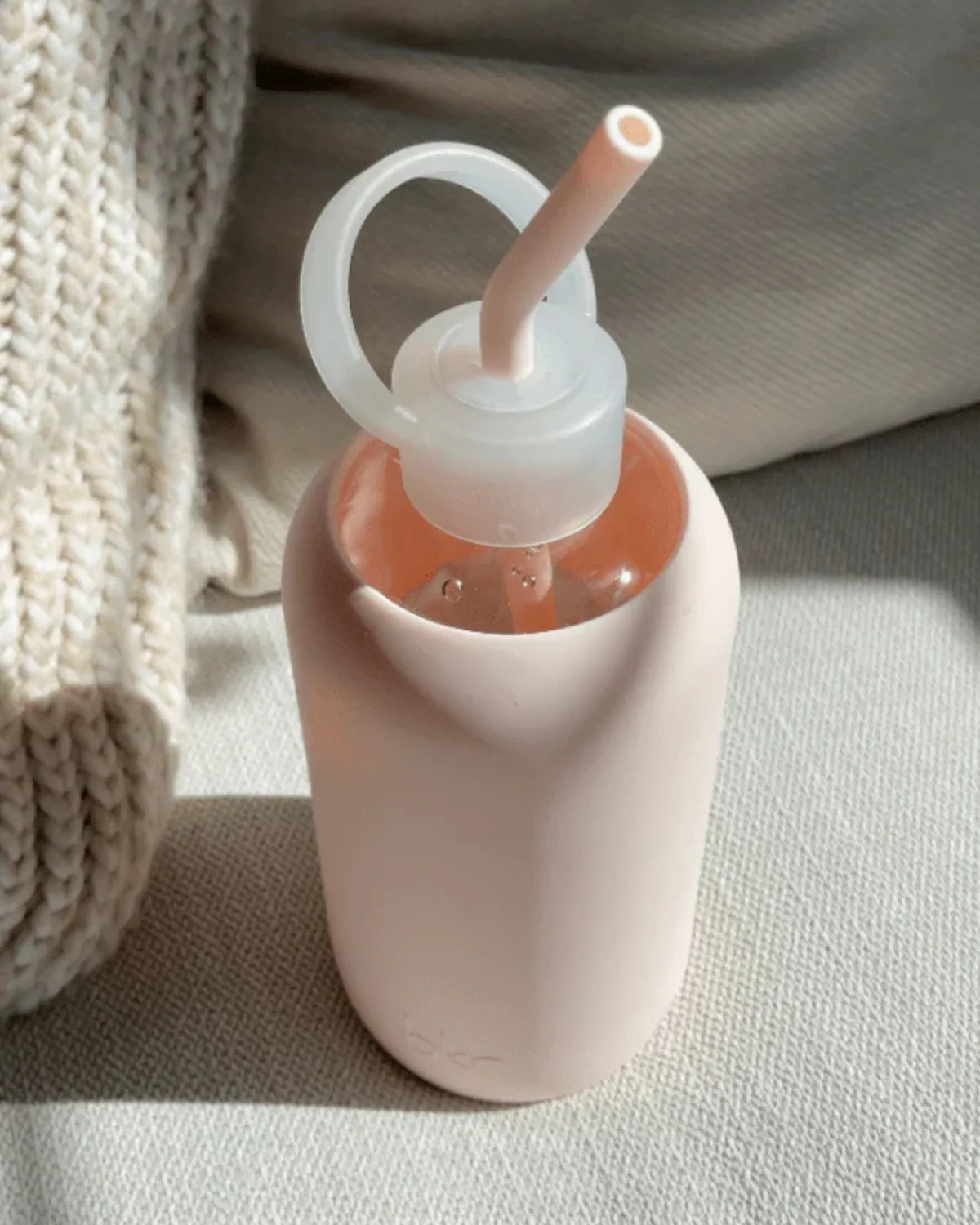
The Big Frost Sip Kit looks great on a desk or kitchen counter while still being portable enough to bring along on errands or to pilates class.
It’s made from soda-lime glass with a food-grade silicone sleeve that adds grip and helps protect against everyday bumps and minor falls.
Though I do think it’s important to set expectations here. This is still a glass bottle. The sleeve is a helpful safety buffer, not a shatter-proof shield.
And while the straw cap is convenient for sipping, it isn’t fully leakproof, so be sure not to toss it sideways into a bag.
But I do appreciate how easy it is to clean. The valve and gasket come apart, which makes it much easier to wash everything thoroughly.
The cap itself is polypropylene with a removable silicone gasket.
bkr is fairly clear about its product materials, but more limited when it comes to testing disclosures.
They don’t explicitly label the glass as lead-free or publish heavy-metal testing or pigment details.
Price
$80.00
Materials
Soda-lime glass bottle, food-grade silicone sleeve and straws, polypropylene cap with silicone gasket
location/shipping
Designed and engineered in San Francisco, manufactured in China. Ships within the US.
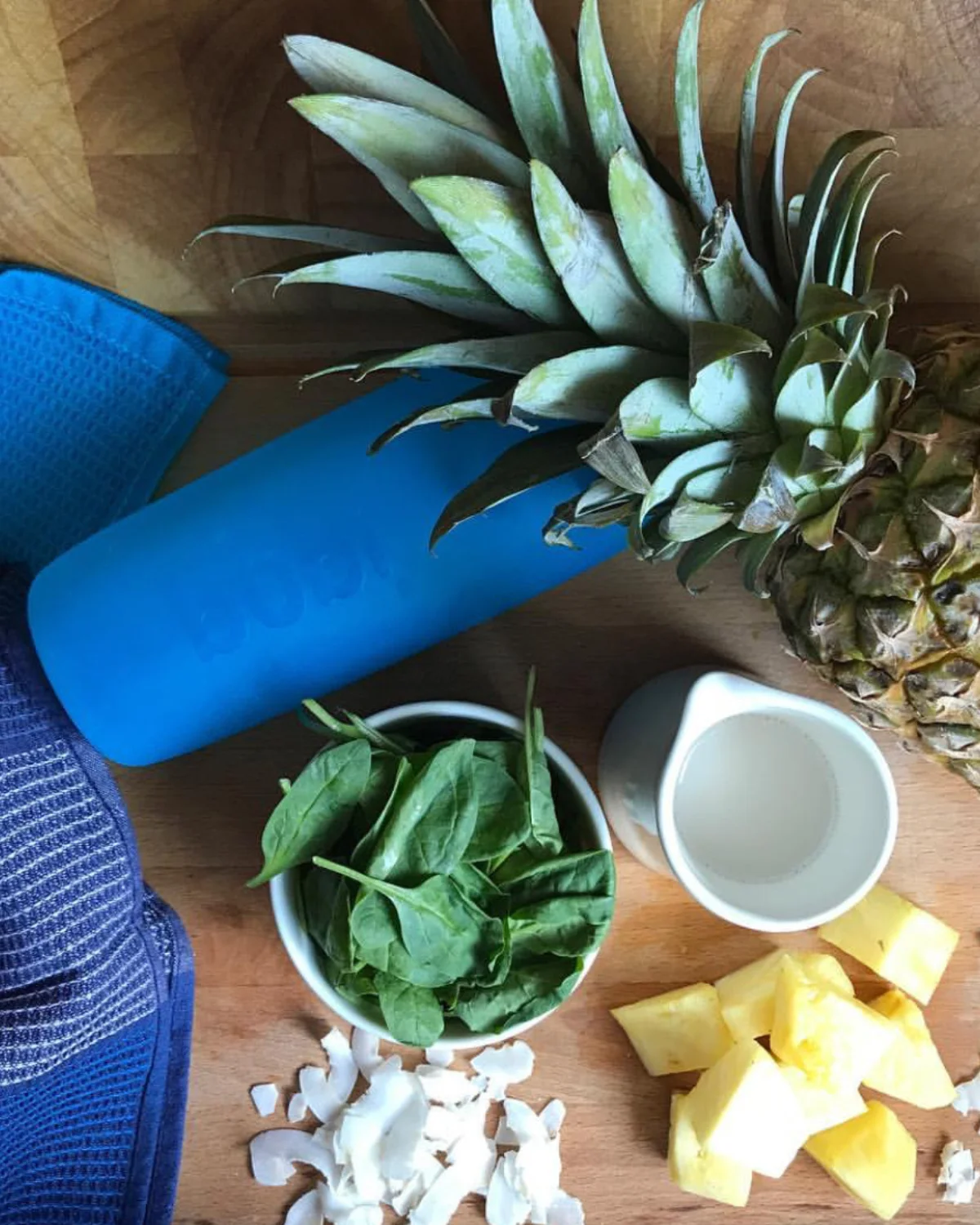
The Bubi Bottle is great to stash away for those unexpected adventures.
We’ve kept one in the diaper bag and another in our travel backpack for years.
Because it’s collapsible silicone, toddlers can drop it, squeeze it, or knock it over without worrying about dents, spills, or smashed toes.
It rolls up small and weighs practically nothing, which makes it especially handy for flights, road trips, and camping.
That said, you’ll quickly notice this isn’t a bottle meant for everyday use.
Squeeze it too hard, and you’ll get a surprise splash to the face, and as it empties, it starts to flop over.
But that tradeoff is part of the design. This bottle is built for packability.
From a materials perspective, it keeps things simple.
The bottle is made from medical-grade silicone and is free from BPA, phthalates, and PVC.
Price
$24.99
Materials
Medical-grade silicone
location/shipping
United States, ships to the US and select international countries.
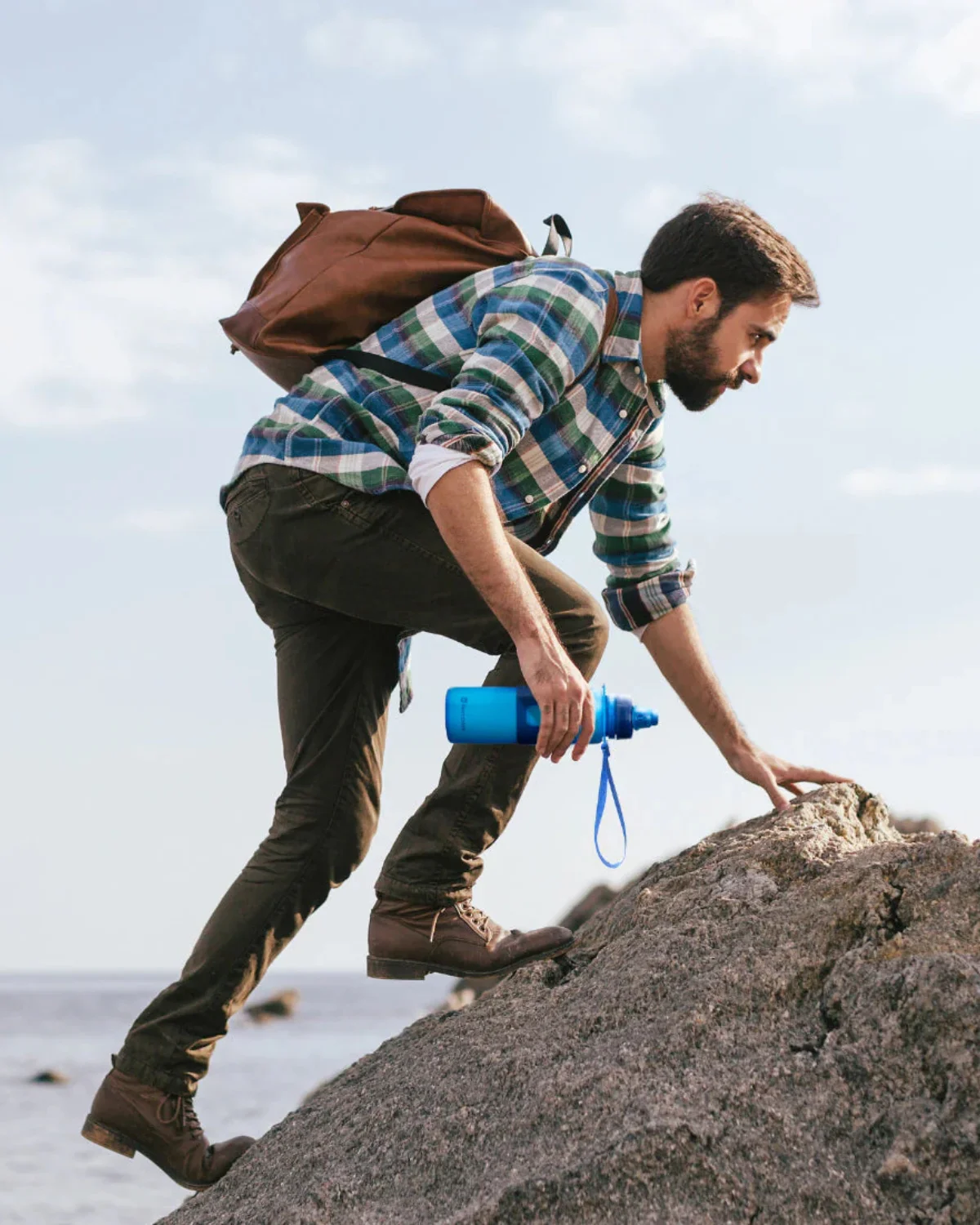
I started using the Nomader Collapsible Bottle when I wanted something packable but more structured than the Bubi Bottle.
It’s also made from silicone, but the supportive outer sleeve makes it a better middle-ground option between compact storage and everyday usability.
The bottle stays upright, is easier to drink from, and feels more stable on surfaces like car floors or picnic tables.
The covered spout also helps reduce leaks, which makes it more practical for kids to use independently.
It doesn’t fold down quite as small as softer silicone bottles like the Bubi Bottle, and I always recommend washing it a few times before first use to help minimize that initial silicone taste.
Nomader states that the bottle is made from BPA-free, food-grade silicone with a protective outer frame.
While the brand doesn’t break down every component in detail, the overall construction avoids rigid plastics and any metal parts that could contain lead.
Price
$36.95
Materials
Medical-grade silicone
location/shipping
United States, ships to the US and select international countries.
👉🏼 Looking for even more non-toxic reusable water bottles that are both safe and sustainable? Check out our sister site Sustainably Kind Living.
Why You Can Trust This Guide
When it comes to what our families use every day, ‘good enough’ isn’t enough for me.
I’ve combined years of research into non-toxic materials with hands-on testing to see which brands actually walk the walk.
Every recommendation here has been closely compared with Toxic Free Choice safety standards, with close attention to materials, construction methods, and any potential lead exposure pathways, especially in insulated designs.
My goal is to give you a clear, honest look at what’s actually in these products—and whether they’re practical enough to survive your real, everyday life.
🚩 Red Flags To Watch For
Not every water bottle needs to be replaced, but certain signs are worth paying attention to. These guidelines are meant to help you decide when a bottle is still fine to use and when it’s time to replace it.
Replace Immediately
- A loose, cracked, or missing base cap on an insulated stainless steel bottle
- Visible corrosion, residue, or metal exposure at the bottom seam
- Bottles involved in confirmed safety recalls
- Insulated bottles that have been severely dented at the base
Monitor Closely
- Insulated bottles with dents or deep scratches near the bottom
- Paint or powder coating chipping around seams or base areas
- Bottles that no longer keep drinks hot or cold like they used to
- Older insulated bottles with unknown manufacturing details
Avoid Before Purchase
- Insulated bottles that do not clearly disclose how the vacuum seal is made
- Very low-cost insulated stainless steel bottles with limited brand information
- Decorative kids’ bottles with heavy exterior coatings and unclear materials
- Bottles marketed as “eco” or “non-toxic” without specific material disclosures
When Lead In Water Bottles Becomes A Real Concern
If your insulated bottle is intact and functioning normally, there’s no urgent reason to panic.
Risk increases when the bottom of your insulated bottle is badly damaged. A deep dent at the base or visible wear around the sealed area is worth replacing.
Children are more vulnerable than adults because their bodies absorb lead more easily, and they tend to handle bottles more frequently. A damaged base that’s touched daily by small hands is more concerning than occasional adult use of a bottle in good shape.
Also, keep in mind that pre-2017 models from major brands often used lead solder at the vacuum seal, and daily use compounds any micro-exposures over time.
If you want to avoid the lead insulation issue entirely, single-wall stainless steel or glass bottles are your safest bet. The tradeoff is that they won’t keep drinks hot or cold for hours, but they simplify construction and reduce uncertainty.
💬 Frequently Asked Questions About Non-Toxic & Lead-Free Water Bottles
Stainless steel itself does not contain lead. The concern applies to some double-wall insulated bottles that use a sealed base to create vacuum insulation.
In certain designs, that seal has historically involved a small amount of lead-based solder. It is not part of the steel interior and does not line the drinking surface.
No. In insulated designs that use solder, the sealed area is located at the base between the inner and outer walls.
Under normal use, it does not come into contact with the water. The concern arises only if the bottom seal becomes damaged and exposes the sealed area.
Not necessarily. If your bottle is in good condition, with no dents at the base, no loose bottom cap, and no visible damage, there is no immediate reason to discard it.
Focus on the condition rather than the assumptions. If the base is compromised, replacing the bottle is a reasonable next step.
Turn the bottle upside down and inspect the base. Look for a circular cap or a small sealed area in the center. If the bottom cap is cracked, loose, or missing, stop using the bottle.
If the base is intact and undamaged, the sealed area should not be accessible. You can also search recall databases if you’re unsure about an older model.
Single-wall bottles do not use vacuum insulation, which means there is no sealed base involved. That simplifies the construction and removes this specific concern.
The tradeoff is that they won’t keep drinks hot or cold for extended periods.
Some brands publicly state that they use lead-free sealing methods in their insulated designs, while others avoid vacuum insulation entirely.
When evaluating options, look for clear disclosures about how the insulation is sealed rather than relying on general “lead-free” labeling.
If the bottom cap detaches or becomes loose, stop using the bottle. The sealed area is not meant to be exposed. Replacing the bottle is the safest course of action.
Yes. Children absorb lead more readily than adults, and they tend to handle bottles frequently, including touching the base.
That doesn’t mean every insulated bottle is unsafe for kids, but it does mean damaged bottles should be replaced promptly and inspected more carefully.
Feel Confident In Your Choice
Reusable bottles are still a healthier choice than plastic. The key is understanding design differences, not panicking. If you want to eliminate the lead issue entirely, single-wall stainless steel or glass bottles are the simplest options.
Continue Your Kitchen Safety Upgrade
- 🥤 PFAS-Free Sparkling Water → A packaging-focused review of sparkling water brands, examining aluminum can linings, epoxy resins, bisphenol substitutes, and potential PFAS concerns in beverage coatings.
- 🌿 BPA BPS Plastic Alternatives → A polymer-based analysis of food storage materials, comparing bisphenol-containing plastics with glass, stainless steel, and food-grade silicone to reduce endocrine-disrupting exposure.
- 🧊 PVC Free, Lead-Free Coolers → A materials-first breakdown of hard and soft coolers, reviewing vinyl components, phthalate risks, heavy metal testing, and safer insulation alternatives for food contact.
- 🚰 Non-Toxic Water Filter Pitchers → A certification-driven review of water filtration systems, evaluating activated carbon, ion exchange, and NSF/ANSI standards for PFAS, lead, chlorine, and emerging contaminants.
- 🥛 Non-Toxic Kids Cups → A construction-focused analysis of children’s drinkware, examining stainless steel grades, silicone stability, plastic resin codes, decorative coatings, and chemical migration under heat and wear.
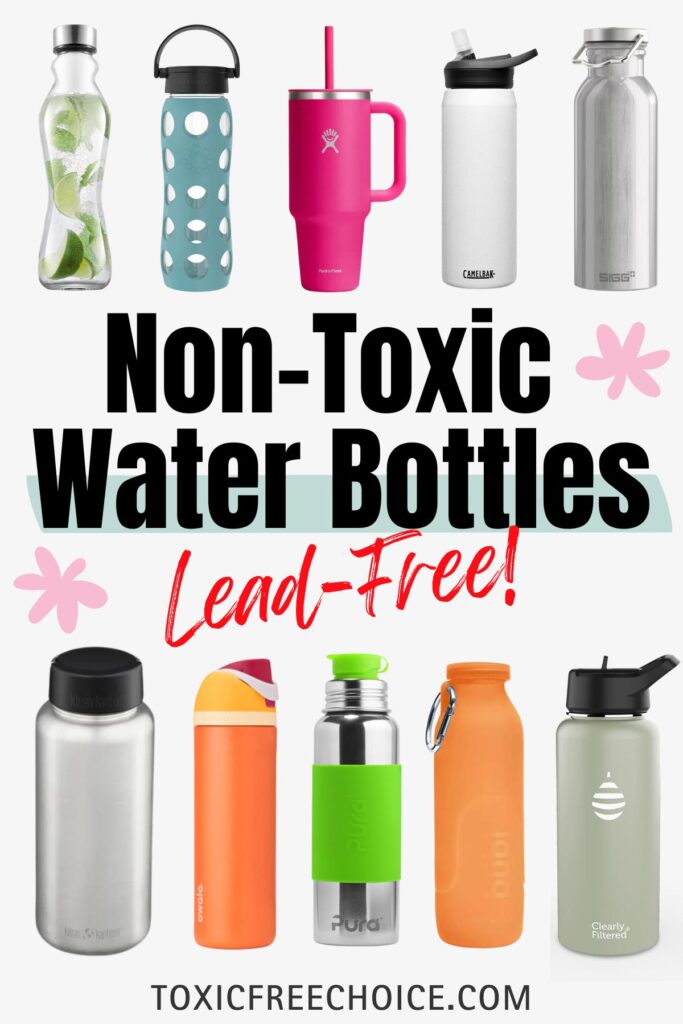
📌 Save This Pin For Later
Not all “reusable” water bottles are created equal. Some contain lead-sealed bases, aluminum liners, plastic components, or coatings you’d never expect.
This guide breaks down the best non-toxic & lead-free water bottles, what materials to avoid, and what actually makes a bottle safe. Save this for your next safer swap.
References:
- Wakabayashi, D. (2024, January 26). The Stanley Quencher craze has a lead problem. Wired. Retrieved from https://www.wired.com/story/stanley-cup-lead-soldering/
- Eaton, C. (2024, February 8). Stanley’s lead problem is a big opportunity for its rivals. Business Insider. Retrieved from https://www.businessinsider.com/stanley-tumblers-lead-owala-hydro-flask-seize-moment-2024-2
- U.S. Food and Drug Administration. (2024). Lead in food, foodware, and dietary supplements. Retrieved from https://www.fda.gov/food/environmental-contaminants-food/lead-food-and-foodwares





Hello
Can tou tell me anything about yeti cups are they safe to use also
Thanks
Hi there! Great question 👋 Yeti cups are made from food-grade 18/8 stainless steel with BPA-free lids, so the parts that touch your drink are safe. The concern you may have seen is about a small sealed lead pellet in the base that’s used for insulation — but it’s completely encased and doesn’t contact your water. The only real risk would be if the base gets damaged or comes off. If that happens, I’d replace it.
If you’d prefer to avoid even that tiny possibility, brands like Hydro Flask, Owala, and Klean Kanteen don’t use lead seals at all.