This post may contain affiliate links. By browsing this website, you agree to our disclaimer, privacy policy, and terms of use.
Most parents assume that products sold specifically for children have already cleared the highest safety standards.
But in recent years, insulated drinkware has been recalled for lead in vacuum seals. “BPA-free” plastics have been replaced with structurally similar chemicals like BPS and BPF.
And bamboo-melamine cups marketed as eco-friendly have been pulled from EU markets for exceeding legal migration limits.
A kid’s cup seems harmless. It’s used daily. It’s washed repeatedly. It’s exposed to heat, acids, dishwashers, and wear. Those conditions matter — because material stability under real-world use is what determines long-term safety.
When I began reviewing children’s drinkware, I wasn’t looking for aesthetics or trends. I was looking for material disclosure. Steel grade. Silicone curing method. Solder type. Third-party testing. In many cases, that information was incomplete or missing altogether.
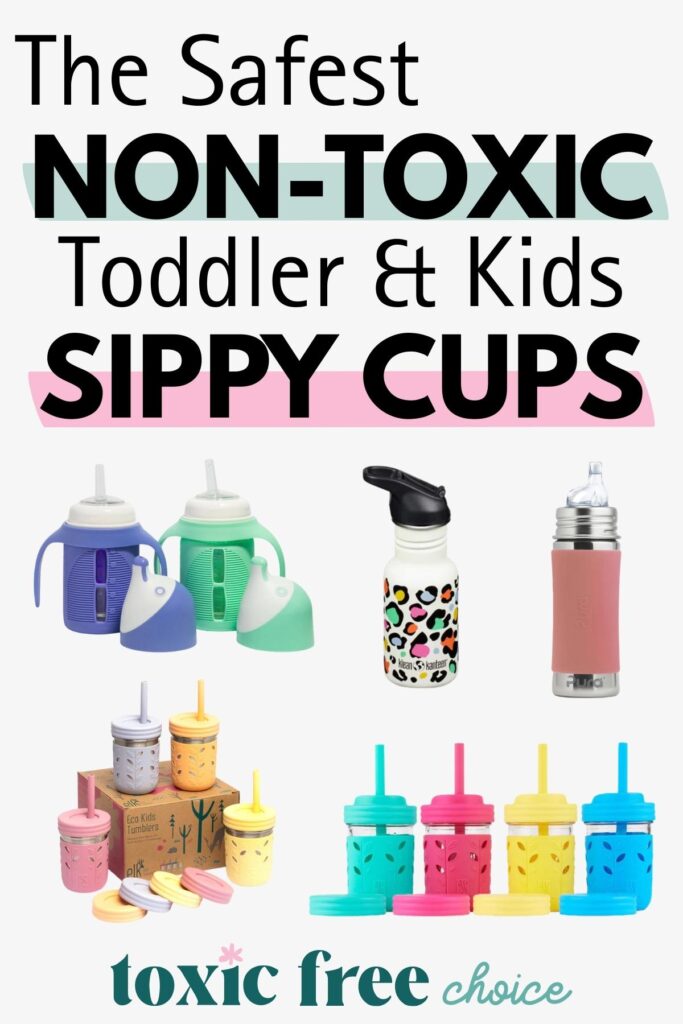
This guide evaluates the safest non-toxic toddler cups and kids’ cups available right now — including non-toxic sippy cups, transitional toddler cups, and open training designs — based on material transparency, construction details, and regulatory context — not marketing claims.
You may also want to review our guides to non-toxic lunch boxes, non-toxic & lead-free water bottles, and our expert guide to non-toxic dinnerware to build a fully low-tox feeding setup.
If you want to know what actually matters when choosing kids’ drinkware, start here.
In This Guide:
- Quick Comparison Table
- Full Brand Reviews
- Red Flags To Avoid
- Full Safety & Materials Breakdown
- How To Choose The Right Cup
- Frequently Asked Questions
Best Non-Toxic Kids Cups & Sippy Cups (Material & Safety Reviewed)
These cups use the most inert liquid-contact materials, like glass or clearly disclosed food-grade stainless steel, and avoid common risk points such as unknown plastics or undisclosed insulated base seals.
They also offer the strongest material transparency and safety disclosures, and include some of the best non-toxic sippy cups and toddler cups for babies 6–12 months, along with durable transitional options for toddlers and kids 2–3+ years old.
If you want the safest non-toxic kids cups with the fewest material unknowns, start here.
1. Klean Kanteen
Best For: Durable, everyday stainless steel for school-age kids
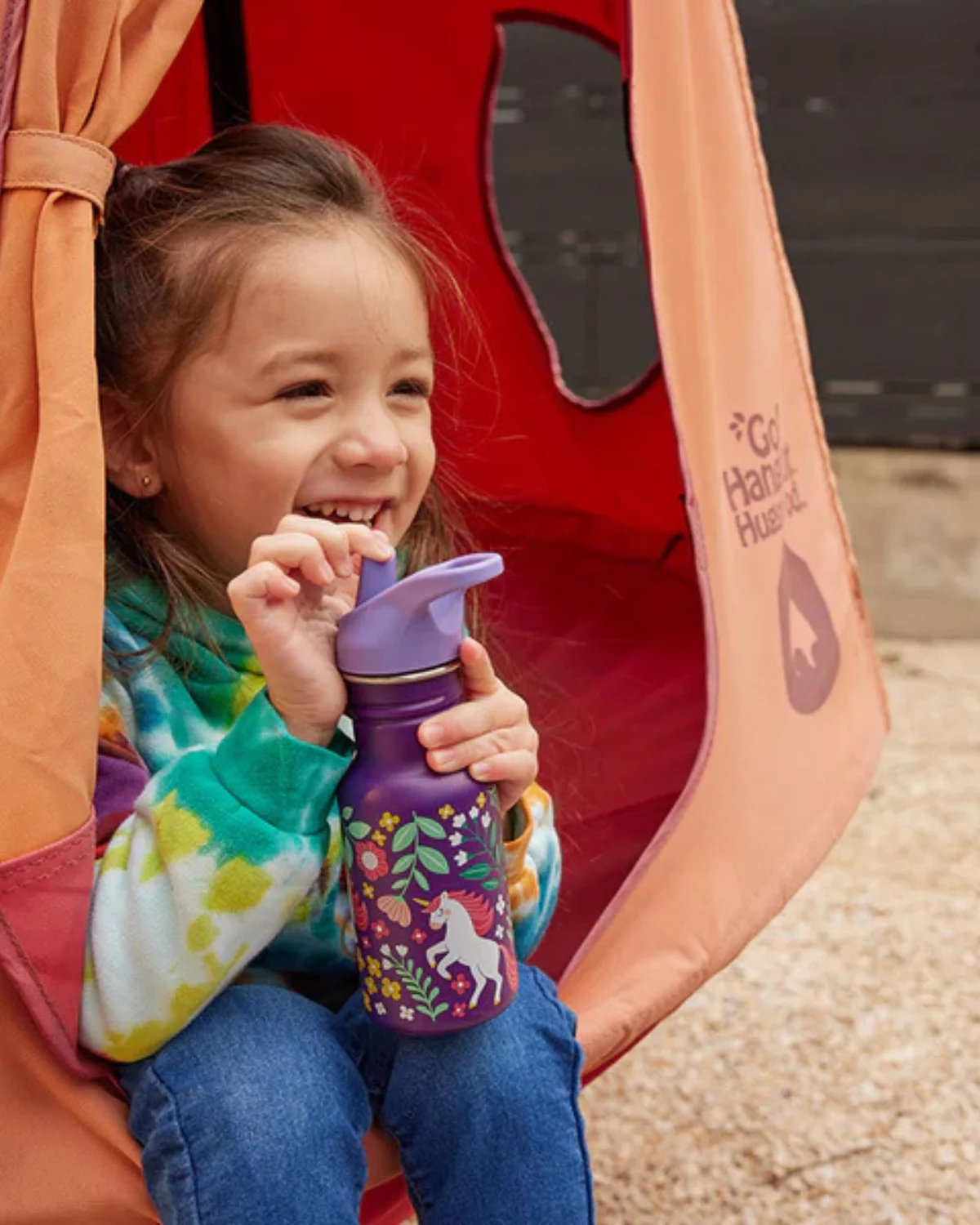
This Kid’s Classic Water Bottle is made from 90% post-consumer recycled 18/8 stainless steel with a simple, unlined interior.
The brand explicitly discloses lead-free construction, and because the Classic line is single-wall, there is no insulated base seal to evaluate.
Klean Kanteen has been consistent with material transparency across its product line, clearly identifying steel grade and construction details.
The bottle is dishwasher safe, widely available, and backed by a lifetime warranty — all indicators of long-term durability rather than short product cycles.
The trade-off is insulation. As a single-wall bottle, it won’t retain cold temperatures for extended periods.
Some cap options include silicone components, though fully stainless caps are available for those wanting to minimize material variables further.
Price
$17.95
Materials
90% Post-Consumer Recycled 18/8 Stainless Steel Body | Food-Safe Silicone Sport Cap (Can Wwitch Out For Stainless Steel) | Lead-Free Construction
location/shipping
United States, ships worldwide
2. Pura Stainless
Best For: Families wanting a fully plastic-free bottle system that grows with their child

This Kiki™ 11oz Sippy Bottle uses single-wall 18/8 stainless steel for the body and collar, paired with a medical-grade silicone spout.
Because it’s uninsulated, there’s no vacuum base and no solder point to evaluate — eliminating one of the most common concerns associated with insulated designs.
Pura Stainless is one of the more transparent brands in this space. They explicitly state their products are lead-free and hold MADE SAFE certification.
The modular lid system allows the bottle to convert from sippy to straw to sport cap, extending its usable lifespan.
While they reference independent testing, full lab reports, and LFGB disclosure for silicone components are not publicly linked.
The trade-off is temperature control. As a single-wall bottle, it will not keep drinks cold for extended periods and may show condensation.
For families prioritizing material simplicity and long-term versatility, this remains one of the strongest stainless options available.
Price
$27.99
Materials
18/8 Food-Grade Stainless Steel Body & Collar | Medical-Grade Silicone Spout | No Plastic Components In Lid Assembly
location/shipping
United States, ships worldwide
3. Tabor Place
Best For: Babies 6–12 months, where minimizing plastic contact is the priority
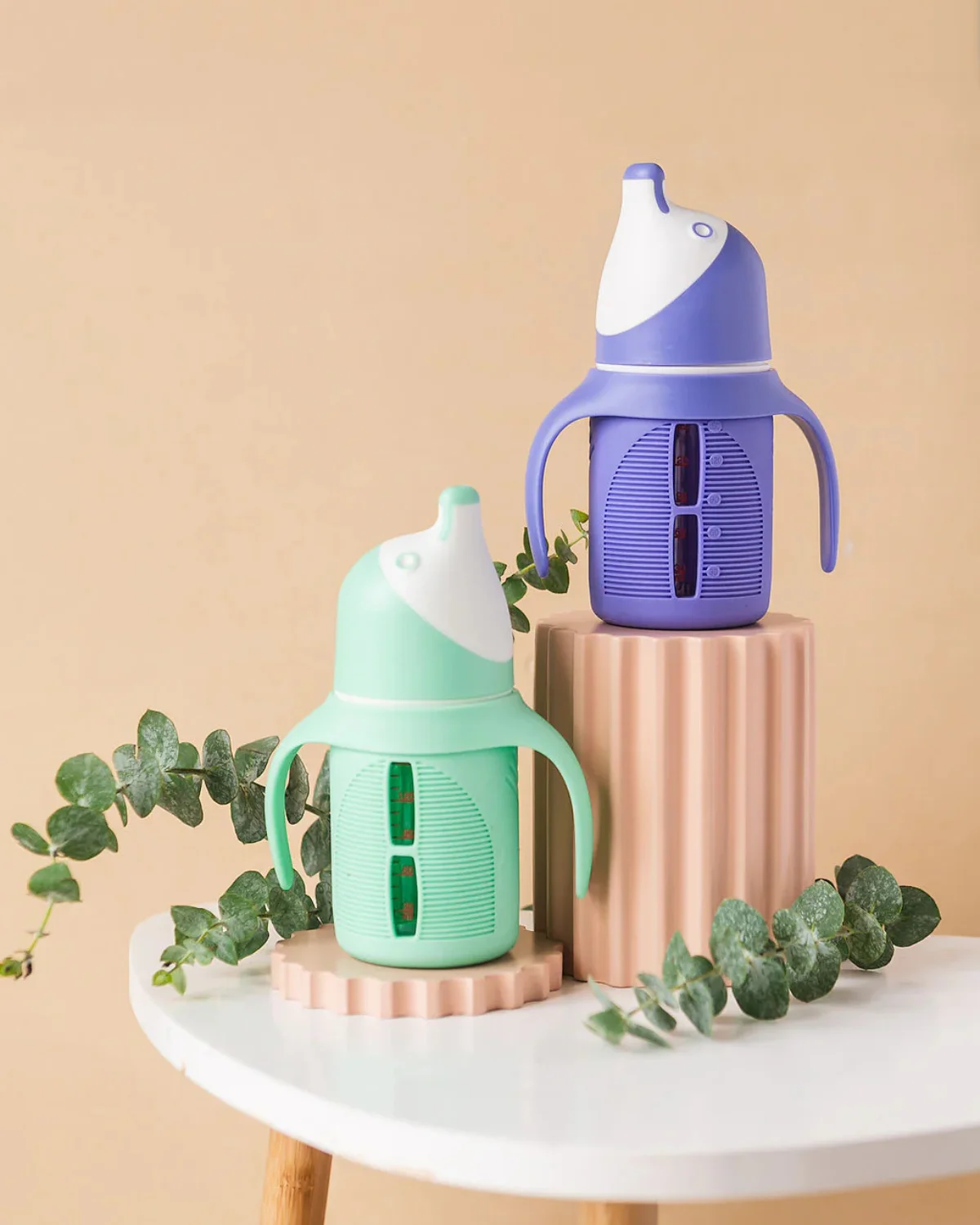
This Mini Cup Set uses borosilicate glass as the primary liquid-contact surface, paired with a platinum-cured silicone straw and sleeve.
The design keeps liquid from touching plastic, which significantly reduces migration concerns common in conventional sippy cups.
Borosilicate glass is chemically inert and more temperature-resistant than standard glass, making it a stable option for daily use.
The brand confirms CPSC lead and cadmium testing and specifies platinum-cured silicone — a higher standard than generic “food-grade” silicone.
However, third-party lab reports and LFGB compliance are not publicly available.
The trade-off is durability. While stronger than standard glass, it can still break if dropped with force (I never had an issue, but it needs to be said), and replacement parts are not sold separately.
For supervised use at home, it remains one of the least-known options in this category.
Price
$30 (Set of 2)
Materials
Borosilicate Glass Body | Platinum-Cured Silicone Straw, Valved Tip & Sleeve
location/shipping
United States, ships worldwide | Available on Amazon USA
4. Elk and Friends (Glass Mason Jars)
Best For: Supervised home use and families comfortable with glass
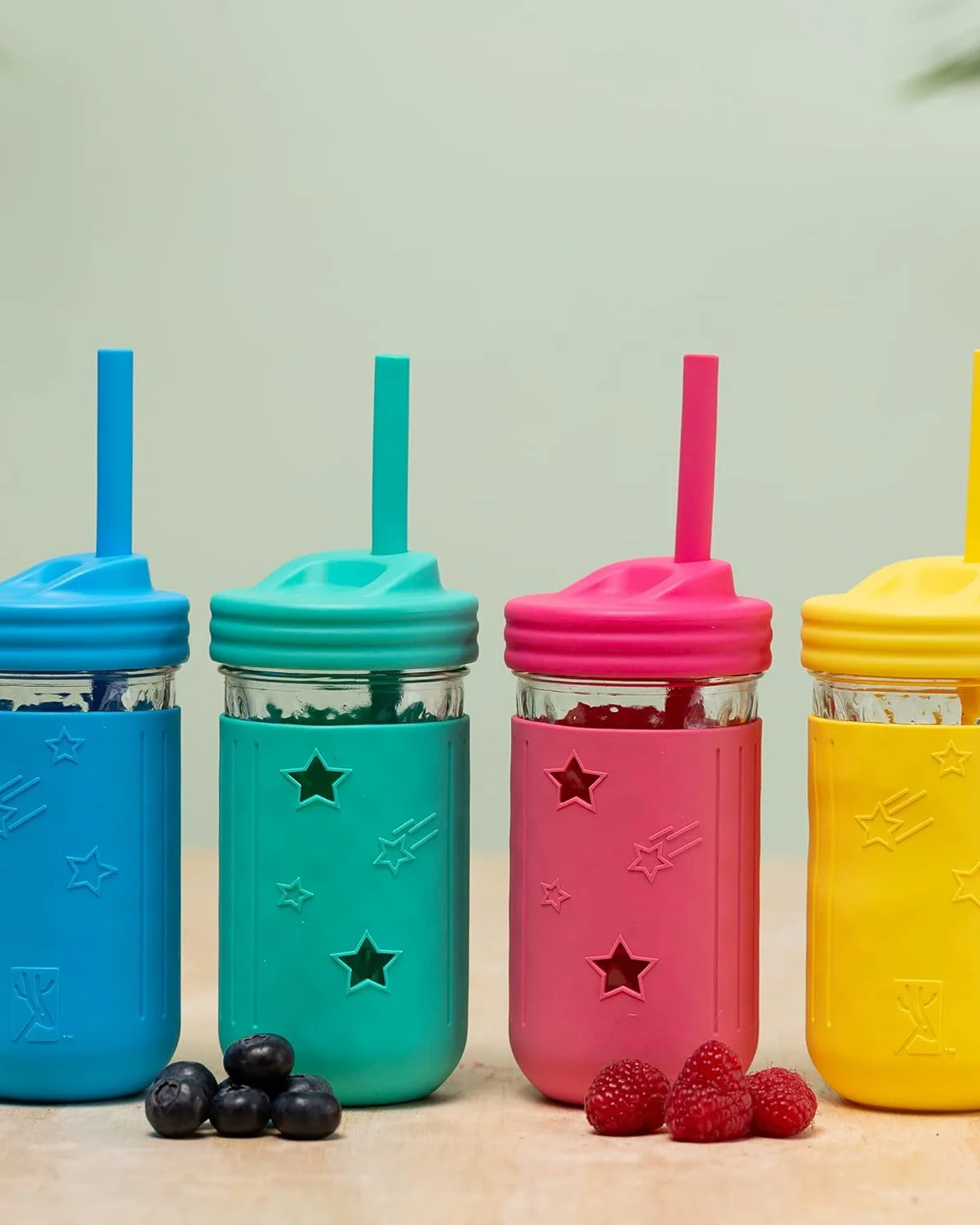
These Glass Mason Jar Tumblers use soda-lime glass with thick silicone sleeves to reduce breakage risk.
Glass is non-porous and does not leach into liquids, making it one of the most stable materials available for drinkware.
The design also includes multiple lid options, allowing the jars to function for both drinks and snacks.
The brand discloses FDA food-grade silicone and states that lids are free from BPA, phthalates, and PVC.
Products are tested at CPSC-accredited labs for lead and cadmium, though the exact lid polymer is not specified.
While soda-lime glass is not as thermally resistant as borosilicate, it remains chemically stable under normal use conditions.
The main limitation is practicality. Even with silicone sleeves, glass carries a breakage risk and is better suited for home or supervised settings rather than backpacks or daycare.
For families prioritizing inert materials and versatility, this is a strong low-tox option.
Price
$34.99 (Set of 4)
Materials
Soda-Lime Glass Jars | FDA Food-Grade Silicone Straws & Sleeves | BPA, Phthalate & PVC-Free Lids (Polymer Type Not Disclosed)
location/shipping
United States, ships worldwide | Available on Amazon USA
5. Elk and Friends (Stainless Mason Jar)
Best For: Families who want stainless steel durability with flexible lid options
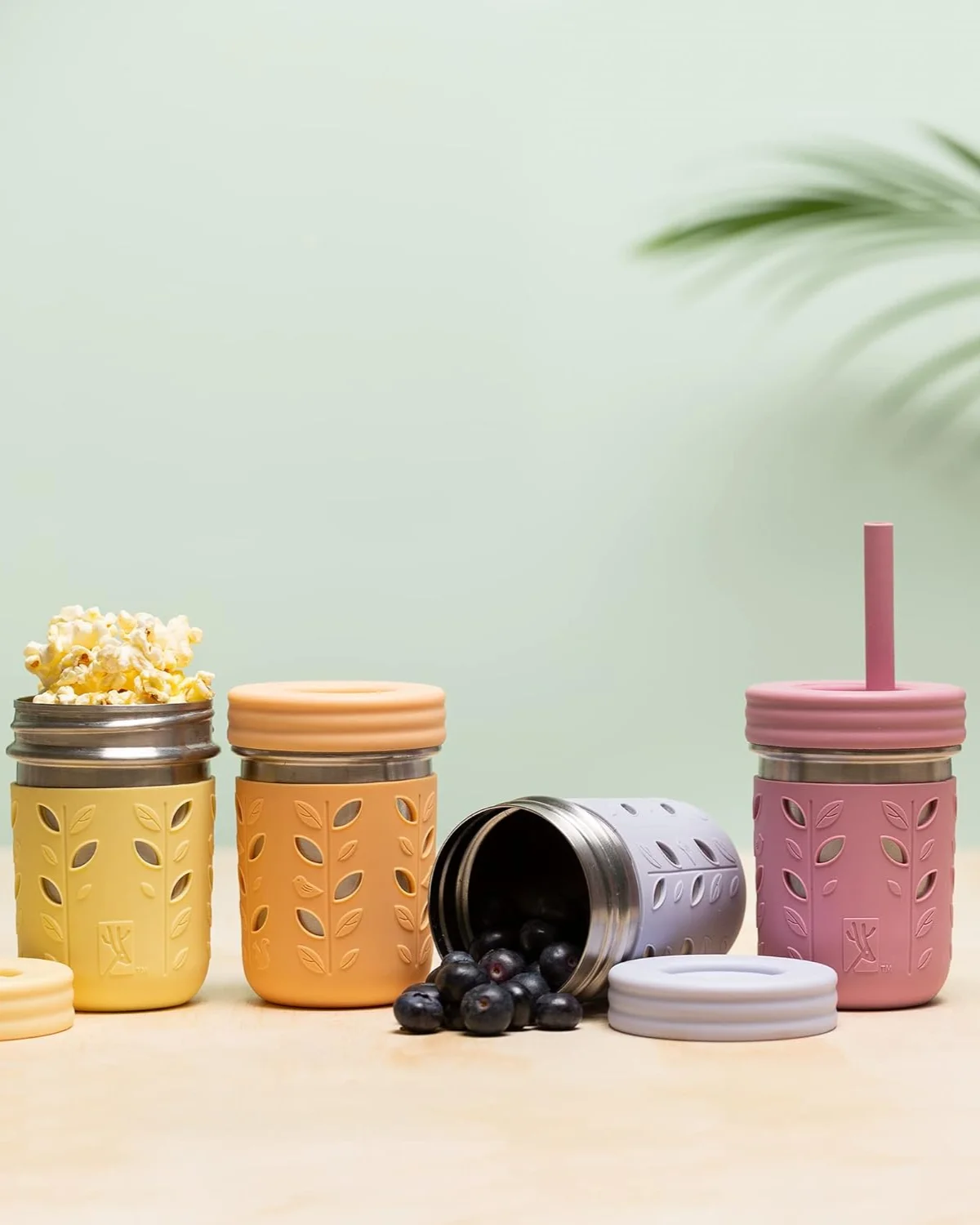
This Tumbler Version swaps the glass jar for 304 (18/8) stainless steel while keeping the same versatile lid system and silicone sleeve design.
The stainless interior is unlined, reducing concerns about coatings or interior degradation over time.
The brand specifies 304 stainless steel and FDA food-grade silicone, and states that products are independently tested at CPSC-accredited labs for lead and cadmium.
Lids are disclosed as BPA-, phthalate-, and PVC-free, though the exact polymer composition is not specified.
Because this is not a fully plastic-free system, the lid components remain the main variable.
However, for families wanting something more durable than glass without moving to a traditional bottle design, this is a practical and reasonably transparent option.
Price
$34.99
Materials
Stainless Steel 304 (18/8) Jars | FDA Food-Grade Silicone Straws & Sleeves | BPA, Phthalate & PVC-Free Lids (Polymer Type Not Disclosed)
location/shipping
United States, ships worldwide | Available on Amazon USA
Acceptable Options With Material Trade-Offs
These cups are generally acceptable options but come with disclosure gaps, plastic components, or incomplete material transparency. They’re not red flags — just not Tier 1.
6. EZPZ
Single-piece silicone open Training Cup with weighted base and angled interior for controlled flow.
No hidden parts or mold-prone components. Free from BPA, BPS, PVC, lead, and phthalates. Silicone curing method and LFGB compliance are not disclosed.
Price: $11.49
Materials: 100% Food-Grade Silicone | Single-Piece Construction | No Additional Components
Location/Shipping: United States, ships worldwide
7. NUK
All-silicone Straw Cup designed for early training and teething stages. Simple construction with no hard plastic parts.
BPA-free, but no disclosure on silicone curing method or published migration testing. Replacement parts are not sold separately.
Price: $21.99
Materials: 100% Food-Grade Silicone Throughout | No Stainless or Hard Plastic Components
Location/Shipping: Germany | Available on Amazon USA
8. Owala
Insulated stainless steel Tumbler with removable silicone straw and disclosed lead-free solder.
Stainless steel grade not specified. Lid polymer not disclosed beyond “BPA-free.” Plastic components remain in liquid-contact areas.
Price: $19.99
Materials: Stainless Steel Body (Grade Not Disclosed) | Silicone Straw | BPA-Free Plastic Lid (Polymer Type Not Disclosed) | Lead-Free Solder Disclosed
Location/Shipping: United States, ships worldwide
9. Zak
Budget insulated Tumbler with detachable silicone valve to improve cleanability and reduce spills.
Accessible components disclosed as lead-free. Steel grade inconsistently listed. Lid polymer not specified beyond “BPA-free.” Replacement parts are limited.
Price: $15.99
Materials: Double-Wall Stainless Steel Body (18/8 Per Some Listings) | Silicone Sipper Spout With Valve | BPA-Free Plastic Lid (Polymer Type Not Disclosed)
Location/Shipping: United States, ships worldwide | Available on Amazon USA
10. Munchkin
Spoutless 360° design with integrated silicone valve and replaceable lids. Lid disclosed as BPA-free. Stainless steel grade not specified. No explicit confirmation of lead-free insulated base.
Price: $16.79
Materials: Stainless Steel Body (Grade Not Disclosed) | TPE Outer Lid | Integrated Silicone Valve Membrane
Location/Shipping: United States | Available on Amazon USA
11. Green Sprouts
Plant-based plastic body paired with platinum-cured silicone spouts and an interchangeable lid system. Exact polymer composition not disclosed. No publicly available migration testing data for the proprietary material.
Price: 14.99
Materials: Proprietary Plant-Based Plastic Body (Sprout Ware) | Platinum-Cured Silicone Spouts | PVC & BPA-free
Location/Shipping: United States, ships worldwide | Available on Amazon USA
12. EKOBO
Eco-Composite Cup made from wood fiber combined with a melamine binder and silicone components. Replacement straws are available.
Melamine-based binder composition not fully disclosed. Caution is advised with heat exposure.
Price: $14
Materials: Eco-Composite Cup Body With Melamine Binder | Food-Grade Silicone Lid & Straw
Location/Shipping: United States, ships worldwide
Our Evaluation Criteria & Research Standards
Every cup in this guide was evaluated against Toxic Free Choice safety standards with a focus on material disclosure, construction transparency, and real-world durability.
Each product was reviewed in the context of current FDA food-contact standards and EU Regulation (EU) No 10/2011, where applicable.
Manufacturer documentation, recall databases, and available third-party testing claims were cross-checked to assess consistency and completeness.
Brands that relied on vague marketing language, omitted material details, or failed to address known regulatory concerns were excluded.
This guide is grounded in publicly available toxicology research and regulatory guidance from U.S. and EU authorities.
🚩 Red Flags When Choosing A Kids Cup
Replace Immediately
- Loose or detaching base on any insulated cup
- Chipping or flaking paint or exterior coatings
- Deep scratches on interior surfaces or warping after dishwasher use
Monitor Closely
- Cloudy or yellowing plastic components
- Sticky or tacky silicone that persists after washing
- Torn straws or stretched, ill-fitting seals
Avoid Before Purchase
- Vague “BPA-free plastic” labeling with no further material detail
- Bamboo cups without a clear material composition breakdown
- Insulated stainless designs with no disclosed steel grade or solder information
- Hard-to-clean designs with hidden crevices or non-removable components
❌ Toxic Chemicals Found in Kids’ Cups
BPA & Its Replacements (BPS, BPF)
BPA became a household concern for good reason. It’s an endocrine-active chemical — meaning it interacts with hormone systems — and it was used extensively in hard plastic food-contact products for decades.
When public pressure pushed manufacturers to remove it, most replaced it with structurally similar compounds: BPS and BPF. These substitutes behave in similar ways biologically, and some research suggests comparable endocrine activity at low exposure levels.
The European Food Safety Authority reassessed BPA in 2023 and lowered its tolerable daily intake threshold by a factor of 20,000, citing immune and endocrine-related effects observed at very low doses in animal studies.
The U.S. FDA maintains that current dietary exposure levels are safe — a regulatory disagreement that hasn’t been resolved.
What that means practically is that “BPA-free” on a plastic cup tells you one chemical was removed. It doesn’t tell you what replaced it, or whether that replacement has been independently tested.
For children’s cups specifically, the more useful question isn’t whether BPA is present — most manufacturers have removed it — but whether the cup contains any plastic in liquid-contact areas at all, and if so, what testing has been done on the full material.
Lead in Insulated Designs
Lead in kids’ cups is not a widespread crisis, but it is a documented one. Some double-wall vacuum-insulated bottles use a small solder dot to seal the vacuum at the base during manufacturing.
In several recalled products — including formal CPSC recalls — the solder contained lead rather than lead-free alternatives. The lead in these designs does not contact liquid under normal conditions.
The concern arises when that base seal is exposed, damaged, or accessible through a bottom compartment, physical damage, or manufacturing variation.
Children are more vulnerable to lead exposure than adults because their developing neurological systems are more sensitive to disruption. The CDC has established no safe level of lead exposure for children.
Because neurological development continues throughout early childhood, even low-level or indirect exposure pathways — including damaged insulated base seals — deserve closer evaluation.
This is why base construction transparency matters when evaluating insulated cups. Brands that explicitly address solder type — or eliminate the concern entirely through single-wall construction — are providing meaningfully more useful information than brands that simply list stainless steel as a material.
Melamine & Bamboo Composite Cups
Bamboo cups marketed as eco-friendly are often not what they appear to be. Many products in this category are not made from solid bamboo — they’re made from melamine-formaldehyde plastic with bamboo powder added as a filler. The bamboo component is cosmetic and structural, not a safety feature.
Under EU Regulation (EU) No 10/2011, which governs plastic food-contact materials, bamboo powder is not an authorized substance in multiple EU member states, including Belgium, the Netherlands, Luxembourg, and Ireland.
These countries have ordered these products withdrawn from the market. Testing across products in this category found melamine and formaldehyde migration exceeding legal limits.
In the U.S., no equivalent federal prohibition exists. Bamboo-melamine composites can be sold if they comply with the extraction limits under 21 CFR 177.24, but there is no additive authorization requirement equivalent to the EU system.
That regulatory gap is worth understanding if you’re evaluating a bamboo cup marketed as a safer or greener alternative.
✅ Safer Materials For Kids Cups — & Their Limitations
Borosilicate Glass
Borosilicate glass is non-porous, chemically inert, and does not leach into liquids under normal use conditions. It’s the cleanest liquid-contact surface available in this category.
The limitation is straightforward — it breaks. Borosilicate is more durable and heat-resistant than standard glass, but it is not shatterproof.
With an appropriate silicone sleeve for grip and impact absorption, it’s a practical option for supervised use at home, particularly for younger children being introduced to cup drinking.
18/8 (304) Stainless Steel
Food-grade 18/8 stainless steel is well-established as a safe food-contact material. The unlined, uncoated interior found in quality stainless cups means there are no secondary materials to evaluate for migration.
The main variables to watch are steel grade disclosure — not all manufacturers specify it — and base construction on insulated designs.
Single-wall stainless eliminates the solder concern entirely. For insulated designs, explicit lead-free solder disclosure or third-party testing confirmation is the relevant detail to look for.
Prolonged storage of highly acidic drinks in stainless containers can increase trace metal migration, but under typical use conditions with water or non-acidic beverages, this is not a meaningful concern with quality food-grade steel.
Food-Grade Silicone
Silicone occupies a middle ground. It’s generally considered low-risk for food contact, flexible, durable, and free from BPA and phthalates. The quality variables matter more than the category label.
Platinum-cured silicone represents a more refined manufacturing process with fewer residual byproducts than peroxide-cured alternatives.
LFGB-level migration testing — the German standard widely considered more demanding than basic U.S. FDA food-contact requirements — provides more documented assurance than a general “food-grade” designation alone.
“Food-grade silicone” without further specification is a starting point, not a complete safety profile. When a brand discloses platinum-cured status and LFGB compliance, that’s a meaningful step above the baseline.
When neither is disclosed, the gap doesn’t mean the product is unsafe — it means the manufacturer hasn’t provided enough information to evaluate it fully.
Plant-Based Plastics
Plant-derived plastics like Sprout Ware represent a shift away from petroleum-based materials, which is a meaningful distinction in terms of sourcing.
What plant-based does not automatically mean is chemically inert or migration-tested. The safety of any food-contact plastic, regardless of its origin, depends on what additives are present, what migration testing has been done, and what the results show.
Plant-based materials that come with full migration testing disclosure and third-party certification are worth considering. Those without that documentation carry the same transparency limitations as conventional plastics.
How To Choose The Best Non-Toxic Kids Cup For Your Family
Start with your child’s age and how the cup will actually be used
- 6–12 months: Keep it simple. At this stage, you’re right there with them, so you don’t need insulation or a leakproof travel seal. A borosilicate glass cup with a silicone sleeve or a single-piece silicone cup keeps the material question easy and the cleaning even easier.
- 12–24 months: This is when toddler cups start getting thrown, dropped, and left in car seats. Single-wall stainless or silicone holds up well here. A spoutless design is worth considering — dentists recommend them for a reason at this stage.
- 2+ years: Now, portability and temperature retention start to matter. Insulated stainless is a solid choice — just make sure the brand is upfront about their base construction and solder type. A modular lid system that grows with your child is worth the investment.
Then look at what actually touches the liquid
- Least complicated: Unlined stainless steel or borosilicate glass — nothing to degrade, nothing to migrate.
- Fine with the right details: Platinum-cured silicone with disclosed migration testing.
- Worth a closer look: Any plastic in liquid-contact areas, even if it’s labeled BPA-free.
- Skip entirely: Bamboo-melamine composites; insulated designs where the brand won’t tell you how the base is sealed.
When in doubt, let transparency be your guide
Brands that openly disclose steel grade, silicone curing method, and construction details are showing you something about how they operate.
Brands that lean on “non-toxic” and “eco-friendly” without specifics are not giving you enough to work with.
After researching hundreds of products in this space, that distinction — more than any single material claim — is usually the most reliable signal.
💬 Non-Toxic Kids Cups: Expert Answers To Common Questions
It depends on what it’s made of and what condition it’s in.
If it’s a single-material silicone or glass cup with no visible damage, continued use is generally reasonable.
If it’s an insulated stainless cup, check the base for looseness, damage, or recalls on the CPSC database.
If it’s a plastic cup — even a BPA-free one — inspect it for deep scratches, clouding, or warping, and consider whether you know what material replaced the BPA.
When in doubt, the Red Flags section above gives specific criteria for what to look for.
Not necessarily. A panic swap isn’t the goal here. The priority is identifying cups with visible wear, unclear materials, or known safety concerns, and replacing those first.
If a plastic cup is in good condition, used only for cold liquids, and the manufacturer has done independent testing, the risk profile is different than a heavily scratched cup that goes in the microwave daily.
Make informed, gradual swaps rather than an expensive overnight overhaul.
Start with the CPSC recall database at cpsc.gov — search your brand and model.
Then check the brand’s own website for any solder disclosure. Brands that use lead-free solder or single-wall construction typically say so explicitly.
If you can’t find any statement about base construction or solder type from the manufacturer, that’s a transparency gap worth factoring into your decision. Single-wall stainless designs eliminate this concern entirely.
Yes, meaningfully so. Developing bodies process chemical exposure differently from adult systems.
Children have higher surface-area-to-body-weight ratios, which means proportionally greater exposure from the same amount of contact.
Neurological and endocrine systems are still developing, making them more sensitive to disruption from chemicals like lead, BPA, and phthalates during critical developmental windows.
The CDC has established no safe level of lead exposure for children, specifically for this reason.
It means bisphenol A was not used in the product. It does not mean the product is free from all bisphenol compounds — BPS and BPF are common substitutes that behave similarly in the body.
It also doesn’t confirm independent testing, full material disclosure, or the absence of other concerning chemicals. BPA-free is a starting point for evaluation, not a conclusion.
Generally, yes, but the details matter. Platinum-cured silicone with LFGB-level migration testing provides more documented assurance than silicone described only as “food-grade” with no further specification.
Neither label is a guarantee, but they represent meaningfully different levels of manufacturer transparency.
For daily-use kids’ cups, it’s reasonable to look for platinum-cured disclosure and prefer brands that have published or referenced migration testing.
Material transparency.
A brand that clearly discloses what every component is made of, what testing has been done, and what their construction choices were — including base construction on insulated designs — is giving you the information you need to make a real decision.
Brands that are vague about materials, rely on marketing language, or make absolute claims without supporting data are telling you something, too.
Most bamboo kids’ cups on the market are not solid bamboo — they’re melamine-formaldehyde plastic with bamboo powder added as filler. That distinction matters significantly.
Multiple EU member states have ordered these products withdrawn from the market because bamboo powder is not an authorized food-contact additive under EU Regulation (EU) No 10/2011, and tested products have shown melamine and formaldehyde migration above legal limits.
In the U.S., no equivalent prohibition exists, but the documented migration concerns apply regardless of jurisdiction. If a bamboo cup doesn’t provide a clear material composition breakdown, that’s a reason to look elsewhere.
It depends on the material. Borosilicate glass and stainless steel are generally appropriate for both hot and cold liquids.
Food-grade silicone is usually suitable but may have temperature limitations that the manufacturer should specify. Pura Stainless explicitly states that their single-wall stainless steel is not recommended for hot liquids.
Bamboo-melamine composites show increased migration at higher temperatures, which is an additional reason to avoid them.
Always check manufacturer guidance for the specific cup before using it with hot beverages, particularly for young children.
There’s no universal timeline, but condition matters more than age.
Replace immediately if you see chipping, deep interior scratches, warping, a loose base on an insulated cup, or a persistent odor after washing.
Silicone components like straws and seals should be inspected regularly and replaced when they show stretching, tearing, or stickiness.
A cup that’s used daily and well-maintained will last longer than one that gets thrown in a bag without a lid — but no cup lasts forever, and replacing worn components promptly is more important than replacing the whole cup on a schedule.
Most stainless steel cups do not contain lead in the liquid-contact surface. Food-grade 18/8 or 304 stainless steel is lead-free and widely recognized as a safe material for drinkware.
The concern arises with some double-wall insulated designs. In certain recalled products, a small solder dot used to seal the vacuum base contained lead.
That solder does not touch liquid under normal conditions, but if the base is damaged, loose, or exposed, the lead can become accessible.
Final Takeaway
Most kids cycle through a lot of cups in the first few years. The goal isn’t to overhaul everything overnight — it’s to understand what you’re buying and make better decisions as things naturally wear out and get replaced anyway.
Stainless steel, borosilicate glass, and high-quality silicone hold up to real daily use and come with fewer material unknowns than plastic alternatives.
Start with the non-toxic kids cups your child uses most, watch for the red flags covered in this guide, and replace them gradually as needed.
I started this research when my daughter was seven months old, and I realized I couldn’t answer basic questions about what her cup was made of. That felt like a problem worth solving.
Hopefully, this guide means you don’t have to start from scratch the way I did. For a full home reset, start with our Non-Toxic Living 101 | How To Protect Your Family Without Losing Your Mind guide.
More Articles To Love…
- 🎒 Non-Toxic School Supplies → A materials-focused review of classroom essentials, examining plastic resins, coatings, VOCs, PFAS-treated papers, and heavy metal risks.
- 🍎 Non-Toxic School Snacks → A packaging- and ingredient-focused analysis of common school snacks, evaluating food additives, pesticide residues, and chemical migration from wrappers and liners.
- 🥪 Non-Toxic Lunch Boxes → A construction-based breakdown of lunch boxes, reviewing insulated linings, plastic components, and PFAS, phthalate, and bisphenol exposure risks.
- 🎨 Non-Toxic Art Supplies → A formulation- and regulation-focused review of children’s art materials, examining pigments, binders, solvents, and the limits of “non-toxic” labeling.
- 🚰 Non-Toxic & Lead-Free Water Bottles → A design-focused analysis of reusable water bottles, evaluating stainless steel grades, lead-sealed vacuum construction, and coating safety.
Sources & Further Reading
- U.S. Consumer Product Safety Commission. (2016, July 19). GSI Outdoors recalls children’s water bottles due to violation of the federal lead content ban. Retrieved from https://www.cpsc.gov/Recalls/2016/GSI-Outdoors-Recalls-Childrens-Water-Bottles
- European Food Safety Authority. (2023, April). Plain language summary: EFSA’s opinion on BPA. Retrieved from https://www.efsa.europa.eu/sites/default/files/2023-04/efsa-6857-bpa-pls.pdf
- U.S. Food and Drug Administration. (n.d.). Bisphenol A (BPA): Use in food contact application. Retrieved from https://www.fda.gov/food/food-additives-petitions/bisphenol-bpa
- Centers for Disease Control and Prevention. (2025, January 30). CDC updates blood lead reference value. Retrieved from https://www.cdc.gov/lead-prevention/php/news-features/updates-blood-lead-reference-value.html
- European Commission. (2020, September 23). Commission Regulation (EU) No 10/2011 on plastic materials and articles intended to come into contact with food. Retrieved from https://eur-lex.europa.eu/eli/reg/2011/10/2020-09-23
- U.S. Government Publishing Office. (n.d.). Electronic Code of Federal Regulations, Title 21, Chapter I, Subchapter B, Part 177: Indirect food additives: Polymers. Retrieved from https://www.ecfr.gov/current/title-21/chapter-I/subchapter-B/part-177