


This post may contain affiliate links. By browsing this website, you agree to our disclaimer, privacy policy, and terms of use.
This comprehensive guide to the safest non-toxic cookware brands is perfect for home cooks looking to create a healthier, more sustainable kitchen for their families.
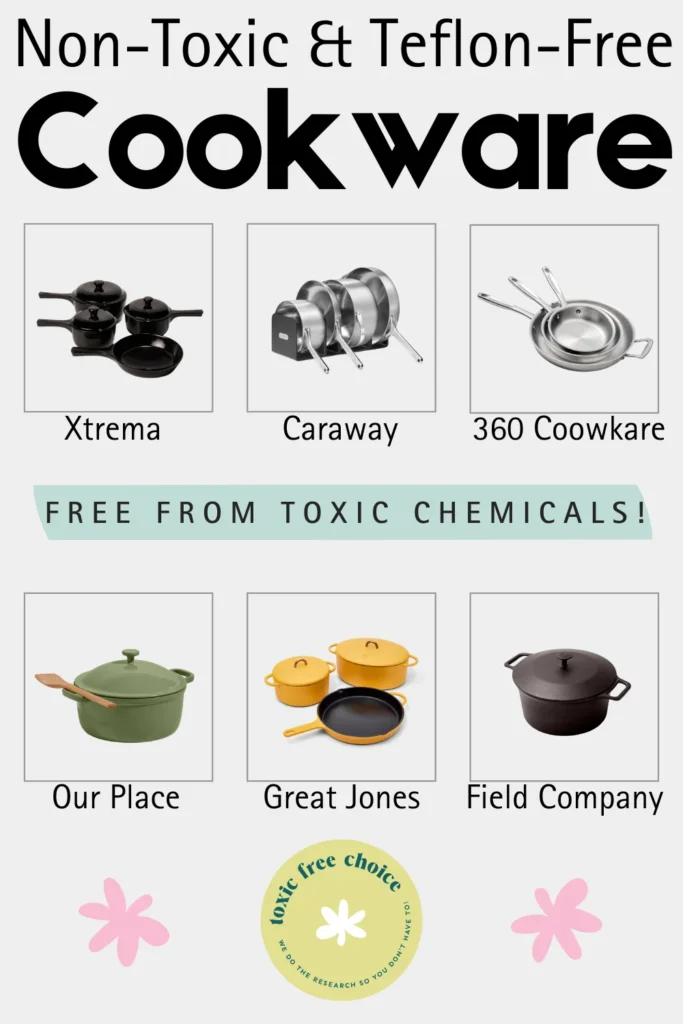
Whether you’re concerned about protecting your loved ones from harmful chemicals leaching into food, reducing your environmental impact, or investing in high-quality pieces that can be passed down through generations, these carefully selected brands offer safer alternatives to conventional cookware made with synthetic coatings and toxic materials.
For years, we’ve been told that non-stick cookware is the ultimate kitchen convenience. No more scrubbing, no more stuck-on messes – just a quick wipe and you’re done!
But what if I told you that the very thing that makes our lives easier in the kitchen could also be making us sick?
The pan you’re using to cook your healthy, organic vegetables might be introducing more toxins into your food than the pesticides you’re trying to avoid. It’s a terrifying thought, isn’t it?
In 2026, we’re more focused than ever on making healthy choices for ourselves and our families. We spend hours researching the best organic produce, the cleanest meats, and the most nutrient-dense superfoods.
But have you ever stopped to consider the pots and pans you’re using to cook all these wholesome ingredients?
You have trusted us to find the best non-toxic furniture, mattresses, rugs, and even baby essentials – we are thrilled to dive deep into toxic-free cookware with you today!
As it turns out, the cookware we use can have a significant impact on our health, and not always in a good way.
Many popular brands of cookware, especially non-stick varieties, contain toxic chemicals that can leach into our food during the cooking process.
These chemicals have been linked to a host of health issues, from hormonal disruption and developmental problems to an increased risk of certain cancers.
And what’s even scarier is that we’re exposed to these toxins on a daily basis, often without even realizing it.
The time has come for us to take a serious look at the cookware we’re using and make informed choices about what we’re putting into our bodies.
By switching to non-toxic cookware options, we can reduce our exposure to harmful chemicals and take a proactive step towards protecting our health and the health of our families.
As cookware manufacturers are jumping on the “non-toxic” bandwagon, separating genuine safety claims from clever marketing can be extra tricky when trying to find non-toxic cookware.
That’s why I’ve done the research for you. I’ve analyzed material specifications, scrutinized chemical disclosures, and even reached out to manufacturers to verify their safety claims to bring you only the best, and the safest.
In this guide, you’ll learn:
- Why 2026 is a great time to switch to safer, non-toxic cookware
- The toxic chemicals in non-stick cookware
- The safest non-toxic materials available
- Our top 15 recommended brands for every budget and cooking style
Buckle up, because what you’re about to learn might just make you want to toss those non-stick pans for good!
Why 2026 is a Turning Point for Cookware Safety
Advancements In Cooking Materials
Thanks to ongoing research and development in the field of materials science, we now have access to a wider range of non-toxic cookware materials than ever before.
Many materials, like cast iron and carbon steel, have been around for centuries. While they are great for cooking, they do come with a learning curve, especially if you are used to cooking with a non-toxic pan.
Manufacturers are now making it easier than ever to adopt these classic materials by offering pre-seasoned pots and pans.
This means that the cookware comes with a naturally non-stick surface right out of the box, so you can start cooking with it right away without having to go through the seasoning process yourself.
There are also newer options like ceramic and titanium, providing safe and effective alternatives to traditional non-stick cookware.
Stricter Regulations
As awareness of the dangers of toxic cookware grows, governments and regulatory agencies are starting to take action.
In the United States, for example, several states have banned the use of PFAS chemicals in food packaging and cookware.
We can expect to see even stricter regulations in the coming years as more research emerges on the health impacts of these toxic materials.
California’s Bold Move to Protect Consumers
Fortunately, some states are starting to take action to protect consumers from the dangers of PFAS chemicals.
In 2021, California passed a groundbreaking law called AB1200, also known as the California Safer Food Packaging and Cookware Act.
This law does two important things:
- It bans the use of PFAS chemicals in food packaging starting in 2023.
- It requires cookware manufacturers to disclose the presence of potentially hazardous chemicals on product labels and online starting in 2024.
This means you will have a much easier time identifying which cookware products contain harmful chemicals and which ones are safe to use, even if you live outside of California.
The key things to watch out for are any mentions of PFAS, PTFE, or other fluorinated compounds. If you see these chemicals listed, it’s best to steer clear.
The Dark Side of Non-Stick Pans– What Manufacturers Don’t Want You to Know
To understand the potential dangers of non-stick cookware, we first need to understand the chemistry behind it.
The main culprits here are a group of chemicals called per- and polyfluoroalkyl substances (PFAS), which include the now-infamous PFOA and PTFE.
PFOA, or perfluorooctanoic acid, was one of the key ingredients in Teflon and other non-stick coatings for decades. This chemical has been linked to a host of serious health issues, including:
- Kidney and testicular cancer
- Thyroid disease
- Low birth weight and developmental issues in children
- Immune system dysfunction
In response to growing concerns about the safety of PFOA, many manufacturers have phased it out in favor of newer PFAS alternatives like GenX or PTFE.
However, these new chemicals may not be much safer. In fact, some studies suggest that they could be just as harmful to our health and the environment as the old ones.
One of the biggest problems with PFAS chemicals is that they are incredibly persistent in the environment. They don’t break down easily, which means they can accumulate in our bodies over time. This is why even small exposures can add up to big health risks over the long term.
So don’t be fooled by those “PFOA-free” labels. Many of these products still contain other PFAS chemicals that could be just as harmful.
The Safest Non-Toxic Cookware Materials
- Stainless Steel: Stainless steel is capable of handling everything from delicate sauces to sizzling stir-fries. Stainless steel is generally easy to clean and resists scratches and dings. And because it’s non-reactive, you can cook acidic foods like tomatoes and wine without worrying about any funky flavors leaching into your dish. Just be sure to look for high-quality grades like 18/10 or 18/8.
- True Ceramic: Unlike some “ceramic-coated” cookware that may still contain harmful chemicals, true ceramic cookware is made from 100% natural materials like clay and minerals. It’s completely free of any synthetic coatings or additives, making it one of the purest and safest options when looking for a non-stick coating.
- Cast Iron: Cast iron cookware is virtually indestructible, retains heat like a dream, and when properly seasoned, develops a naturally non-stick surface that rivals even the slickest chemical-laden pans. But the best part? Cast iron is completely free of any scary chemicals or toxic coatings. And as an added bonus, cooking with cast iron can actually help boost your iron intake.
- Carbon Steel: Carbon steel is cast iron’s slightly lighter, more agile cousin. It’s a staple in professional kitchens around the world, prized for its durability, heat conductivity, and versatility. Like cast iron, carbon steel develops a naturally non-stick patina over time with proper use and care. It’s also free of any harmful chemicals or coatings.
Now you know what to look for in non-toxic cookware, let’s explore the brands that are leading the way in safe, sustainable kitchen solutions.
I’ve thoroughly researched and vetted each of these companies, examining their manufacturing processes, material sourcing, and chemical disclosures to ensure they meet the highest standards for non-toxic cookware.
From heritage brands with decades of experience to innovative newcomers pushing the boundaries of safe cooking technology, these 15 companies are the best options available in 2026 for creating your toxin-free kitchen.
15 Safest Cookware Brands To Trust In 2026
Use discount code TFC15 to save 15%!
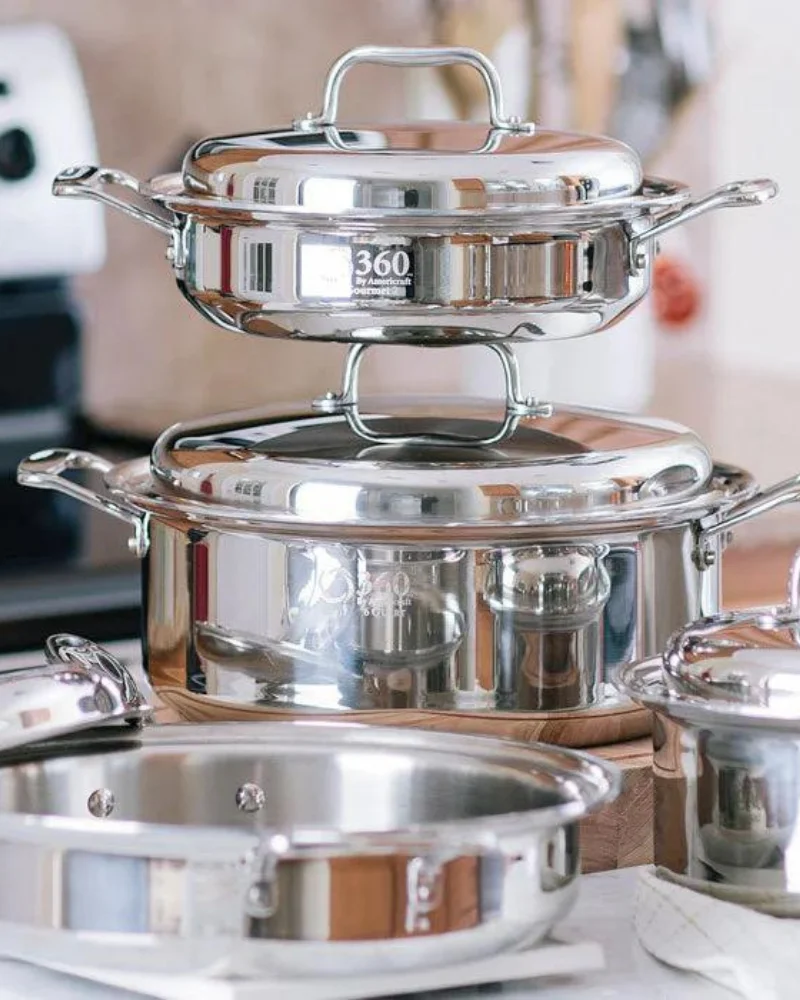
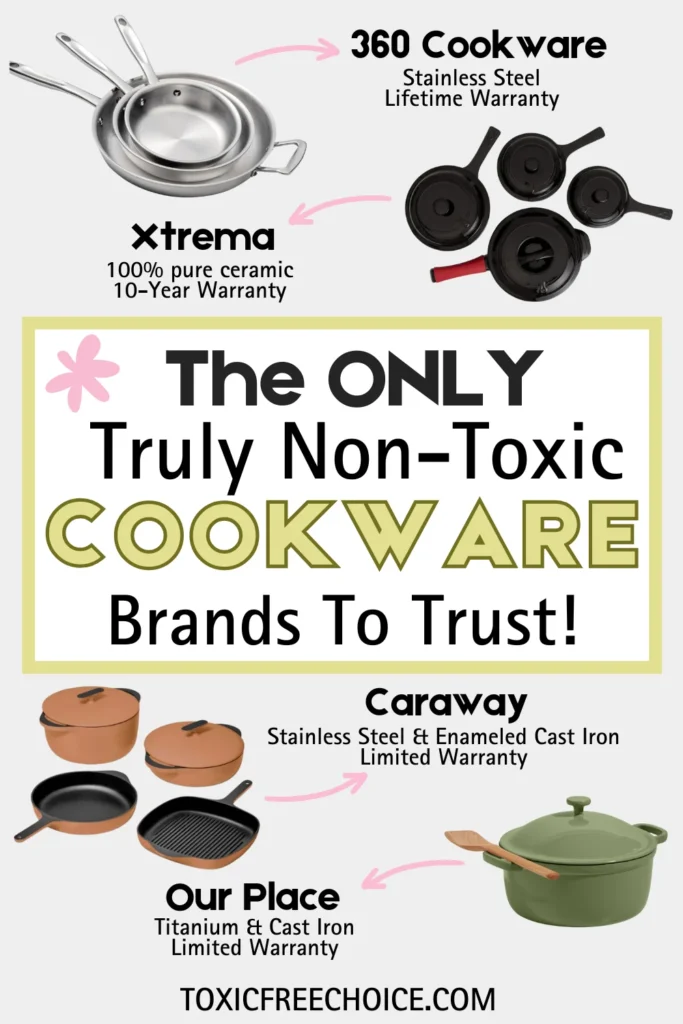
I have used and loved 360 cookware for 4+ years. Highly recommend it for perfectly cooked meat.
360 Cookware’s commitment to eco-friendly, non-toxic cookware shines through their unique manufacturing process and high-quality materials.
Bonus: their LIFETIME warranty.
Their cookware combines T-316 surgical-grade stainless steel for the cooking surface, T-400 series stainless steel for the exterior, and an aluminum core for excellent heat conduction – all without harmful metals leaching into your food.
With a manufacturing process that uses zero toxic chemicals and requires no EPA permits, 360 Cookware has a zero percent chance of ending up in a landfill.
Their dry sanding process creates a non-porous surface, eliminating the need for chemical coatings like PFAS, PFOS, PFOA, and PTFE.
Price
One Piece: $110.00+ | Full Set: $760.00+
Notable Features
Lifetime warranty | Unique vapor cooking technology | High-quality, durable
Location/Shipping
United States, ships to Canada, the United Kingdom & Australia
Use discount code TFC10 to save 10%!
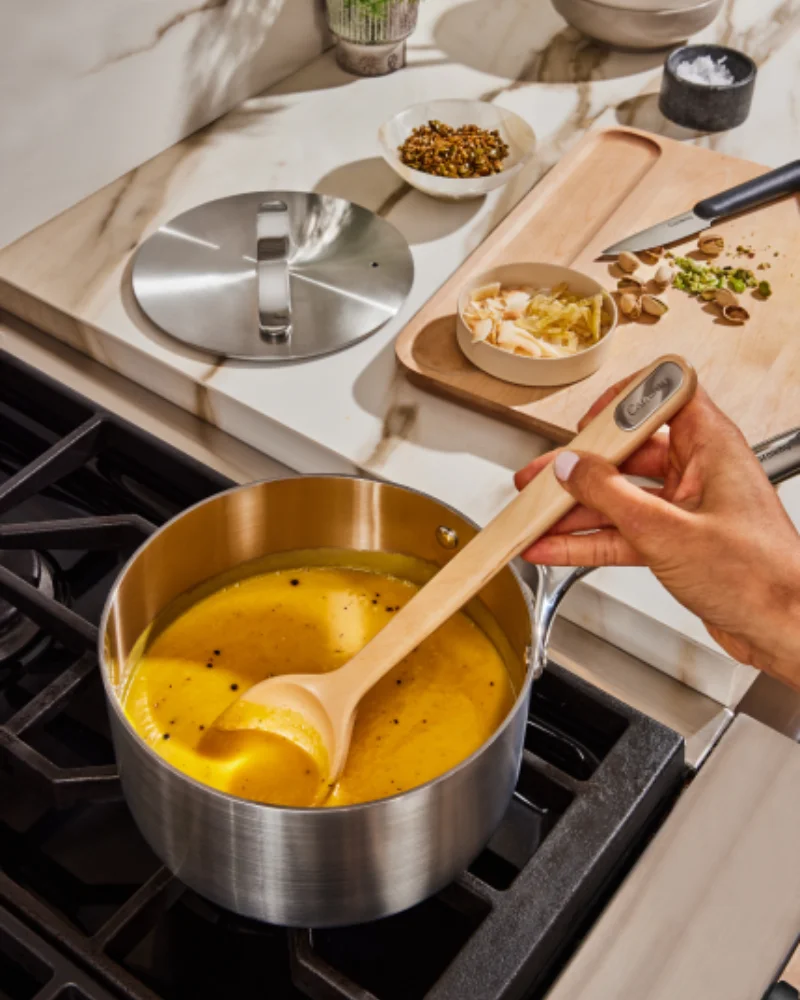
While I do not recommend the non-stick pans, I do really enjoy their stainless steel set.
Recommended: Stainless Steel
Caraway is raising the bar for non-toxic cookware with their well-designed, PFOA, PTFE, PFAs, lead, and cadmium-free options.
Their stainless steel cookware boasts a lightweight 18/10 grade steel construction with 5-ply layering for even heat distribution.
Oven-safe and compatible with all stovetops, this thoughtfully designed 16-piece set includes a fry pan, sauté pan, saucepans, a Dutch oven, and convenient pan and lid storage.
Plus, with a lifetime warranty, Caraway’s stainless steel cookware is built to last—bringing safe, high-performance cooking to every kitchen.
Price
One Piece: $125.00+ | Full Set: $745.00+
Notable Features
Limited warranty (USA only) | Free from forever chemicals | Crafted with recycled materials
Location/Shipping
United States, ships to Canada, Mexico, the United Kingdom & Australia
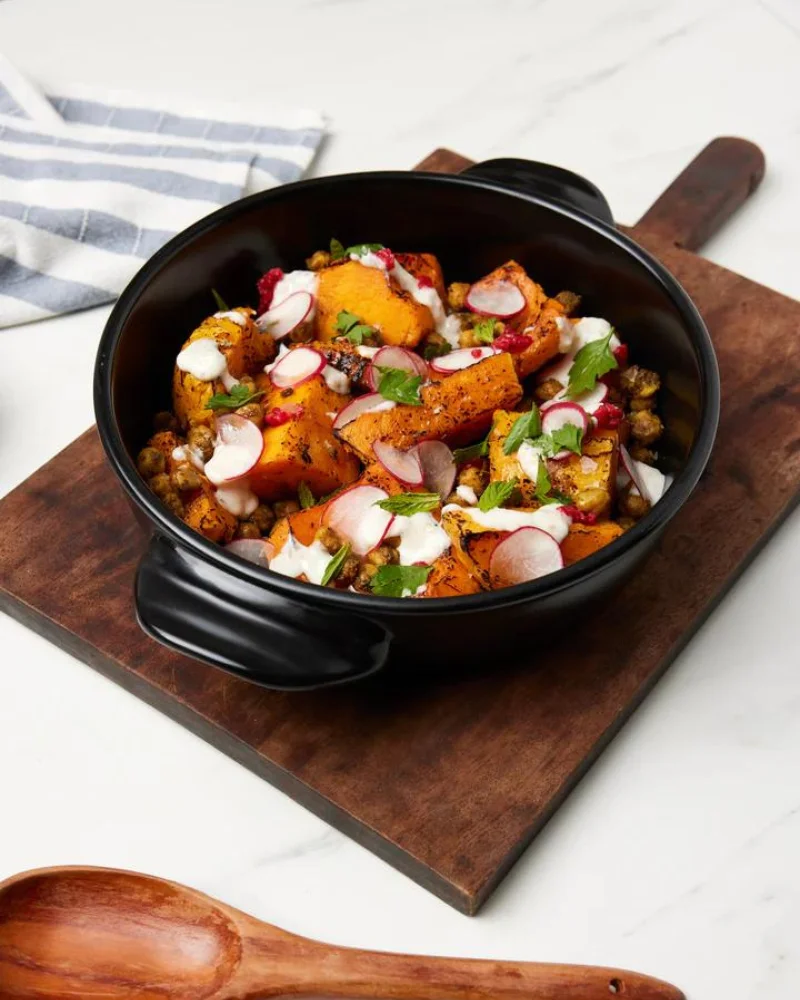
Use discount code TFC to save 15%!
I have used and loved my Xtrema cookware for 3+ years. Great for stovetop to oven meals.
If you’re looking for a truly non-toxic, metal-free cookware option, Xtrema Pure Ceramic Cookware is a top choice.
Bonus: they will replace your ceramic cookware if you accidentally drop it!
Made from a blend of natural minerals, clay, and water, Xtrema’s cookware is 100% ceramic – no metals, glues, or polymers here!
Unlike ceramic-coated options with metal cores, Xtrema is pure ceramic through and through. That means no risk of metals leaching into your food.
Plus, it’s free from harmful substances like Teflon, PFOA, and PFAS. With a 10-year warranty and replacements for accidental breakage, Xtrema is built to last for generations.
Price
One Piece: $49.99+ | Full Set: $280.49+
Notable Features
10-year warranty | Provides replacements for accidental breakage | Metal, glue, & polymer-free | Durable, non-scratch, oven & dishwasher-safe
Location/Shipping
United States, ships to the Canada, the United Kingdom, Switzerland & Australia
pssst! From pans to appliances, non-toxic toasters deserve a spot on your radar too. We put together a full guide to the safest non-toxic toasters and toaster ovens over on our sister site, Sustainably Kind Living—written by our team here at TFC.”
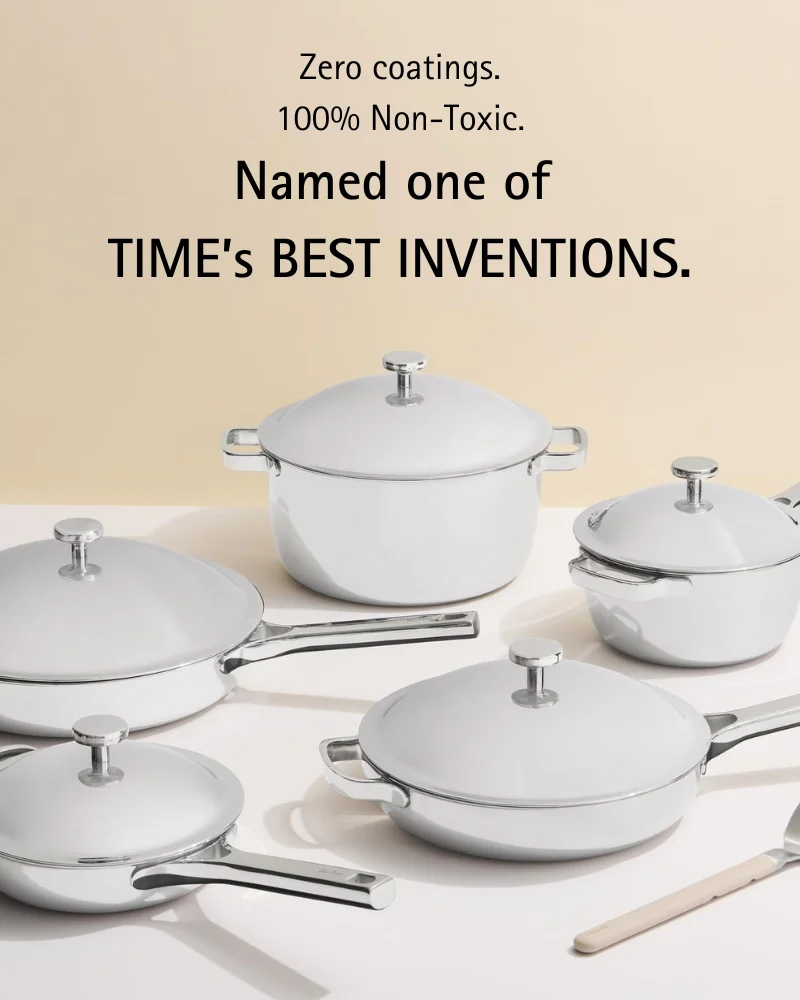
I have the titanium pan at home and love it. It’s been less than 6 months, but it’s one of my favourites. Their new titanium set has JUST hit my kitchen!
Recommended: Titanium
Our Place is revolutionizing non-toxic cookware with the Titanium Pro Cookware Set, designed for durability, performance, and effortless cooking.
Engineered with groundbreaking NoCo® nonstick technology, this set is free from coatings and forever chemicals, making it one of the safest options for home chefs.
The virtually indestructible titanium interior and fully clad tri-ply construction ensure fast, even heat distribution on all cooktops—including induction.
Oven-safe up to 1000°F, dishwasher-friendly, and metal utensil-safe, this set is built to withstand a lifetime of use.
Complete with the Titanium Always Pan® Pro, Perfect Pot® Pro, mini versions, and custom utensils, it’s the ultimate high-performance cookware for healthy, worry-free meals.
Plus, enjoy a 100-day trial and a limited lifetime warranty for total peace of mind.
Price
One Piece: $155.00+ | Full Set: $1,499.99+
Notable features
Lifetime Warranty | Coating-Free | PFAS-Free Nonstick Surfaces | NoCo® Nonstick Technology | Withstands Up to 1000°F | Fully-Clad Tri-Ply Construction | Induction Compatible | Fast, Even Heat Distribution | Dishwasher & Metal Utensil Safe | Includes Custom Utensils | 100-Day Trial
location/shipping
United States, ships to Australia
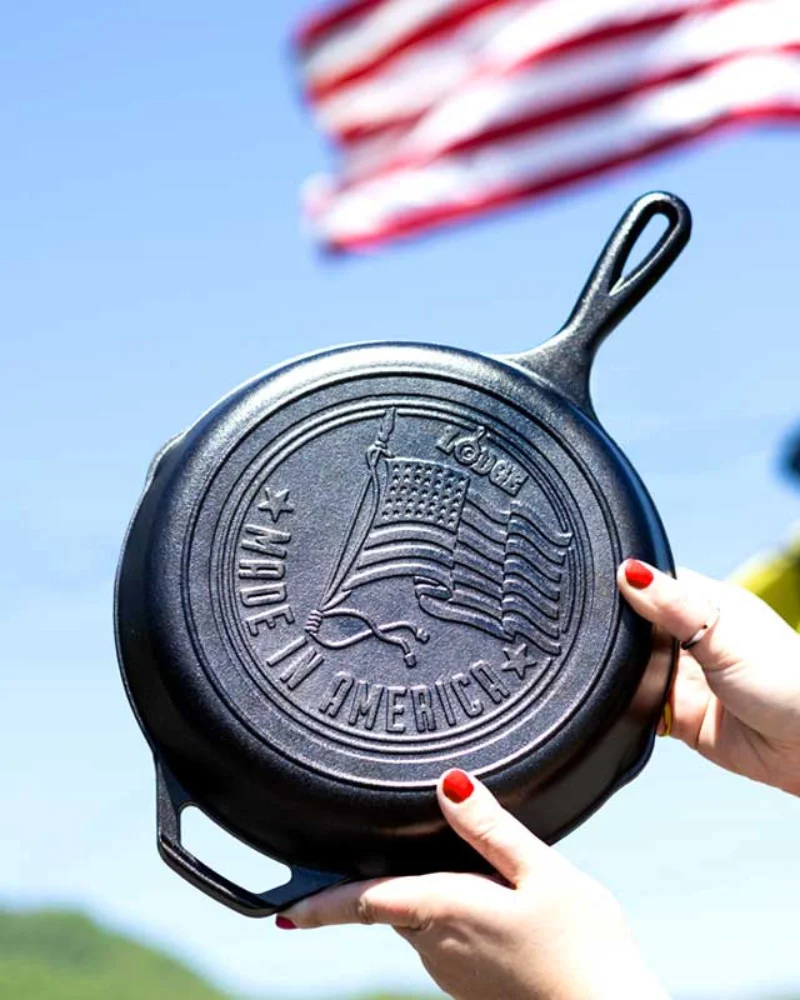
The TFC tested and reviewed Lodge’s cast iron pan in 2023. It passed all our tests.
A name synonymous with quality and durability, Lodge has been crafting safe, non-toxic cast iron cookware in the USA since 1896.
Their cast iron pans come pre-seasoned with 100% natural vegetable oil for a non-stick surface free from synthetic coatings.
Their lighter-weight carbon steel cookware offers the natural non-stick properties and high heat.
With Lodge, you’re investing in an affordable, heirloom-quality pan that’ll be your trusty kitchen sidekick for generations.
Price
One Piece: $29.95+ | Full Set: $675+
Notable features
Limited lifetime warranty | Reducing environmental impact through recycling and eco-friendly practices
location/shipping
United States
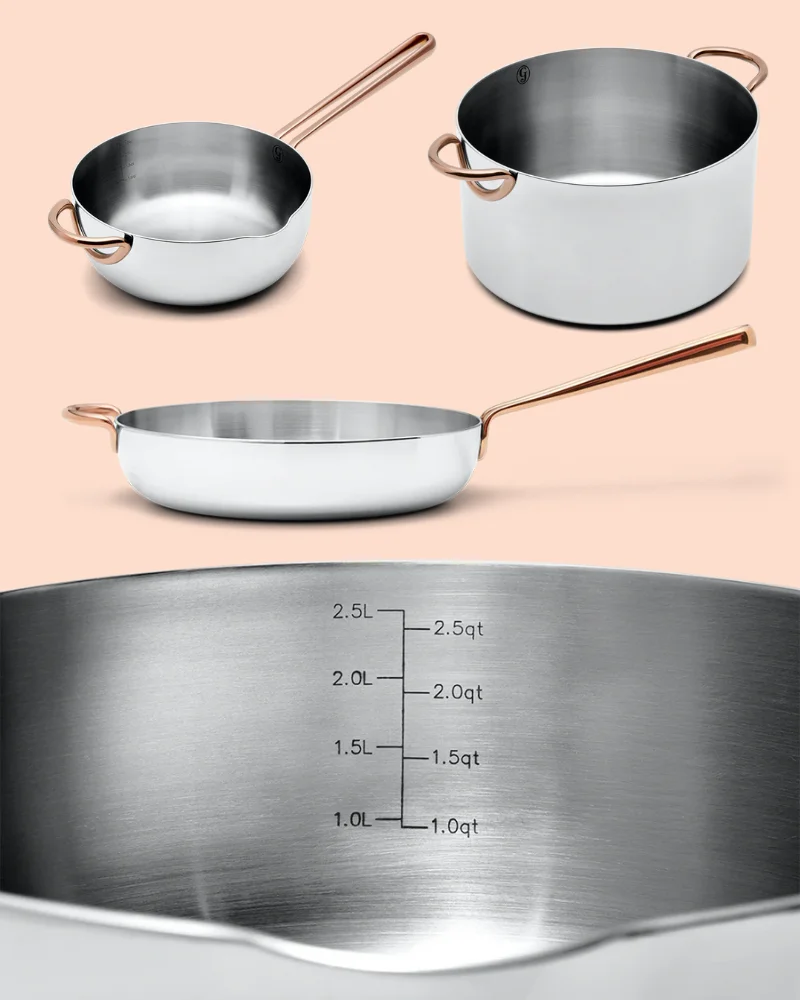
The TFC tested and reviewed the stainless steel pans in 2023. It passed all our tests!
Recommended: Stainless Steel
Great Jones is redefining stainless steel cookware with their Precious Metals set—durable, stylish, and built for everyday ease.
Crafted from high-quality, food-grade stainless steel, these fully clad pans ensure fast, even heat distribution for perfect cooking results.
Oven-friendly, induction-compatible, and dishwasher-safe, they’re as functional as they are beautiful.
Featuring bronzed handles and a sleek mirrored finish, this space-saving set nests together seamlessly while sharing two lids.
Designed by a women-run, New York-based small business, Great Jones combines safety, quality, and timeless style to empower home cooks everywhere.
Price
One Piece: $125+ | Full Set: $435+
Notable features
Limited lifetime warranty | Women-run small business | Partners with Hot Bread Kitchen to facilitate the recycling of old cookware
location/shipping
United States
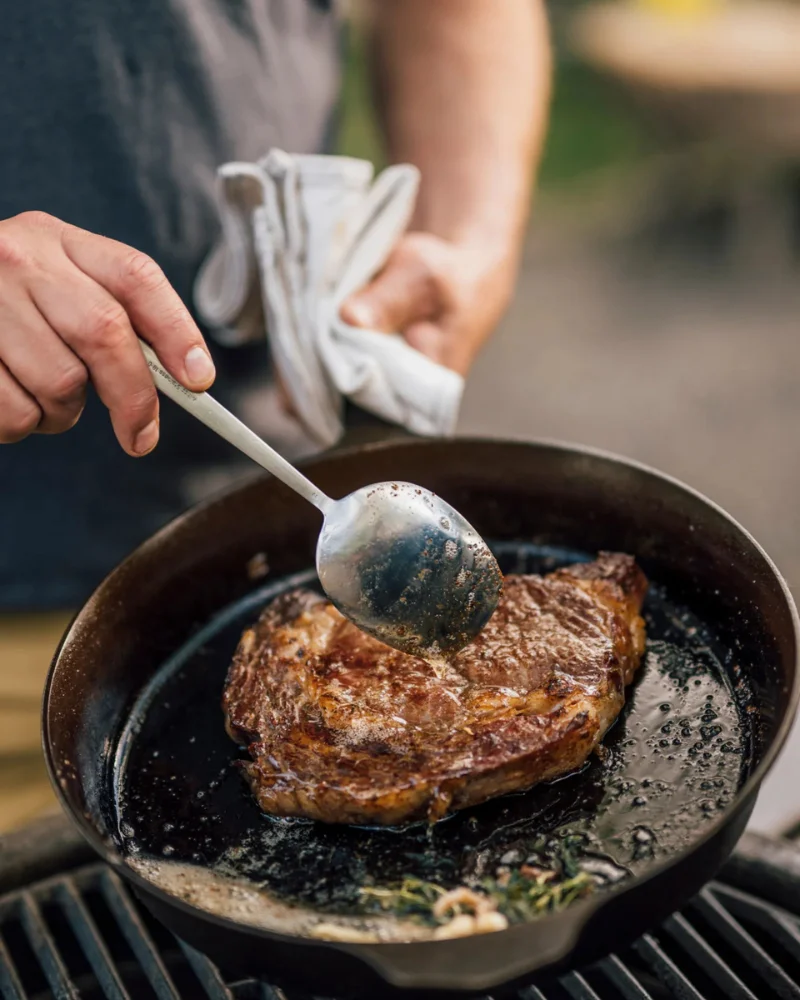
This was the first non-toxic pans I ever purchased. 8 years and still going strong!
Dedicated to crafting heirloom-quality cast iron cookware, Field Company revives traditional manufacturing techniques and uses only the purest materials to make sure their skillets are free from harmful chemicals and toxic coatings.
Field Skillets are machined to be smooth, with just enough texture to hold a natural seasoning layer that provides a non-stick surface without synthetic coatings.
We love that the iron used to create their skillets is sourced from responsible suppliers and free from any questionable chemicals, so your food remains safe and healthy.
Handcrafted in the USA using time-honored techniques, Field Company prioritizes quality and safety over mass production.
Price
One Piece: $155+ | Full Set: $385+
Notable features
Lifetime warranty | Handcrafted in the USA
location/shipping
United States, ships to Canada, the United Kingdom & Cyprus

As Australia’s only 100% made and owned cookware company, Solidteknics takes pride in their non-toxic, sustainable cookware crafted from clean Australian iron and non-nickel stainless steel.
The AUS-ION range, wrought from a single sheet of clean iron, is free from synthetic or toxic coatings.
And if you have any heavy metal sensitivities or allergies, their non-nickel stainless steel is an excellent choice.
Built to last generations, both the AUS-ION and nöni ranges come with a multi-century warranty that reflects Solidteknics’ dedication to creating healthy, sustainable cookware.
Price
One Piece: $129.95+ | Full Set: $639.90+
Notable features
Limitless warranty | Nickel-free
location/shipping
Australia, ships to the United States & select international countries
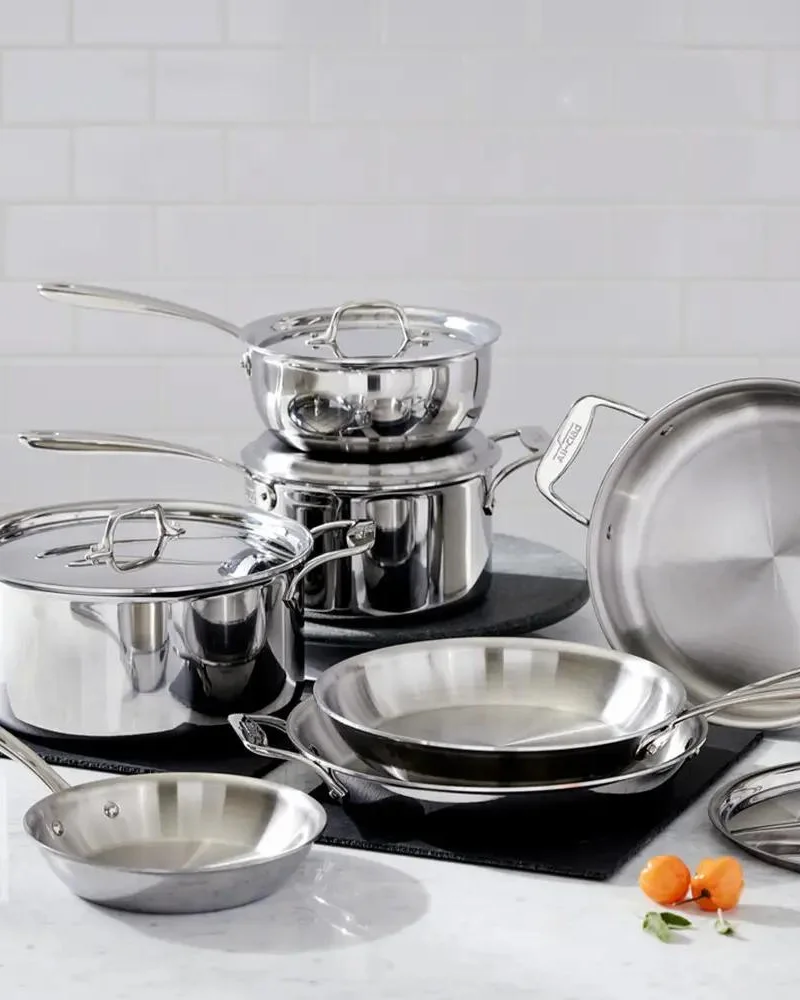
All-Clad’s D5 brushed stainless steel cookware offers a safe, non-toxic cooking experience without compromising performance.
The five-ply construction features an 18/10 stainless steel core, ideal for searing, browning, and deglazing without leaching harmful metals into your food.
The brushed stainless steel exterior is also free from harmful coatings or chemicals, and All-Clad’s stainless steel cookware is PFOA-free.
Built to last with a limited lifetime warranty, All-Clad’s commitment to quality ensures you’ll be cooking with these pans for years to come.
Price
One Piece: $149.99+ | Full Set: $679.97+
Notable features
Limited warranty | 5-ply bonded construction for exceptional heat distribution & durability
location/shipping
United States

Recommended: Stainless Steel
With over a century of exceptional craftsmanship, Demeyere, a Belgian cookware manufacturer, is known for producing high-quality, non-toxic stainless steel cookware.
Their flagship stainless steel cookware features multi-layered 7-ply and 5-ply construction, ensuring superior heat distribution, retention, and precise temperature control.
The highest quality stainless steel, resistant to corrosion, ensures longevity, and stays looking great, even after years of use.
Price
One Piece: $315+ | Full Set: $1,700+
Notable features
10-year warranty | High-quality, durable cookware with innovative features | Superior heat distribution & retention through multi-ply construction
location/shipping
Belgium, available on Amazon USA
Recommended: Stainless Steel | Carbon Steel
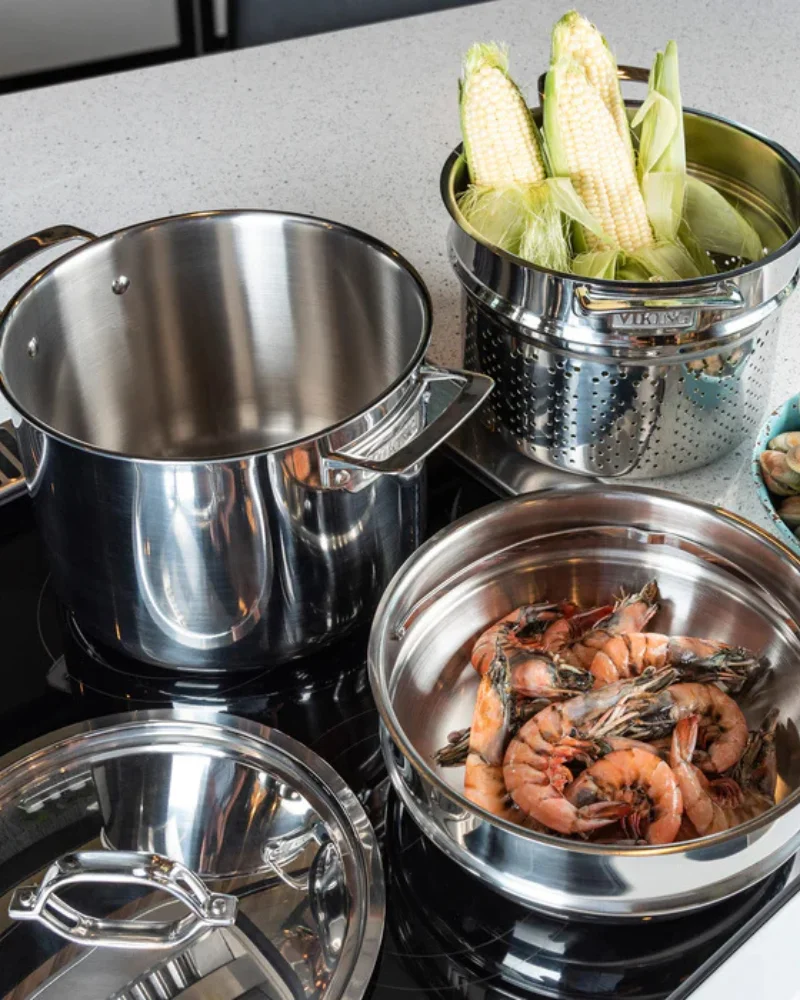
Viking is a well-established name in the world of professional-grade cookware, but their stainless steel and carbon steel collections are particularly noteworthy for anyone looking for completely non-toxic cookware.
Each piece of Viking’s 3-ply stainless steel cookware has a thick aluminum core sandwiched between layers of high-quality stainless steel. They also offer a great line of non-toxic carbon steel pans.
Their pans feature ergonomic, stay-cool handles that provide a secure and comfortable grip, even when cooking for a long time.
Viking also offers non-stick cookware options, but these non-stick pots and pans contain PTFE (polytetrafluoroethylene), which we do not recommend.
Price
One Piece: $70+ | Full Set: $1,500+
Notable features
Limited lifetime warranty | 3-ply construction | Aluminum core for even heat distribution | Ergonomic design
location/shipping
United States

FINEX’s cast iron skillets are a cut above the rest, with their unique octagonal shape and machined, polished cooking surface that’s entirely free of harmful chemicals like PFAS, PTE, PTFE, and Teflon.
Pre-seasoned with organic flaxseed oil, these skillets develop a rich, non-stick patina that only gets better with time.
Plus the rounded corners not only look great, but they double as helpful pour spouts.
Crafted with 100% made-in-USA quality and backed by a “Good Forever” guarantee, a FINEX skillet is an investment in your cooking journey that will surpass your highest expectations.
Price
One Piece: $129.95+ | Full Set: $639.90+
Notable features
Lifetime warranty | Compatible with all stove tops | Pre-seasoned with 100% natural flaxseed oil
location/shipping
United States
Recommended: Iron Pans | Stainless Steel | Copper
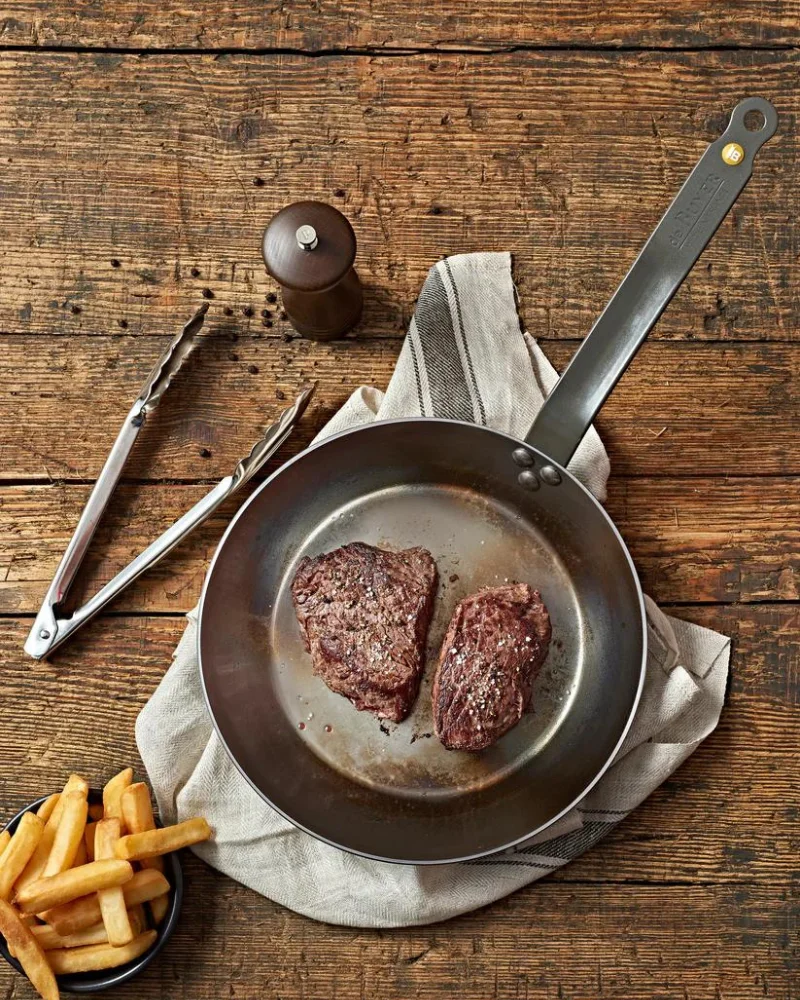
With nearly two centuries of experience, De Buyer crafts beautiful, carbon steel cookware in France using traditional techniques.
Their affordable yet high-quality frying pans are lighter than cast iron, and more durable than stainless steel or ceramic. And the sloped sides make it easy to flip and toss food.
Made from 100% natural materials without added chemicals, De Buyer’s pans are eco-friendly, recyclable, and long-lasting.
As you use their fry pans, they develop a natural non-stick patina that only improves with time – the blacker it gets, the less it sticks!
Price
One Piece: $21.00+ | Full Set: $135.00+
Notable features
Lifetime warranty | Cookware made from 100% natural material | Recyclable pots & pans | Third-party tested by SGS laboratory
location/shipping
France, ships to the United States

With over 40 years of experience, Heritage Steel is a family-owned cookware manufacturer based in Clarksville, Tennessee.
They pride themselves on crafting high-quality, durable, and safe cookware that’s perfect for both professional chefs and home cooks alike.
One of their standout collections is the Heritage Steel titanium series, which features a 5-ply construction with a layer of titanium mixed into the 439 stainless steel, resulting in cookware that’s 26 times stronger than cast iron.
The Legacy and Essential series are made from 316Ti and 439 stainless steel and are up to 20 times stronger than any competitors’ stainless steel.
It is important to note that Heritage Steel’s cookware contains nickel as part of its stainless steel alloy, which contributes to its corrosion resistance and durability.
While nickel exposure from cooking is minimal and generally below allergy-triggering thresholds, individuals with severe nickel sensitivities may want to consider alternative cookware materials.
Price
One Piece: $100+ | Full Set: $700+
Notable features
Lifetime warranty | 5-ply construction for superior heat conductivity & durability
location/shipping
United States, Canada, the Netherlands, Switzerland & Saudi Arabia

Recommended: Stainless Steel | Copper Core
Legend Cookware is a rising star in the world of non-toxic, high-performance cookware.
Based in the USA, Legend offers a range of cookware options that focus on stainless steel and copper core construction.
Their stainless steel collection comes in both 5-ply and 3-ply options, with a combination of brushed stainless steel layers and a fortified aluminum core. This design ensures even heating and excellent heat retention.
The aluminum core is fully enclosed within the stainless steel layers, preventing any direct contact with your food.
Legend’s copper core collection features a copper core sandwiched between layers of stainless steel, offering superior heat conductivity and precise temperature control.
Like their Stainless Steel collection, the Copper Core pans are non-reactive and safe for all types of cooking.
Price
One Piece: $92+ | Full Set: $600+
Notable features
Lifetime warranty | 5-ply construction for even heating & heat retention
location/shipping
United States, available on Amazon USA
How To Know It’s Time to Replace Your Cookware
So how do you know when it’s time to say goodbye to your old cookware? Here are a few telltale signs that it’s time to replace:
- Visible scratches or chips in the non-stick coating
- Peeling or flaking of the coating
- Warping or visible damage to the pan’s surface
- Discoloration or staining that won’t come out with cleaning
If you spot any of these red flags, it’s definitely time to toss those old pans and start fresh.
Which Pans Are Most Important To Replace First?
I recommend starting with the pans you use most often, like your everyday frying pan or saucepan. These are the workhorses of your kitchen, so replacing them first will have the biggest impact on reducing your exposure to toxic chemicals.
From there, you can work your way down the list to your less frequently used pieces, like specialty cookware or bakeware. And don’t forget about those small but mighty kitchen tools like spatulas and ladles – if they’re made from plastic or have any signs of wear and tear, it’s time to replace those too.
Responsibly Disposing of Toxic Cookware
When it comes to disposing of your old cookware, it’s important to do so safely and responsibly. Non-stick pans can’t be recycled due to their chemical coatings, so they should be disposed of in the trash.
However, if you have any uncoated metal cookware like stainless steel or cast iron that’s still in good condition, consider donating it to a local thrift store or charity instead of sending it to the landfill.
Finding the Best Non-Toxic Cookware For You
Consider your cooking style:
- For low and slow cooking methods (braising, roasting), choose cast iron or stainless steel for even heat retention and distribution.
- For quick cooking (stir-fry, sauté), opt for carbon steel or ceramic for fast heating and non-stick properties.
Think about your stove type:
- Cast iron and stainless steel are versatile and work well on all stove types.
- Ceramic and titanium may be more sensitive to certain heating elements.
Factor in cost:
- Some non-toxic options (ceramic, titanium) have a higher upfront cost.
- However, high-quality non-toxic cookware is a long-term investment that can save money in the long run by lasting longer.
- Investing in your health and your family’s health is always worth it.
Consider maintenance requirements:
- Cast iron and carbon steel need more care (seasoning, special cleaning).
- Stainless steel and ceramic are generally lower maintenance.
Mix and match:
- Don’t be afraid to choose different materials for different cooking needs.
- A variety of non-toxic cookware can create a versatile, well-rounded kitchen setup.
This has been your guide to the safest non-toxic cookware for 2026.
Making the switch to non-toxic cookware is one of the most important steps you can take for your family’s health in 2026.
Whether you choose the timeless reliability of cast iron, the professional-grade performance of stainless steel, or the lightweight convenience of carbon steel, there’s a non-toxic option perfect for your cooking style and budget.
Remember, this isn’t just about buying new pots and pans – it’s an investment in your family’s health and well-being for generations to come.
So, what are you waiting for?! Start by assessing your current cookware collection and replacing any potentially harmful pieces with safer, high-quality options. You’ll be so glad you did!
Check out our other amazing Non-Toxic Kitchen articles:
- Non-Toxic & Lead-Free Water Bottles
- Non-Toxic Water Filter Pitchers
- Plastic-Free Electric Kettles
- Non-Toxic Kitchen Utensils
- Non-Toxic Cutting Boards
- Non-Toxic Coffee Makers
- Non-Toxic Lunch Boxes
- Non-Toxic Dinnerware
- Non-Toxic Kids Cups
- Non-Toxic Air Fryers
Like It? Pin It!







You need to do more reading, Caraway cookware contains nanoparticles titanium dioxide. Not good for anyone! This is just one site see below! She did her homework.
Hi Rose. We actually could not agree more – I believe you did not read our blog post well enough (maybe you just saw the name “caraway” and assumed we didn’t do our research. We clearly state that we ONLY recommend the stainless steel set from Caraway.)
I will copy and paste our words here:
I have used and loved my Caraway stainless steel pots and pans for 3+ years. They are my go to for daily cooking.
Recommended: Stainless Steel
Caraway is raising the bar for non-toxic cookware with their well-designed, PFOA, PTFE, PFAs, lead, and cadmium-free stainless steel set.
Their stainless steel cookware boasts a lightweight 18/10 grade steel construction with 5-ply layering for even heat distribution.
Unlike many conventional cookware brands, Caraway avoids hard anodization and toxic metals like mercury and antimony. This means you can confidently cook at higher heats without worrying about what’s leaching into your food.
With Caraway, healthier meals start with healthier materials — from stove to table.
Hi,
I would correct #14, “All of Heritage Steel’s cookware is also nickel-free, making it a great choice for those with nickel sensitivities.” They do contain Nickel. Per Heritage Steel’s website: Yes, our cookware does include nickel in its stainless steel cooking surface. “Nickel is an important element in the alloy to help make the steel more corrosion resistant and durable.” Please go to link below. https://www.heritagesteel.us/products/hsc-14402
I appreciate your article. Great starting point. 😊
Thank you for catching that! You’re absolutely right—Heritage Steel cookware does contain nickel as part of its stainless steel alloy, which enhances durability and corrosion resistance. While nickel exposure from cooking is minimal, those with severe sensitivities may want to explore alternative materials. We appreciate the correction and will update the caption accordingly!
Yes, you are right and surprisingly, it also goes on to state that if nickel sensitivity is an issue for you then paying attention to your diet that may be high in nickel is what you should address according to the link they provide to WebMd. What leaches from the pan they stated, is so small that it shouldn’t be a major concern even when acidic food is being prepared. Salt Pitting, which happens when your pan becomes damaged (rusted) by salt is what you should be aware of when cooking with stainless steel. The information with the accompanying links renewed my confidence in stainless steel cookware and made me more aware of my diet choice in connection with it. Thank you for the link to Heritage Steel cookware.
Yes, you are right and surprisingly, it also goes on to state that if nickel sensitivity is an issue for you then paying attention to your diet that may be high in nickel is what you should address according to the link they provide to WebMd. What leaches from the pan they stated, is so small that it shouldn’t be a major concern even when acidic food is being prepared. Salt Pitting, which happens when your pan becomes damaged (rusted) by salt is what you should be aware of when cooking with stainless steel. The information with the accompanying links renewed my confidence in stainless steel cookware and made me more aware of my diet choice in connection with it. Thank you for the link to Heritage Steel cookware.
Thank you for taking the time to share your concerns and Tamara Rubin’s findings. We understand that her XRF testing raised questions about the elemental makeup of Xtrema cookware, and it’s important to acknowledge and clarify the difference between presence and exposure when it comes to metals in cookware.
Yes, XRF testing can detect the presence of various elements—including trace metals like lead, cadmium, nickel, iron, and cobalt—in raw materials or coatings. However, XRF cannot determine whether any of these elements actually leach out during cooking or regular use, which is the key factor in assessing consumer health risk. That’s why the cookware industry and regulatory bodies like California Prop 65 rely on leach testing, not XRF, to determine safety.
Xtrema cookware has passed California Prop 65 leach testing standards for lead and cadmium for over 15 years. These third-party, independent lab tests are designed to measure real-world exposure: how much (if any) of a substance migrates from the cookware into food under normal use. If a material does not leach, it does not pose a health risk—even if trace amounts are detected in the raw material by XRF.
It’s also worth noting that no heavy metals are intentionally added to Xtrema cookware. These are naturally occurring elements found in the earth-based materials used to make ceramics. When present in trace amounts, they are chemically bound within the material and, as long as they don’t leach, they are not considered harmful.
Regarding the label fused to the bottom of the pan: this surface does not come into contact with food and has passed all safety testing for leaching. However, we understand the concern and agree that consumer trust is built on transparency and ongoing product improvement. All of Xtrema’s leach test results are publicly posted for full transparency, and none show unsafe levels of lead or cadmium exposure.
Lastly, every cooking material has its own set of pros and cons, and we respect that ceramic cookware may not suit everyone’s taste or cooking style. Our priority is ensuring that for those who choose ceramic for its non-toxic and non-reactive properties, they can feel confident in its safety.
Thank you again for engaging in this important conversation. Asking tough questions helps move all of us toward a safer, more informed marketplace.
do you know of a good waffle maker? a cast iron one? and a pizza pan? also how do u clean your xtrema i have some but am afraid im going to scratch it becasue the food easily sticks to the pan
Yes! I definitely have some thoughts here for you. Let’s break this down:
1. Waffle Maker – Cast Iron Style
For a classic cast iron waffle maker, I really love the Rome Industries Old Fashioned Waffle Iron. It’s non-electric, stovetop-friendly (perfect for gas or open flame), and free from non-stick coatings and PFAS. You do need to preheat it and season it like any other cast iron, but the waffles come out super crispy. Another option (though a bit heavier) is Lehman’s Cast Iron Waffle Iron – also fantastic and built to last generations.
2. Pizza Pan (Non-Toxic Options)
For non-toxic pizza pans, I recommend either:
Lodge Cast Iron Pizza Pan – it’s heavy-duty, heats evenly, and gives that perfectly crisp bottom crust. It’s what we use most here.
Solid stainless steel pizza pan – No coatings, just food-grade stainless.
Avoid anything “non-stick” or “ceramic-coated” unless you know the exact materials (a lot hide PFAS).
3. Xtrema Cleaning Tips (without Scratching!)
Ohhh yes – Xtrema can be a little sticky at first until you get the hang of it. Here’s how I clean mine without fear of scratching:
Soak it in hot water with a bit of baking soda for a few minutes if anything is stuck.
Use a non-scratch sponge like a Swedish dishcloth, coconut scrubber, or bamboo fiber cloth.
For tougher bits: sprinkle baking soda, then use white vinegar spray over it and let it bubble. Let sit for 10 minutes, then wipe.
Never use steel wool or anything metal—Xtrema is durable but has a ceramic glaze that can dull if scrubbed with abrasives.
Also, I recommend cooking with a little more oil than you’re used to in the beginning. Once it’s well “broken in,” it becomes way easier to clean and more naturally non-stick.
XTREMA
MADE IN CHINA!!
Product doesn’t meet safe expectations nor do they stand behind their claimed warranty.
I bought the 9″ signature Skillet November 2024 … December 2025 we discovered a crack on the bottom that went all the way through. It was not noticeable until the pan was slowly heating up – and we discovered liquid running onto stove top.
We followed all the care instructions for product … and yet when emailing customer service for their 10 year warranty – we got the “replacement guarantee” (THEY AUTOMATICALLY ASSUME YOU DID THE DAMAGE)!!!
**So beware on their warranty – they don’t appear to really stand behind it, and assume any problems – you caused.
So shipping is the customer’s responsibility…and 1st item they’ll replace – and when it fails again in a year or so – you pay 20% of the current cost of product….
Numerous people have reported same issues in quality and warranty claims.
I’m really sorry you went through that — discovering a crack like that after following care instructions is incredibly frustrating, especially when you’re counting on a long warranty.
Thank you for sharing the details about the failure and your warranty experience. Our cookware guides focus primarily on material safety and chemical exposure, but durability and how warranties are handled absolutely matter in real life, and experiences like yours are important for readers to consider.
Solid ceramic cookware (including Xtrema) can be more prone to cracking over time compared to metal cookware, and warranty policies — including shipping costs and replacement terms — are something we always encourage readers to review carefully before purchasing.
We appreciate you adding your firsthand experience here. It gives helpful context beyond lab testing and materials alone.