This post may contain affiliate links. By browsing this website, you agree to our disclaimer, privacy policy, and terms of use.
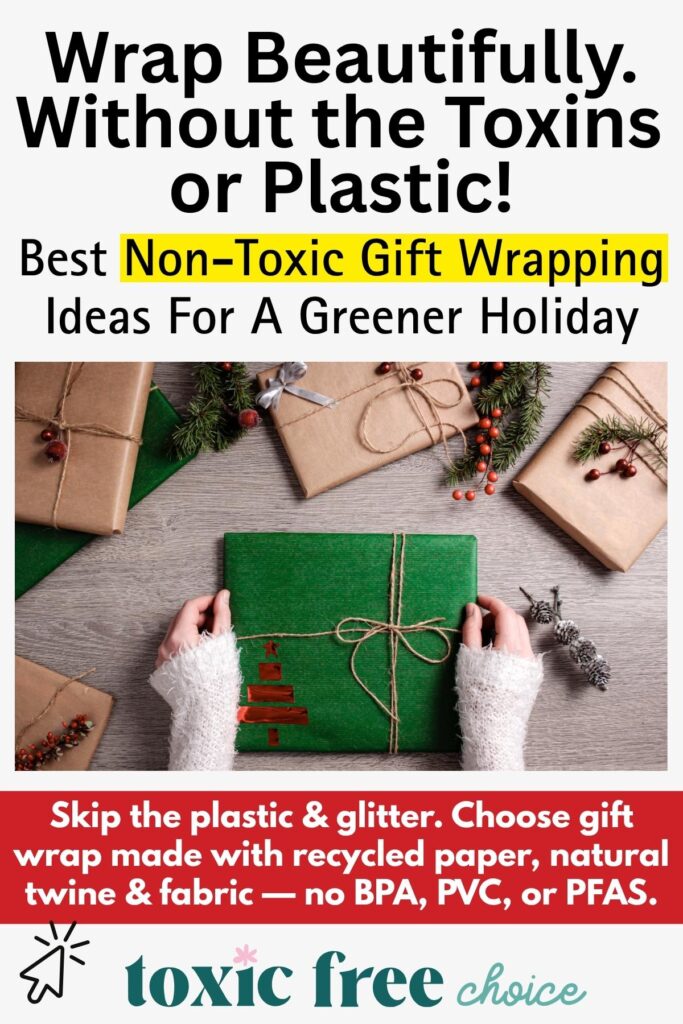
That glittering gift wrap may look magical under the tree, but it often hides hidden risks. From BPA and PVC to PFAS, formaldehyde, and even microplastics, many wrapping papers aren’t as harmless as they seem.
Scientists have been warning us about this for decades. As far back as 1979, studies found high levels of lead and chromium in brightly colored wrapping paper.
Modern testing still detects BPA, PFAS, and other chemicals in common holiday packaging — some at levels linked to serious health risks.
And it’s not just what the paper is made of. Hours of handling, warm lights under the tree, or a roaring fireplace nearby can all accelerate chemical transfer from paper to skin, surfaces, and even the air your family breathes.
The good news? You don’t have to give up the joy of beautifully wrapped gifts to stay safe.
In this guide, we’ll break down the biggest red flags in conventional wrapping paper, explain what certifications to look for, and share our favorite non-toxic gift wrap options that look festive without the hidden chemicals.
Why Traditional Gift Wrap Is Problematic
Gift wrap may look like “just paper,” but most rolls are far from harmless.
In the U.S., wrapping paper isn’t held to strict chemical safety standards, which means manufacturers can use a cocktail of PFAS, synthetic dyes, plastic coatings, and solvent-based glues without disclosing any of it.
Even labels that sound reassuring — like “eco-friendly,” “BPA-free,” or “made with recycled paper” — don’t always guarantee safety.
Many so-called sustainable brands source their paper from the very same mills as conventional wrapping products, with no transparency about inks, adhesives, or coatings.
Without third-party certifications like FSC or RCS, “eco-friendly” gift wrap is often just another example of greenwashing.
The Most Common Toxic Materials In Holiday Packaging
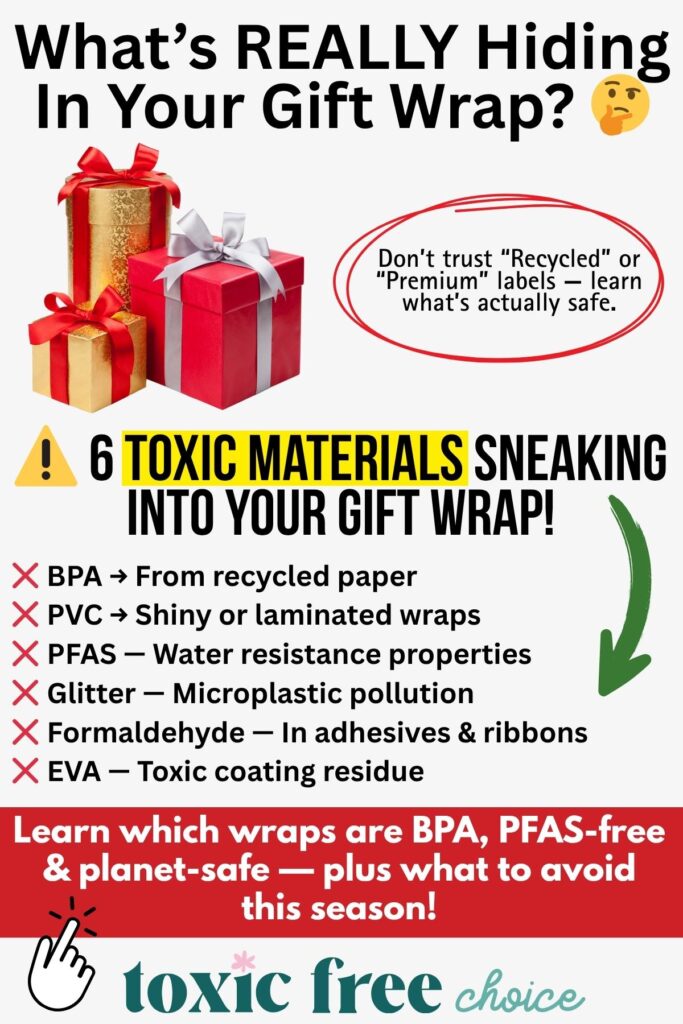
❌ BPA (Bisphenol A)
Glossy wrapping paper made with recycled content can carry BPA from thermal receipt paper. This endocrine disruptor is linked to reproductive harm, metabolic issues, and developmental risks in children.
❌ PVC (Polyvinyl Chloride)
Used in laminated papers, shiny bags, and coated tags, PVC requires phthalates for flexibility and releases dioxins during production and disposal. These compounds are tied to hormone disruption, asthma, and developmental delays.
❌ PFAS (Per- and Polyfluoroalkyl Substances)
Applied to premium wraps and bags for water or grease resistance, PFAS are “forever chemicals” that persist in the body and environment. They are associated with thyroid disease, cancer, and immune suppression.
❌ Conventional Glitter
Most glitter is PET or PVC film with aluminum that sheds easily and becomes microplastic pollution. It can damage marine life tissue and carry toxins up the food chain.
❌ Formaldehyde in Adhesives
Glues used in paper, bags, and ribbons often release formaldehyde or contain solvents like toluene and hexane. Formaldehyde is a known carcinogen and respiratory irritant, especially for children and asthmatics.
❌ EVA (Ethylene-Vinyl Acetate)
Even though EVA is marketed as a “safer adhesive”, EVA coatings found in wrapping papers can contain formamide and vinyl acetate residues that can transfer to your skin with heat and handling.
Health Concerns Linked To Wrapping Paper Chemicals
- Brain & Nervous System Damage — Lead and heavy metals can impair brain development in children, affecting learning, attention, and behavior.
- Reproductive & Developmental Harm — Endocrine disruptors like BPA, phthalates, and PFAS interfere with hormones, raising risks for fertility issues, developmental delays, and pregnancy complications.
- Cancer Risk — Chemicals such as formaldehyde, benzene, and certain chromium compounds are classified as carcinogens.
- Respiratory Problems — Adhesive solvents and formaldehyde can trigger asthma, worsen allergies, and irritate sensitive groups.
- Immune Suppression — PFAS exposure has been linked to weakened immune defenses, including reduced vaccine response.
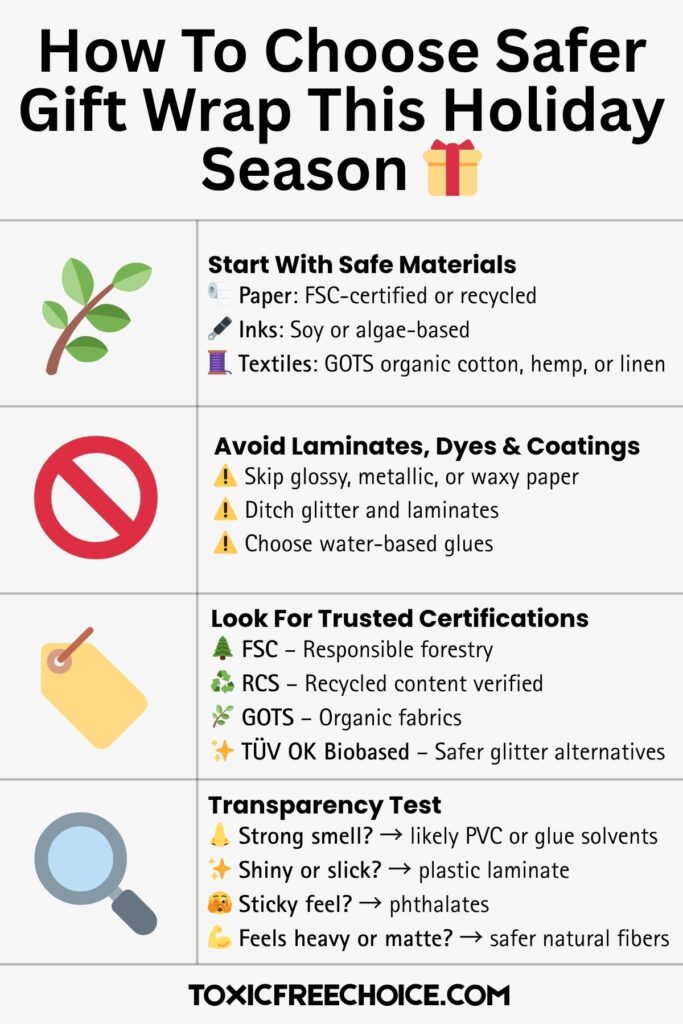
What To Look For In Non-Toxic Wrapping Paper & Packaging
✅ Start With Safe Materials
- Paper: Look for FSC-certified or verified recycled content. FSC audits track fiber from forest to consumer.
- Inks: Choose soy- or algae-based inks instead of petroleum solvents and heavy metals.
- Textiles: Reusable wraps made from GOTS-certified organic cotton, hemp, or linen ensure fibers are grown without pesticides, formaldehyde finishes, or toxic dyes.
🚫 Avoid Laminates, Dyes & Coatings
- Skip glossy, metallic, or waxy-finished papers — these often contain plastics, PFAS, or heavy-metal pigments.
- Even “recyclable” paper can be rejected if it has glitter or laminates.
- Check adhesives, too: safer wraps use water-based glues instead of solvents.
🏷️ Check For Trusted Certifications
Certifications aren’t perfect, but they’re the best proof that gift wrap is safer:
- FSC (Forest Stewardship Council): Verifies responsible forestry and chain-of-custody. Check license codes at fsc.org.
- RCS (Recycled Claim Standard): Confirms recycled content percentages.
- GOTS (Global Organic Textile Standard): For organic fabric wraps and bags.
- TÜV “OK Biobased”: For glitter alternatives.
🔍 Look For Transparency (& Use The Sniff & Feel Test)
Larger companies own many “eco” brands and share production lines with conventional wrapping paper. (Example: Creative Brands owns The Gift Wrap Company, consolidating multiple labels into one Tennessee facility.)
Quick Tests For Spotting Safer Options:
- Strong chemical smell? Likely PVC or toxic adhesives → avoid.
- Shiny, plasticky surface? Often laminate or PVC.
- Sticky/soft finish? Phthalates are probably present.
- Natural materials feel heavier and resist easy tearing/creasing.

Best Non-Toxic Gift Wrap & Packaging For The Holidays
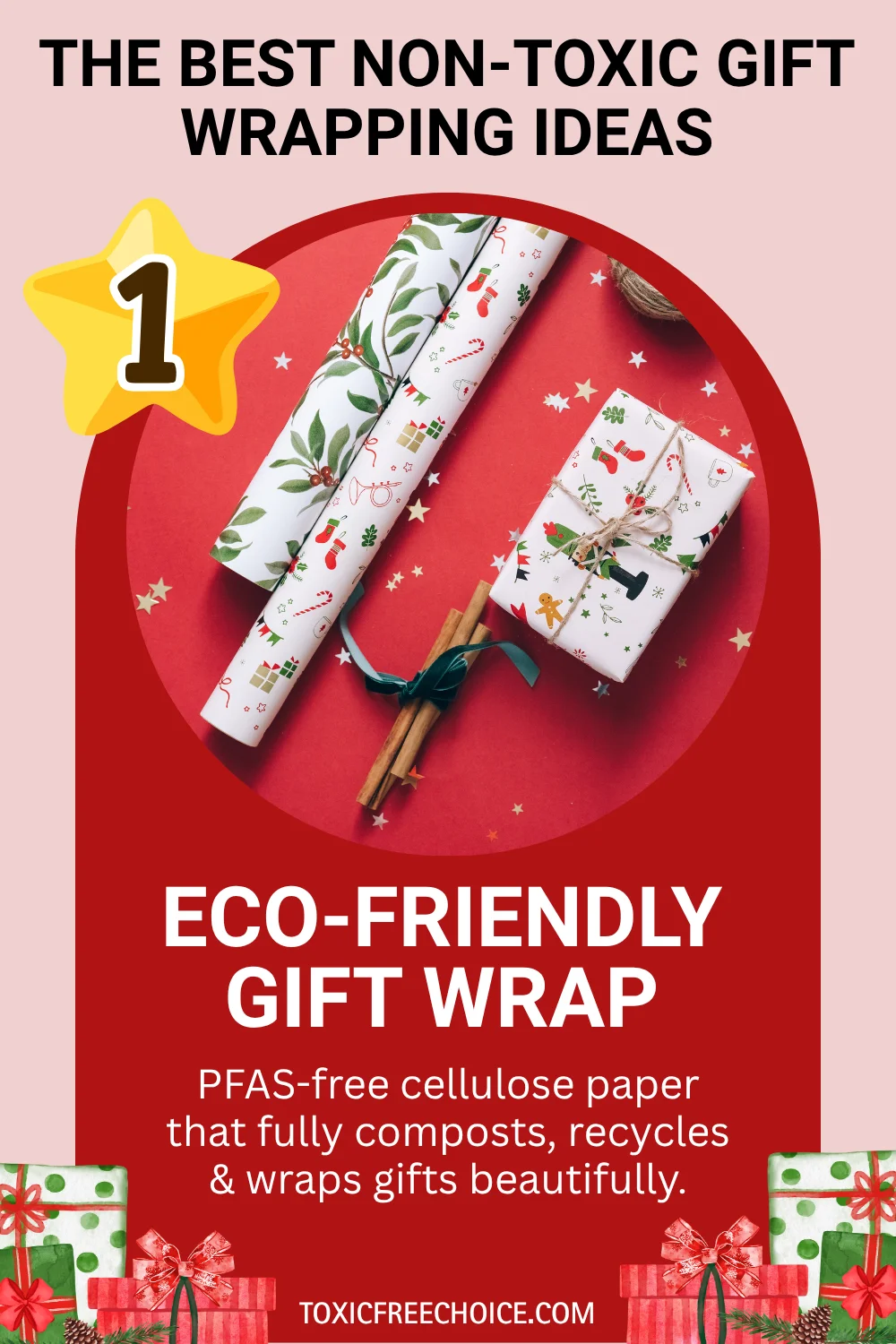
Waterleaf Paper Company is a USA brand that produces one of the safest gift wraps on the market: PFAS-free paper made from 100% cellulose fibers.
FSC-certified and petroleum-free, it’s printed with water-based inks and can fully dissolve, compost, or recycle without leaving behind harmful residues.
For families looking for a non-toxic option that balances durability with environmental safety, Waterleaf’s products provide peace of mind without sacrificing festive presentation.
Price
$15 (Cellulose Wrapping Paper) | $12.99 (Kraft Wrapping Paper)
Materials
Cellulose (Plant Fibers) | Recycled Kraft Paper | Water-Based Inks
location/shipping
United States
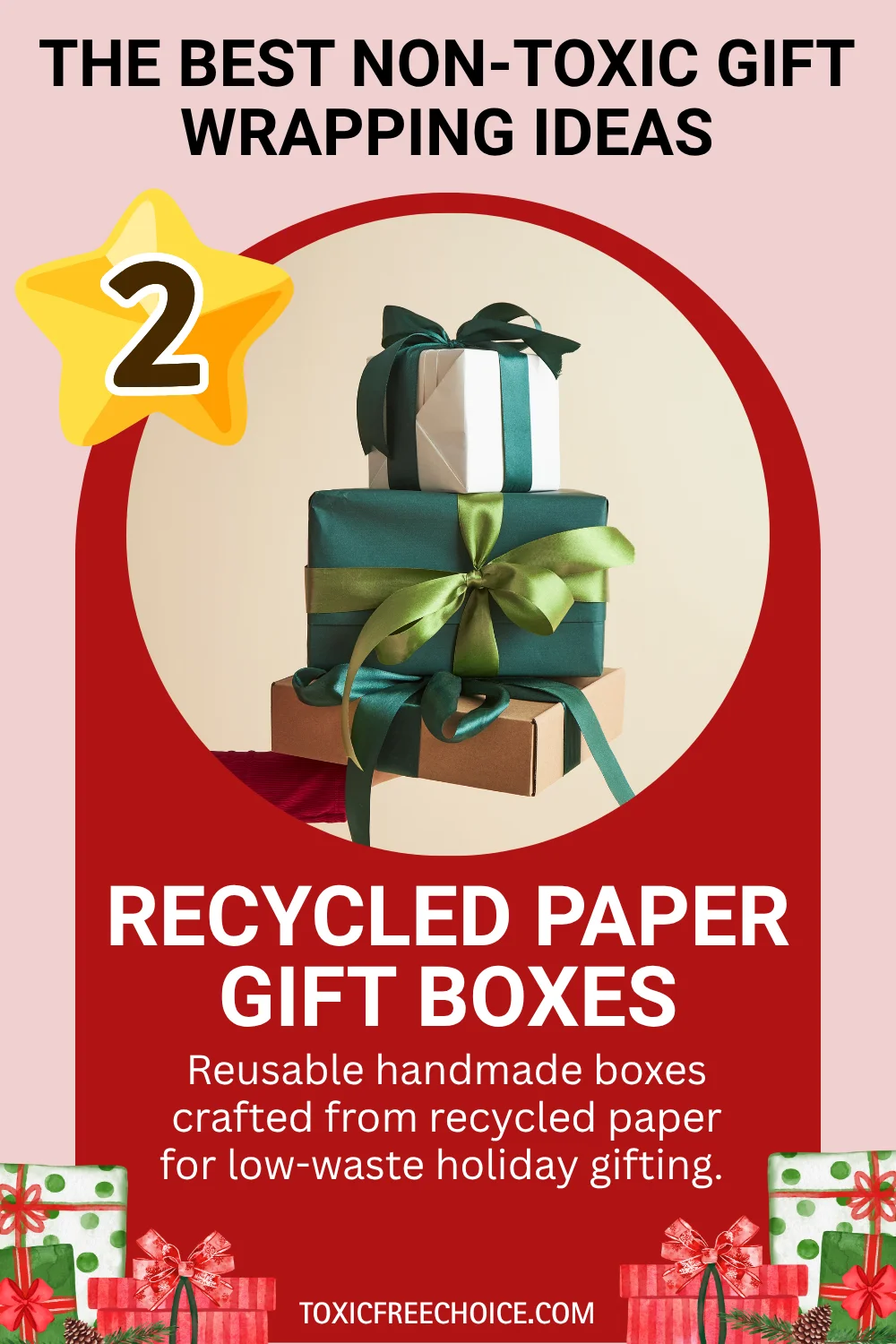
Cotton & Crete creates handmade recycled paper gift boxes that combine charm with practicality.
Each box features holiday patterns and nests neatly for storage, offering both an eco-friendly presentation and long-term reusability.
These boxes let you skip single-use wrapping paper entirely—just add a bow, and your gift is ready.
With their balance of durability, style, and non-toxic materials, Cotton & Crete boxes are a thoughtful alternative for modern holiday gifting.
Price
$38 (Set of 5)
Materials
Handmade Printed Recycled Paper
location/shipping
United States, ships to select international countries
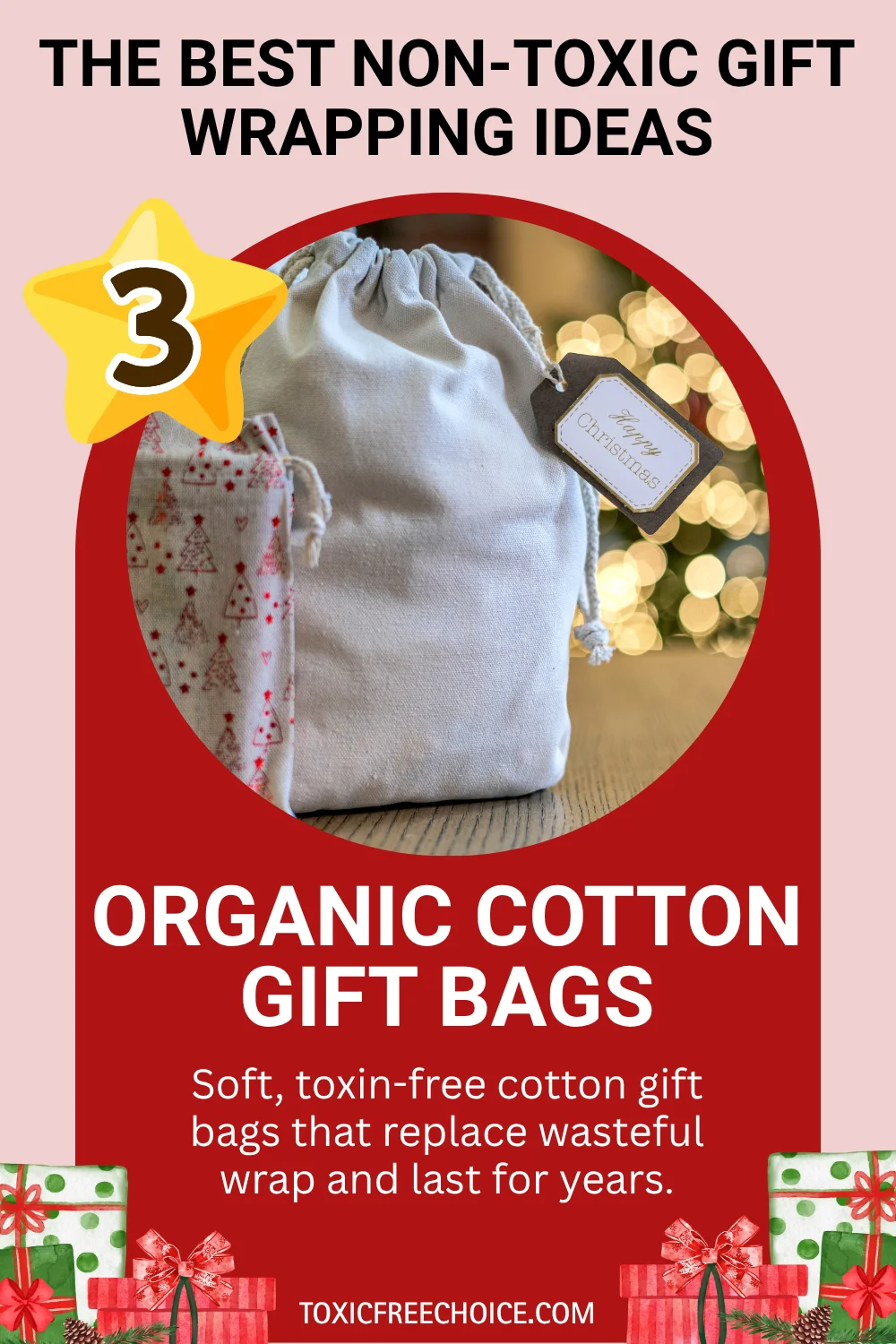
Simple Ecology simplifies holiday wrapping with reusable, organic cotton gift bags.
Made from GOTS-certified fabric, these bags avoid the toxic dyes and coatings often found in traditional packaging.
Available in multiple sizes, they’re perfect for everything from wine bottles to jewelry.
Beyond the holidays, they double as reusable storage or travel bags, making them a practical, non-toxic, and zero-waste alternative to wrapping paper.
Price
$17.95 (Set of 4)
Materials
GOTS-Certified Organic Cotton
location/shipping
United States, ships to Canada
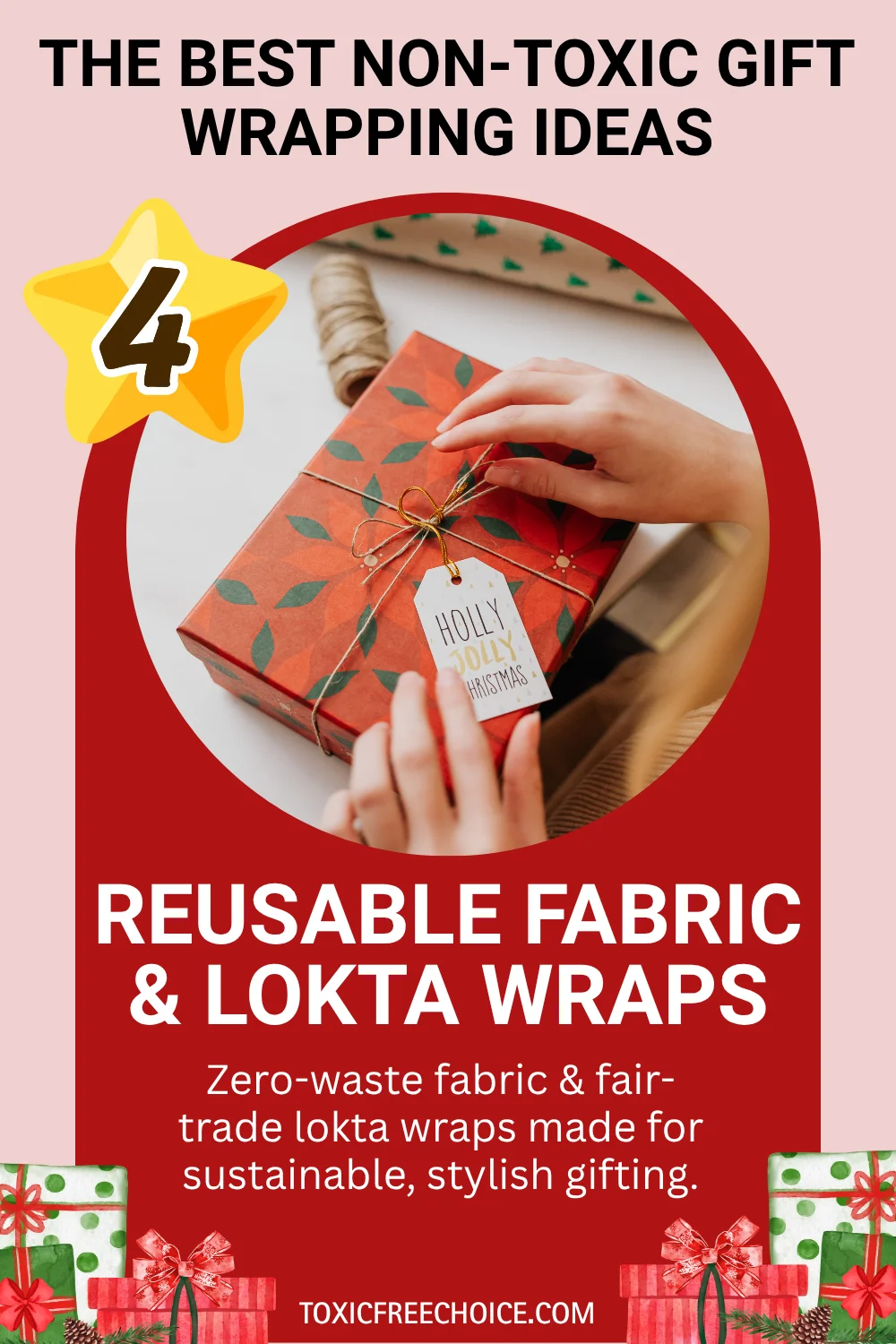
Happy Wrap specializes in zero-waste cotton wraps and fair-trade lokta paper sourced from Nepal.
Designed to be re-gifted, these fabric wraps make every holiday season a little more sustainable while eliminating plastic waste.
With organic cotton and fair trade production, Happy Wrap products combine environmental safety with social responsibility, ensuring your gifts look beautiful while aligning with non-toxic, ethical values.
A perfect long-term swap for disposable wrapping paper.
Price
From $6.68+
Materials
Varies – Organic Cotton | Lokta Paper | Recycled Paper
location/shipping
United Kingdom, ships internationally
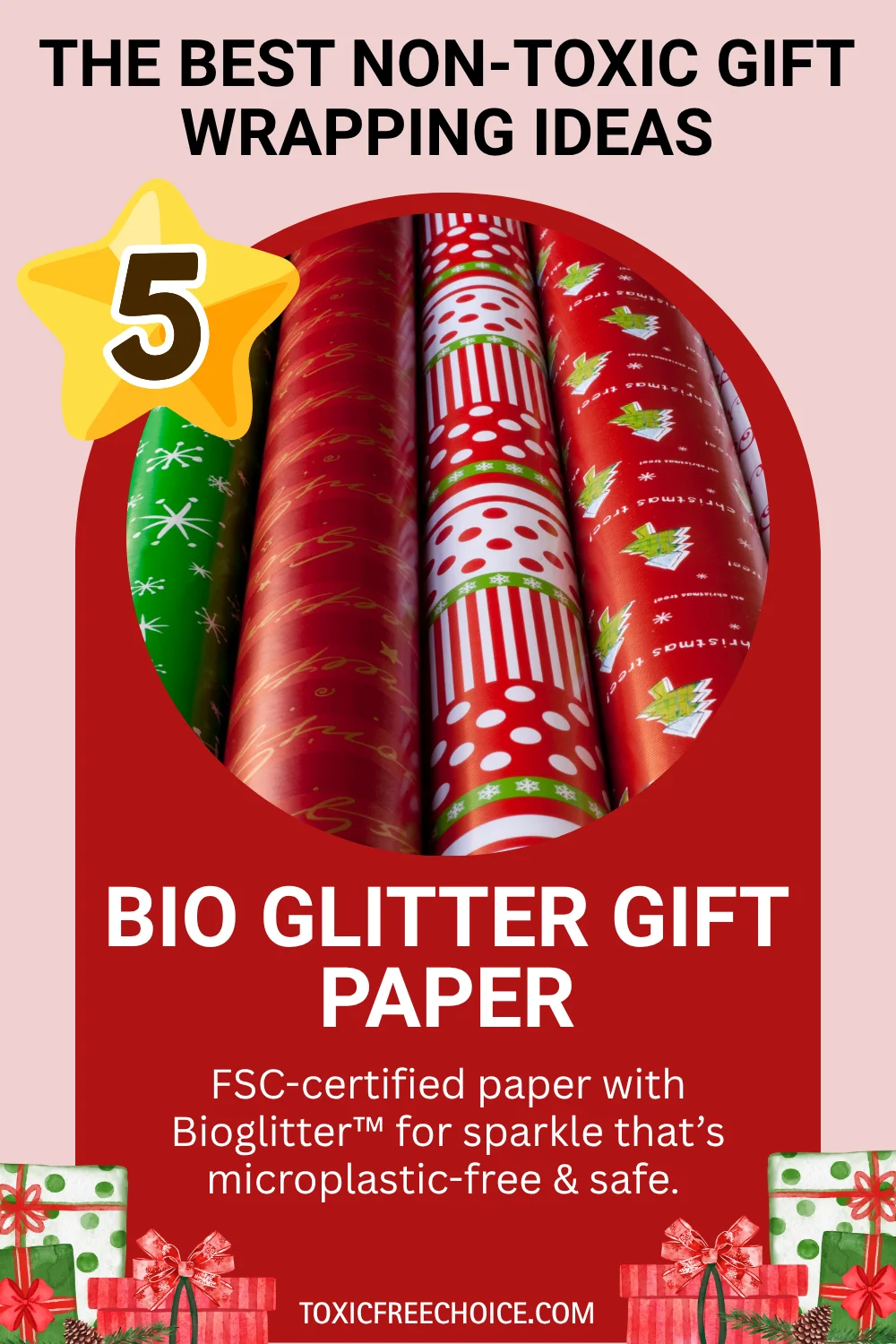
Today Glitter offers a safe alternative to traditional glitter gift wrap with its FSC-certified paper finished with Bioglitter™, the world’s only TÜV-certified freshwater-safe glitter.
Conventional glitter is a major source of microplastics, but Today Glitter’s wraps sparkle without polluting waterways.
Designed to comply with UK recycling standards, these papers bring a festive look without toxic baggage, making them one of the most responsible glitter options available.
Price
$15/roll
Materials
FSC® Certified Paper | Bioglitter™
location/shipping
United Kingdom, ships internationally
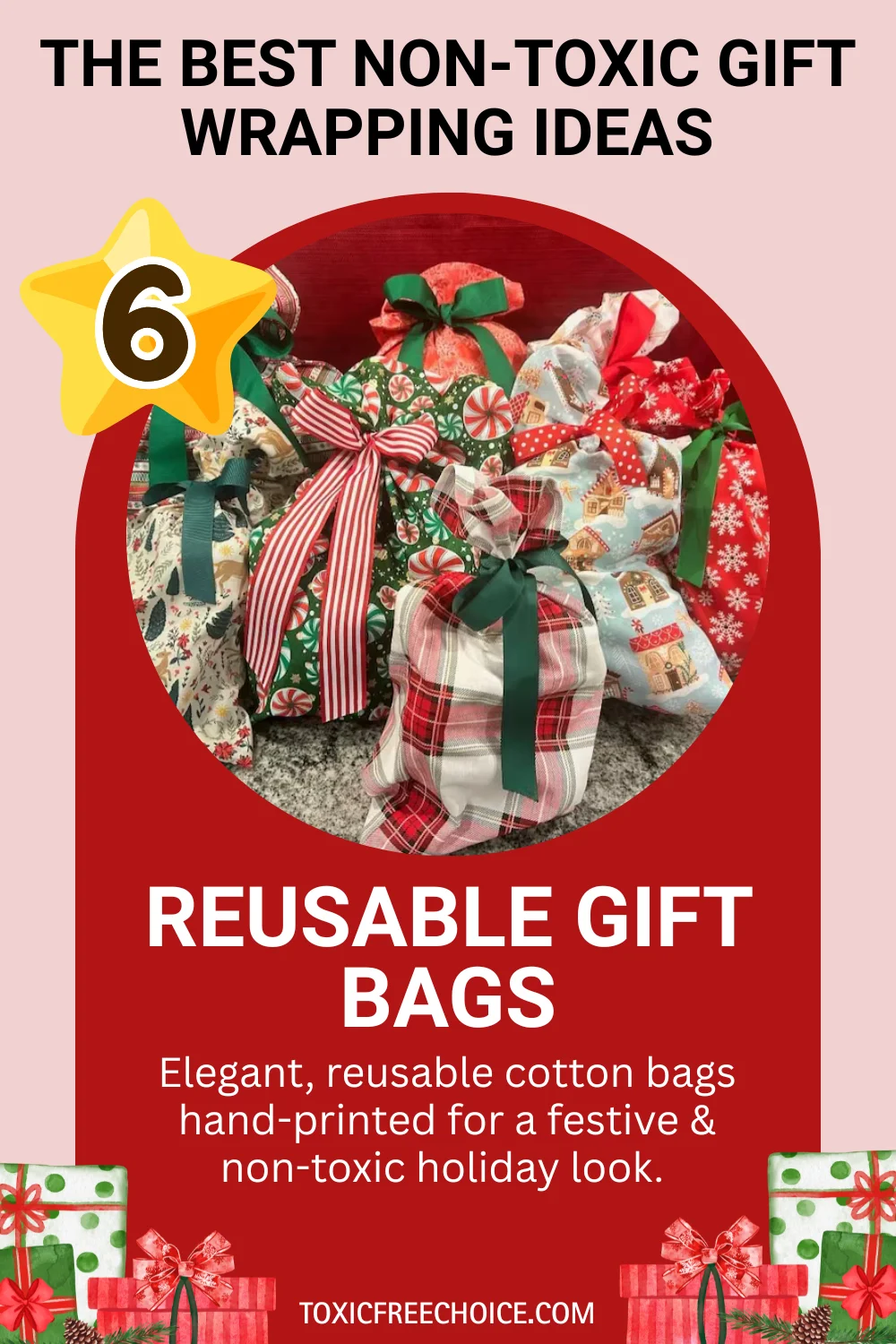
FabRap offers reusable gift bags crafted from 100% GOTS-certified organic cotton and hand-block printed in Jaipur, India.
Their nested sets of three bags make wrapping everything from small keepsakes to larger gifts quick and elegant.
Unlike synthetic packaging, these non-toxic bags are plastic-free, washable, and endlessly reusable.
With rich block-print designs in ruby and emerald, FabRap gift bags add a festive, chemical-free touch to your holiday celebrations.
Price
$73.05 (3-Pack)
Materials
GOTS-Certified Organic Cotton
location/shipping
India, ships to select international countries
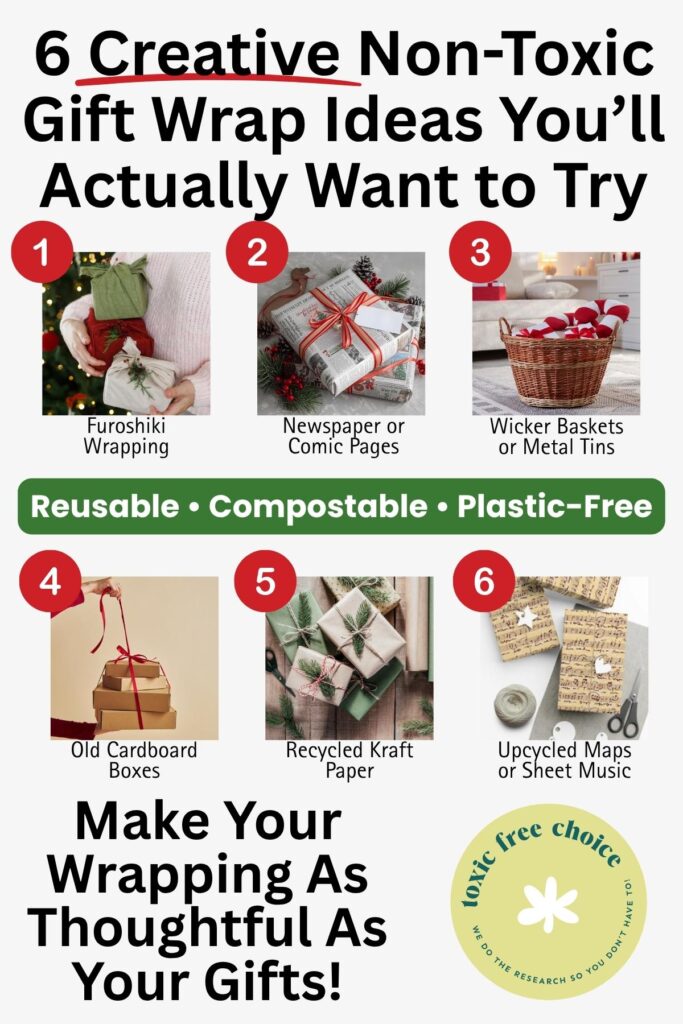
Creative Non-Toxic Wrapping Ideas (DIY & Reusable Options)
1. Furoshiki Wrapping
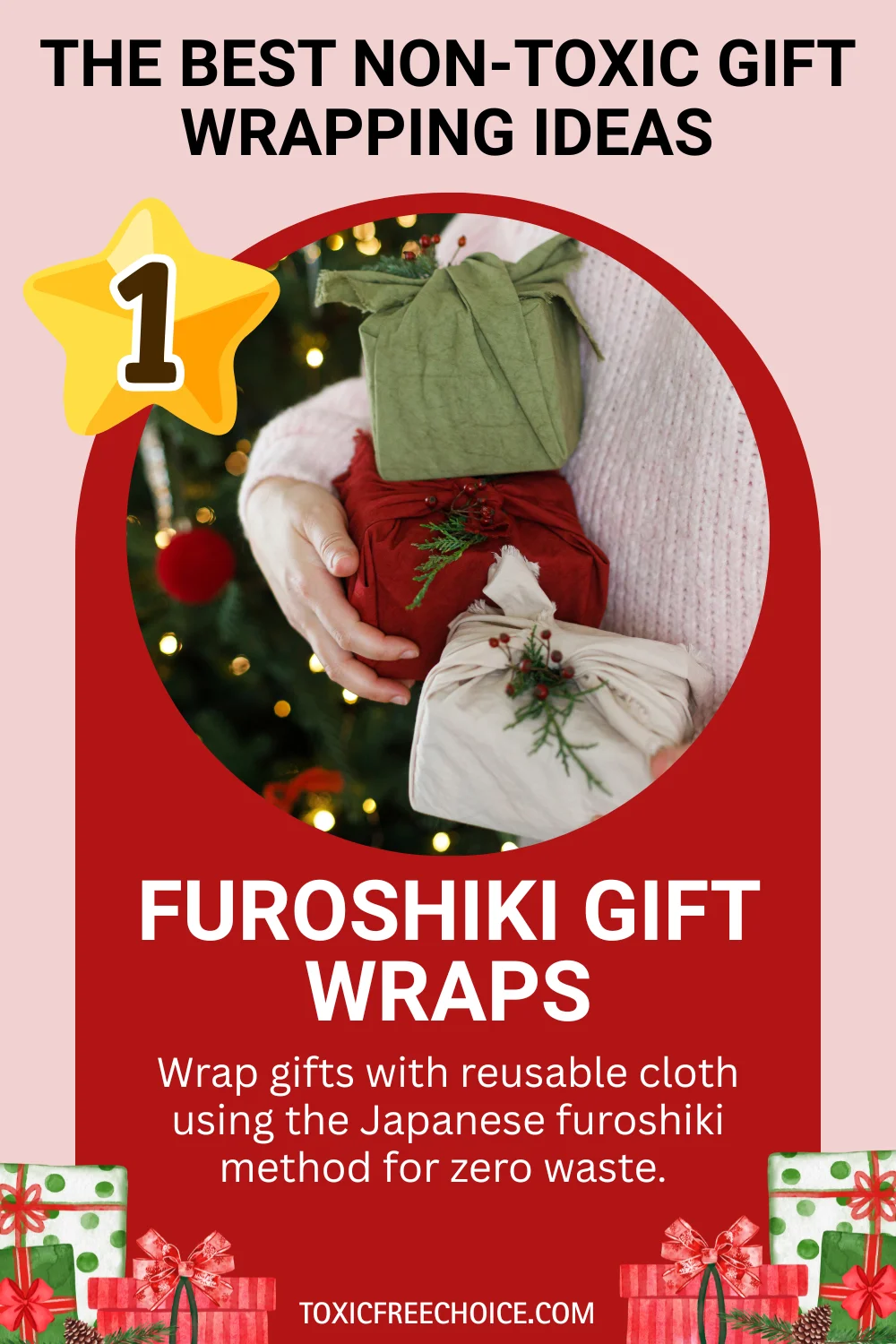
A Japanese wrapping technique that turns square cloths into reusable gift wraps.
Choose GOTS-certified organic cotton, hemp, or linen to avoid pesticides and toxic dyes.
Scarves, tea towels, or fabric scraps also work, as long as the base textile is safe.
Furoshiki adds cultural tradition, creates zero waste, and looks elegant under the tree.
2. Newspaper or Comic Pages
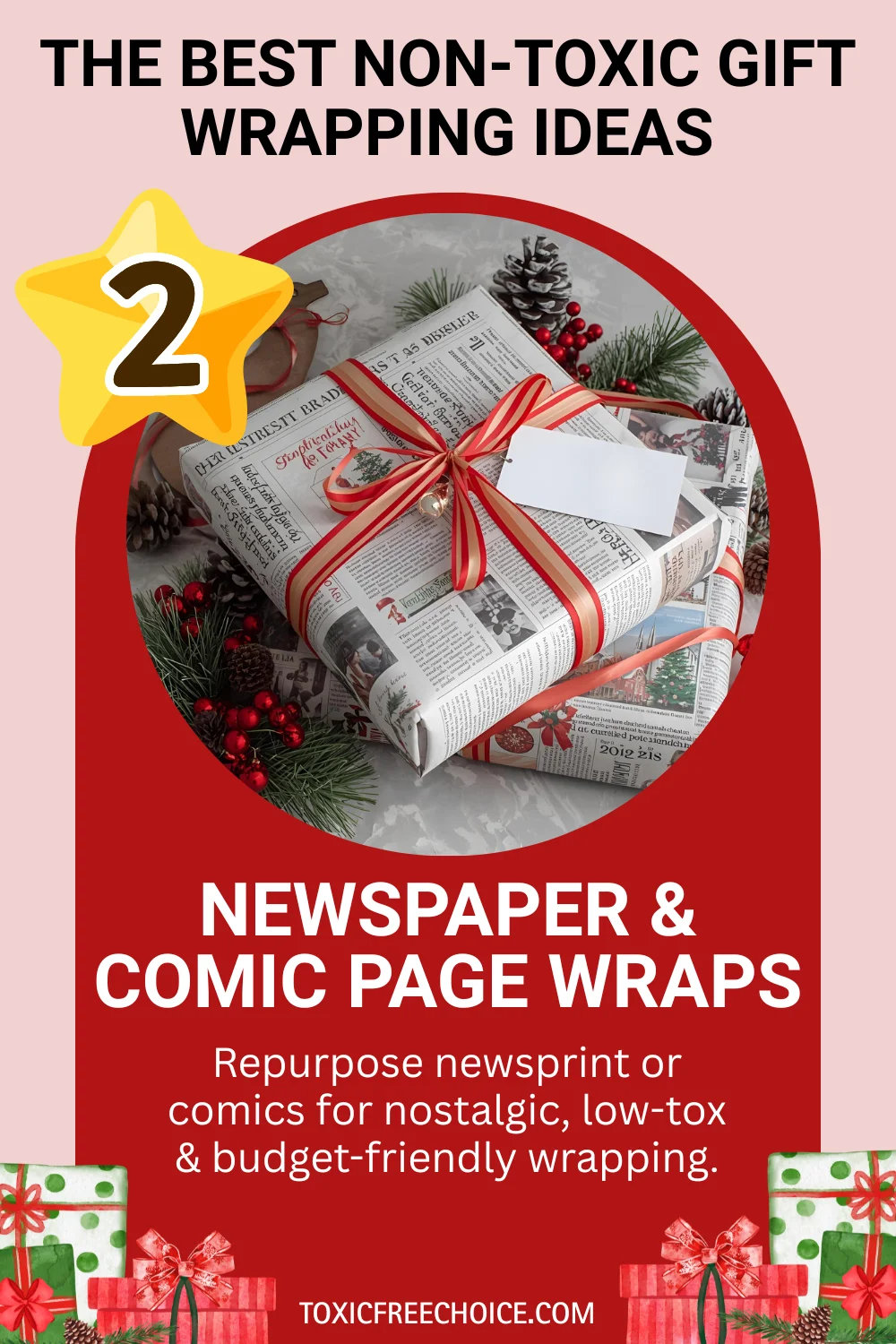
Uncoated newsprint or colorful comic pages make a nostalgic and budget-friendly wrapping choice.
They’re generally safer than glossy papers, which often contain petroleum-based inks.
Pair with natural twine, jute, or paper tape to keep it recyclable.
This option also gets kids involved in the wrapping process while cutting waste.
3. Wicker Baskets or Metal Tins
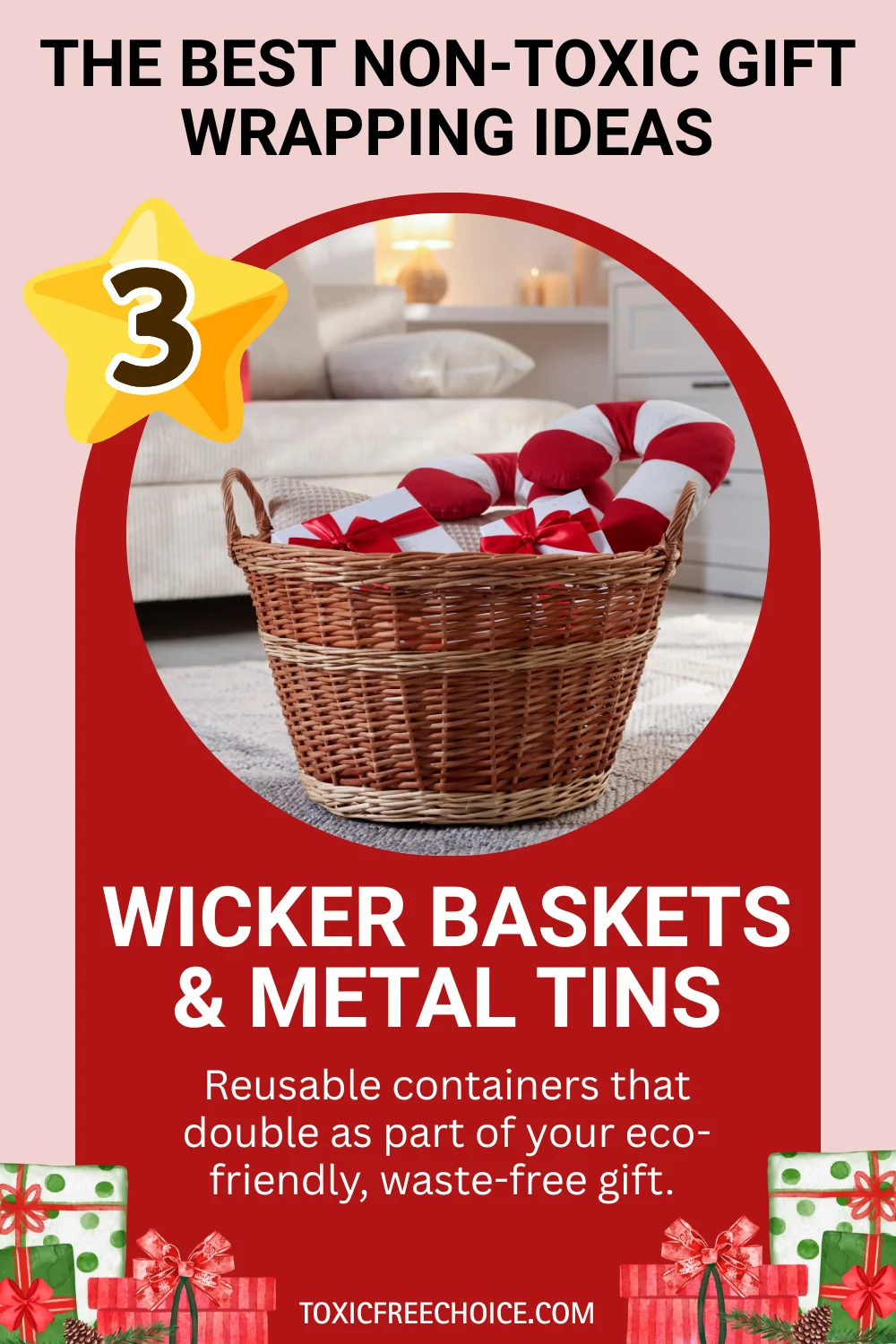
Think beyond paper by placing gifts inside reusable containers.
Wicker baskets and decorative tins double as part of the gift, avoiding adhesives and dyes altogether.
Recipients can repurpose them as storage or décor, giving these non-toxic packaging choices a second life long after the holidays.
4. Old Cardboard Boxes

Transform cereal boxes or Amazon packages into gift boxes by covering them with kraft paper or letting kids decorate with crayons and markers.
It’s an easy way to reuse what you already have while avoiding glossy coatings, metallic inks, and adhesives.
Plus, it makes wrapping a fun, creative project for the whole family.
5. Recycled Kraft Paper

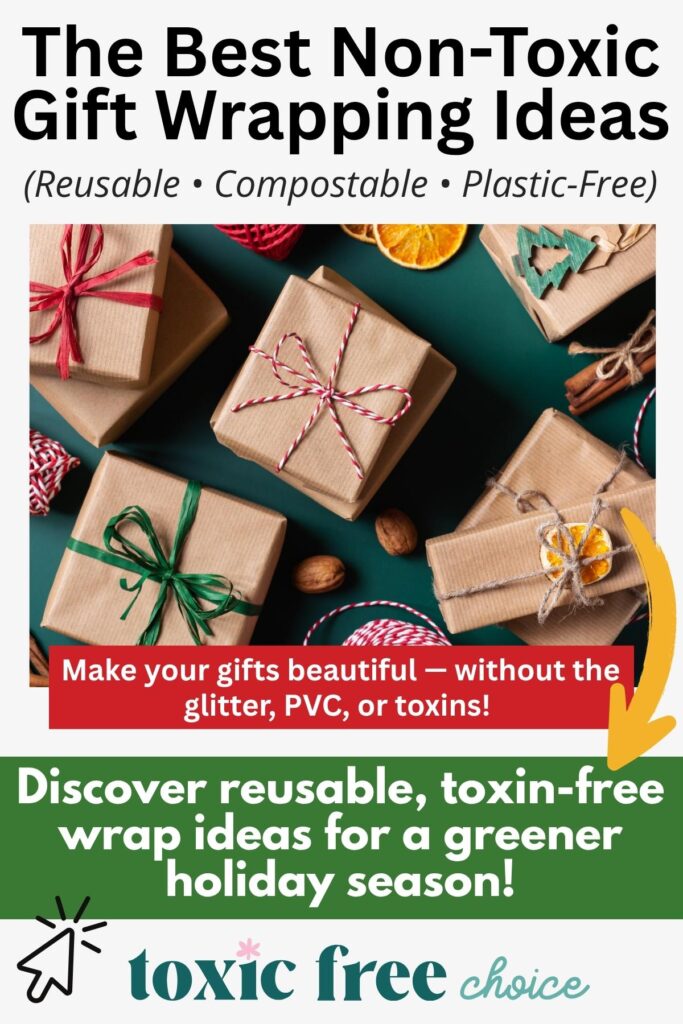
When you need traditional wrapping, choose plain recycled kraft paper.
Look for FSC-certified rolls that confirm responsibly managed sources. Avoid glossy coatings, dyes, and metallic accents.
Keep it low-tox by pairing with paper tape, jute twine, or cotton ribbon.
Kraft paper is simple, compostable, and recyclable, making it one of the safest wrapping paper swaps.
6. Upcycled Maps or Sheet Music
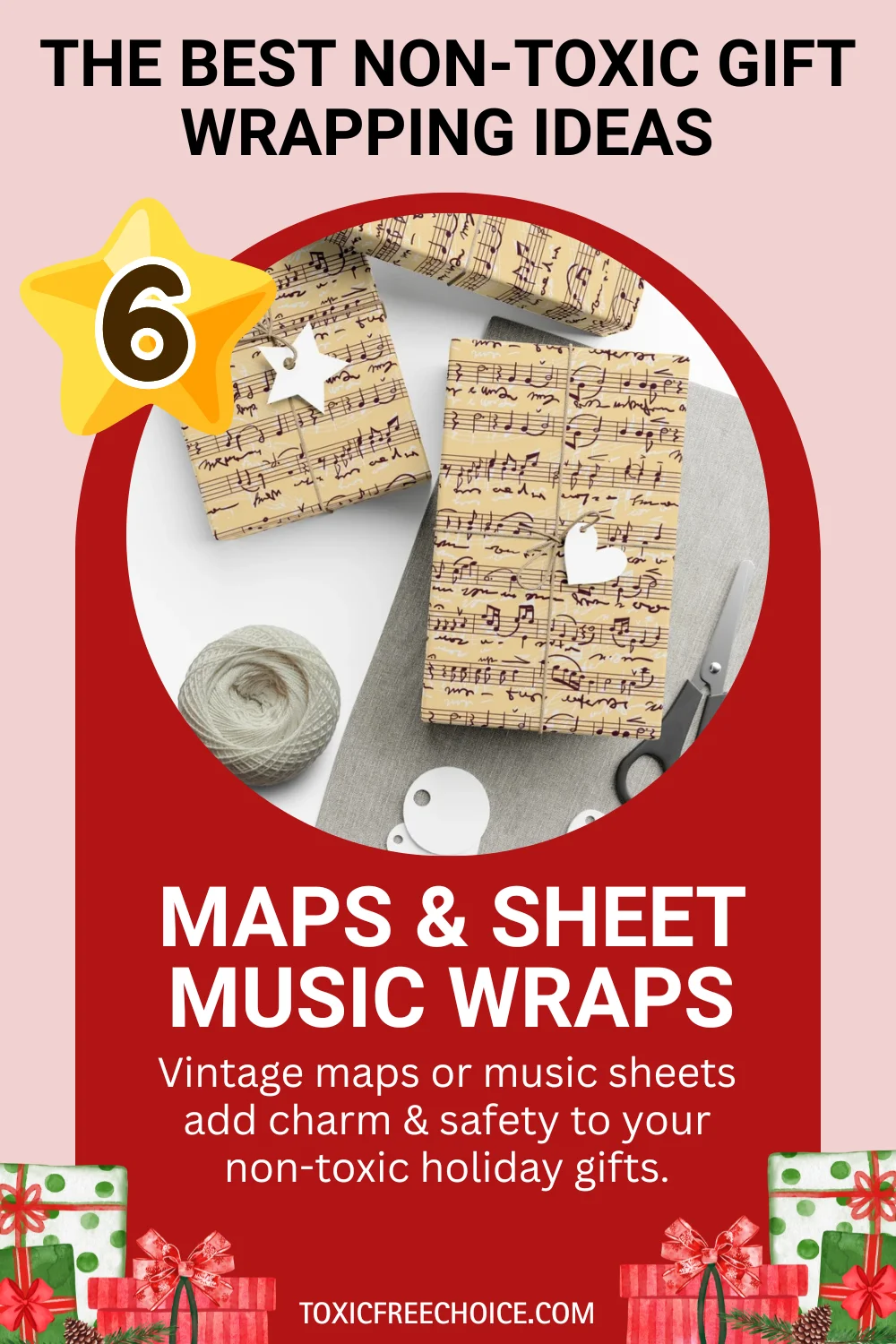
Old road maps, atlases, or sheet music make charming and unique wrapping paper alternatives.
They’re typically printed on matte, uncoated paper that’s safer than glossy or laminated options.
These materials add a personal, nostalgic touch—especially for travel lovers or music enthusiasts—and can be recycled or repurposed afterward for crafts or décor.
👉 Want even more ideas? Explore zero-waste gift wrapping inspiration over at Sustainably Kind Living.
How To Avoid Toxic Gift Wrap
Red Flag Brands To Approach With Caution
- Generic Amazon “Kraft” Sellers → Often claim recycled content but rarely provide certifications—many sources are from the same mills as conventional gift wrap.
- Nashville Wraps → Uses a proprietary “Green Way®” label, but documentation falls short compared to FSC or TÜV standards.
- Paper Mart → Sustainability language without supply chain transparency or certificate numbers.
- Hallmark → Some FSC-certified or “recyclable” products, but many still include plastic coatings. Only select lines meet meaningful standards.
Popular Holiday Packaging To Avoid
- Metallic or Foil Wraps → Pigmented with heavy metals (lead, chromium). Not recyclable in most systems.
- Glossy Laminated Papers → Shiny finish signals BPA, PFAS, or plastic coatings; contaminates recycling.
- Conventional Glitter Products → PVC or PET microplastics that shed easily. Research shows glitter makes up ~24% of sewage sludge microplastics.
- Solvent-Based Adhesives → Glues with toluene or hexane off-gas harmful fumes, increasing respiratory and neurological risks.
- Unverified “Eco” Sellers → Many online rebrands make claims without certification numbers or MSDS sheets.
Don’t Trust These Claims Without Verification
- “Eco-friendly” → Too vague without third-party certification.
- “BPA-free” → Doesn’t rule out PVC, phthalates, or PFAS.
- “Biodegradable glitter” → Unless TÜV-certified, it still breaks down into microplastics.
- “Natural” → Unregulated term; may still include synthetics.
FAQs: Non-Toxic Gift Wrap & Packaging
Not all metallic finishes contain heavy metals, but most foils use pigments with aluminum, chromium, or lead. Unless a product has verified safety testing or certifications, it’s best to assume metallic wrapping paper carries a higher risk.
Not always. Many gift bags are coated in PVC laminates or made with solvent-based adhesives. Safer options include FSC-certified paper bags with water-based glues, but you’ll need documented verification.
Older wrapping paper often contains lead pigments or PVC coatings. If you use it, add a safe inner layer like unbleached tissue paper to reduce direct contact, especially for kids.
Every real FSC product lists a license or certificate code. Enter it at fsc.org to confirm authenticity and check the scope of certification.
No. Recycled content can contain BPA from thermal receipts or inks from mixed sources. Look for FSC or RCS-certified recycled paper and brands that openly disclose their supply chain, like Wrappily.
Safer Wrapping, Same Holiday Magic
So while that glittery holiday gift wrap may look enticing, be sure to check the label twice to make sure it’s not hiding any not-so-merry surprises.
Instead, think of wrapping as part of the gift. Organic cotton bags and reusable cardboard boxes are just as festive, and they often feel more thoughtful. Plus, the recipient can use them again and again, cutting down on holiday waste.
Because in the end, what makes the holidays special isn’t the paper or the bows — it’s the thought inside the box. Choosing non-toxic gift wrap just makes it safer to enjoy.
More Non-Toxic Holiday Resources
Looking to make the rest of your holiday season safer, too? These guides go deeper into avoiding hidden toxins in the products your family uses most:
- Non-Toxic Christmas Gifts For Kids → Safe, thoughtful picks for little ones.
- Non-Toxic Christmas Décor Ideas → Safer swaps for wreaths, garlands, and table settings.
- Non-Toxic Christmas Candles → Clean-burning candles without paraffin or synthetic fragrance.
- Non-Toxic Christmas Gifts For Everyone → Health-conscious gift ideas for all ages.
📌 Save This Research-Backed Guide
Holiday wrapping shouldn’t expose your family to BPA, PVC, or PFAS. Pin this guide now to keep evidence-based tips on non-toxic gift wrap handy — so you can wrap presents with confidence, not chemicals. 🎁⚠️📑
References:
- Abrusci, V., Pineda, R., Polo, A., & Río, M. de. (1979). Identification of toxic compounds in gift wrapping and tissue papers. Bulletin of Environmental Contamination and Toxicology, 22(6), 769–773. https://doi.org/10.1007/BF02026929
- International Agency for Research on Cancer. (2024). List of classifications by cancer sites with sufficient or limited evidence in humans, Volumes 1–136. https://monographs.iarc.who.int/agents-classified-by-the-iarc/
- Lithner, D., Larsson, Å., & Dave, G. (2011). Environmental and health hazard ranking and assessment of plastic polymers based on chemical composition. Science of the Total Environment, 409(18), 3309–3324. https://doi.org/10.1016/j.scitotenv.2011.04.038
- Marques, G., Recchia, D. R., & Becaro, A. A. (2023). Environmental impacts of decorative paper production: A review of sustainability and waste management. Heliyon, 9(11), e20725. https://doi.org/10.1016/j.heliyon.2023.e20725
- National Center for Biotechnology Information. (2023). Bisphenol A toxicity. In StatPearls. StatPearls Publishing. https://www.ncbi.nlm.nih.gov/books/NBK597627/
- Peterson, B. (1978, November 28). Gift wrap is termed toxic. The Washington Post. https://www.washingtonpost.com/archive/politics/1978/11/28/gift-wrap-termed-toxic/2f21e964-9de5-47da-8a0e-ac76be783ce7/
- Rogers, K. (2019, December 21). Analysis: How decorative glitter contributes to microplastic pollution. PBS NewsHour. https://www.pbs.org/newshour/science/analysis-how-decorative-glitter-contributes-to-microplastic-pollution
- The Providential. (2023, November 20). Wrapping paper’s negative environmental effect. The Providential Online. https://theprovidentialonline.com/features/2023/11/20/wrapping-papers-negative-environmental-effect/
- U.S. Environmental Protection Agency. (2010). Bisphenol A action plan: Chapter 5—Environmental fate and transport (EPA Report No. 743-R-10-001). https://www.epa.gov/sites/default/files/2015-09/documents/bpa_ch5.pdf
- Zero Waste Europe. (2021, June 22). PVC: The hidden costs of a plastic planet (Briefing Paper). https://zerowasteeurope.eu/wp-content/uploads/2021/08/2021-06-22-PVC-briefing-FINAL.pdf