This post may contain affiliate links. By browsing this website, you agree to our disclaimer, privacy policy, and terms of use.
This guide to non-toxic baking accessories is here to help you trade harmful coatings and plastic tools for safer, better-made essentials you’ll actually enjoy using.
Because what you bake with matters just as much as what you bake and your kitchen deserves tools that are as safe and enduring as the recipes you love.
The smell of cinnamon and vanilla wafting through the kitchen, little hands covered in flour, and the promise of warm cookies cooling on the rack—baking with my family is one of my favorite ways to spend a weekend.
I’ve spent years making sure all my pots and pans were non-toxic cookware. I invested in a non-toxic air fryer and scrutinized every label on our kitchen utensils.
But recently, while prepping a batch of blueberry muffins, I pulled out my old tin and noticed the words “non-stick coating” stamped across the bottom.
And it hit me. I’d been so focused on the obvious swaps that I completely overlooked some of the most-used tools in my kitchen.
Because here’s the thing, even when we’re using organic flour and grass-fed butter, we might be unknowingly adding a dangerous ingredient to our baked goods through our baking tools themselves.
The CDC reports that 97% of Americans have PFAS (known as “forever chemicals”) in their bodies. What’s even more concerning? These toxins don’t break down, they just keep building up.
And exposure can happen through something as simple as a muffin tin.
Even products labeled “PFOA-free” or “eco-friendly” aren’t always safe. Saying a product is “PFOA-free” is like saying a cigarette is arsenic-free. Technically true, but not exactly comforting.
After giving my baking pantry a complete overhaul (and testing plenty of tools along the way), I’ve put together this list of safer swaps and trusted brands that don’t just claim to be non-toxic, they actually are.
This guide will help you decode misleading labels, understand which materials to trust, and choose baking tools that are genuinely safe for your family.
Because you deserve to bake with confidence, knowing the only thing you’re adding to your cookies is love (and maybe some chocolate chips).
The PFAS Crisis in Our Kitchens
What Are PFAS & Why Should Bakers Care?
PFAS, or per- and polyfluoroalkyl substances, are called “forever chemicals” for a scary reason – they never break down. Not in our bodies, not in the environment, not ever.
These synthetic chemicals were created to make things non-stick and stain-resistant, which sounds great until you realize what that really means.
Every time you use a non-stick muffin tin or coated parchment paper, tiny amounts of PFAS can migrate into your food.
And because these chemicals bioaccumulate, they build up in your body over time like unwanted house guests that refuse to leave. The health impacts read like a nightmare checklist.
PFAS exposure has been linked to:
- Thyroid Disease
- Decreased Fertility
- High Cholesterol
- Immune System Damage
- Hormonal Disruption (especially concerning for pregnancy and little ones)
What really worries me is that every exposure adds up and baking involves high heat, which accelerates the release of these chemicals.
That batch of cookies at 375°F? That’s the prime temperature for PFAS to start their migration from your baking sheet to your snickerdoodles.
PFAS-Free ≠ Safe: What They Aren’t Tell You
Here’s where my blood really starts to boil. DuPont, the company that gave us Teflon, knew their product was harmful as far back as the 1950s.
The EWG uncovered studies showing DuPont was aware that Teflon released toxic fumes even at low temperatures. They knew it could cause acute illness. And they kept selling it anyway.
When PFOA (one type of PFAS) was finally banned in 2013 after decades of harm, you’d think the industry would have learned its lesson.
Instead, they simply replaced it with GenX, a chemical that the EPA found to be nearly as toxic as what it replaced. It’s like swapping out one poison for its slightly different cousin.
Many brands use misleading terms like:
- “PFOA-Free”: While still using other PFAS chemicals like GenX
- “Green” or “Eco-Friendly” Coatings: That often still leach toxins
- “New & improved”: Meaning they’ve switched to a less-regulated chemical, not a safer one
It’s a toxic shell game, and we’re the ones who lose.
Cooking In Heat Makes PFAS More Dangerous
Baking is particularly problematic when it comes to PFAS exposure.
Most of our favorite recipes call for temperatures between 350–450°F, which is exactly where these chemicals love to break free from their coatings and migrate into our food.
Why baking tools are a hidden PFAS risk:
- Baking often happens at high heat (350–450°F)
- Heat speeds up chemical leaching from non-stick coatings
- Scratched or aging pans release more toxins over time
- Frequent use (especially during holidays) increases cumulative exposure
Each time we pop something in the oven using PFAS-coated tools, we’re adding to our body’s forever chemical burden.
Hidden PFAS Traps in Common Baking Tools
This is where things get sneaky. PFAS isn’t just hiding in the obvious places like non-stick pans, it’s hiding in kitchen tools you’d never expect.
Take parchment paper, for years, I bought the “natural” brown kind, thinking it was the healthier option. But many brands coat their parchment with PFAS to achieve that non-stick finish.
So every time I lined a sheet pan, I was essentially adding a layer of forever chemicals between my food and the pan.
Black plastic spatulas are another culprit. They’re everywhere and they often contain both PFAS and flame retardants. It’s a double dose of toxicity in something from something we use daily.
Even silicone, long thought of as a “safe” material, can be misleading. Unless it’s LFGB-certified (a stricter European food safety standard), it often contains unknown fillers that may leach chemicals when heated.
That cheerful blue spatula? It could be hiding not-so-cheerful compounds.
Other sneaky offenders include:
- Ceramic-coated pans. “Ceramic” usually means there’s a mystery coating layered over metal. What’s in that coating? Most companies won’t say.
- Rolling pins with non-stick finishes. Yes, even rolling pins. That slick surface that glides across dough could be laced with PFAS.
- “Easy-release” or “stain-resistant” tools. These convenience features are usually coded for chemical coatings.
Bottom Line: If it claims to be non-stick, stain-proof, or easy-release, your PFAS radar should go off.
15 PFAS-Containing Baking Tools To Replace
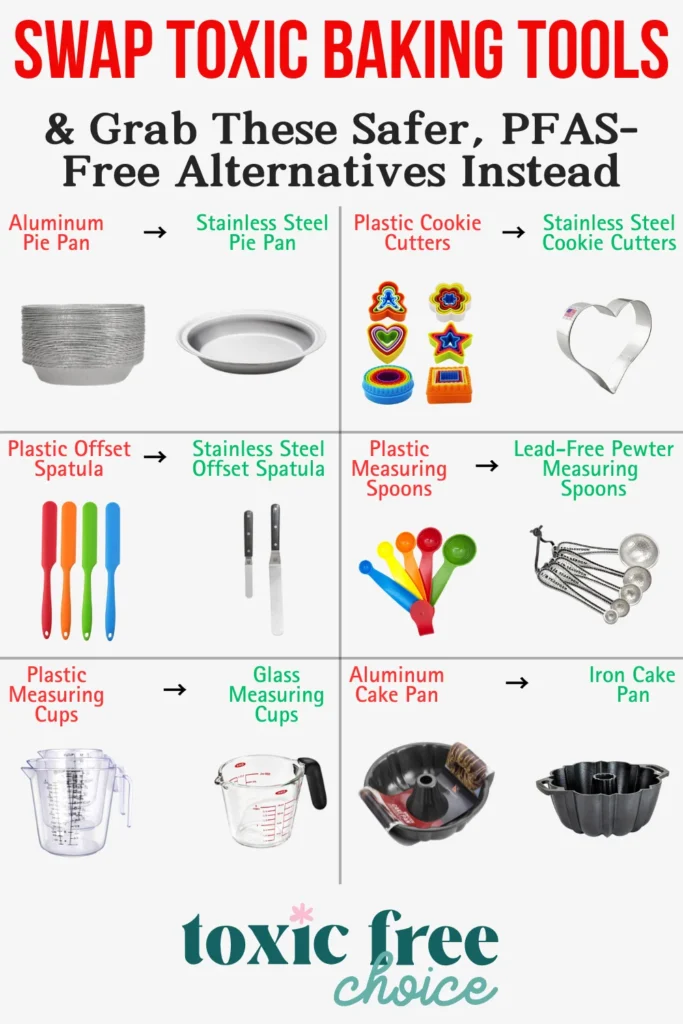
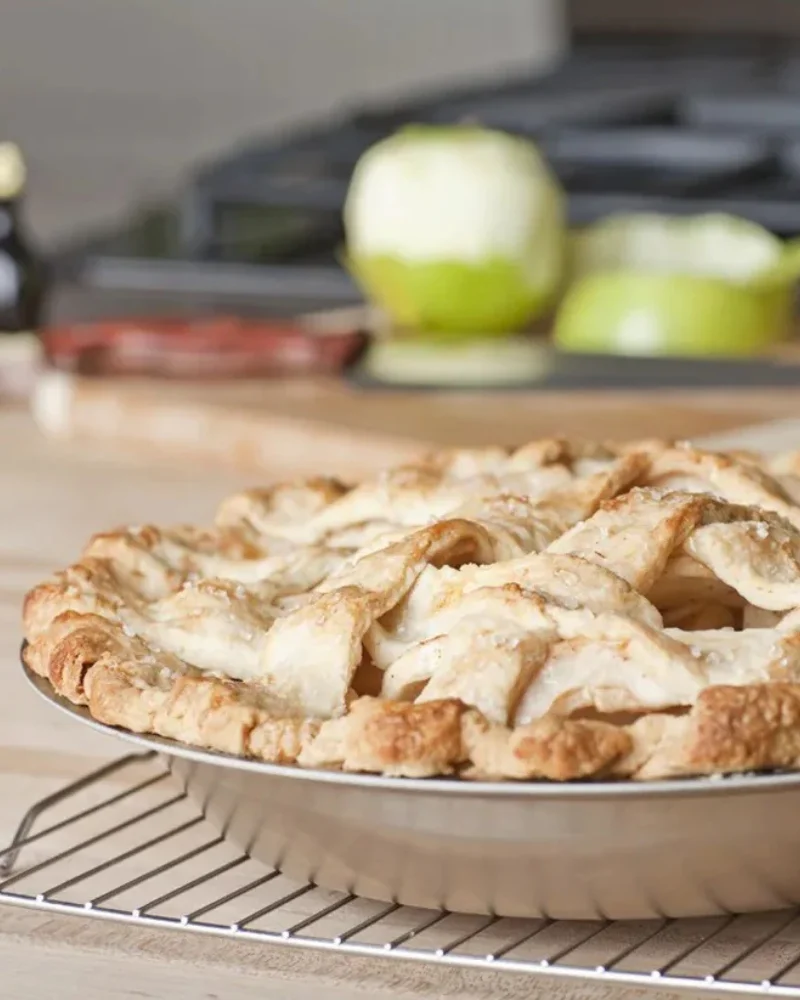
1. Aluminum/Coated Pie Pan → Stainless Steel Pie Pan
Use discount code TFC15 to save 15%!
This gleaming Stainless Steel Pie Pan delivers golden crusts without any chemical coatings.
Crafted from 5-ply clad metal made from layers of surgical-grade stainless steel around an aluminum core.
It heats evenly and is completely free of PFAS, PTFE, and PFOA.
The polished interior is dry-sanded, not chemically coated, and naturally releases food with just a touch of butter or oil.
Made in Wisconsin and backed by a lifetime warranty, it’s a true “buy it for life” option with timeless durability.
Price
$115
Materials
T-304 surgical grade stainless steel
Location/Shipping
United States, ships to Canada, the United Kingdom & Australia
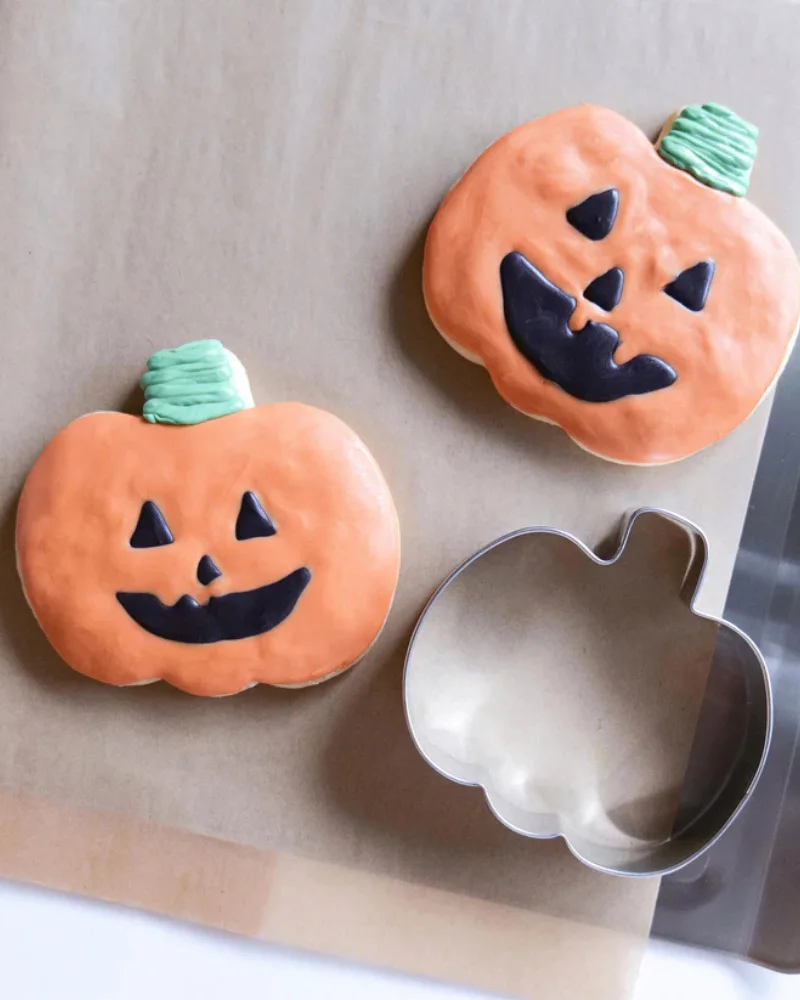
2. Plastic/Aluminum Cookie Cutters → Stainless Steel Cookie Cutters
Use discount code TFC15 to save 15%!
These Stainless Steel Cookie Cutters are proof that safer can also mean sturdier, and way more fun.
Made in the USA from food-grade steel (no coatings or plastic in sight), they’re the kind of heirloom tools you’ll reach for every holiday season.
Each one has smooth edges for easy cutting and a rolled top for a comfy grip, even for little hands.
Whether you’re making heart-shaped shortbread for Valentine’s Day or gingerbread people in December, these cutters hold their shape and slice through dough cleanly. No bending or rusting over time.
They’re available in tons of cute shapes (stars, daisies, shamrocks—you name it), and since there’s no mystery metal or flaky paint, you don’t have to worry about bits getting into your cookie dough.
Price
$2.99
Materials
Made in America stainless steel
Location/Shipping
United States, ships to Canada, the United Kingdom & Australia
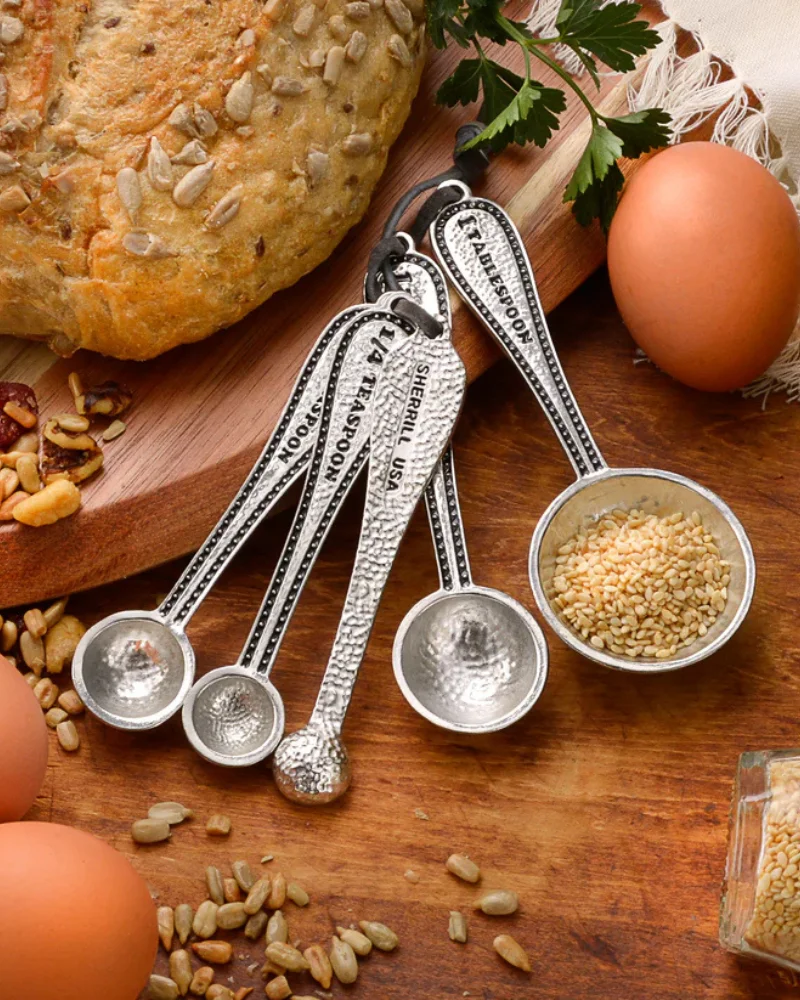
3. Plastic Measuring Spoons → Lead-Free Pewter Measuring Spoons
Use discount code TFC15 to save 15%!
These aren’t your average measuring spoons.
The Measuring Spoons from 360 Cookware are heirloom-quality tools made in the USA from a pewter-based, lead-free metal alloy.
The set of five features deeply engraved measurements that won’t fade or wear over time.
Crafted by Liberty Tabletop, each spoon has a sturdy, weighty feel and won’t bend, warp, or leach harmful materials into your ingredients.
Price
$79.95 (Set of 5)
Materials
Lead-free pewter
Location/Shipping
United States, ships to Canada, the United Kingdom & Australia
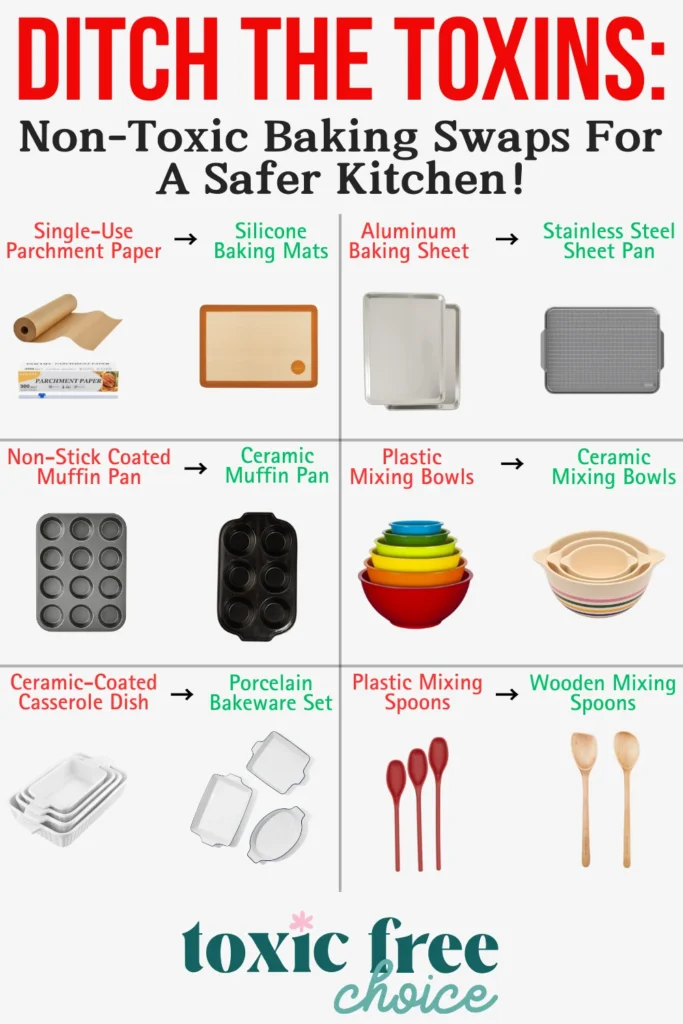
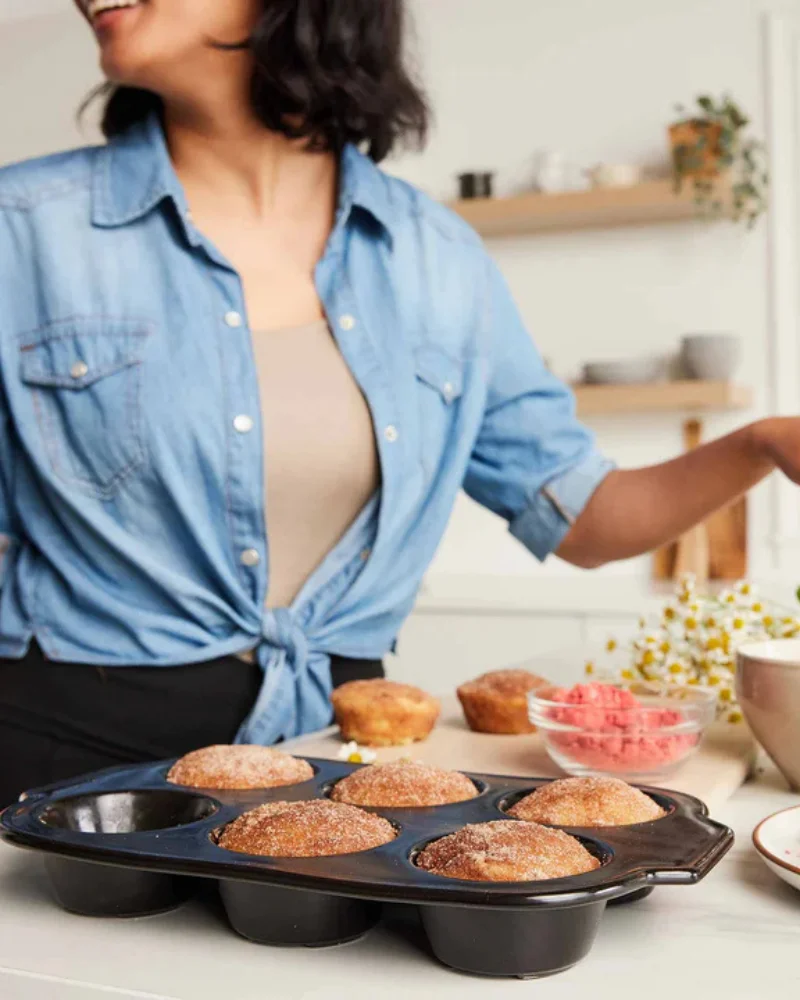
4. Non-Stick Coated Muffin Pan → Ceramic Muffin Pan
Use discount code TFC to save 15%!
Ditch flaky coatings with Xtrema Cookware’s solid Ceramic Muffin Pan made without any metal or chemical non-stick.
It’s 100% pure ceramic, meaning no PFAS, PTFE, lead, cadmium, or other heavy metals.
Durable and chip-resistant, this pan bakes evenly and safely with no risk of leaching.
Unlike many muffin pans that degrade over time, this one is built to last and is safe for the oven, dishwasher, microwave, and freezer.
It’s also backed by a 10-year warranty and handcrafted in a zero-metal process.
Plus, 1% of every purchase goes to a nonprofit of your choice.
Price
$85
Materials
100% pure ceramic
Location/Shipping
United States, ships to the Canada, the United Kingdom, Switzerland & Australia
5. Plastic Mixing Bowls → Ceramic Mixing Bowls
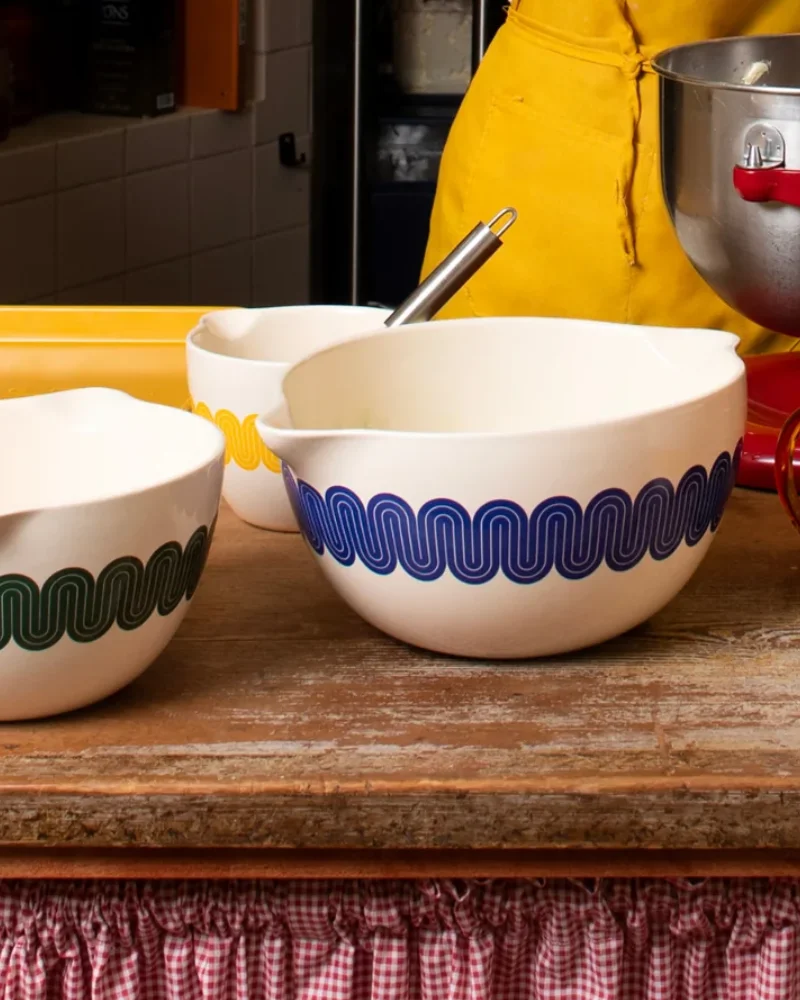
These retro-inspired bowls aren’t just adorable, they’re practical, durable, and PFAS-free.
The “Stir Crazy” set from Great Jones includes three stackable stoneware bowls in cheerful colors like broccoli green and mustard yellow.
Made from durable glazed ceramic, they’re microwave-, freezer-, and dishwasher-safe.
The smooth finish makes for easy cleanup, and the weighty base keeps them stable while mixing.
Best of all, there are no chemical coatings, just food-safe ceramic that won’t leach into your batter.
When you’re done baking, they double as serving bowls and stack neatly for storage.
They’re a refreshing upgrade from plastic bowls and bring charm to every weekend bake.
Price
$110
Materials
Ceramic
location/shipping
United States
6. Ceramic-Coated Casserole Dish → Porcelain Bakeware Set
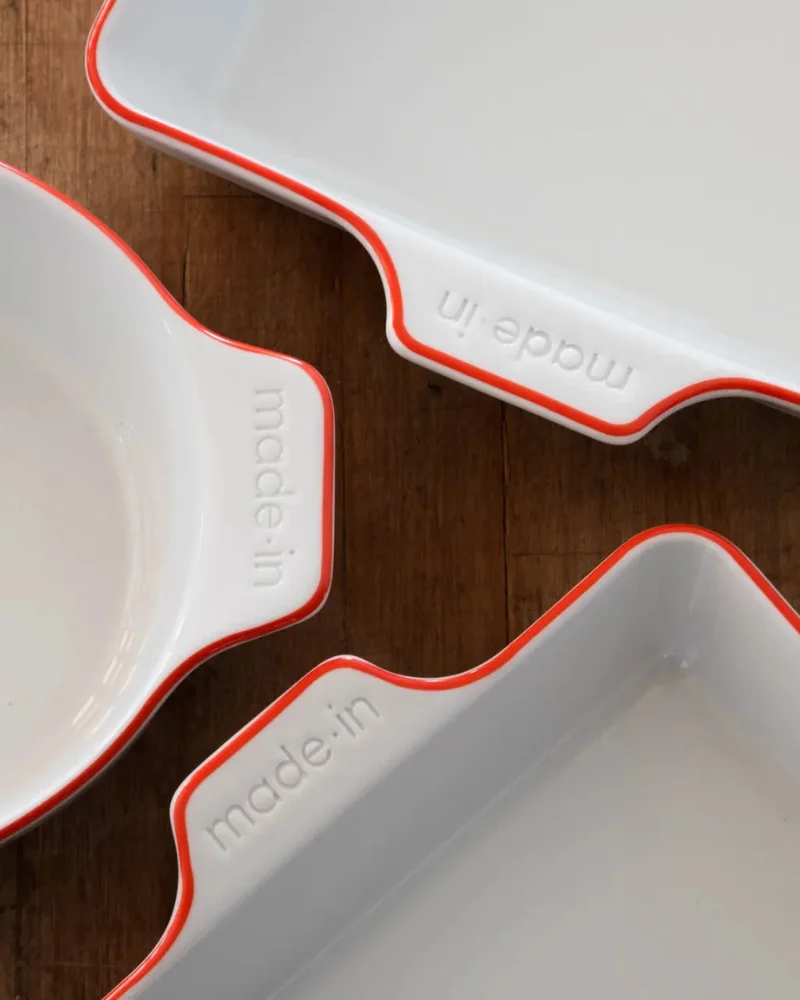
Crafted in France from proprietary burgundy clay and finished with a lead-free glaze.
Made In Cookware’s Porcelain Bakeware Set is pure, non-toxic, and built to perform.
It’s naturally non-stick, oven-safe up to 650°F, and resistant to stains and odors.
This heritage-quality line includes pie dishes, casseroles, gratins, and the unique “Baking Slab” for slab pies and focaccia.
It goes from freezer to oven and straight to the table with elegance with zero coatings or heavy metals.
Price
$247 (Set of 3)
Materials
French porcelain (burgundy clay)
location/shipping
United States, ships to Albania
7. Plastic Measuring Cups → Glass Measuring Cup
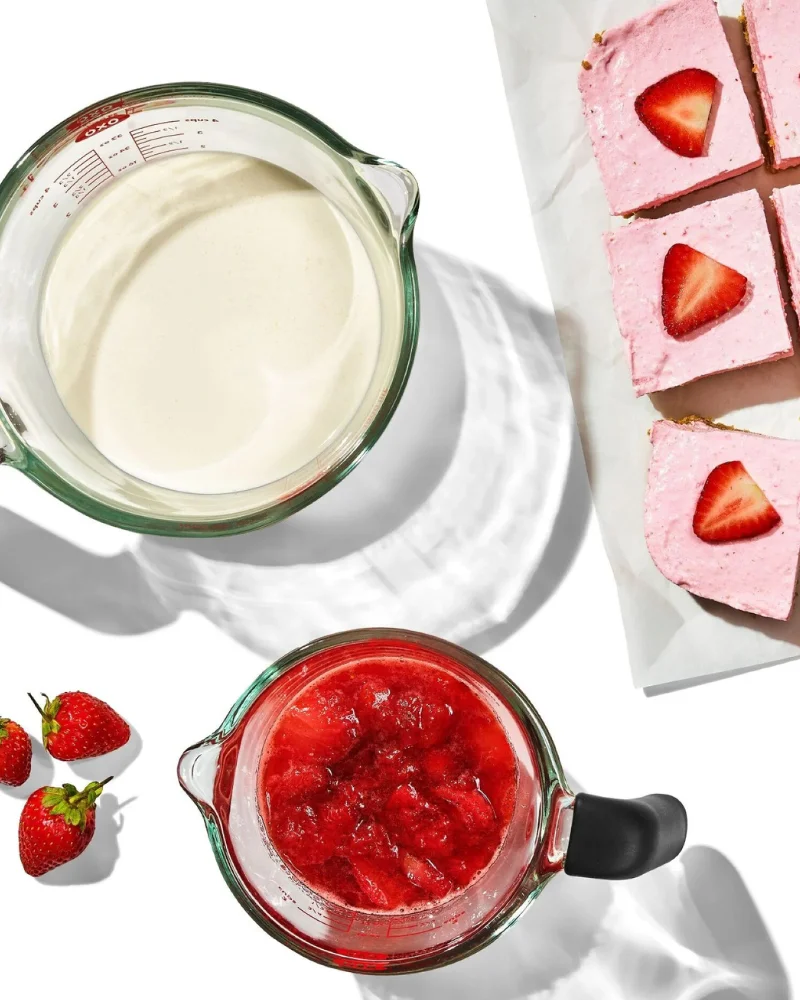
This one’s a kitchen staple for a reason.
OXO’s beloved 2-Cup Glass Measuring Cup has all the non-toxic perks and thoughtful design touches that make it feel extra satisfying to use.
It’s made from borosilicate glass, which means it won’t crack when you go from the freezer to the microwave or pour in hot milk for cocoa.
The bold measurement lines are angled so you can read them from above (no squinting or crouching!), and the handle is soft, grippy, and made for real-life messes.
Because it’s glass it’s stain-resistant, dishwasher-safe, and won’t absorb odors, either.
Price
$15.99
Materials
Borosilicate glass
location/shipping
United States
8. Aluminum Baking Sheet → Stainless Steel Half Sheet Pan
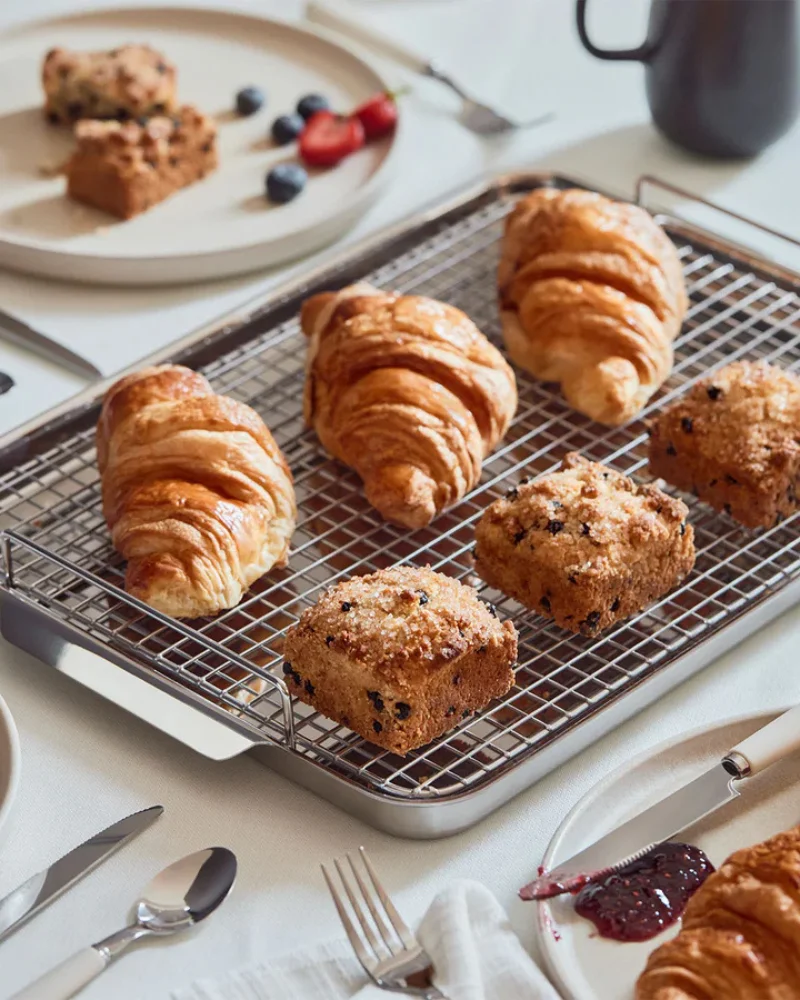
Kana Lifestyle’s tri-ply Stainless Steel Sheet Pan is made for serious baking.
Its aluminum core ensures even browning for cookies, roasted vegetables, and sheet cakes, while the uncoated stainless surface stays smooth and warp-resistant even at high temperatures.
It’s oven-safe up to 1000°F and completely PFAS-free, with no coatings to scratch or degrade.
The standard sizing fits pre-cut parchment (Kana makes its own compostable version), and the handles make it easy to lift out of hot ovens.
Kana also earns points for sustainability, using recycled metals, offering carbon-neutral shipping, and producing their own toxin-free parchment paper.
Price
$95 (Without Rack) | $115 (With Rack)
Materials
Tri-ply clad 304 stainless steel with aluminum core
location/shipping
Canada, ships to the United States & the United Kingdom
9. Plastic Mixing Spoons → Wooden Mixing Spoons
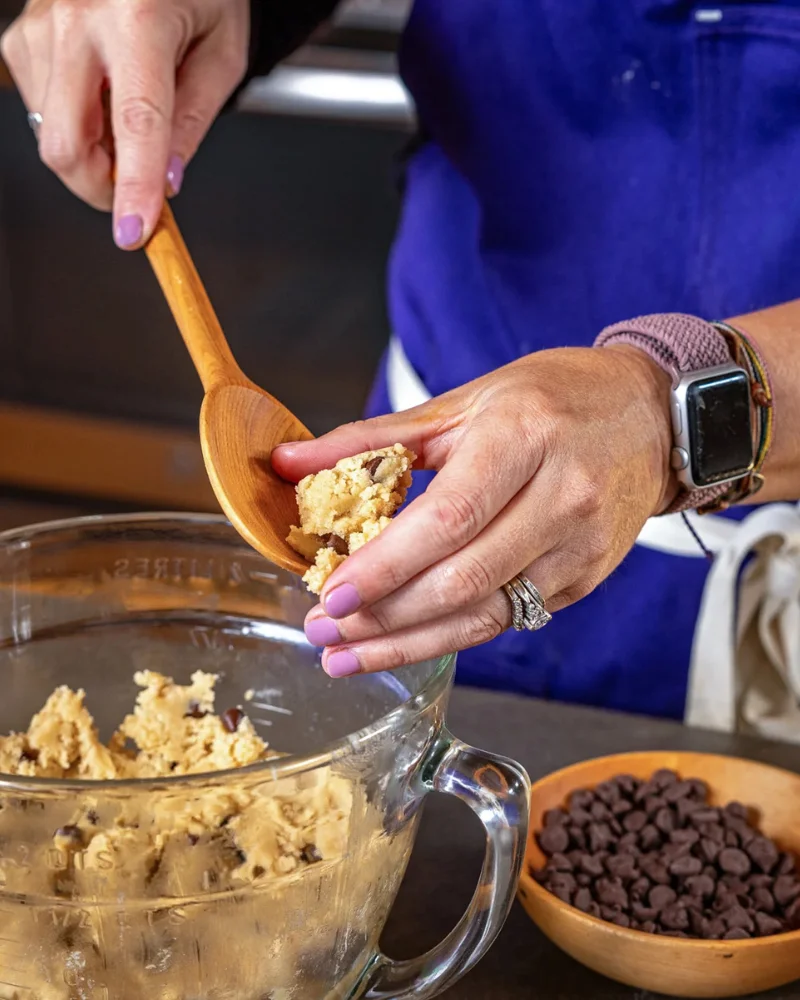
Sometimes the best baking tool is the simplest.
Earlywood’s handcrafted Wooden Spoons are carved from ultra-dense hardwoods like jatoba, maple, and bloodwood.
They are durable enough to mix heavy batters and gentle enough for nonstick bakeware.
They’re finished with food-grade oil (no varnish, glue, or synthetic coatings), and they never leach microplastics or melt on hot pans.
These spoons feel warm and smooth in hand, making them a joy to use for everything from cookie dough to cake batter.
Earlywood crafts each spoon sustainably in Montana, even turning leftover sawdust into fuel.
Their designs are streamlined, beautiful, and built for long-term everyday baking.
Price
From $39+
Materials
Solid hardwood (ethically sourced) including maple & jatoba, finished with food-safe oil
location/shipping
United States, ships to Canada, Sweden & Belgium
10. Plastic/Non-Stick Offset Spatula → Stainless Steel Offset Spatula Set
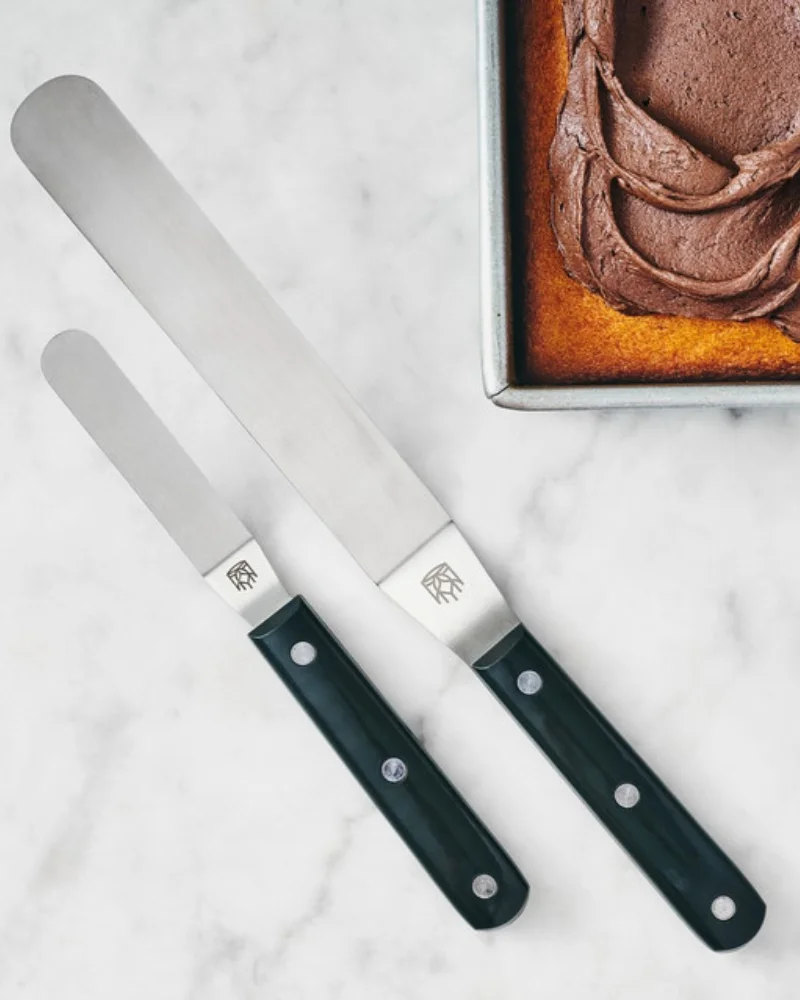
Perfect frosting starts with the right tools, and these Offset Spatulas make decorating easy and precise.
The set includes two sizes (4” and 8”) with flexible Japanese stainless steel blades and comfortable, PFAS-free plastic handles.
The offset angle keeps your hands out of the way while spreading, smoothing, or lifting.
Whether you’re frosting a cake or smoothing batter into a pan, these spatulas offer pro-level control without introducing any toxic materials into your kitchen.
Price
$16.90 (Set of 2)
Materials
Japanese stainless steel blades, BPA- & PFAS-free plastic handles
location/shipping
United States
11. Non-Stick Aluminum Bundt Cake Pan → Iron Fluted Cake Pan
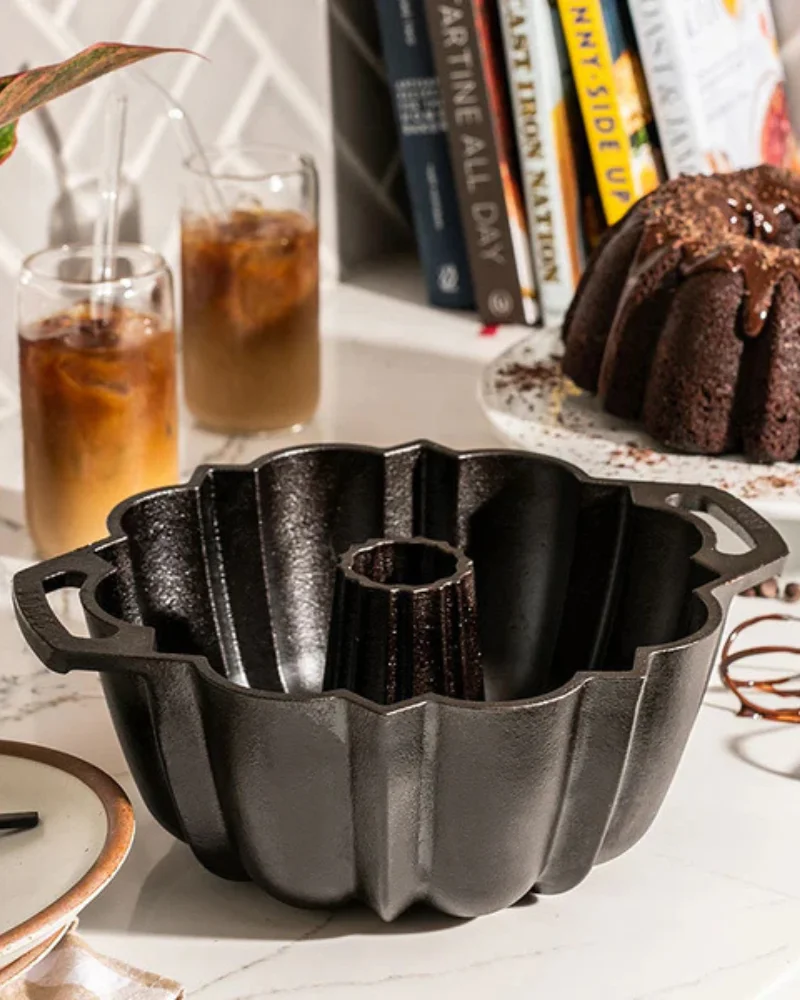
If you want evenly baked, golden cakes without worrying about toxic coatings, the Lodge Cast Iron’s Seasoned Cast Iron Fluted Cake Pan is a smart, durable pick.
It’s designed to deliver crisp fluted edges, even browning, and long-lasting performance.
This pan is made from solid cast iron and pre-seasoned with 100% natural vegetable oil, so the nonstick surface builds naturally over time.
It holds 12–15 cups of batter, making it ideal for classic Bundt recipes and celebration cakes.
The cast iron heats evenly and retains heat well, helping cakes rise consistently and develop that light crust on the outside.
Built-in handles make it easier to move in and out of the oven—especially helpful since it weighs nearly 10 pounds.
While it does require hand washing and occasional oiling, it’s worth the extra care.
Unlike aluminum pans with chemical coatings, this one is completely PFAS-free, won’t warp, and can last for generations with proper use.
Price
$79.95
Materials
Cast iron (seasoned with 100% natural vegetable oil)
location/shipping
United States
12. Plastic/Coated Whisk → Stainless Steel Whisk
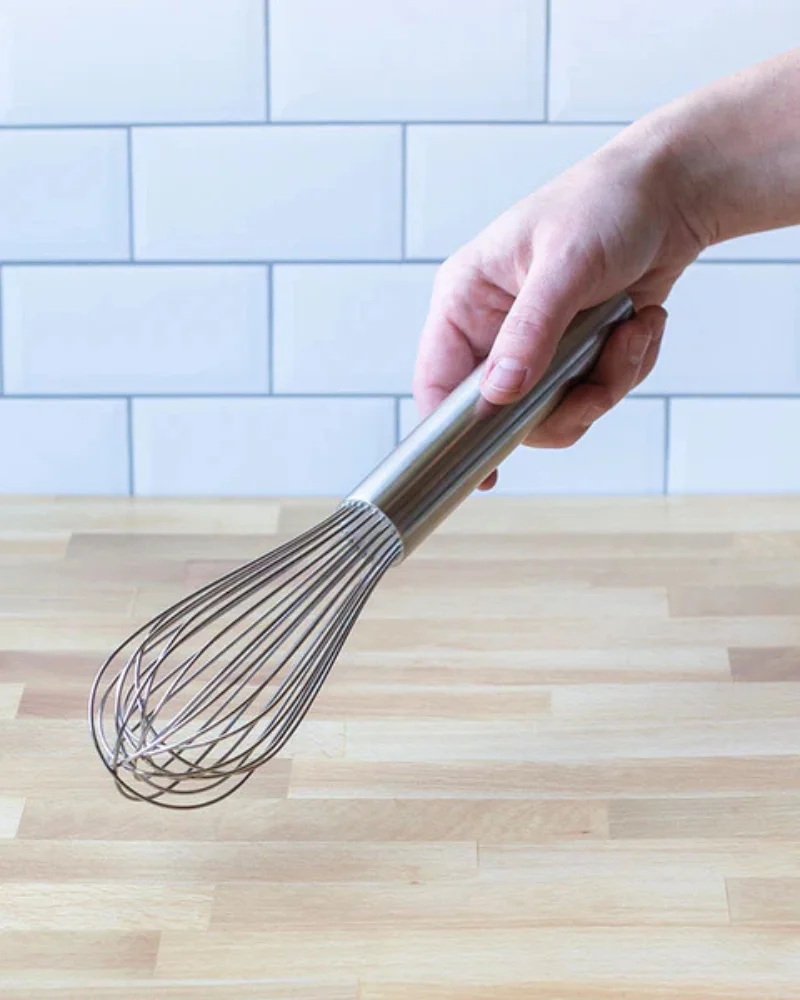
A better whisk makes a big difference, especially when it’s built to last and won’t shed microplastics into whatever you’re whipping up.
The Lodge Cast Iron’s 10-inch Stainless Steel Piano Whisk brings commercial-grade durability to your home kitchen with thoughtful design and toxin-free construction.
Crafted from 18/8 stainless steel, the flexible yet sturdy wires create excellent aeration for egg whites, whipped cream, and batters, while holding up to denser tasks like mixing mashed potatoes or pancake dough.
The ergonomic handle is fully sealed, so no batter can sneak in, making it easier to clean and more hygienic than typical open-ended whisks.
It’s NSF-certified for food safety, rust-resistant, and free of any coatings or plastic parts—so there’s no risk of leaching at high heat or over time.
Dishwasher-safe and thoughtfully weighted, it offers both professional-grade performance and peace of mind in a single too
Price
$9.95
Materials
18/8 stainless steel
location/shipping
United States
13. Plastic Rolling Pin → Hardwood Rolling Pin
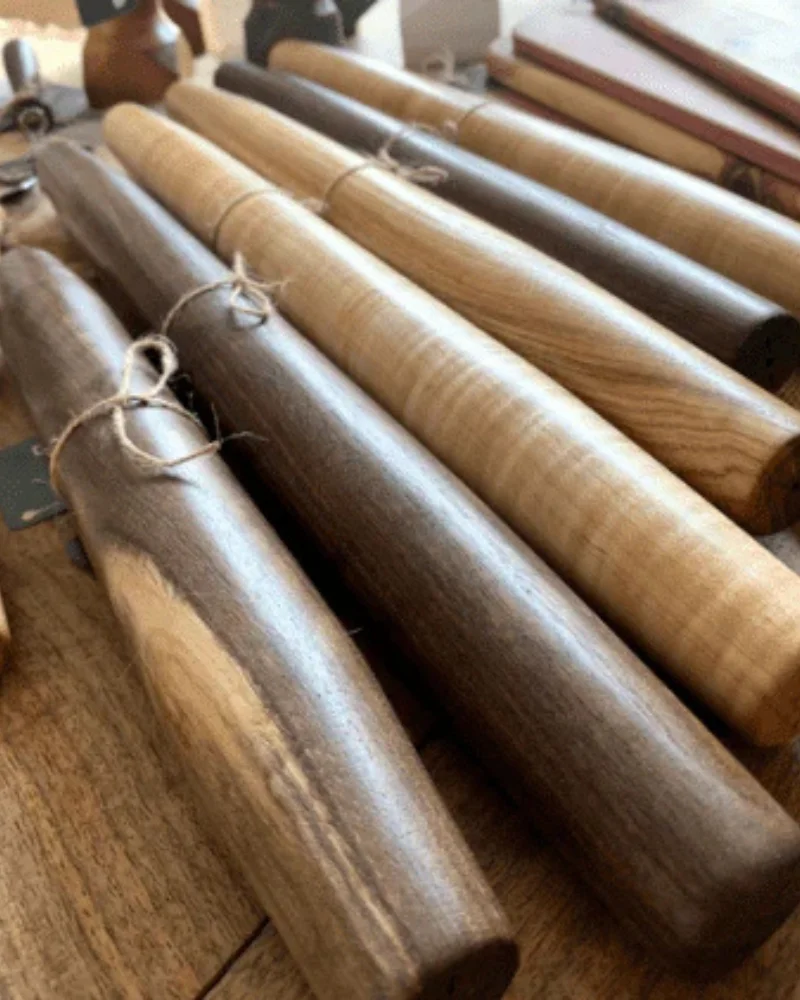
There’s something deeply satisfying about using a tool shaped by human hands.
This handcrafted Tapered French Rolling Pin from Clines Crafted Woodworking brings a level of artistry and simplicity that mass-produced plastic tools can’t replicate.
Each pin is turned from a single solid piece of sustainably sourced hardwood (maple, cherry, or walnut), then sanded smooth and finished with food-safe oil—no lacquers, varnishes, or PFAS coatings.
The tapered design gives you more control over pressure and movement, ideal for rolling out croissant dough, pie crust, or sugar cookies.
Because it’s made from untreated wood, it won’t leach chemicals into your dough, and it’s naturally non-stick when dusted with flour.
Price
From $28+
Materials
Cherry, walnut, oak, or solid maple wood
location/shipping
United States
14. Single-Use Parchment Paper → Silicone Baking Mats
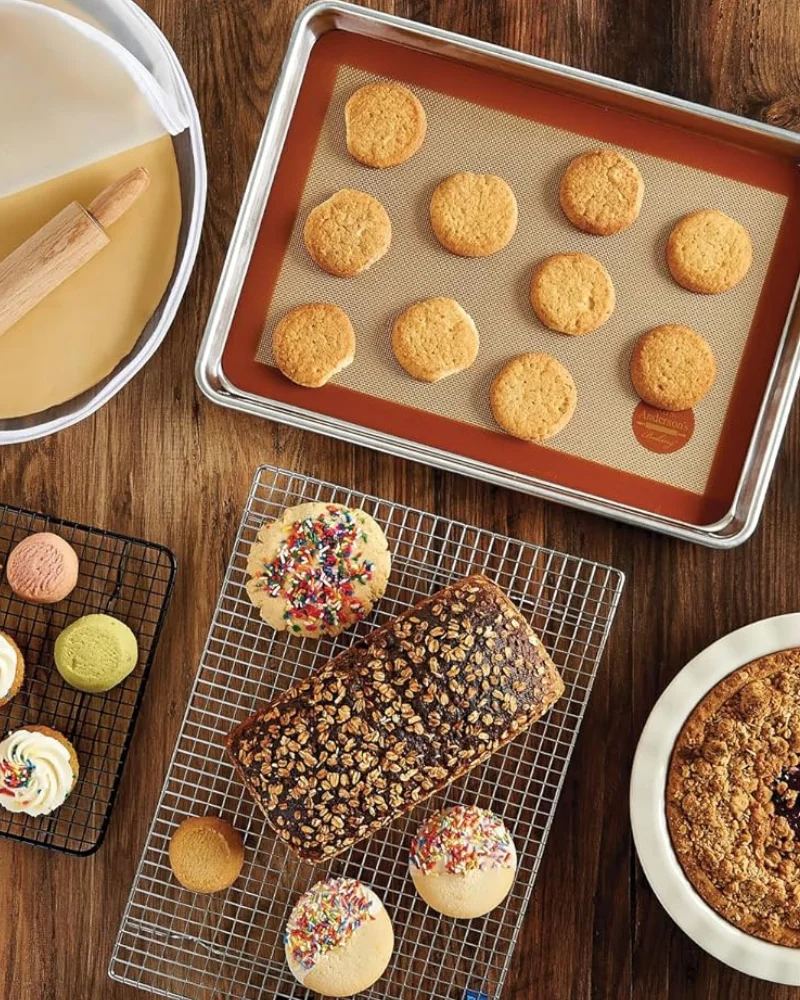
Ditch disposable parchment and opt for a reusable solution that’s safer and smarter.
These Silicone Baking Mats provide a non-toxic, nonstick surface that makes baking easier, and cleanup faster.
Made from FDA-approved food-grade silicone reinforced with natural fiberglass mesh.
Mrs. Anderson’s mats promote even heat distribution and won’t absorb odors or flavors.
They’re free from PFAS, PFOA, Teflon, and other chemical coatings.
Use them to bake cookies, roast veggies, or freeze dough—then wipe clean or toss in the dishwasher.
Want to make your cleanup routine non-toxic too? Here are the best non-toxic dishwasher detergents we’ve found!
Price
$16.16
Materials
Food-grade silicone with a woven fiberglass core
location/shipping
Available on Amazon USA
15. Disposable Cupcake Liners → Silicone Muffin Cups

Paper cupcake liners may be convenient, but they’re often coated with who-knows-what.
Plus they tear, stick, and get tossed after one use.
That’s why we love these flexible, toxin-free Silicone Muffin Cups from Mrs. Anderson’s Baking.
They pop baked goods out effortlessly and can be reused hundreds of times.
Made from 100% European-grade platinum silicone (the good stuff), these cups are totally free from fillers, BPA, and other nasties.
They’re oven-safe up to 570°F, freezer-safe down to –94°F, and won’t lose their shape over time.
Just place them on a baking sheet or inside a muffin tin, fill with batter, and bake—no greasing or waste required.
Price
$10.99 (Set of 12) | $21.99 (Set of 24)
Materials
100% platinum-cured silicone
location/shipping
Available on Amazon USA
Safest Materials For Your Baking Accessories (Based On Testing)
Tier 1: Gold-Standard Materials
These are the safest, most reliable options I use in my own kitchen daily.
100% Ceramic (Not Ceramic-Coated)
- Completely free from glazes, coatings, or mystery layers
- Brands like Xtrema Cookware make pure ceramic bakeware fired at 2,500°F for durability
- Typically lasts 3+ years of heavy use without chipping or cracking
Tempered Glass
- Naturally non-toxic, non-reactive, and completely inert
- Great for brownies, casseroles, and anything where you want to see the bake
- Just avoid sudden temperature changes to prevent cracking
Surgical-Grade Stainless Steel (T-304 or Similar)
- Used by brands like 360 Cookware for safer, nickel-free baking
- Won’t warp, corrode, or leach metals—even with acidic foods
Tier 2: Great Options with a Little Extra Care
Still safe and effective—but they require proper use and maintenance.
Cast Iron
- Excellent heat retention and even baking (hello, skillet cookies!)
- Needs seasoning and a little TLC to keep rust away
- Lodge cast iron pans are affordable, durable, and truly timeless
LFGB-Certified Silicone Only
- Safer than standard FDA silicone thanks to stricter purity standards
- No cheap fillers or sneaky off-gassing
- Brands like Mrs. Anderson’s Baking meet LFGB standards and pass the “pinch test”
Tier 3: Best to Avoid
These materials carry safety concerns, especially with frequent use and high heat.
Aluminum (Even Anodized)
- Known to leach into food, especially with acidic ingredients
- Long-term exposure has been linked to neurological issues
- If you’re using it daily, it might be time to upgrade
Nonstick Coatings (Especially PTFE/PFAS)
- Found in traditional nonstick bakeware—even when marketed as “safe”
- Heat can cause coatings to break down and release toxic fumes
- The convenience isn’t worth the chemical risk
Quick At-Home Tests to Vet Your Tools
Before you start tossing every spatula and muffin tin you own, there are a couple of simple tests and label-reading tips that can help you figure out what’s worth replacing—and what might already be safe.
The Silicone Pinch Test
Not all silicone is created equal. Many cheaper products are mixed with chemical fillers that can break down at high heat.
How To Test It: Take any silicone item (spatula, baking mat, muffin liner) and pinch it. Then twist it like you’re wringing out a tiny towel.
- If the color stays the same, it’s likely 100% pure silicone.
- If it turns white at the twist point, it contains questionable fillers.
Reading Labels Like a Pro
Red Flags That Scream “PFAS Inside”:
- “Non-stick” (unless it clearly states it’s ceramic or cast iron)
- “Easy release”
- Mentions of PTFE (the active ingredient in Teflon)
- “Stain-resistant” or “oil-resistant”
Misleading Phrases That Sound Reassuring but Mean Little:
- “PFOA-Free” – This only excludes one type of PFAS
- “Eco-Friendly Non-Stick” – No regulated definition
- “Natural Coating” or “Green Technology” – All marketing fluff
Statements You Can Trust:
- Full material disclosure (not vague “proprietary coating”)
- Third-party certifications displayed clearly (LFGB, GOTS, PFAS-free)
- Brands that explicitly state “PFAS-free” (not just PFOA-free)
- Companies that share independent testing data
Once you start spotting the patterns, it becomes easier to shop with confidence and avoid falling for greenwashed kitchen gear that looks cute but cooks dirty.
Budget-Friendly Swaps For Non-Toxic Baking Accessories
Start Small with the Easiest Swap: Parchment Paper
- Ditch the coated rolls for PFAS-free parchment from Kana Lifestyle
- It’s only a couple of dollars more, and it’s compostable too
- Considering what we now know about “forever chemicals,” the added $3 is worth every penny
Prioritize High-Use Tools First
- Baking trays are a big one. Swapping my old non-stick sheets for stainless steel baking trays is an easy way to make an immediate difference.
- Measuring spoons. Replace that plastic set with a simple stainless steel set from a local kitchen store for under $10. They’re easy to clean and built to last.
- Finally, mixing bowls. I phased out old plastic bowls for a glass and stainless steel set—safer for both hot and cold prep, and no risk of leaching.
Think Long-Term Value
- 360 Cookware may feel like a splurge, but their lifetime warranty changes the game
- Their stainless cookie sheet? ~$7/year if it lasts just 10 years (which it will… and then some)
- Cheaper pans might need replacing every couple of years—those costs add up fast
Check Thrift Stores for Hidden Gems
- Vintage glass measuring cups and stainless steel spoons are often just sitting there
- I scored both at a local estate sale for under $10 total
- Just double–check for chips, cracks, or coatings—if it’s clean glass or plain metal, you’re golden
How to Spot Greenwashing in Kitchen Tools
Certifications to Trust
- LFGB-Certified Silicone: This is the highest safety standard for food-grade silicone. If it’s LFGB certified, it’s passed strict European testing.
- California Prop 65 Disclosure: This law requires companies to warn consumers if their products contain chemicals known to cause cancer, birth defects, or reproductive harm. It’s not a ban—it’s about transparency.
- Made In The USA/Europe: Not a guarantee, but manufacturing in these regions typically involves better oversight. Brands like 360 Cookware are much more transparent about materials and testing.
Red Flags to Watch For
- “PFOA-Free”: That’s just one of thousands of PFAS chemicals. This claim is too limited to mean anything.
- “Ceramic-Coated”: What’s underneath the ceramic? How is it bonded? No clear answers = no thanks.
- “Natural Non-Stick”: A meaningless term. Even Teflon is technically made from “natural” elements.
What I Ask Before Buying
- “Is this product PFAS-free—not just PFOA-free?”
- “Can you share a full list of materials?”
- “Do you have third-party testing results?”
- “What certifications does this product carry?”
The best non-toxic baking accessories aren’t just about what you use—they’re about how you choose to care for your home, your health, and your future.
I know once you start learning about PFAS and hidden toxins in everyday baking tools, it’s easy to feel discouraged. But the good news is, you don’t have to change everything overnight. Start with one simple swap. Maybe it’s switching to PFAS-free parchment or picking up a safer mixing bowl the next time yours needs replacing. Every little change helps lower your exposure and moves your kitchen in a healthier direction. Safer baking tools are out there and you don’t need a whole new kitchen to make a difference. These small steps add up, and over time, they create a kitchen that feels better, functions better, and supports your well-being every time you bake.
Check out our other amazing Non-Toxic Kitchen articles:
- Non-Toxic Kitchen Utensils
- Non-Toxic Cutting Boards
- Non-Toxic Coffee Makers
- Non-Toxic Grilling Gear
- Non-Toxic Dinnerware
- Non-Toxic Tea Kettles
- Non-Toxic Cookware
- Non-Toxic Air Fryers
Like It? Pin It!