This post may contain affiliate links. By browsing this website, you agree to our disclaimer, privacy policy, and terms of use.
Looking for cozy winter sweaters that don’t come with a side of hormone disruptors or hidden toxins? You’re not alone—and what I uncovered while researching this article might surprise you.
As an investigative journalist for TFC, I was shocked to find that I could only confidently recommend five sweater brands that meet our strict non-toxic standards.
Many so-called “eco” or “clean” brands lacked transparency, used uncertified fibers, or applied chemical finishes like wrinkle resistance or stain repellents.
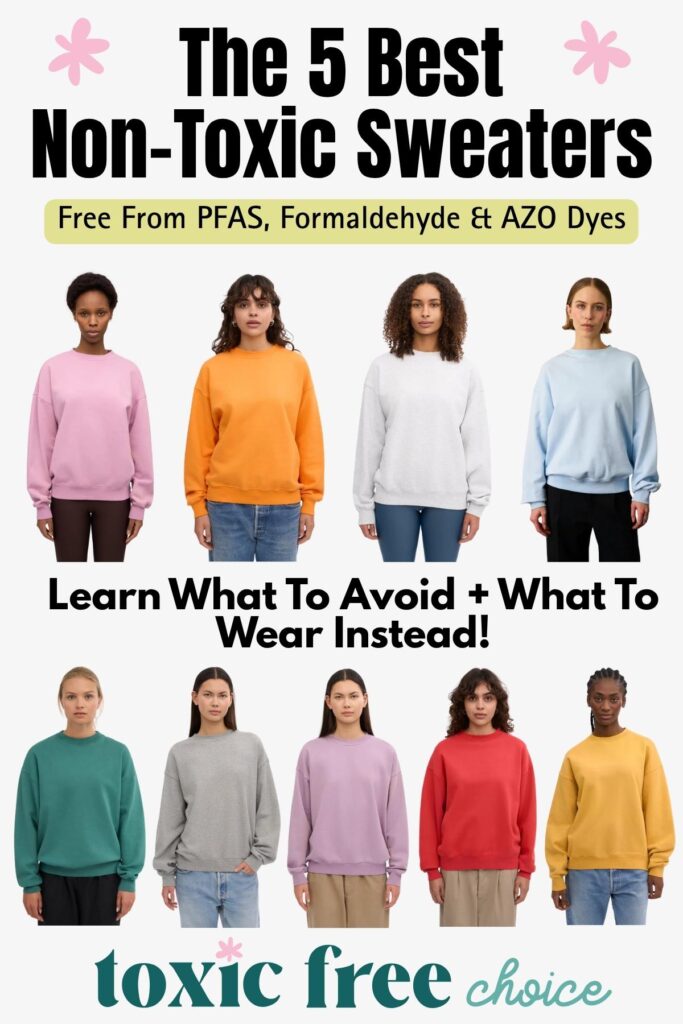
Sweaters may feel soft and cozy, but many come with a hidden toxic burden.
From PFAS coatings to formaldehyde resins and azo dyes that leach heavy metals, conventional knitwear can harbor a cocktail of chemicals you wouldn’t want near your skin.
At Toxic Free Choice, we break down what makes a sweater truly non-toxic, which materials and certifications to trust, and which brands rise above the rest (and which don’t quite make the cut).
Whether you’re managing skin sensitivities, trying to reduce hormone disruption, or shopping with young children in mind, this guide helps you choose safer, cleaner winter layers.
Why Many Sweaters Are More Toxic Than You Think
Even sweaters made from “natural” fibers aren’t always safe. Common toxic offenders include:
- PFAS coatings: Added to make sweaters stain, water-, or wrinkle-resistant. PFAS are linked to hormone disruption, cancer, thyroid issues, and immune suppression. Learn more about PFAS exposure risks.
- Formaldehyde-based finishes: Used for anti-wrinkle or shrink-resistance. Formaldehyde is a known carcinogen and skin irritant.
- Azo dyes and heavy metals: Common in synthetic dyes, these break down into carcinogenic amines and can leach lead, chromium, or cadmium.
- Antimicrobial agents: Triclosan and nanosilver, marketed as odor-fighting, may disrupt the microbiome and promote bacterial resistance.
- Synthetic fibers: Acrylic, polyester, and nylon not only shed microplastics but often serve as carriers for toxic additives.
Explore our guide to the 15 most common toxic chemicals hiding in your home to see how apparel plays a part.
What Makes a Sweater Truly Non-Toxic?
To be considered non-toxic, a sweater must be made from safe materials, processed without harmful chemicals, and certified for low toxicity across the entire supply chain.
✅ Safer Materials
- GOTS-certified organic cotton
- Organic wool and alpaca (non-chlorinated, pesticide-free)
- TENCEL™ Lyocell and hemp (processed in closed-loop systems)
✅ Trusted Certifications
❌ Materials & Marketing Claims to Avoid
- PFAS finishes (DWR)
- “Wrinkle-free,” “odor-resistant,” or “performance knit”
- Unverified recycled polyester
- Brands that omit fiber or dyeing details
Check our non-toxic fashion overview for a full glossary of material safety.
Greenwashing in the Sweater Industry
“Sustainable” does not always mean non-toxic. Be wary of brands that:
- Use recycled polyester but offer no dye or finishing transparency
- Label their products “natural” while including chemical additives
- Offer carbon offsets but lack certifications for fabric safety
If a brand doesn’t disclose fiber content, finishing methods, or carry certifications, that’s a red flag.
Brands That Fail the Non-Toxic Test ❌
These brands fall short due to a lack of certifications, reliance on synthetic materials, or use of known toxic treatments:
- Patagonia: Still uses PFAS in some outerwear and sweaters; limited GOTS or OEKO-TEX certifications.
- Everlane: Minimal certifications; sweaters often contain synthetics and unverified “clean” treatments.
- Uniqlo: Heavy use of wrinkle-resistant finishes, synthetic dyes, and no disclosure on chemical safety.
- Fast Fashion Brands (Zara, H&M, Shein): Known for synthetic blends, formaldehyde-based finishes, and azo dyes.
- J. Crew & Banana Republic: Frequent use of polyamide, spandex, and unlisted anti-odor or wrinkle-free treatments.
Safe Non-Toxic Sweater Brands We Trust
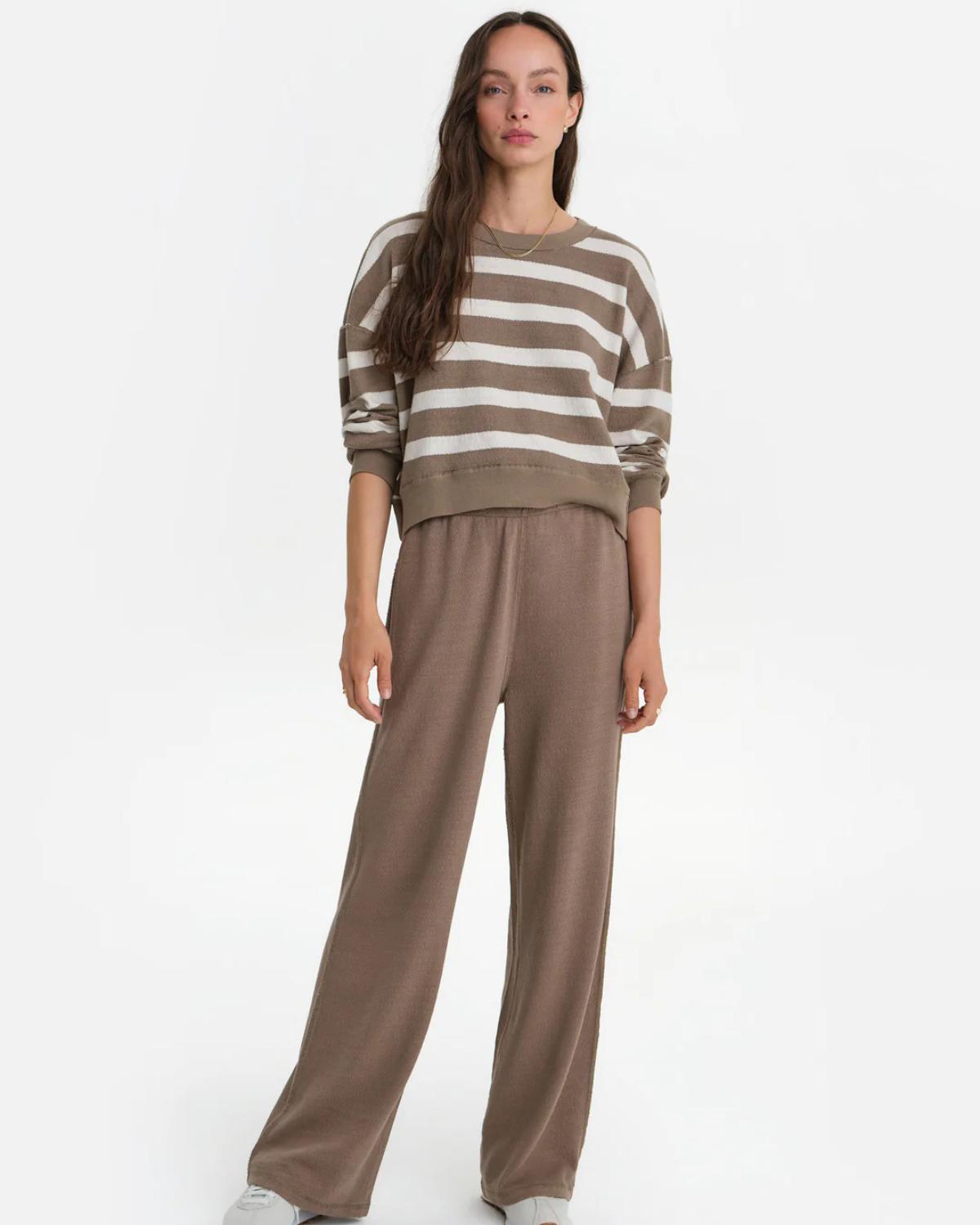
Mate The Label is a clear standout in the non-toxic clothing space, especially for those seeking PFAS-free and formaldehyde-free sweaters.
Their sweaters are crafted from GOTS-certified organic cotton, dyed using OEKO-TEX® certified methods, and sewn in ethically run factories in LA.
The brand bans synthetics, PFAS, and formaldehyde, making their garments exceptionally safe for skin contact.
Mate is also Climate Neutral Certified and a B Corp, backing their clean materials with measurable impact transparency.
Price & Size Range
$98–$168 | XS–3X
Materials
GOTS-certified organic cotton
location/shipping
Made in Los Angeles | Ships internationally
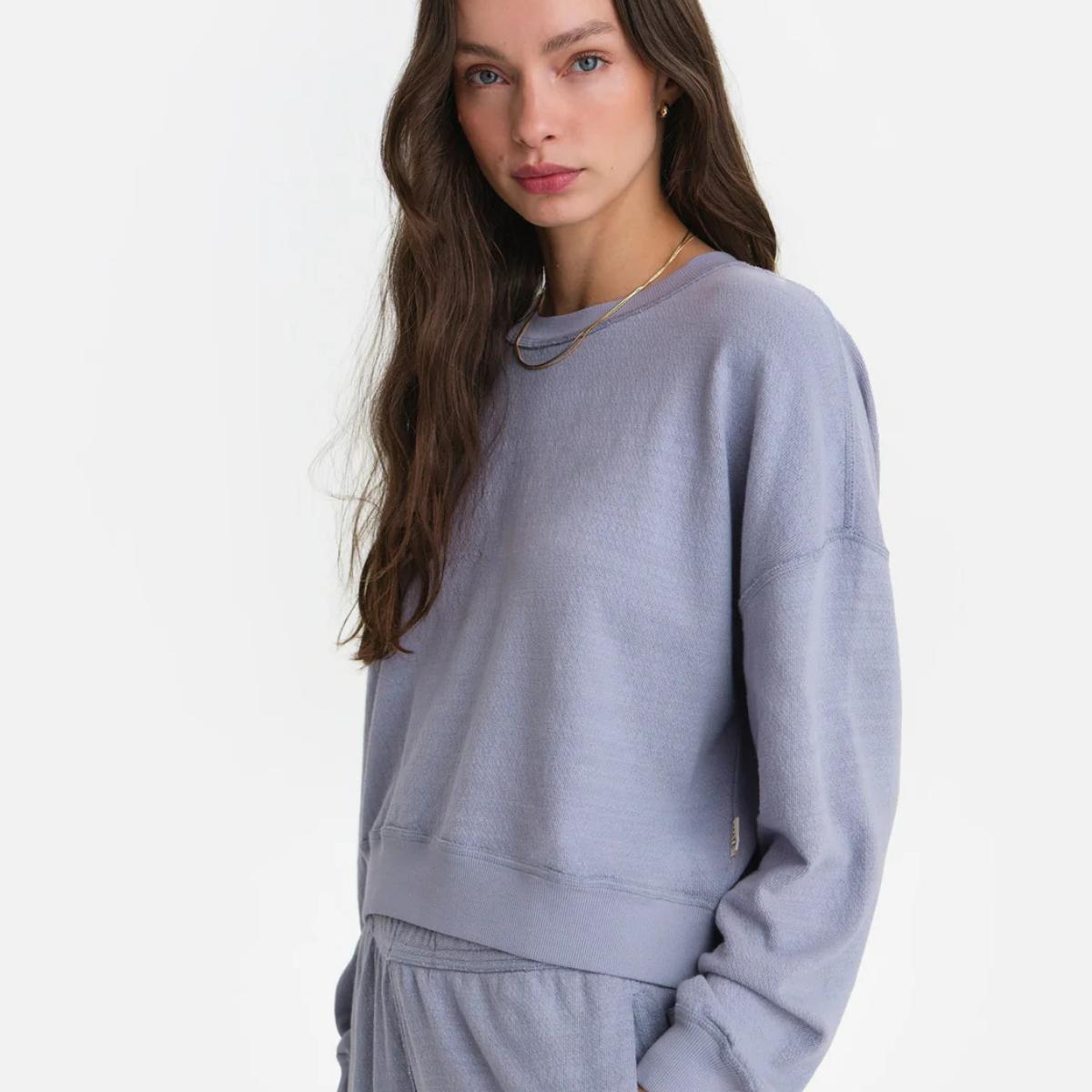
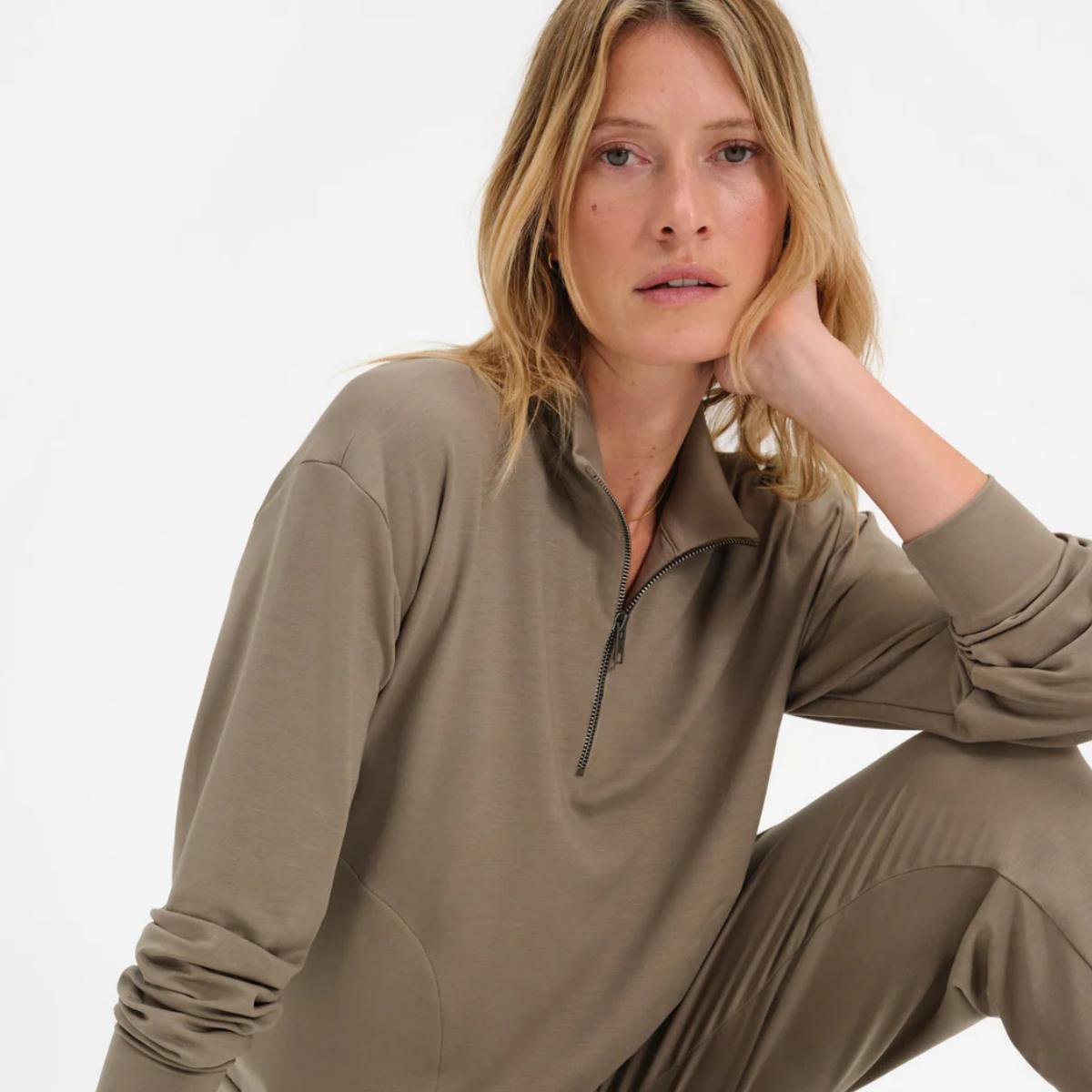
More From Mate The Label:
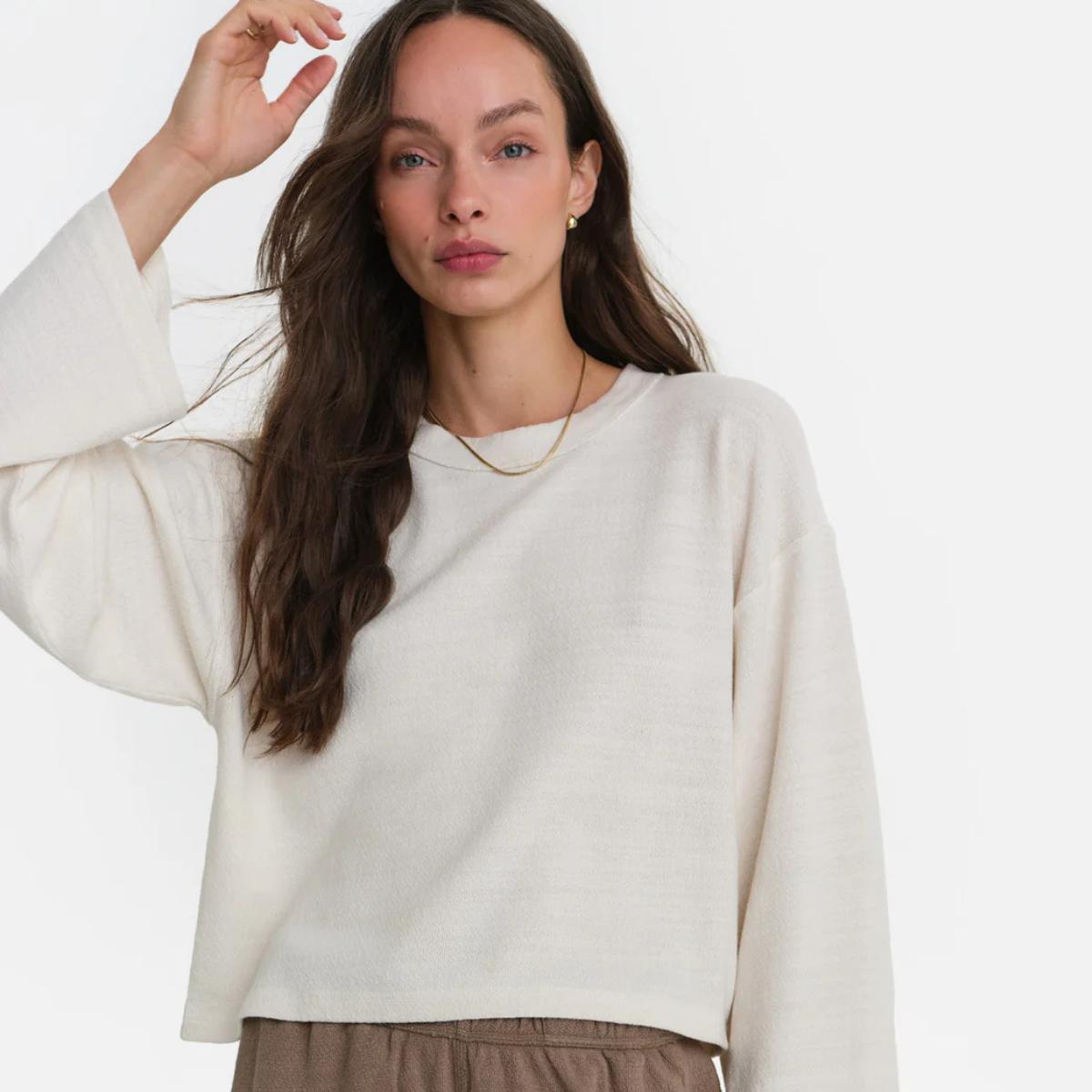

Colorful Standard offers an eye-catching array of everyday staples in vibrant tones—all without the toxins!
This makes them one of the most colorful certified PFAS-free sweater brands.
Every sweater is made with long-staple organic cotton, dyed in OEKO-TEX® certified facilities, and crafted under fair labor practices.
These are perfect for anyone seeking non-toxic winter basics that are affordable and truly clean.
Bonus: their carbon-neutral operations and transparent supply chain make them a leader in both ethics and safety.
Price & Size Range
$65–$120 | XS–XXL
Materials
100% GOTS-certified organic cotton
location/shipping
Made in Portugal | Ships worldwide

Harvest & Mill is one of the cleanest clothing brands on the market, offering one of the only fully non-toxic sweatshirt lines made entirely in the USA!
Their sweaters are made from 100% GOTS-certified organic cotton grown in the USA, spun and sewn entirely on American soil.
Many pieces are undyed or naturally dyed using non-toxic methods, and their operations are fully traceable and low-waste.
Ideal for those seeking toxin-free, minimalist basics from a truly local and transparent supply chain.
Price & Size Range
$70–$160 | XS–XL
Materials
GOTS-certified organic cotton (USA grown)
location/shipping
Entirely made in the USA | Ships domestically

Lanius brings feminine flair to the toxin-free space, setting the gold standard for certified non-toxic sweaters.
Their sweaters are made exclusively from certified organic materials and crafted in certified facilities that ban formaldehyde, azo dyes, and chlorine bleaching.
Their commitment extends to avoiding mohair, angora, and any wool sourced from mulesed sheep.
These elegant, GOTS-certified styles are perfect for those who want peace of mind and polished silhouettes.
Price & Size Range
$100–$250 | XS–XL
Materials
Organic wool, organic cotton, TENCEL™
location/shipping
Made in Germany | Ships internationally
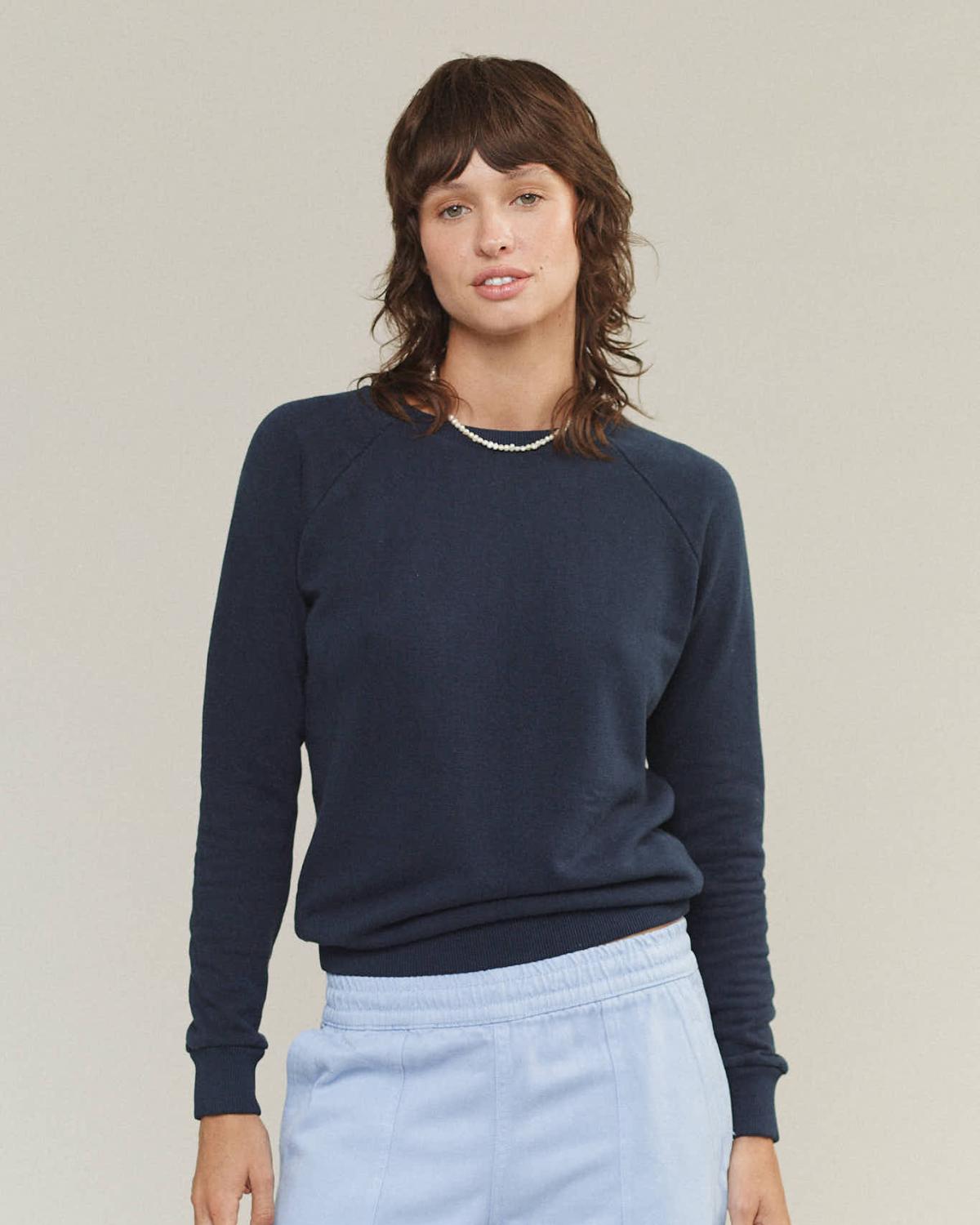
Jungmaven has pioneered hemp-based apparel in the US, building a reputation for chemical-free casual sweaters and hoodies.
Their sweaters are made from simple, breathable blends of hemp and organic cotton with absolutely no polyester or anti-wrinkle finishes.
Though not third-party certified, the company openly shares every detail of their fiber sourcing, dyeing methods, and production process.
These are ideal for shoppers who value ingredient-level transparency and rugged, lived-in style.
Price & Size Range
$85–$220 | XS–XXL
Materials
Hemp, organic cotton
location/shipping
Made in USA | Ships to select international locations
Sustainable Brands That Almost Made the Cut ⚠️
These brands came close to meeting our non-toxic criteria, but ultimately fell short due to gaps in transparency, missing certifications, or unclear dye and finish practices.
They may still be great low-tox options—but they didn’t meet our stricter standards for full inclusion.
Asket
- Why it almost made it: Full traceability, no toxic finishes
- Why it didn’t: No third-party certifications, uses conventional wool and cotton
Outerknown
- Why it almost made it: Some Bluesign/OEKO-TEX certifications, PFAS-free
- Why it didn’t: Not all items certified, some blends unclear, cashmere products lack sourcing transparency
Quince
- Why it almost made it: Clear fiber labeling, no anti-odor or wrinkle coatings
- Why it didn’t: No certifications, uses conventional cotton and wool, no dye transparency
Neu Nomads
- Why it almost made it: Closed-loop TENCEL™, OEKO-TEX dyes, plastic-free shipping
- Why it didn’t: Cotton is not organic, limited fiber and dye certification at the product level
FAQ: Sweater Safety & Non-Toxic Materials
No. They may be treated with pesticides, bleach, or formaldehyde. Look for certified organic labels.
These are red flags. They usually rely on PFAS, formaldehyde, or undisclosed chemical coatings.
Only when it’s backed by certifications like OEKO-TEX or Bluesign. Otherwise, it may carry chemical residues.
Stay Warm—Not Toxic
Choosing a truly non-toxic sweater means digging deeper than marketing buzzwords.
Instead of trusting vague labels, it requires reading fiber content, checking for trusted certifications, and learning how certain finishes impact health.
For example, anti-wrinkle treatments may sound helpful, but they can contain formaldehyde—a chemical tied to serious health risks.
Fortunately, there are a few standout brands doing things differently. These five companies show that you can enjoy warmth, softness, and comfort without sacrificing safety.
They prioritize transparency, avoid toxic finishes, and offer clean, well-labeled garments backed by third-party standards.
In a fashion landscape full of misleading marketing, these brands prove that it’s possible to be cozy and chemical-conscious at the same time.
Whether you’re shopping for your own closet or building a safer wardrobe for your family, these picks offer a strong foundation for a healthier cold-weather season.
Looking for more articles on non-toxic fashion?
- Low-Tox Raincoats & Non-Toxic Rainboots For Kids
- Organic & Non-Toxic Maternity Clothing Brands
- Non-Toxic & Organic Cotton Nursing Bras
- Safest Raincoats & Rain Boots For Adults
- Organic & Non-Toxic Summer Dresses
- Non-Toxic & Organic Bras + Bralettes
- Non-Toxic Barefoot Shoes For Kids
- Organic & Non-Toxic Leggings
- Non-Toxic Underwear Brands
- Non-Toxic Fashion For Adults
- Non-Toxic Maternity Clothing
- Non-Toxic Hemp Underwear
- Non-Toxic Workout Clothes
- Non-Toxic Fashion For Kids
- Non-Toxic Shoes For Kids
- Non-Toxic Baby Clothes
- Non-Toxic Swimsuits
- Non-Toxic Sandals
Like It? Pin It!
Sources & Further Reading
To ensure accuracy and transparency, all health and material safety claims in this guide are supported by reputable sources:
- PFAS Exposure Risks – ATSDR: Per- and Polyfluoroalkyl Substances (PFAS)
- Formaldehyde Toxicity – National Cancer Institute – Formaldehyde and Cancer Risk
- Azo Dyes & Heavy Metal Risks – ECHA: Substances in Articles – Skin Contact Risks
- Triclosan & Microbiome Disruption – FDA: Triclosan Consumer Update
- Microplastics from Synthetic Fibers – IUCN – Primary Microplastics in the Oceans
- GOTS Certification Standards – Global Organic Textile Standard (GOTS)
- OEKO-TEX® Textile Safety Criteria – OEKO-TEX® Standard 100 Explained
- Bluesign® Certification – Bluesign® System: Sustainable Textile Production
- Greenwashing in Fashion – Changing Markets Foundation – Synthetics Anonymous