This post may contain affiliate links. By browsing this website, you agree to our disclaimer, privacy policy, and terms of use.
I used to assume dish soap was harmless. Just bubbles, scent, and soap in a bottle.
But when I finally read the full ingredient list, I realized I was washing my family’s dishes with chemicals I couldn’t pronounce, let alone trust.
Most conventional dish soaps rely on synthetic surfactants, undisclosed “fragrances,” and preservatives linked to hormone disruption, skin irritation, and worse.
And here’s the sneaky part, those ingredients don’t just rinse away. They leave behind a residue that sticks to your plates, lingers on your hands, and flows straight into our waterways.
So every time you’re scooping ice cream out of a bowl or finishing a spoonful of soup, you might also be taking in trace amounts of toxic chemical residue.
Unfortunately, even brands that claim to be “clean” or “natural” often contain ingredients you’d never knowingly put in your mouth.
That’s what pushed me to make my own dish soap. But I’ll be honest, it took some trial and error. A lot of the recipes I tried couldn’t cut through grease or leave a gummy film on my dishes. Not exactly the kind of clean I was after.
After testing dozens of formulas over the years, I finally found a handful that are simple, effective, and surprisingly affordable.
In this guide, I’ll walk you through:
- The most common toxins hiding in commercial dish soaps
- My go-to DIY dish soap recipes
- Real-world tips for getting the texture, thickness, and grease-cutting power just right
If you’re looking for a dish soap that’s safe for your home, gentle on your hands, and tough on grease, I’ve got you covered.
The Problem With Conventional Dish Soaps
So here’s something that totally surprised me, most dish “soaps” in the cleaning aisle aren’t actually soaps at all. Crazy, right?
Here’s the deal. True soap is made by mixing fat or oil (like coconut or olive oil) with an alkali (like lye). This process is called saponification.
This process results in a biodegradable combo of soap and glycerin. It’s a time-tested recipe that’s been cleaning things naturally for centuries.
Modern dish “soaps,” on the other hand, are usually synthetic detergents made from petroleum-based surfactants like sodium lauryl sulfate (SLS).
While these chemicals admittedly do a great job at cutting grease, they come with a whole host of concerns for our health and environment.
Ingredients To Avoid At All Costs
- Sodium Lauryl Sulfate (SLS) & Sodium Laureth Sulfate (SLES): These harsh sulfates help create that satisfying foam, but they also strip your skin’s natural oils, leading to dryness and irritation. Even worse? They can be contaminated with 1,4-dioxane, a known carcinogen.
- Fragrance: That “fresh” scent comes from a cocktail of chemicals, often containing phthalates, which are known endocrine disruptors. Phthalates have been linked to hormonal issues and even birth defects. Synthetic fragrance is one of the top allergens and can trigger asthma.
- Triclosan: This antimicrobial agent (basically, a pesticide) is often added to dish soaps to kill bacteria. However, triclosan is a known endocrine disruptor and may contribute to antibiotic resistance. It’s so sketchy that it’s currently being phased out of personal care products.
- Formaldehyde: You read that right. This known carcinogen can sneak into your dish soap as a preservative. No thanks!
- MEA, DEA, TEA: These ammonia compounds are used as foaming agents and emulsifiers. When combined with other ingredients, they can form nitrosamines—potent cancer-causing agents.
And those are just the chemicals we know about! Since cleaning products aren’t tightly regulated, companies can sneak in all sorts of questionable ingredients without disclosing them on labels.
How These Chemicals Impact Your Health & Home
- Respiratory Issues: Many dish soap chemicals are respiratory irritants. Inhaling them can trigger asthma attacks, allergic reactions, and other breathing problems. This is especially true for products with strong synthetic fragrances.
- Skin Irritation & Allergies: Your hands take a beating when washing dishes. Constant exposure to harsh sulfates and other irritants can lead to redness, dryness, and even painful cracking. In some cases, these chemicals can cause full-blown contact dermatitis or hives. Ouch!
- Hormone Disruption: Endocrine disruptors like triclosan and phthalates interfere with your body’s delicate hormone balance. Over time, this can contribute to thyroid issues, reproductive problems, metabolic disorders, and certain cancers. Developing babies and kids are especially vulnerable.
- Antibiotic Resistance: When antimicrobial chemicals like triclosan go down the drain, they can promote the growth of resistant bacteria in our waterways. This makes it harder to fight infections and puts a strain on our public health.
- Indoor Air Pollution: Ever notice how your nose burns a little after washing dishes with a fragranced soap? Those chemicals don’t just disappear. They linger in your indoor air, contributing to poor air quality and aggravating breathing issues.
- Environmental Damage: Once dish soap chemicals swirl down your drain, they end up in our rivers, lakes, and oceans. Many don’t break down easily and can wreak havoc on aquatic ecosystems. Some, like triclosan, are highly toxic to algae and fish.
The scariest part is that we don’t fully understand the long-term effects of these toxins.
They haven’t been well-studied, especially not in combination. What we do know is that reducing our exposure is always a smart move.
Why I’m A Fan Of DIY Dish Soap
When you make it yourself with a few simple, natural ingredients, you can wash your dishes with total peace of mind.
No mystery chemicals, no scary side effects, just sparkling clean plates and happy hands. Ready to give it a try?
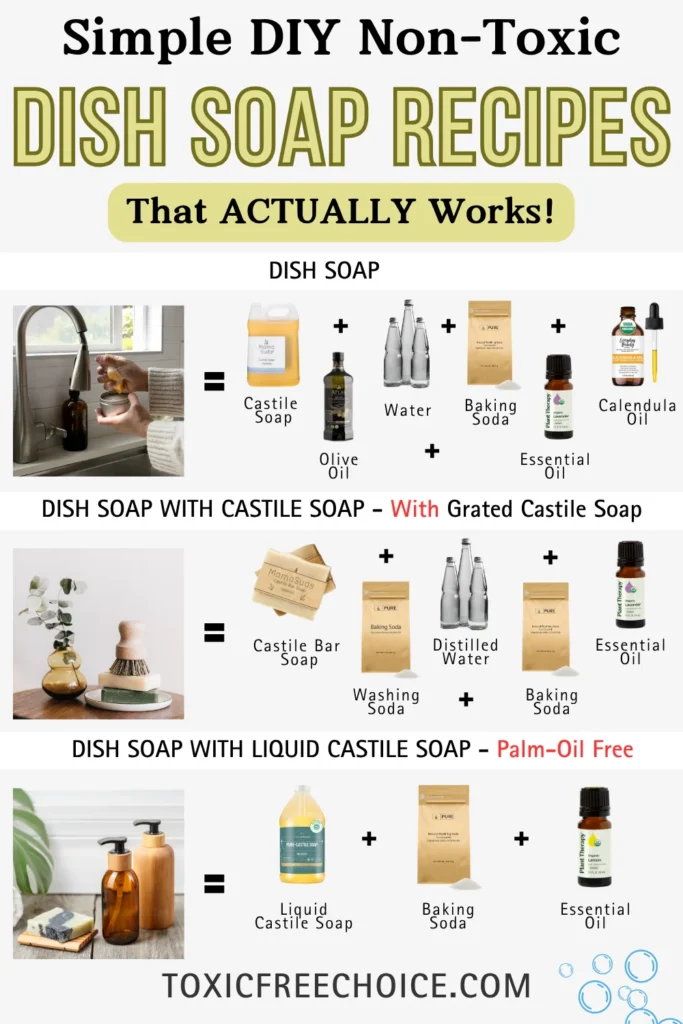
6 DIY Non-Toxic Dish Soap Recipes That Work!
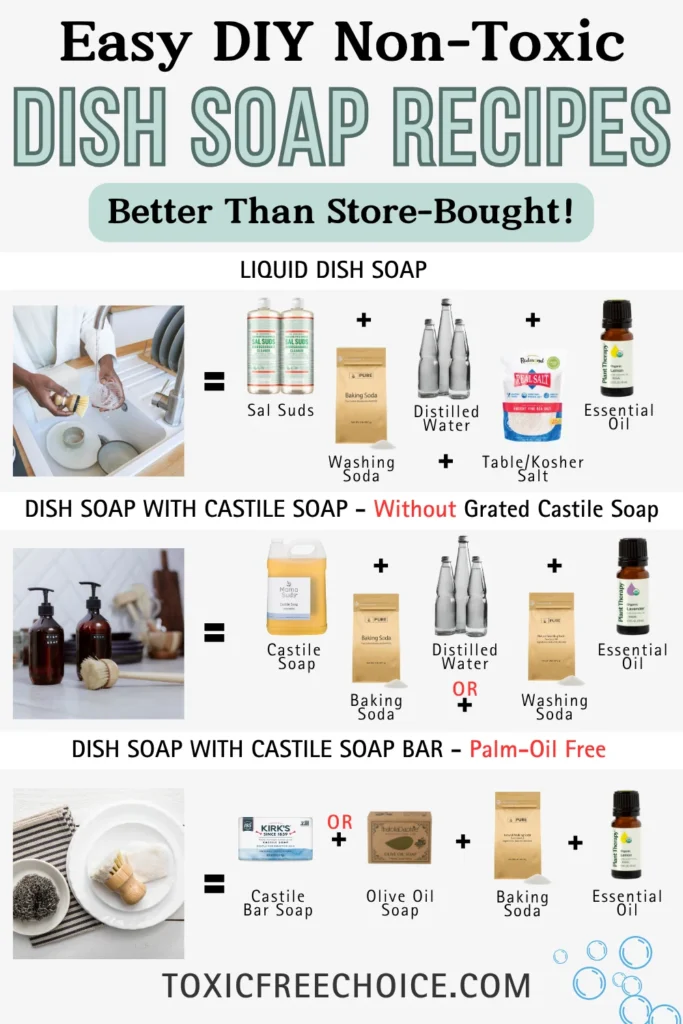
1. DIY Dish Soap With Castile Soap (With Grated Castile Soap)
From: Lemon Grove Lane (with some adjustments) | Difficulty: Moderate | Time Required: 10 minutes
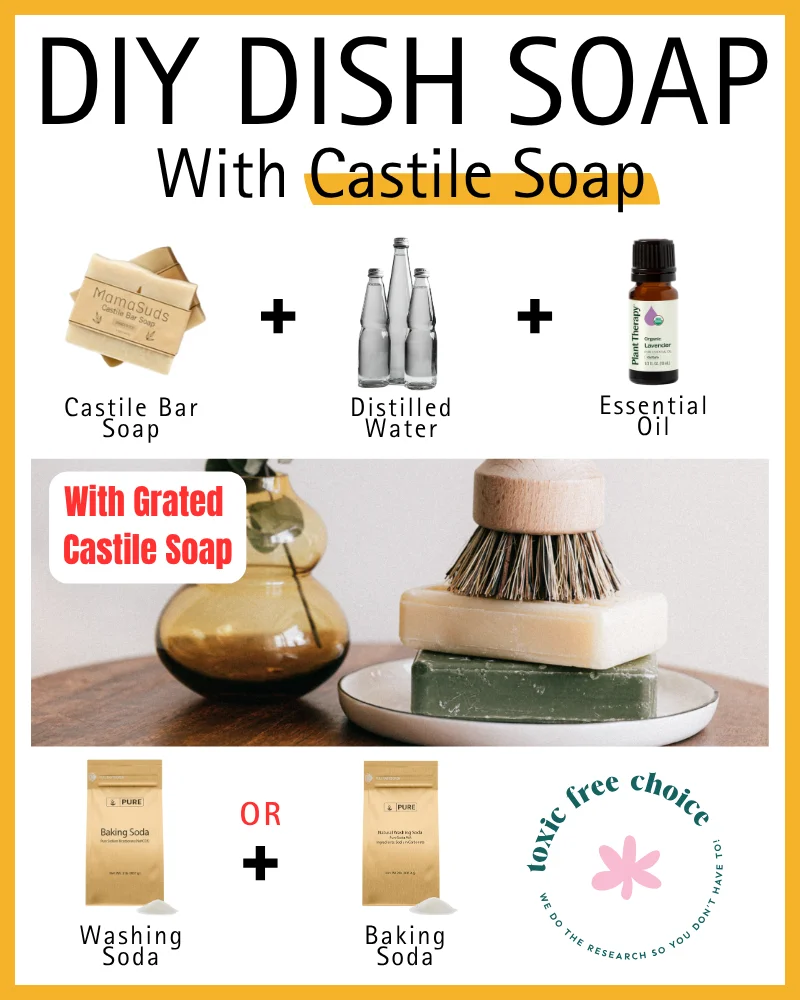
Make your own non-toxic dish soap at home with this simple, budget-friendly recipe featuring pure castile soap, washing soda, and essential oils.
Add grated Castile bar soap for a thicker texture—and enjoy sparkling clean dishes without synthetic fragrances, dyes, or harsh chemicals.
Bonus: It smells amazing with a few drops of citrus or eucalyptus oil!
Ingredients
- 1 cup unscented castile soap
- 6 ounces of distilled or filtered water
- 1/3 cup washing soda or baking soda
- 10 drops essential oil (grapefruit, lemon, citrus blends, or eucalyptus recommended)
- 1/4 cup grated castile bar soap (optional for a thicker consistency)
Instructions
- Pour castile soap and filtered water into a heavy-bottomed saucepan or pot.
- Slowly heat the castile soap and water to medium heat making sure not to over-heat.
- Slowly mix in grated castile bar soap (if you don’t mix slowly the bar soap will accumulate at the bottom of the pan).
- Once all ingredients are incorporated slowly pour in washing soda to combine.
- Remove from heat.
- Once cooled add your essential oils and pour them into your favorite dispenser.
- Tip: If the consistency is too thick once cooled add 2-3 ounces of distilled water to loosen.
To Use
- Use as regular dish soap.
- Shake before use if separation occurs.
- For extra grime, add 1-2 drops of Sal’s Suds.
2. DIY Dish Soap With Castile Soap (Without Grated Castile Soap)
From: Lemon Grove Lane (with some adjustments) | Difficulty: Moderate | Time Required: 10 minutes
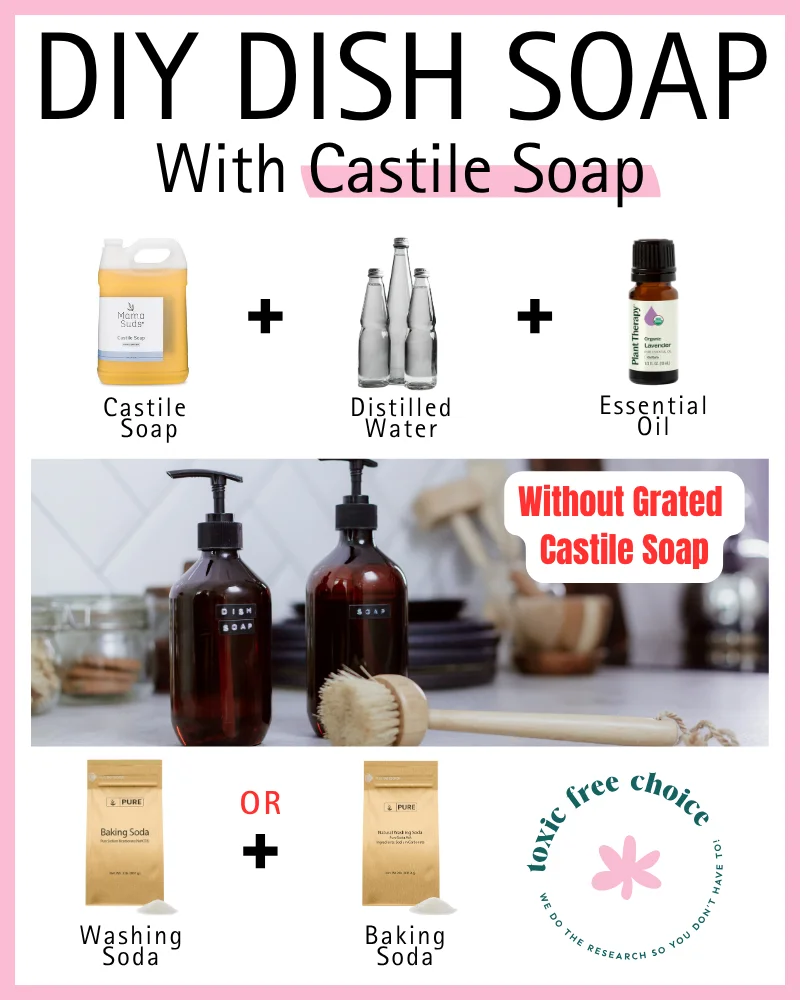
This super simple DIY dish soap skips the grated castile bar soap for a faster prep—but that means it’ll be a bit thinner in consistency.
Still, it gets the job done with just four clean ingredients: liquid castile soap, washing soda or baking soda, distilled water, and a splash of essential oils.
Ingredients
- 1 cup unscented castile soap
- 6 ounces of distilled or filtered water
- 1/3 cup washing soda or baking soda
- 10 drops essential oil (grapefruit, lemon, citrus blends, or eucalyptus recommended)
Instructions
- Combine all ingredients in a measuring cup or mixing bowl and combine.
- Tip: Add washing soda slowly so it does not accumulate at the bottom.
- Pour into your favorite dispenser.
- Start washing! (Best if shaken before each use)
To Use
- Use as regular dish soap.
- Shake before use if separation occurs.
- For extra grime, add 1-2 drops of Sal’s Suds.
3. Natural Liquid Dish Soap
From: Wellness Mama | Difficulty: Easy | Time Required: 20 minutes
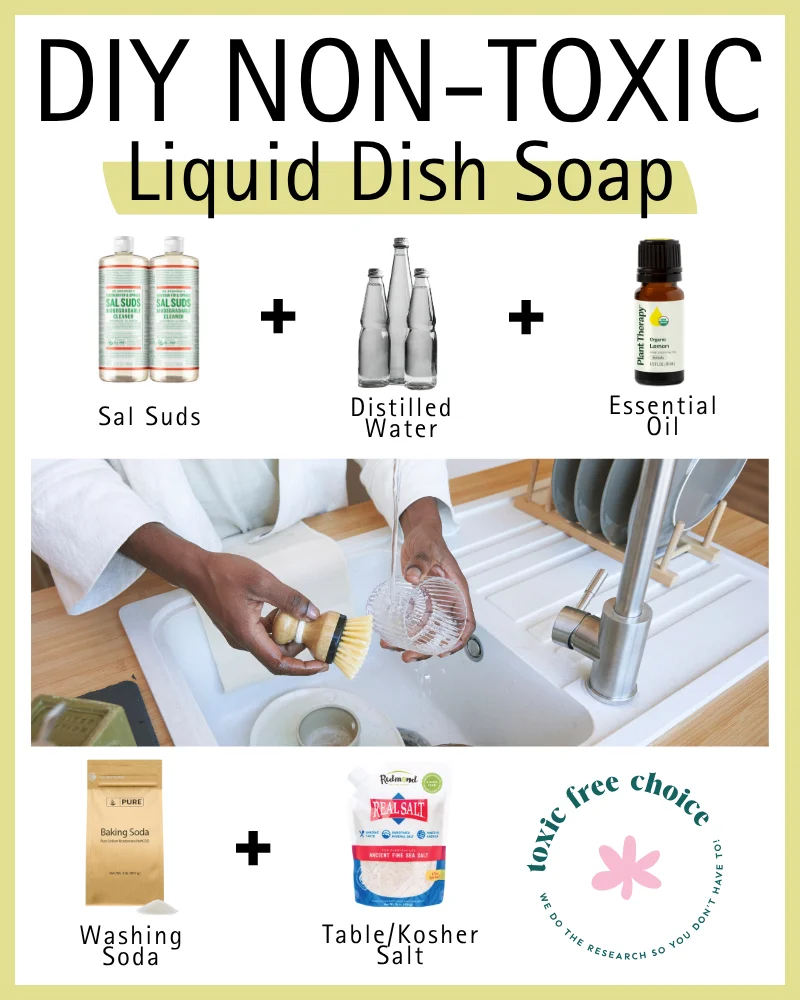
This recipe is your go-to when you need serious grease-cutting power.
It uses Sal Suds, a non-toxic but extra-potent cleaner made by the makers of castile soap.
Washing soda and salt act as natural degreasers and thickeners, creating a consistency that feels closer to conventional soap.
This blend is effective, budget-friendly, and a great step up if castile-based soaps aren’t getting you the clean you’re looking for.
Ingredients
- 2/3 cup Sal Suds
- 1 and 1/3 cup distilled water
- 40 drops of lemon or grapefruit essential oil (or essential oil of choice)
- 1 tablespoon washing soda
- 1 tablespoon table or kosher salt
- 3 tablespoons hot water
- Large pot
- Dish soap dispenser
Instructions
- In a small pot heat the 3 tablespoons water and 1 tablespoon salt, stirring frequently until everything is completely dissolved.
- Remove the pot from the heat and pour the contents into a small bowl. Set the salt mixture aside.
- If using kosher salt and it won’t completely dissolve, strain out the residual salt pieces.
- Add the washing soda and 1 and 1/3 cups distilled water to the pot and heat just until dissolved.
- Add the Sal Suds, washing soda, water mixture, and essential oils to a dish soap dispenser. If your container has a small opening, then it works best to mix this in a glass mason jar.
- Add 1 tablespoon of the salt water to the soap and stir. It will turn cloudy and thicken.
- Add another tablespoon of salt water mixture if you want it thicker. Keep in mind that it may thicken more over time.
- Pour the mixture into a soap dispenser.
To Use
- Use as regular dish soap.
- Shake before use if separation occurs.
4. Simple DIY Non-Toxic Dish Soap
From: Flexitarian Nutrition (with some adjustments) | Difficulty: Easy | Time Required: 5 minutes
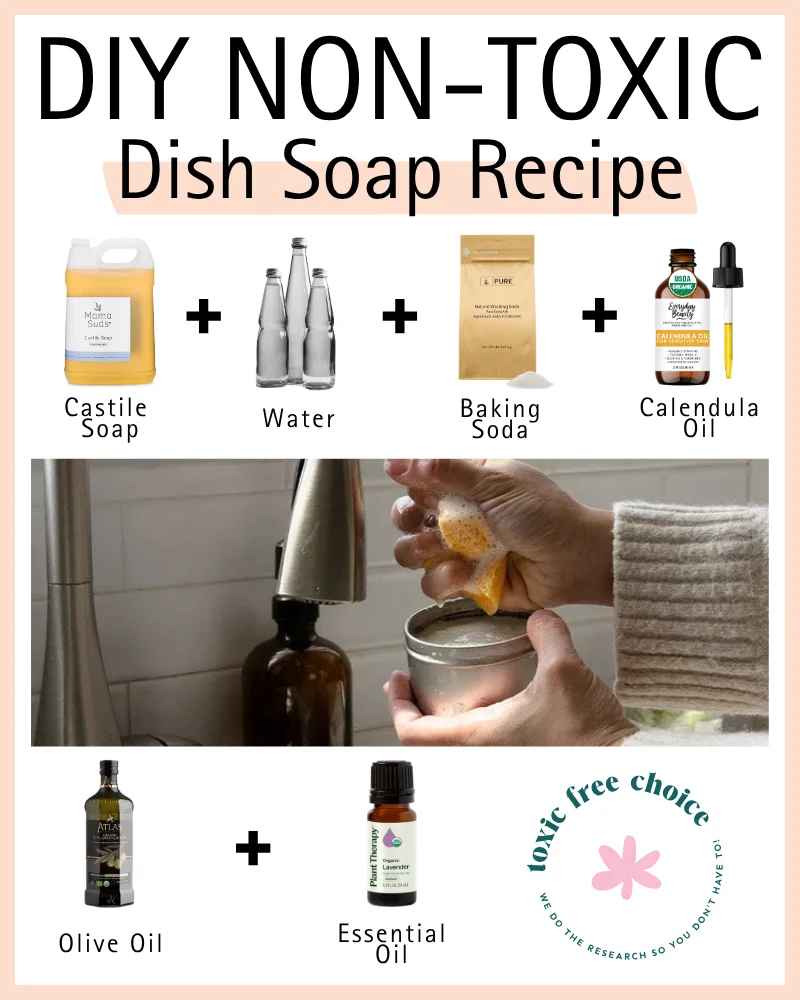
If your hands are sensitive or dry from frequent dishwashing, you’ll love this ultra-moisturizing dish soap.
Made with nourishing oils like calendula and olive, plus a trio of essential oils for scent and disinfecting power, this formula prioritizes skin as much as sparkle.
It’s more liquid than conventional dish soap, but once you adjust, you may find yourself reaching for it every time.
Ingredients
- 1/3 cup organic liquid pure castile soap
- 2 ¼ cups water
- 1 teaspoon baking soda
- 1/2 teaspoon organic calendula oil
- 1/2 teaspoon organic olive oil
- 10 drops of lavender essential oil
- 10 drops of tea tree or thyme essential oil
- 10 drops peppermint essential oil
Instructions
- Simply put everything in a regular dish soap container.
- Mix thoroughly.
- If you want to avoid using essential oils you can infuse your castile soap with lemon or orange peels overnight before mixing all of the ingredients together. Just be sure to remove them before storing
To Use
- Use as regular dish soap.
- Give it a shake before every use.
5. DIY Dish Soap With Castile Soap Bar (Palm-Oil Free)
From: WastelandRebel | Difficulty: Easy | Time Required: 10-15 minutes
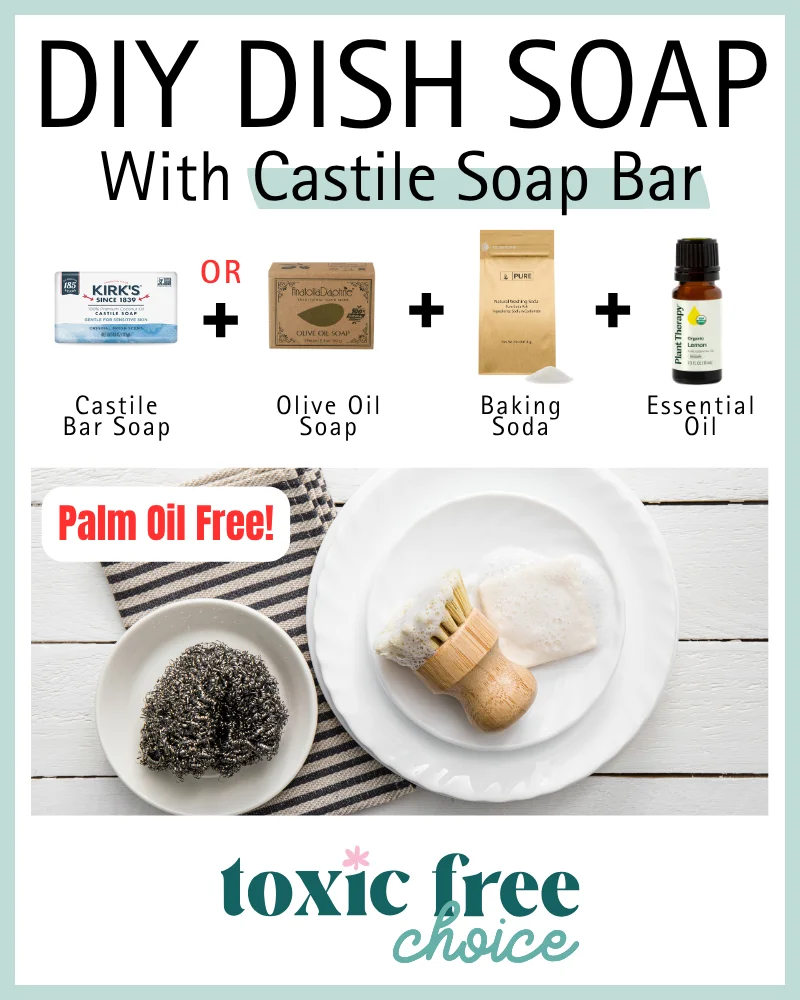
Looking for a truly sustainable way to keep your dishes clean?
This DIY dish soap recipe uses a traditional castile bar soap made without palm oil, plus just water, baking soda, and optional essential oils.
It’s budget-friendly, zero-waste, and free from synthetic ingredients.
Ingredients
- 25-30g palm oil-free castile bar soap (or traditional olive oil soap works well)
- 2 teaspoons baking soda
- 600ml water
- 3 drops of your favorite essential oil (optional)
Instructions
- Grate the soap. You can grate in bulk while watching TV and store soap flakes in a jar for future use.
- If you have a food processor, chop the bar into chunks and let it do the shredding.
- Bring water to a boil. Turn off the stove, and add the soap flakes.
- Stir with a spoon until the soap has dissolved. Let cool completely.
- Add baking soda when the mixture is still warm, but not so hot that you can’t touch it.
- Let it cool down overnight if desired.
- Shake before transferring into a soap dispenser.
To Use
- Shake before each use.
- Apply directly to dish sponge or dishes.
- For greasy dishes, use undiluted soap directly on the dish.
6. DIY Dish Soap With Liquid Castile Soap (Palm-Oil Free)
From: WastelandRebel | Difficulty: Easy | Time Required: 1 minute
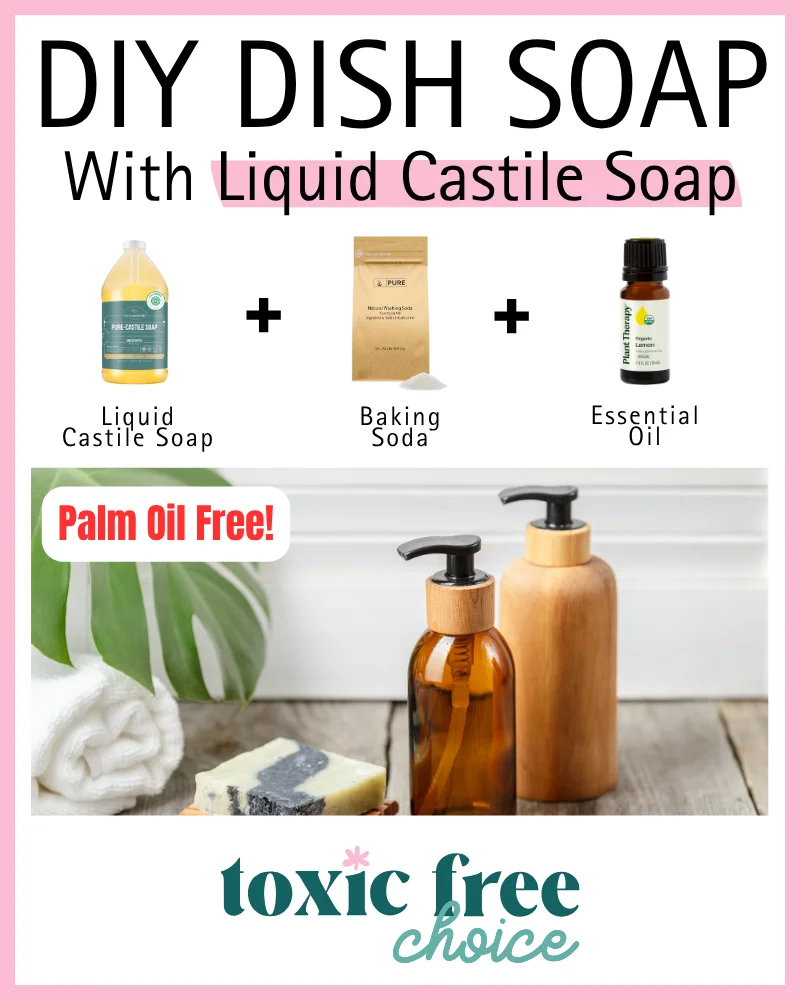
This easy DIY dish soap skips the palm oil but doesn’t skip the clean.
With just liquid castile soap, baking soda, water, and an optional hint of essential oil, you’ll have a non-toxic, eco-friendly cleaner ready in minutes.
Ingredients
- 170ml palm oil-free liquid castile soap
- 2 teaspoons baking soda
- 600ml water
- 3 drops of your favorite essential oil (optional)
Instructions
- Mix the castile soap with hot water (not so hot that you couldn’t touch it).
- Add the baking soda and stir to combine.
- Transfer to soap dispenser.
To Use
- Shake before each use.
- Apply directly to dish sponge or dishes.
- For greasy dishes, use undiluted soap directly on the dish.
Tips For Success With DIY Dish Soap
- Soap not sudsing up? Make sure you’re using a true castile soap, not a detergent-based one. Also, avoid mixing castile soap with acids like vinegar or lemon juice—this can cause the soap to “unsaponify” and separate.
- Is soap too thick or too runny? Play with the ratio of soap to water until you find your perfect consistency. Remember, a little castile soap goes a long way!
- Dealing with hard water? Try adding a bit more washing soda to your recipe. This helps soften the water and boost cleaning power.
- Soap leaving a film? Check your water hardness. You may need to increase the vinegar or decrease the castile soap. Using a rinse aid (like diluted white vinegar) can also help.
How To Get The Best Clean Naturally
- Start Small: You don’t have to overhaul your entire cleaning routine overnight! Begin by replacing just your dish soap, then gradually work up to other DIY products as you get more comfortable.
- Experiment & Adjust: Every home’s water is different, so what works for me might need some tweaking for you. Don’t be afraid to play mad scientist until you find your perfect formula.
- Get The Fam On Board: Explain to your partner and kiddos why you’re making the switch. Get them excited about choosing scents and helping mix up batches. Teamwork makes the green-cleaning dream work!
- Embrace The Learning Curve: DIY dish soap might not feel exactly like the commercial stuff you’re used to, and that’s okay! Give yourself time to adjust. I promise the squeaky-clean results, gentler feel on your hands, and peace of mind knowing exactly what’s in your soap are well worth the switch.
- Soak Stubborn Dishes: For caked-on food, let dishes soak in hot, soapy water for a few minutes before scrubbing. The heat and castile soap will break down grease and gunk like woah.
- Bust Out The Baking Soda: For extra-grimy pots and pans, sprinkle on some baking soda and scrub with a natural bristle brush. The gentle abrasion will cut through the crud in a flash.
- Use Hot Water: The hotter the water, the better the clean. If your tap water isn’t quite steamy enough, try boiling a pot and adding it to your sink or dishpan. Bonus: it’ll help loosen stuck-on food, too!
DIY non-toxic dish soap doesn’t just clean your dishes, it protects your health, too.
Choosing non-toxic dish soap isn’t just about what you’re cleaning with, it’s about what you’re cleaning without.
By swapping synthetic ingredients for safer, biodegradable ones, you’re creating a healthier home and making a small but meaningful impact on the planet.
Whether you’re starting with a simple castile soap blend or diving into zero-waste options, every homemade batch is a step toward less plastic, fewer toxins, and more control over what touches your dishes (and your food).
The best part? You don’t need perfection, just progress. Pick one recipe, give it a try, and adjust as you go. Once you see how easy it can be, you may never look back.
Check out our other amazing Non-Toxic Cleaning & DIY articles:
- How To Wash Baby Clothes Without Toxic Chemicals | DIY & Best Non-Toxic Detergents
- Non-Toxic Room Sprays & Air Fresheners | DIY & Store-Bought
- Non-Toxic Dishwasher Detergents | DIY & Store-Bought
- Non-Toxic Floor Cleaners | DIY & Store-Bought
- Non-Toxic DIY Cleaning Recipes
- Non-Toxic Laundry Detergent
- Organic Household Cleaners
- Non-Toxic Cleaning Swaps
- Non-Toxic Fabric Softener
- Ways To Use Castile Soap
- Household Cleaning Tips
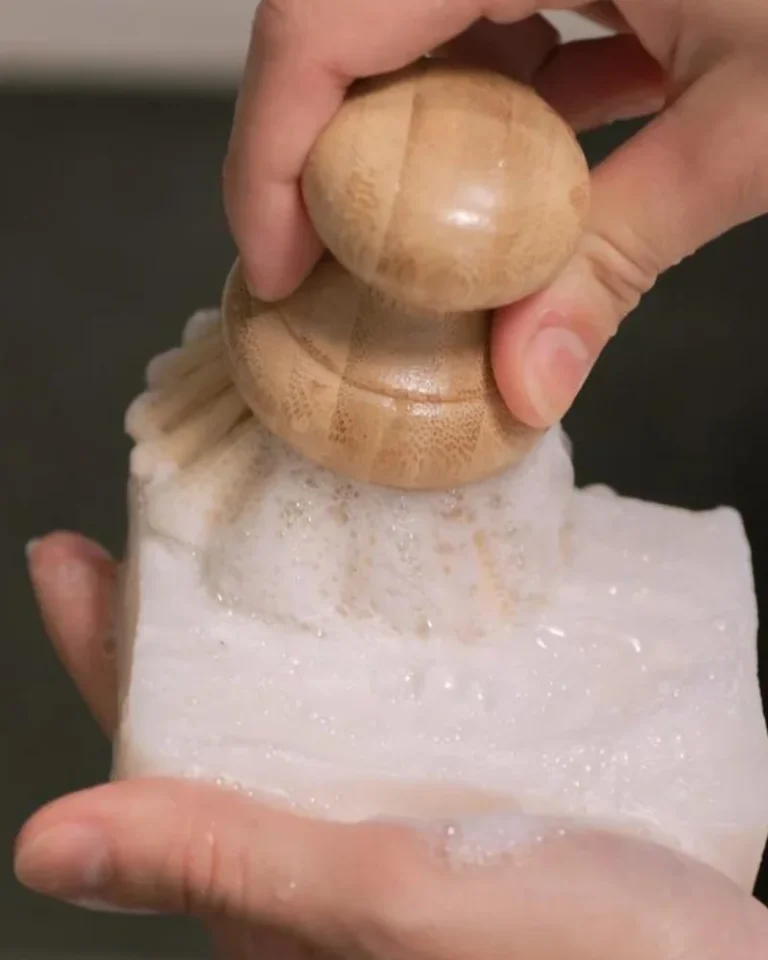
- Non-Toxic Dish Sponges
- Non-Toxic Dish Soap
Like It? Pin It!